The Dawn of the Matter Standard
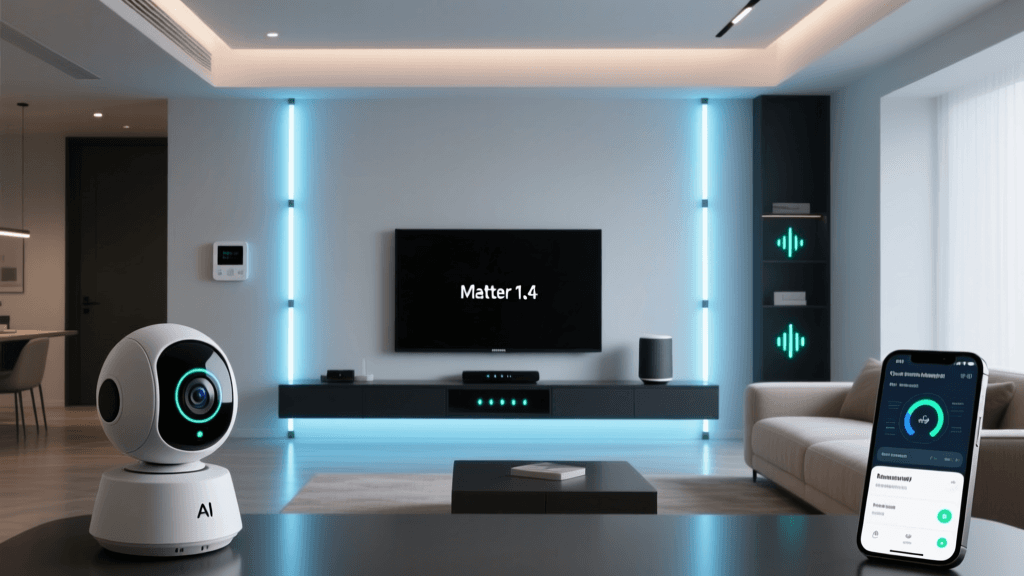
The smart home landscape is undergoing its most significant transformation in a decade. For years, consumers have been forced to navigate a fragmented ecosystem of proprietary hubs, conflicting wireless protocols, and cloud-dependent automations that break the moment your internet connection drops. Enter Matter: the unified, open-source connectivity standard developed by the Connectivity Standards Alliance (CSA). Matter promises a future where devices from different manufacturers communicate seamlessly, securely, and locally.
However, to truly unlock the potential of this new ecosystem, you need the right foundation. Legacy hubs built solely for Zigbee or early-generation Wi-Fi simply cannot handle the demands of Matter-over-Thread, local automation engines, and advanced security protocols. As we look at the best new releases and upcoming devices in the smart home sector, next-generation hubs are emerging as the undisputed command centers of the modern connected home.
Why Your Old Hub is Becoming Obsolete
Before diving into our top picks, it is crucial to understand why upgrading your hub is necessary. Older hubs rely heavily on cloud-based processing. When you trigger a smart plug or adjust a thermostat, the signal often travels from your device to a remote server and back, introducing latency and creating a single point of failure. Next-gen hubs prioritize local execution. They process automations directly on your home network, ensuring that your lights and locks respond instantly, even if your ISP goes down.
Furthermore, new hubs act as Thread Border Routers. Thread is a low-power, mesh-networking protocol that forms the backbone of Matter. According to the Thread Group, this protocol allows devices to communicate with one another without congesting your primary Wi-Fi network. A next-gen hub bridges this Thread mesh to your Wi-Fi and Ethernet, creating a resilient, self-healing network that expands your smart home's range and reliability.
Top New Releases & Upcoming Contenders
1. Aqara Smart Home Hub M3: The Ultimate Agnostic Controller
The Aqara Hub M3 is arguably the most forward-thinking hub released in recent years. Designed for power users and those who want to mix and match ecosystems, the M3 serves as a Matter controller, a Thread border router, and a Zigbee 3.0 coordinator all in one sleek device. What sets the M3 apart from the competition is its emphasis on local automations and its unique hardware features.
Unlike most consumer hubs, the M3 includes a built-in infrared (IR) blaster, allowing you to integrate legacy appliances like older air conditioners and televisions into your modern Matter ecosystem. It also features a USB-C port that supports Power over Ethernet (PoE) via an optional dongle, a massive selling point for users who want to hardwire their hub for maximum stability and hide it in a media closet or attic. With support for up to 128 local automations, the M3 ensures your home runs smoothly without pinging external servers. Priced around $129, it offers unparalleled flexibility for those building a multi-platform smart home.
2. Apple HomePod (2nd Generation): The Premium Ecosystem Anchor
For users deeply invested in the Apple ecosystem, the 2nd Generation HomePod remains the gold standard for a smart home hub. While it is primarily marketed as a premium spatial audio speaker, its internal architecture makes it a powerhouse for Apple Home and Matter. The HomePod 2 features a dedicated Thread border radio and acts as a HomeKit Secure Router, ensuring that your smart home data is encrypted and processed locally via Siri.
The latest firmware updates have vastly improved Siri's contextual awareness and response times for smart home commands. The HomePod 2 also includes a built-in temperature and humidity sensor, which can be used to trigger climate-based automations without needing additional third-party hardware. While the $299 price tag is steep compared to dedicated hub pucks, the combination of audiophile-grade sound, UWB (Ultra Wideband) for precise device handoff, and robust Matter support makes it a top-tier choice for Apple loyalists.
3. Amazon Echo Show 8 (3rd Gen): The Smart Display Powerhouse
Amazon's 3rd Generation Echo Show 8 represents a significant leap in smart display technology, doubling down on its role as a central smart home dashboard. This new release features a vibrant 8-inch display with adaptive color and spatial audio processing that adjusts to the room's acoustics. More importantly, it is built from the ground up to support Matter-over-Thread and Zigbee 3.0 natively.
The Echo Show 8 (3rd Gen) introduces a highly customizable Smart Home Dashboard, allowing users to pin their most-used devices, view security camera feeds, and monitor energy usage directly from the home screen. Amazon has also integrated local voice processing for common smart home commands, reducing latency and improving privacy. At approximately $149, it is the best option for users who want a visual command center in high-traffic areas like the kitchen or living room, bridging the gap between voice control and touch interfaces.
4. SwitchBot Hub 2: The Budget-Friendly IR & Matter Bridge
SwitchBot has carved out a niche by creating devices that retrofit dumb homes into smart homes, and the SwitchBot Hub 2 is the linchpin of their ecosystem. This compact device combines a Thread border router, a Matter controller, and a 360-degree IR blaster. It allows you to expose your existing IR-controlled devices to Matter, meaning your old AC unit or TV can suddenly be controlled via Apple Home, Google Home, or Alexa simultaneously.
The Hub 2 also features a built-in temperature, humidity, and light sensor, enabling complex local automations like closing smart blinds when the sun hits a certain intensity. SwitchBot's aggressive firmware update schedule has continually improved its Matter bridging capabilities, making older SwitchBot Bluetooth devices compatible with the new standard. Priced at an accessible $79, it is the ultimate entry point for renters or budget-conscious DIYers looking to embrace Matter without replacing their existing appliances.
Feature Comparison Matrix
When selecting a next-gen hub, understanding the underlying protocols and controller capabilities is essential. Below is a structured comparison of our top picks to help you align your purchase with your specific network topology and ecosystem preferences.
| Device | Primary Protocols | Matter Controller | Thread Border Router | IR Blaster | Avg. Price |
|---|---|---|---|---|---|
| Aqara Hub M3 | Zigbee 3.0, Thread, Wi-Fi | Yes | Yes | Yes | $129 |
| Apple HomePod 2 | Thread, Wi-Fi 5, UWB | Yes (Apple Home) | Yes | No | $299 |
| Echo Show 8 (3rd Gen) | Zigbee 3.0, Thread, Wi-Fi 6 | Yes (Alexa) | Yes | No | $149 |
| SwitchBot Hub 2 | Bluetooth, Thread, Wi-Fi | Yes (via Bridge) | Yes | Yes | $79 |
Market Pricing & Value Analysis
Investing in a smart home hub requires balancing upfront hardware costs with long-term ecosystem flexibility. While dedicated hubs like the Aqara M3 and SwitchBot Hub 2 offer aggressive pricing and specialized features like IR blasting, smart displays and speakers command a premium by bundling high-quality audio and visual interfaces into the package.
As illustrated in the pricing breakdown, users can achieve full Matter and Thread compatibility for under $100 with the SwitchBot Hub 2. However, those seeking local Zigbee support alongside Matter will find the Aqara M3 to be the most cost-effective middle ground. The premium tier is dominated by devices that serve dual purposes as high-fidelity speakers or smart displays, justifying their higher price points through multifunctional utility.
Upcoming Matter Releases: What to Expect Next
Buying a next-gen hub today is an investment in tomorrow's device categories. The CSA is actively rolling out updates to the Matter specification, expanding beyond basic lights and locks into complex home management systems. Here is what your new hub will support in the near future:
- Matter 1.2 & 1.3 (Robot Vacuums & Appliances): The standard has recently expanded to include robot vacuums, allowing you to send specific room-cleaning commands via your hub's native app. Upcoming additions include full support for refrigerators, dishwashers, and washer/dryer units, enabling unified energy monitoring.
- Water Management & Leak Detection: Future updates will standardize smart water valves and leak detectors. Your hub will be able to instantly shut off your home's main water supply if a localized sensor detects a leak, all processed locally without cloud latency.
- EV Chargers & Energy Storage: As residential solar and electric vehicle adoption grows, Matter is developing profiles for EV chargers and home batteries. Your hub will soon be able to coordinate charging schedules based on real-time utility grid pricing and solar production data.
Buyer's Guide: Choosing the Right Hub for Your Network
Selecting the right hub goes beyond brand loyalty; it requires an assessment of your home's physical layout and network infrastructure. Here are the critical factors to consider before making a purchase:
1. Assess Your Wireless Topology
If your home has thick walls, stone, or multiple stories, Wi-Fi alone will not suffice for a reliable smart home. You need a hub with Thread and Zigbee capabilities. Thread creates a mesh network where every plugged-in device (like a smart plug or light bulb) acts as a repeater, extending the range of your hub. If you are building a large home, consider deploying multiple Thread Border Routers (e.g., an Aqara M3 on the ground floor and a HomePod on the second floor) to create a seamless, overlapping mesh.
2. Local vs. Cloud Processing
Privacy and speed are the main drivers for local processing. When evaluating a hub, check if it supports local execution for your specific devices. Apple and Aqara are currently leading the charge in local automation engines, ensuring that motion-triggered lights respond in milliseconds. If you rely heavily on third-party cloud integrations (like IFTTT or specific brand clouds), ensure the hub you choose supports background cloud-syncing alongside local Matter control.
3. Power over Ethernet (PoE) Capabilities
For the ultimate in reliability, hardwiring your hub to your network switch via Ethernet eliminates Wi-Fi interference and ensures your smart home survives router reboots. The Aqara Hub M3's PoE support makes it a favorite among custom installers and networking enthusiasts who prefer to tuck their hubs away in structured wiring panels.
Security and Privacy in Next-Gen Hubs
As smart homes become more integrated with critical infrastructure like locks and garages, security is paramount. The National Institute of Standards and Technology (NIST) has continually emphasized the importance of reducing attack surfaces in IoT devices. Next-gen Matter hubs address this by utilizing blockchain-based distributed ledger technology for device commissioning, ensuring that only authorized controllers can add or modify devices on your network.
Furthermore, by shifting processing to the local hub, you drastically reduce the amount of telemetry data sent to external servers. When shopping for a new hub, prioritize devices that offer hardware-level security enclaves and regular, automated firmware updates to patch vulnerabilities as they are discovered.
Final Verdict
The transition to Matter and Thread is not just a software update; it is a fundamental hardware shift that requires a capable command center. For the ultimate in flexibility, local control, and legacy device integration, the Aqara Hub M3 stands out as the best overall next-gen hub. Apple users will find the HomePod 2 to be an unmatched blend of audio excellence and secure smart home routing, while the Echo Show 8 (3rd Gen) provides the best visual dashboard for family spaces. Finally, the SwitchBot Hub 2 remains the undisputed champion for budget-conscious upgraders looking to bridge the gap between old IR appliances and the new Matter frontier. By investing in one of these next-generation hubs today, you are future-proofing your home for the exciting device categories arriving in the coming years.