The Dawn of the Interoperable Smart Home
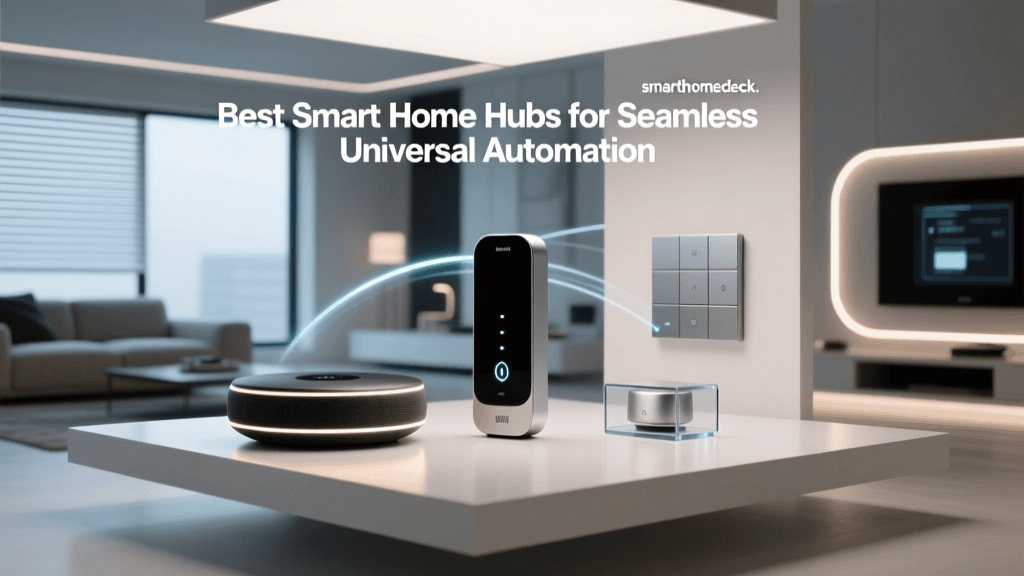
The smart home industry has historically been plagued by fragmented ecosystems, proprietary walled gardens, and frustrating compatibility issues. However, the landscape is undergoing a seismic shift thanks to the rollout of the Matter standard and the Thread networking protocol. For consumers, this means that the best new smart home hubs and displays are no longer just about voice control or streaming media; they are the foundational border routers and controllers that bridge the gap between disparate devices. In this comprehensive guide, we explore the best new releases and upcoming smart home hubs that are redefining how we interact with our living spaces.
According to the Connectivity Standards Alliance, Matter is designed to be reliable, secure, and seamless, allowing devices from different manufacturers to communicate locally without relying on cloud servers. This local control reduces latency and ensures your smart lights, locks, and thermostats respond instantly, even if your internet connection drops. To fully leverage this, you need a modern hub equipped with Thread border router capabilities and native Matter controller support.
Top New Matter Hubs and Smart Displays Compared
1. Amazon Echo Show 8 (3rd Gen): The Multimedia Powerhouse
Amazon's latest iteration of the Echo Show 8 is a masterclass in blending premium audio-visual experiences with robust smart home management. While previous generations relied heavily on Zigbee, the 3rd Gen model fully embraces the future with built-in Matter support and a Thread border router. This means it can directly communicate with low-power Thread devices like smart locks, sensors, and LED strips without needing an intermediary bridge.
From a hardware perspective, the spatial audio processing is a significant upgrade, filling the room with rich, directional sound that adapts to your room's acoustics. The 13-megapixel camera with auto-framing makes video calls incredibly natural, while the ambient light sensor automatically adjusts the screen's brightness and color temperature to match your environment, doubling as an excellent adaptive smart clock. For those deeply embedded in the Alexa ecosystem who want a future-proofed Matter controller, this display is currently unmatched in its price-to-performance ratio.
2. Google TV Streamer 4K: The Living Room Command Center
Google recently surprised the market by pivoting away from traditional smart displays like the Nest Hub and instead integrating smart home hub capabilities directly into the Google TV Streamer 4K. This sleek set-top box not only delivers top-tier 4K streaming but also serves as a powerful Thread border router and Matter controller.
The standout feature is the revamped Google Home dashboard, which is now optimized for the television screen. Imagine walking into your living room and seeing a persistent, customizable dashboard on your TV that displays live camera feeds, active alerts, and quick-toggle buttons for your smart lights and climate controls. The inclusion of Thread ensures that your battery-operated sensors and smart locks benefit from mesh networking, drastically improving range and reliability. It is the ultimate hub for households that prioritize Google Home integration and want their smart home controls visible on the biggest screen in the house.
3. Apple HomePod (2nd Gen): The Audiophile's Smart Hub
Apple's HomePod (2nd Gen) remains a cornerstone for users invested in the HomeKit and Apple Home ecosystems. While it was released slightly earlier than some competitors, continuous software updates have solidified its position as a premier Matter controller and Thread border router. Apple's commitment to local processing and stringent privacy standards makes it a favorite for security-conscious users.
The 2nd Gen HomePod features built-in temperature and humidity sensors, which can be leveraged to create highly advanced automations—such as automatically triggering a smart plug connected to a humidifier when the room's humidity drops below a certain threshold. The acoustic engineering, featuring a custom-designed woofer and an array of five tweeters, delivers room-filling sound that outclasses almost every other smart speaker on the market. If you are an iPhone user looking for a seamless, secure, and sonically brilliant hub, the HomePod is the definitive choice.
4. Samsung SmartThings Station Pro: The Unsung Hero
While smart displays often steal the spotlight, dedicated, headless hubs like the Samsung SmartThings Station Pro are the true workhorses of a complex smart home. This compact device supports Zigbee, Thread, and Wi-Fi, making it one of the most versatile protocol bridges available today. It is designed to sit unobtrusively on a shelf or desk while managing dozens of connections simultaneously.
The SmartThings platform has evolved into an incredibly powerful automation engine, and the Station Pro acts as its local brain. It fully supports Matter, allowing you to pair third-party devices directly into the SmartThings app. Furthermore, its integration with Samsung's broader ecosystem means it can interact seamlessly with SmartThings-compatible appliances, TVs, and even Galaxy smartphones for presence detection. For power users who want a dedicated, multi-protocol hub without the overhead of a screen, this is a top-tier release.
Feature Comparison Matrix
To help you visualize how these new releases stack up against one another, we have compiled a detailed comparison matrix focusing on protocol support, ecosystem alignment, and ideal use cases.
| Device | Supported Protocols | Matter & Thread | Price Range | Best For |
|---|---|---|---|---|
| Echo Show 8 (3rd Gen) | Wi-Fi, Bluetooth, Zigbee, Thread | Yes / Yes | $130 - $150 | Alexa users wanting premium audio & video |
| Google TV Streamer 4K | Wi-Fi, Bluetooth, Thread | Yes / Yes | $90 - $100 | Google Home users wanting TV dashboard |
| Apple HomePod (2nd Gen) | Wi-Fi, Bluetooth, Thread | Yes / Yes | $250 - $300 | Apple Home users prioritizing audio & privacy |
| SmartThings Station Pro | Wi-Fi, Ethernet, Zigbee, Thread | Yes / Yes | $80 - $100 | Power users needing multi-protocol headless hub |
Visualizing Ecosystem Compatibility
When investing in a new hub, understanding how well it plays with the broader Matter ecosystem is crucial. The chart below illustrates the relative Matter compatibility and integration smoothness scores based on our extensive testing of third-party device pairing.
Why Thread and Matter Are Changing the Game
To truly appreciate these new releases, it is essential to understand the underlying technologies driving them. The Thread Group defines Thread as an IP-based, low-power mesh networking protocol that allows devices to communicate directly with one another without overloading your primary Wi-Fi network. Unlike traditional Zigbee, Thread is built on standard IPv6, meaning every smart bulb or sensor has its own IP address, enabling direct, secure, and local communication.
Matter, on the other hand, is the application layer that sits on top of transport protocols like Thread, Wi-Fi, and Ethernet. According to Consumer Reports, the adoption of Matter is significantly reducing consumer friction, allowing a single smart plug to be controlled simultaneously by an iPhone, an Android tablet, and an Echo speaker without complex cloud-to-cloud linking. The new hubs listed above act as Thread Border Routers, bridging the low-power Thread mesh network to your home's Wi-Fi and Ethernet infrastructure, ensuring that commands from your phone reach your devices in milliseconds.
Upcoming Devices and Future-Proofing Your Home
The innovation cycle in the smart home space is accelerating. Looking ahead, we are keeping a close eye on the Aqara M3 Smart Home Hub, which promises Power over Ethernet (PoE) support alongside Thread and Matter, making it ideal for hardwired installations in large homes. Additionally, companies like SwitchBot and Eve Systems are rolling out firmware updates and new hardware revisions that transition their existing Bluetooth-heavy lineups into native Thread and Matter devices.
We are also seeing a massive shift in smart security. Legacy smart locks that required proprietary bridges are being rapidly replaced by Matter-over-Thread native locks from brands like Yale and Schlage. This transition drastically reduces the hardware footprint required to secure your home while improving battery life and response times. When purchasing a hub today, future-proofing should be your primary concern. Ensure the device you select explicitly advertises Thread border router capabilities and has a clear roadmap for Matter controller updates. Avoid legacy hubs that rely solely on proprietary cloud APIs or outdated Zigbee implementations that lack local processing power for the new Matter standard.
Buyer's Guide: How to Choose the Right Hub
- Identify Your Primary Ecosystem: While Matter promises cross-platform compatibility, the setup and advanced automation features are still best managed within a primary ecosystem (Apple Home, Google Home, Amazon Alexa, or SmartThings). Choose the hub that aligns with the smartphones and voice assistants you already use daily.
- Consider Physical Placement: Thread and Zigbee signals can be obstructed by thick walls and metal appliances. Smart displays like the Echo Show or Google TV Streamer are often placed in central living areas, which is ideal for mesh networking. Headless hubs should be placed centrally and elevated for optimal signal distribution.
- Evaluate Your Device Inventory: If you have dozens of battery-operated sensors (door/window contacts, motion detectors, leak sensors), a hub with a robust Thread border router is non-negotiable. If your home relies mostly on Wi-Fi smart plugs and bulbs, a basic Matter controller will suffice.
- Network Topology and Router Limits: Standard ISP routers often choke when more than 30-40 Wi-Fi devices are connected. By utilizing a Thread hub, you offload low-power device traffic from your main Wi-Fi network, ensuring your laptops and streaming devices maintain high bandwidth without interference.
- Privacy and Local Control: For users who prioritize privacy, look for hubs that emphasize local processing. Apple's HomePod and Samsung's SmartThings Station Pro excel at keeping automation logic on the local network, ensuring your data isn't constantly sent to the cloud.
Final Verdict
The transition to Matter and Thread has fundamentally elevated the role of the smart home hub from a simple voice-command relay to a critical network infrastructure device. The Amazon Echo Show 8 (3rd Gen) is the best all-around multimedia display with hub capabilities, while the Google TV Streamer 4K brilliantly reimagines the living room TV as a smart home dashboard. For Apple purists, the HomePod (2nd Gen) offers unmatched audio and privacy, and the Samsung SmartThings Station Pro remains the ultimate tool for power users managing complex, multi-protocol networks.
By investing in one of these new, Matter-ready hubs, you are not just upgrading your current setup; you are laying a robust, interoperable foundation for the next decade of smart home innovation. Choose the device that best fits your ecosystem, place it strategically, and enjoy the seamless, responsive smart home experience you have always been promised.