The Evolution from Smart Control to True Automation
The smart home industry has undergone a massive paradigm shift over the last decade. We have moved past the novelty of simply turning on a light bulb with a smartphone app and entered the era of true, context-aware home automation. At the heart of this transformation is the smart home hub—a centralized brain that processes data from various sensors, applies complex logic, and executes actions across multiple devices without requiring manual intervention. For homeowners looking to build a resilient, fast, and privacy-focused smart home, choosing the right hub or controller is the single most important decision you will make.
While cloud-based ecosystems offer convenience, they are inherently vulnerable to internet outages, server downtime, and latency. Advanced automation demands local processing. When a motion sensor triggers a hallway light at 2:00 AM, the signal should not have to travel to a server farm three states away and back. It should be processed in milliseconds by a local hub. In this comprehensive buyer's guide, we evaluate the best smart home hubs and controllers for advanced automation, breaking down their protocols, processing capabilities, and ideal use cases.
The Anatomy of a Modern Smart Home Hub
Before diving into specific product recommendations, it is crucial to understand the underlying technologies that make modern automation possible. A premium smart home hub acts as a universal translator, bridging the gap between disparate wireless protocols and unifying them under a single automation engine.
- Z-Wave and Zigbee: These low-power mesh networks are the backbone of reliable sensor and switch deployments. They operate on different frequencies than Wi-Fi, preventing network congestion.
- Thread and Matter: The new industry standards. Thread provides a low-latency, IP-based mesh network, while Matter ensures cross-platform compatibility. According to the Connectivity Standards Alliance, Matter is designed to unify the smart home ecosystem, allowing devices from different manufacturers to communicate seamlessly regardless of the underlying hub.
- Local Processing Engine: The most critical feature for advanced users. A true local hub executes routines even if your home's broadband connection drops, ensuring your security systems and basic automations never fail.
Top Picks for Smart Home Automation Hubs
1. Home Assistant Green: Best for Privacy and Tinkerers
Home Assistant has long been the gold standard for open-source, local smart home automation, but it traditionally required a Raspberry Pi and a fair amount of Linux command-line knowledge to set up. The Home Assistant Green changes the game by offering a dedicated, plug-and-play hardware appliance designed specifically to run the Home Assistant OS out of the box.
Specifications & Features: Powered by an Intel N100 processor with 8GB of RAM and 64GB of eMMC storage, the Green is significantly more powerful than older Raspberry Pi setups. It features built-in Ethernet for rock-solid network connectivity. While it lacks built-in Zigbee or Z-Wave radios, it is designed to pair seamlessly with the Connect ZBT-1 dongle or network-based bridges like Sonoff or Zigbee2MQTT.
Automation Capabilities: Home Assistant's automation engine is unparalleled. It supports complex YAML scripting, visual block-based automation builders, and integrates with virtually every smart device on the market via community-driven add-ons. If a device has an API, Home Assistant can control it.
Cost: ~$99 (Hub only)
Best For: Tech-savvy users, privacy advocates, and those who want a unified dashboard for every conceivable device brand.
2. Hubitat Elevation: Best for Local Z-Wave and Zigbee Processing
If you want the reliability of local processing without the steep learning curve of open-source software, the Hubitat Elevation is the undisputed champion. It is a dedicated, hockey-puck-sized hub that features built-in antennas for both Z-Wave and Zigbee, allowing you to connect hundreds of sensors and switches directly to the hub.
Specifications & Features: The Hubitat Elevation connects to your router via Ethernet and keeps all automation logic strictly on your local network. Its standout feature is the 'Rule Machine,' an incredibly powerful visual logic builder that allows for nested conditionals, delays, and complex variable tracking without writing a single line of code.
Automation Capabilities: Hubitat excels at lighting automations, HVAC control based on multi-sensor data, and security routines. Because it processes locally, the latency between a door opening and a light turning on is virtually imperceptible.
Cost: ~$149
Best For: Users who want a 'set it and forget it' local hub with built-in radios and a robust, code-free rule engine.
3. Samsung SmartThings Hub (Gen 3): Best for Mainstream Ecosystems
Samsung's SmartThings remains one of the most popular smart home platforms globally. The latest generation hub is a sleek, puck-shaped device that supports Matter, Thread, Zigbee, and Wi-Fi, making it a highly versatile bridge for modern smart homes.
Specifications & Features: The Gen 3 hub is designed to be aesthetically pleasing and easy to set up via the SmartThings app. It acts as a Thread border router and supports the latest Matter standard, ensuring future-proof compatibility. However, unlike Hubitat, SmartThings relies heavily on cloud processing for many of its advanced routines and third-party integrations.
Automation Capabilities: The SmartThings app offers a user-friendly 'Routines' tab that makes setting up basic geofencing, time-based, and sensor-triggered automations incredibly easy for beginners. However, complex conditional logic (e.g., 'Turn on the AC only if the temperature is above 75°F AND the window is closed AND someone is home') often requires third-party workarounds or the new, slightly more advanced Rules API.
Cost: ~$129
Best For: Families and mainstream users who prioritize a polished mobile app and broad commercial device compatibility over strict local processing.
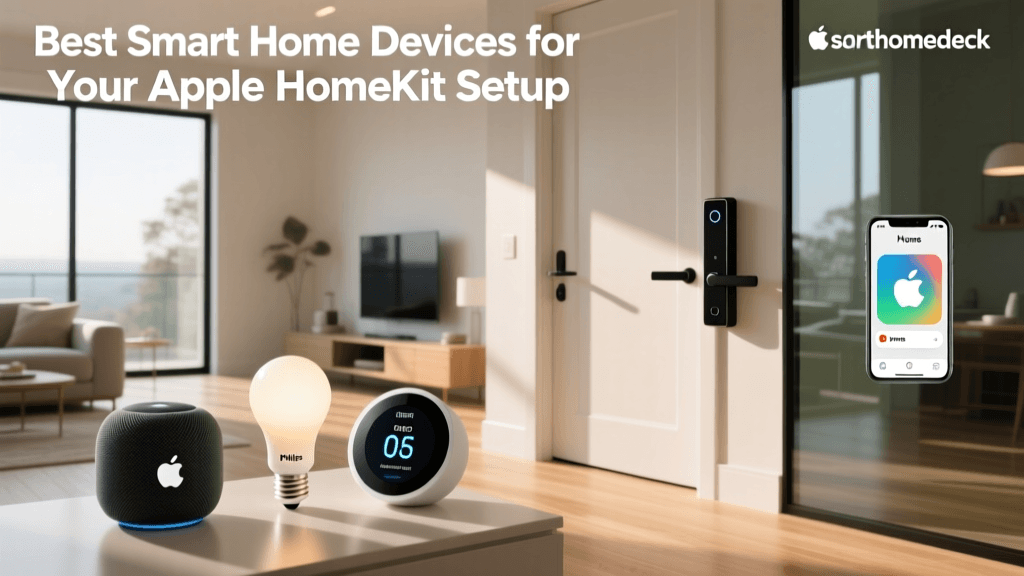
4. Apple HomePod (2nd Gen): Best for Apple Ecosystem and Thread
For households deeply entrenched in the Apple ecosystem, the HomePod (2nd Gen) serves a dual purpose: it is a premium acoustic speaker and a powerhouse smart home hub. Apple has heavily invested in the Matter and Thread standards, making the HomePod an essential Thread border router for modern HomeKit setups.
Specifications & Features: The HomePod features built-in Thread and Matter support, temperature and humidity sensors, and Sound Recognition (for smoke alarms and babies crying). It anchors the Apple Home app, allowing for secure, remote access and automation execution.
Automation Capabilities: Apple's Home app has improved its automation logic significantly, now supporting variables and basic conditionals. However, it remains a walled garden. You are largely limited to HomeKit-certified or Matter-compatible devices, which restricts the vast library of niche Z-Wave sensors available to Hubitat or Home Assistant users.
Cost: ~$299
Best For: iPhone users who want a premium audio device that seamlessly doubles as a secure, Thread-enabled smart home controller.
Feature Comparison Matrix
| Device | Best For | Built-in Protocols | Local Processing | Approx. Price |
|---|---|---|---|---|
| Home Assistant Green | Privacy & Tinkerers | Ethernet, Wi-Fi (Matter/Thread via dongles) | 100% Local | $99 |
| Hubitat Elevation | Local Z-Wave/Zigbee | Ethernet, Z-Wave, Zigbee | 100% Local | $149 |
| SmartThings Hub Gen 3 | Mainstream Users | Wi-Fi, Thread, Matter, Zigbee | Hybrid (Cloud dependent) | $129 |
| Apple HomePod (2nd Gen) | Apple Ecosystem | Wi-Fi, Thread, Matter, Bluetooth | Secure Local/Cloud | $299 |
Visualizing Hub Capabilities
To help you weigh the trade-offs between ease of use, protocol diversity, and local processing power, we have mapped out the core strengths of each hub. A higher score indicates superior performance in that specific category.
Building Your First Advanced Automation Routine
Having the right hub is only half the battle; the magic lies in how you program it. Advanced automation moves beyond simple 'If This, Then That' (IFTTT) logic and embraces multi-condition state machines. Let's break down the anatomy of an advanced automation routine using the 'Midnight Bathroom Pathway' as a practical example.
1. The Trigger (The Catalyst) Triggers are the events that wake up the automation engine. In our example, the trigger is a motion sensor detecting movement in the hallway between 11:00 PM and 6:00 AM.
2. The Conditions (The Filters) Conditions prevent the automation from firing when it shouldn't. Before executing an action, the hub checks the environment.
- Condition A: Is the master bedroom door closed? (Prevents the light from blinding a sleeping partner if the sensor is triggered by a pet).
- Condition B: Is the hallway light already on? (Prevents redundant commands).
3. The Actions (The Execution) If the trigger fires and all conditions are met, the hub executes the actions sequentially.
- Action 1: Turn on under-cabinet LED strips to 10% brightness (Warm White, 2200K).
- Action 2: Wait for motion to clear for 3 minutes.
- Action 3: Fade LED strips to 0% over 10 seconds.
Platforms like Hubitat's Rule Machine and Home Assistant's visual editor allow you to string these logic gates together effortlessly. By utilizing local hubs, the latency between the motion trigger and the LED turning on is reduced to under 50 milliseconds, creating a truly magical, invisible user experience.
Industry Standards: Matter, Security, and Energy Efficiency
When investing in a smart home hub, it is vital to consider the broader implications of your ecosystem regarding security, energy consumption, and future interoperability.
The Promise of Matter and Thread
The introduction of Matter has fundamentally altered the smart home landscape. As noted by the Connectivity Standards Alliance, Matter operates on the application layer, sitting above network protocols like Wi-Fi, Ethernet, and Thread. This means a Matter-certified sensor bought today will work with a future hub, regardless of the brand. Furthermore, Thread—a low-power, self-healing mesh network—ensures that as you add more devices, your network actually becomes stronger and more resilient, eliminating the dead zones that plague Wi-Fi-heavy smart homes.
Security and Privacy in the Connected Home
With dozens of devices communicating constantly, security is paramount. Relying solely on cloud-based hubs means your home's data is constantly traversing the public internet. The Federal Trade Commission (FTC) strongly advises consumers to secure their smart home networks by using strong, unique passwords, enabling multi-factor authentication, and keeping device firmware updated. By choosing a local-processing hub like Home Assistant or Hubitat, you inherently reduce your attack surface. Your camera feeds, door lock statuses, and occupancy data never need to leave your local network, providing a massive boost to household privacy.
Automating for Energy Efficiency
Smart home automation is not just about convenience; it is a powerful tool for energy conservation. By integrating smart thermostats with local occupancy sensors and door/window contacts, your hub can dynamically adjust HVAC usage. The U.S. Department of Energy highlights that properly programmed smart thermostats can save homeowners up to 10% a year on heating and cooling costs. An advanced hub can take this further: if a window is left open for more than 5 minutes, the hub can automatically shut off the HVAC system for that specific zone and send a push notification to your phone, preventing massive energy waste.
Final Verdict and Buyer Recommendations
The 'best' smart home hub depends entirely on your technical comfort level and your commitment to local control versus cloud convenience.
If you are a privacy advocate or a tinkerer who wants absolute control over every device in your home, the Home Assistant Green is an unbeatable value at $99. It provides a robust, local foundation that will grow with your technical skills.
For the pragmatic automator who wants the reliability of local Z-Wave and Zigbee processing without needing a computer science degree, the Hubitat Elevation is the ultimate workhorse. Its Rule Machine is the best visual logic builder on the market.
If you prefer a polished, mainstream experience and primarily use Wi-Fi and Matter devices, the Samsung SmartThings Hub offers the broadest commercial compatibility and the most user-friendly mobile app.
Finally, for Apple loyalists building a premium, Thread-enabled home, the Apple HomePod seamlessly bridges high-fidelity audio with secure, localized HomeKit automations.
Ultimately, the transition to advanced automation requires a shift in mindset. By investing in a capable local hub, you are not just buying a piece of hardware; you are investing in the reliability, speed, and privacy of your home's digital nervous system.