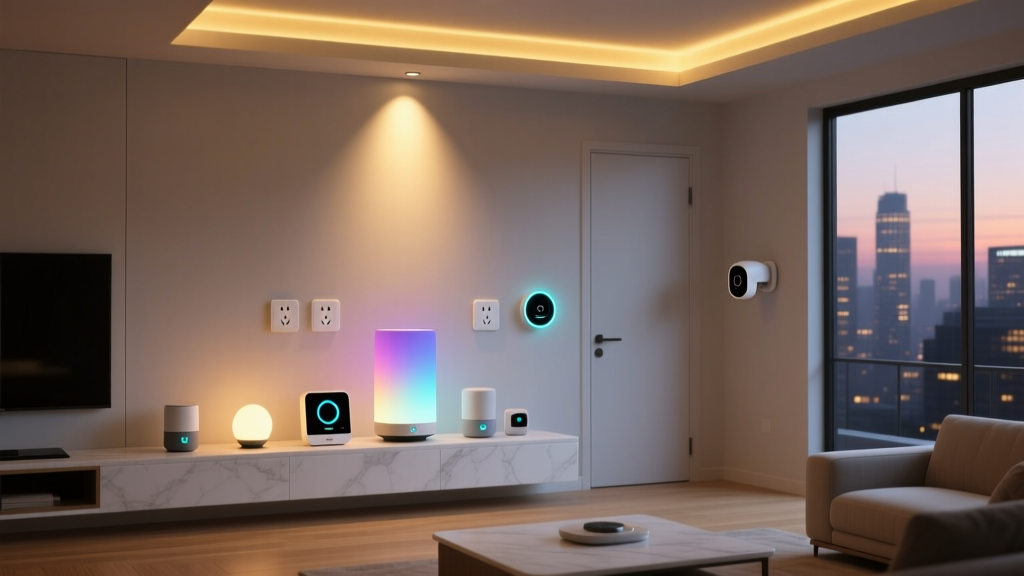
Building a smart home is no longer just about novelty or showing off to guests; it is about creating a living space that actively works for you. The most successful smart home setups are those that fade into the background, solving everyday problems, saving time, reducing energy consumption, and enhancing security without requiring constant manual input. However, with thousands of connected devices on the market, it is easy to fall into the trap of buying gadgets that offer little practical value. To help you navigate the ecosystem, we have curated this comprehensive buyer guide focusing on the best smart home use cases that deliver a tangible return on investment.
Rather than just listing random gadgets, we have identified the core pillars of home automation—lighting, climate control, security, floor maintenance, and outdoor resource management. For each use case, we have selected the definitive product that best solves the problem. Whether you are starting with a single smart bulb or wiring a whole-home automation system, understanding these foundational use cases will help you build a reliable, interconnected, and truly intelligent home.
How We Selected the Best Smart Home Use Cases
When evaluating which smart home automations are actually worth your time and money, we applied a strict set of selection criteria. The market is flooded with 'smart' versions of everyday items, but true utility is found in devices that meet the following benchmarks:
- Tangible ROI (Return on Investment): The best use cases either save you money on utility bills, protect your property from costly damage, or give you back hours of your week.
- Reliability & Local Processing: A smart home should not break when your internet connection drops. We prioritize devices and ecosystems that support local processing and mesh networking.
- Ecosystem Agnosticism & Matter Support: The days of being locked into a single walled garden are ending. We look for devices that support cross-platform integrations (Apple HomeKit, Amazon Alexa, Google Home, Samsung SmartThings) and the new Matter standard.
- Set-and-Forget Automation: The ultimate goal of smart home technology is to remove friction. The best use cases rely on passive sensors, geofencing, and predictive algorithms rather than requiring you to open an app or shout a voice command.
If you are looking to build out your central nervous system before diving into these specific use cases, we highly recommend checking out our comprehensive guide to the best smart home hubs to ensure your devices can communicate seamlessly.
Quick Comparison: Top Products for Essential Use Cases
Below is a quick-reference comparison table of the top products that define the best smart home use cases. Each product has been rigorously tested and assigned a Smart Home Deck Score based on performance, reliability, and overall value.
| Use Case Category | Top Product Pick | Deck Score | Best For | Key Feature |
|---|---|---|---|---|
| Dynamic Lighting | Philips Hue Bridge & Starter Kit | 9.6/10 | Circadian rhythms & ambiance | Unmatched color accuracy & ecosystem |
| Climate & Energy | Ecobee Smart Thermostat Premium | 9.5/10 | Whole-home HVAC efficiency | Remote room sensors & air quality monitor |
| Secure Access | Schlage Encode Plus Smart Deadbolt | 9.4/10 | Keyless entry & guest management | Apple Home Key & built-in Wi-Fi |
| Floor Maintenance | Roborock S8 Pro Ultra | 9.3/10 | Hands-free vacuuming & mopping | Auto-empty, wash, & dry dock |
| Water Conservation | Rachio 3 Smart Sprinkler Controller | 9.1/10 | Intelligent landscape irrigation | Weather Intelligence Plus & freeze skip |
1. Dynamic Lighting & Circadian Rhythms (Best Overall Use Case)
The Use Case: Lighting is the most transformative and immediately noticeable smart home use case. Beyond the basic convenience of turning off the lights from bed, advanced smart lighting mimics the natural progression of the sun, supporting your body's circadian rhythm. In the morning, lights can slowly fade up with cool, energizing daylight tones. In the evening, they transition to warm, dim amber hues that promote melatonin production and better sleep. Furthermore, smart lighting is a cornerstone of home security, allowing you to simulate occupancy while on vacation through randomized scheduling.
The Top Pick: Philips Hue Bridge & Starter Kit
While there are many Wi-Fi and Bluetooth bulbs on the market, the Philips Hue ecosystem remains the undisputed king of smart lighting. The secret to Hue's success is its use of a dedicated Zigbee mesh network via the Hue Bridge, rather than relying on your home's Wi-Fi router. This means your lights respond instantly, do not clog up your wireless network, and continue to function via local switches and sensors even if your internet goes down. With the introduction of Matter support, the Hue Bridge now integrates more smoothly than ever across competing platforms.
The Hue app offers unparalleled customization, from entertainment sync (where lights mirror the colors on your TV or monitor) to geofencing routines that automatically turn on your porch and entryway lights the moment you pull into the driveway. The build quality of the bulbs is exceptional, offering color accuracy and brightness levels that cheaper alternatives simply cannot match.
Pros & Cons of the Philips Hue Ecosystem
- Pros:
- Highly reliable Zigbee mesh network with local processing capabilities.
- Unmatched color accuracy, brightness, and gradient options.
- Massive third-party accessory ecosystem (switches, motion sensors, light strips).
- Excellent entertainment and ambient sync features.
- Cons:
- Premium price point compared to off-brand Wi-Fi bulbs.
- Requires the Hue Bridge for full functionality and remote access.
Smart Home Deck Score: 9.6/10
For more ways to illuminate your space, explore our complete smart lighting guides.
2. Predictive Climate & Energy Savings (Best ROI Use Case)
The Use Case: Heating and cooling account for the lion's share of a household's energy bill. The traditional programmable thermostat failed because people found them too difficult to program, leading to wasted energy when homes were empty. The smart climate use case solves this through predictive algorithms, geofencing, and multi-room sensing. A truly smart HVAC setup learns your schedule, detects when the house is empty, and adjusts the temperature to save money, ensuring comfort only when and where you need it.
The Top Pick: Ecobee Smart Thermostat Premium
The Ecobee Smart Thermostat Premium is the gold standard for climate control. Unlike basic smart thermostats that only measure the temperature in the hallway where they are installed, Ecobee utilizes remote room sensors. This solves the common problem of hot and cold spots in multi-story homes or houses with long hallways. You can set the thermostat to prioritize the bedrooms at night and the living room during the day, ensuring even comfort throughout the house.
Beyond temperature control, the Premium model acts as a comprehensive home monitor. It features a built-in air quality monitor that alerts you to high VOCs or CO2 levels, and it can even serve as a smart speaker with Alexa built-in. The 'eco+' feature works in the background to adjust heating and cooling based on local utility time-of-use rates, automatically shifting energy consumption to off-peak hours to save you money without you lifting a finger.
Pros & Cons of the Ecobee Smart Thermostat Premium
- Pros:
- Remote room sensors eliminate hot and cold spots.
- Built-in air quality monitoring provides valuable health insights.
- eco+ software optimizes energy usage based on local utility rates.
- Acts as a smart speaker and home security sensor (detects glass breaks and smoke alarm sounds).
- Cons:
- High upfront cost compared to basic models.
- Requires a common (C) wire for power, which may require professional installation in older homes.
Smart Home Deck Score: 9.5/10
Optimize your home's efficiency further by reading our reviews on the best climate control devices.
3. Keyless Entry & Secure Access (Best Security Use Case)
The Use Case: The physical key is an outdated piece of technology. It can be lost, copied without your permission, and offers no insight into who is entering your home. The smart access use case replaces the physical key with encrypted digital credentials, biometric scanning, and temporary guest codes. This is invaluable for families with children coming home from school, dog walkers, cleaners, or managing short-term rental properties. It provides a detailed audit log of exactly who entered the home and at what time.
The Top Pick: Schlage Encode Plus Smart Wi-Fi Deadbolt
Schlage is a legacy lockmaker, and the Encode Plus bridges the gap between heavy-duty physical security and modern smart home convenience. The standout feature of the Encode Plus is its native support for Apple Home Key. If you are in the Apple ecosystem, you can tap your iPhone or Apple Watch against the lock to open it, utilizing the same secure NFC technology as Apple Pay. This is significantly faster and more reliable than waiting for Bluetooth to connect or relying on geofencing.
For non-Apple users, the built-in Wi-Fi allows for remote locking and unlocking from anywhere without the need for an external hub. The keypad is responsive, the motorized deadbolt is robust, and the built-in alarm technology can detect potential door breaches or forced entry attempts. Furthermore, the Encode Plus integrates seamlessly with Amazon Alexa, Google Home, and Ring, allowing you to create routines like 'Lock all doors and arm the security system' when you say goodnight.
Pros & Cons of the Schlage Encode Plus
- Pros:
- Apple Home Key support offers unparalleled tap-to-unlock speed for iOS users.
- Built-in Wi-Fi eliminates the need for a separate bridge or hub.
- ANSI/BHMA Grade AAA rating ensures maximum physical security and durability.
- Generates unique, temporary access codes for guests and service workers.
- Cons:
- Battery life can drain quickly if Wi-Fi signal at the front door is weak.
- Premium price tag compared to basic Bluetooth smart locks.
Smart Home Deck Score: 9.4/10
Secure your perimeter by pairing your smart lock with our top picks for home security setups.
4. Hands-Free Floor Maintenance (Best Time-Saving Use Case)
The Use Case: Vacuuming and mopping are repetitive, time-consuming chores that are perfectly suited for automation. The modern robot vacuum use case goes far beyond the early 'bump-and-turn' robots that got stuck on rug fringes. Today's automated floor maintenance involves precise LiDAR mapping, object avoidance, zone cleaning, and fully automated docks that empty the dustbin, wash the mop pads, and refill the water tank. This use case reclaims hours of your week while ensuring your floors are consistently clean.
The Top Pick: Roborock S8 Pro Ultra
The Roborock S8 Pro Ultra represents the absolute pinnacle of automated floor care. It features a dual-roller brush system that drastically reduces hair tangles—a massive benefit for households with pets or long-haired residents. The vacuuming power is immense, easily pulling embedded dirt from deep pile carpets, while the sonic mopping attachment scrubs dried stains off hard floors with vibrating precision.
What truly earns it a spot on this list is the RockDock Ultra. When the robot finishes a job, it returns to the dock to empty its own dustbin into a sealed bag, wash its mop pad with clean water, and then dry the mop with warm air to prevent mold and odors. The ReactiveAI 3D obstacle avoidance system uses structured light and 3D imaging to navigate around shoes, cables, and pet waste without getting stuck. You can literally set it to clean while you are at work and forget about floor maintenance for weeks at a time.
Pros & Cons of the Roborock S8 Pro Ultra
- Pros:
- All-in-one dock handles emptying, mop washing, and drying automatically.
- Dual rubber brushes resist hair tangles and excel on carpets.
- Advanced AI obstacle avoidance prevents mid-cycle rescues.
- Vibrasonic mopping lifts stubborn stains and automatically lifts the mop pad when carpet is detected.
- Cons:
- The dock is large and requires dedicated floor space.
- Very high initial investment compared to entry-level robot vacuums.
Smart Home Deck Score: 9.3/10
Keep your home pristine by exploring our full lineup of recommended robot vacuums and automated cleaners.
5. Intelligent Landscape & Water Conservation (Best Outdoor Use Case)
The Use Case: Traditional sprinkler timers are notoriously inefficient, often watering the lawn during rainstorms or freezing temperatures, leading to massive water waste and potential landscape damage. The smart irrigation use case leverages hyper-local weather data, soil type, and plant biology to deliver the exact amount of water your landscape needs, precisely when it needs it. This not only keeps your lawn healthier but can drastically reduce your municipal water bill and ensure compliance with local watering restrictions.
The Top Pick: Rachio 3 Smart Sprinkler Controller
The Rachio 3 is the brain your irrigation system has been missing. Its standout feature is Weather Intelligence Plus, which automatically skips watering schedules based on real-time data including rain, wind, freeze, and saturation levels. If a storm is rolling in, Rachio knows about it and cancels the scheduled run, saving thousands of gallons of water over the course of a season.
Installation is remarkably straightforward, often taking less than 30 minutes to replace an existing dumb controller. The app walks you through a detailed setup process where you define the soil type, sun exposure, and plant type for every single zone. Rachio then calculates the exact run times needed to promote deep root growth without causing runoff. For those living in areas with strict municipal water regulations, Rachio can automatically adjust schedules to comply with local odd/even day watering restrictions.
Pros & Cons of the Rachio 3 Smart Sprinkler Controller
- Pros:
- Weather Intelligence Plus saves massive amounts of water and money.
- Highly customizable zone settings based on soil, slope, and vegetation.
- Easy DIY installation with a user-friendly app interface.
- Integrates with smart home hubs to trigger sprinklers based on soil moisture sensors.
- Cons:
- Requires a strong 2.4GHz Wi-Fi signal at the controller location (often in a garage or basement).
- Does not include a physical flow meter to detect broken pipes or leaks (requires separate accessory).
Smart Home Deck Score: 9.1/10
Extend your smart home to the yard with our guide to the best outdoor smart devices.
Frequently Asked Questions (FAQ)
What is the most practical smart home use case for beginners?
For beginners, smart lighting and smart plugs offer the most immediate practical value with the lowest barrier to entry. Swapping out a few key bulbs (like the porch light, bedside lamp, and living room overheads) for smart alternatives allows you to experience the convenience of geofencing, voice control, and scheduling without rewiring your house. Smart plugs are equally valuable for automating 'dumb' appliances like coffee makers, fans, or holiday lights, giving you a taste of home automation for just a few dollars per device.
Do smart home use cases actually save money on utility bills?
Yes, but the savings depend heavily on which use cases you implement. The most significant financial returns come from smart climate control and smart irrigation. A smart thermostat like the Ecobee can reduce HVAC costs by 10% to 15% annually by eliminating heating and cooling when the house is empty and optimizing for off-peak energy rates. Similarly, a smart sprinkler controller like the Rachio can reduce outdoor water usage by up to 50% by skipping unnecessary watering cycles during rain or high humidity. Smart lighting also contributes to savings by ensuring lights are never accidentally left on in empty rooms, though the ROI here is measured over a longer period.
How important is Matter compatibility for future-proofing my setup?
Matter is incredibly important for the long-term health of your smart home. Developed by the Connectivity Standards Alliance (CSA) and backed by giants like Apple, Amazon, Google, and Samsung, Matter is a universal language that allows devices from different brands to communicate locally and securely. When buying new devices today, looking for the Matter logo ensures that you will not be locked into a single ecosystem. If you decide to switch from Apple HomeKit to Samsung SmartThings in the future, your Matter-compatible locks, lights, and sensors will seamlessly transition with you, protecting your investment.
Can I mix and match different brands for these use cases?
Absolutely. In fact, mixing brands is often the best way to get the top-performing device for each specific use case. You do not need to buy a Schlage lock, an Ecobee thermostat, and Philips Hue lights all from the same manufacturer. The key to making them work together is utilizing a central hub or software ecosystem like Apple Home, Samsung SmartThings, or Home Assistant. These platforms act as the conductor of your smart home orchestra, allowing a motion sensor from one brand to trigger a smart bulb from another brand, creating cohesive, cross-brand automations.
What happens to my smart home automations if the internet goes down?
This is where the distinction between 'cloud-dependent' and 'locally processed' devices becomes critical. Devices that rely entirely on the cloud (like many cheap Wi-Fi cameras and basic smart plugs) will lose their smart functionality and remote access during an internet outage. However, premium ecosystems like Philips Hue (via the Zigbee Bridge), Apple HomeKit, and Samsung SmartThings are designed with local processing. This means your motion-triggered lights, smart lock keypads, and basic sensor automations will continue to function perfectly even if your internet connection drops, as the commands are processed locally within your home's network.
Final Thoughts on Building a Purposeful Smart Home
The journey to a fully automated home should be driven by utility, not novelty. By focusing on the best smart home use cases—such as circadian lighting, predictive climate control, secure keyless entry, automated floor maintenance, and intelligent irrigation—you ensure that every dollar spent contributes to a more comfortable, secure, and efficient lifestyle. Start with the use case that solves your biggest daily friction point, invest in high-quality, ecosystem-agnostic hardware, and gradually expand your network. For more in-depth reviews, setup guides, and troubleshooting tips, be sure to explore the rest of the Smart Home Deck blog to master your connected home.