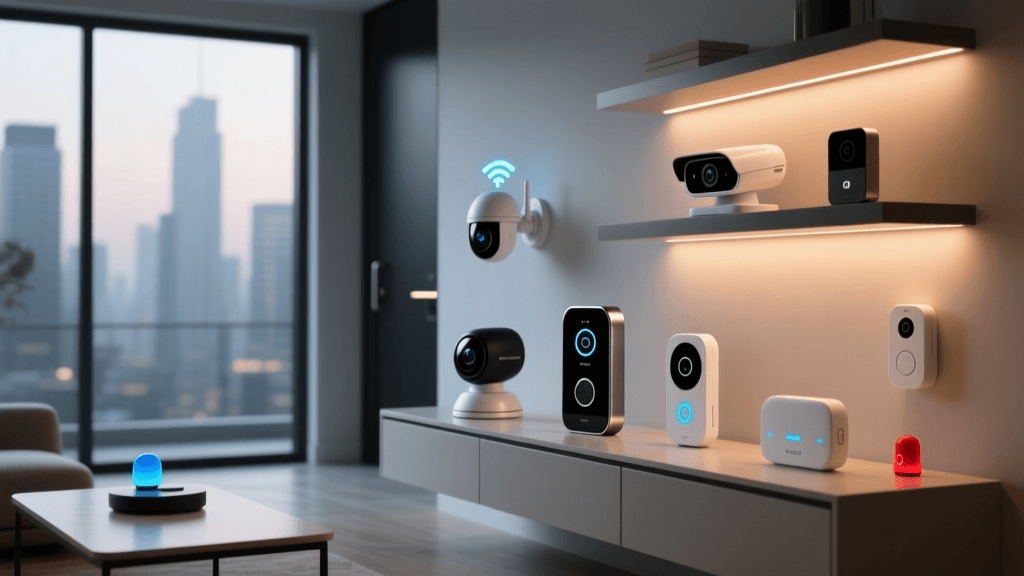
The First Line of Defense: Finding the Right Video Doorbell
The modern front door is more than just a physical barrier; it is the primary point of interaction between your home and the outside world. With the exponential rise in e-commerce deliveries and the persistent threat of porch piracy, a smart video doorbell has transitioned from a luxury upgrade to an essential home security staple. However, the market is saturated with options ranging from fifty-dollar budget models to nearly three-hundred-dollar premium sentinels. Navigating this landscape requires a clear understanding of what you actually need versus what manufacturers want to sell you.
At SmartHomeDeck, we believe that the best smart home device is the one that seamlessly integrates into your life without causing friction. Whether you are looking for a basic budget camera to see who is knocking, a privacy-focused local storage solution, or a premium AI-powered radar system that tracks delivery drivers down your driveway, there is a perfect match for your entryway. In this comprehensive guide, we rank and review the top video doorbells across the budget spectrum, specifically comparing the Wyze Video Doorbell v2, the Reolink Video Doorbell PoE, the Google Nest Doorbell (Wired), and the Ring Video Doorbell Pro 2.
Our Testing Methodology
Evaluating a video doorbell goes far beyond simply reading the resolution specs on the box. A camera boasting 2K resolution is useless if it washes out completely when the afternoon sun hits your porch. Our real-world testing methodology focuses on five critical pillars: dynamic range (HDR performance), night vision clarity, motion detection accuracy, notification latency, and ecosystem integration.
We installed each doorbell in identical testing environments featuring challenging lighting conditions, including deep shadows and direct backlighting. We measured the time delta between a physical button press and the resulting smartphone notification. Furthermore, we rigorously tested AI detection algorithms by introducing variables like stray animals, swaying tree branches, and human subjects carrying packages to see which systems trigger false positives and which accurately categorize the threat. Finally, we evaluated the long-term reliability of the Wi-Fi and wired connections, ensuring that the device remains online during adverse weather conditions.
Best Budget Pick: Wyze Video Doorbell v2
When it comes to extracting maximum value from every dollar spent, Wyze has consistently disrupted the smart home market, and the Wyze Video Doorbell v2 is no exception. Priced significantly lower than its premium competitors, this doorbell offers an impressive 2K resolution sensor and a 140-degree diagonal field of view. In our daylight testing, the image quality was remarkably sharp, easily allowing us to read text on a shipping label held at chest level.
The standout feature for budget-conscious buyers is the flexibility in storage. While Wyze offers its standard Cam Plus cloud subscription, the v2 model supports local storage via a microSD card inserted into the accompanying Wyze Chime or a compatible indoor camera base station. This is a massive win for users who despise mandatory monthly fees. The AI detection is basic but functional, capable of distinguishing between people and packages, though it occasionally struggles with fast-moving subjects at the edge of the frame.
However, the budget price point does come with compromises. The build quality, while adequate, feels more plasticky than the premium offerings. Additionally, the Wyze app is notoriously crowded with advertisements for other Wyze products, which can be frustrating when you are trying to quickly answer a live ring. Furthermore, the local storage setup requires a bit of technical patience to configure correctly, making it slightly less 'plug-and-play' than cloud-first alternatives.
Best Local Storage and Privacy Pick: Reolink Video Doorbell PoE
For the tech-savvy homeowner who prioritizes network reliability and data privacy above all else, the Reolink Video Doorbell PoE is an absolute revelation. Unlike traditional doorbells that rely on existing low-voltage doorbell wiring and congested Wi-Fi networks, this model utilizes Power over Ethernet (PoE). A single Cat5e or Cat6 cable delivers both pristine data transmission and reliable power, completely eliminating the Wi-Fi dropouts that plague wireless cameras during network congestion.
The video quality is excellent, featuring a 3MP resolution with a 180-degree diagonal viewing angle. But the true brilliance of the Reolink ecosystem lies in its local storage capabilities. It integrates seamlessly with Reolink NVRs (Network Video Recorders) and supports ONVIF and RTSP protocols. This means you can pipe the video feed directly into third-party software like BlueIris or Home Assistant, keeping your footage entirely off the cloud and away from corporate servers. The AI detection for people and vehicles runs locally on the device's edge processor, ensuring lightning-fast alerts without requiring a subscription.
The primary barrier to entry for the Reolink PoE is installation. Running an Ethernet cable through your exterior walls to the front door is a significant DIY project or requires hiring a professional electrician. It is not a simple swap-and-play replacement for an old mechanical doorbell. However, for those willing to put in the upfront installation effort, the long-term payoff in reliability, privacy, and zero monthly fees is unmatched in the industry.
Best Mid-Range AI Pick: Google Nest Doorbell (Wired)
Sitting comfortably in the mid-range tier, the Google Nest Doorbell (Wired) strikes an exceptional balance between intelligent software, elegant hardware design, and reasonable pricing. While its resolution on paper (960x1280) might seem lower than the 2K competitors, Google's implementation of HDR (High Dynamic Range) is nothing short of phenomenal. In our testing, the Nest Doorbell perfectly balanced the bright glare of a sunlit driveway while maintaining crisp details in the shadowed porch area, outperforming cameras with technically higher pixel counts.
Google's software ecosystem is where this doorbell truly shines. Out of the box, without any paid subscription, the Nest Doorbell offers highly accurate AI detection for people and packages. It also includes up to three hours of free event video history. If you opt for the Nest Aware subscription, you unlock 'Familiar Faces,' a feature that learns the faces of your family members and friends, allowing the Google Assistant to announce exactly who is at the door rather than just saying 'a person is detected.'
Integration with Google Home is flawless. The doorbell can cast its live feed directly to a Nest Hub smart display or a Chromecast-enabled TV the moment someone presses the button. You can also use pre-recorded quick responses to communicate with delivery drivers without speaking. The main drawback is the reliance on Google's cloud infrastructure; local storage options are virtually non-existent, making a subscription practically mandatory if you want continuous video recording or extended history.
Best Premium Pick: Ring Video Doorbell Pro 2
If budget is of no concern and you demand the absolute cutting edge of consumer surveillance technology, the Ring Video Doorbell Pro 2 is the undisputed heavyweight champion. Ring has packed this device with an array of sensors that go far beyond standard optical cameras. The headline feature is the 1536p Head-to-Toe HD+ video, which provides a perfectly square aspect ratio. This allows you to see the entire person standing at your door, including the packages they are holding at their feet, eliminating the blind spots common in traditional widescreen doorbells.
The Pro 2 also introduces 3D Motion Detection and Bird's Eye View. By utilizing built-in radar technology alongside the camera, the device can map the movement of a subject in three-dimensional space. When motion is detected, the Ring app displays a satellite-style map of your property with an animated path showing exactly where the person walked down your driveway. This drastically reduces false positives from passing cars on the street, as the radar is tuned to focus strictly on your defined property boundaries.
However, premium features demand a premium commitment. The hardware is expensive, and to access the full suite of features—including the 3D motion tracking, continuous recording, and extended cloud storage—a Ring Home subscription is absolutely mandatory. Furthermore, the Pro 2 is notoriously power-hungry. It requires a robust 16-24VAC transformer and a compatible Pro Power Kit to function correctly; older homes with weak transformers will experience frequent reboots and offline errors.
Head-to-Head Feature Comparison
To help you visualize how these four distinct doorbells stack up against one another, we have compiled a comprehensive specification and feature table. This quick-reference guide highlights the critical differences in power requirements, storage options, and smart capabilities.
| Feature | Wyze Video Doorbell v2 | Reolink Video Doorbell PoE | Google Nest Doorbell (Wired) | Ring Video Doorbell Pro 2 |
|---|---|---|---|---|
| Resolution | 2K (2304x1728) | 3MP (2304x1728) | 960x1280 (HDR) | 1536p HD+ (Head-to-Toe) |
| Power Source | 16-24VAC Wired | PoE (802.3af) | 16-24VAC Wired | 16-24VAC Wired (High Draw) |
| Local Storage | Yes (via microSD in Chime) | Yes (NVR / ONVIF / RTSP) | No | No |
| Free AI Detection | Basic (Person/Package) | Advanced (Person/Vehicle) | Advanced (Person/Package) | Basic (Motion only) |
| Subscription Required? | Optional | No | Optional (for history) | Yes (for full features) |
Performance Metrics Visualization
Numbers on a spec sheet do not always tell the whole story. The following radar chart visualizes our real-world testing scores across five critical categories: Video Quality, AI Detection, Ecosystem Integration, Value for Money, and Installation Ease. This chart clearly illustrates the trade-offs between the budget-friendly Wyze, the enterprise-grade Reolink, the balanced Nest, and the feature-heavy Ring.
Crucial Buying Advice: What to Know Before You Buy
Before you add a video doorbell to your cart and attempt to install it, there are several critical infrastructure and ecosystem factors you must evaluate to ensure a successful deployment.
Understanding Power and Transformer Requirements
The most common point of failure for wired smart doorbells is inadequate power. Most modern video doorbells require a transformer that outputs between 16 and 24 Volts AC (VAC) with a minimum VA (Volt-Ampere) rating, typically 30VA for premium models like the Ring Pro 2. If your home was built before the 1990s, your existing doorbell transformer is likely only rated for 10-16VAC and 10VA, which is designed only to ring a simple mechanical chime. Attempting to power a high-draw smart camera on an old transformer will result in constant rebooting, poor Wi-Fi performance, and eventual hardware failure. Always check your transformer's rating in the basement or attic before purchasing, and be prepared to spend twenty dollars on a replacement transformer if necessary.
Cloud vs. Local Storage: The Privacy Debate
Your choice of storage dictates your long-term costs and your data privacy. Cloud storage (offered by Ring and Google) is incredibly convenient, allowing you to access footage from anywhere without managing hard drives. However, it locks you into a monthly subscription model that can cost upwards of fifty to a hundred dollars a year. More importantly, it means your front door footage is stored on corporate servers, subject to their privacy policies and potential data breaches.
Local storage, championed by Reolink and supported by Wyze, keeps your data physically inside your home. While it requires a larger upfront investment in an NVR or a compatible base station, it eliminates monthly fees and guarantees that your private property footage remains strictly under your control. If you are integrating your doorbell into a broader Home Assistant setup, local storage via RTSP is an absolute necessity.
Ecosystem Lock-in and Smart Home Integration
A video doorbell does not exist in a vacuum; it is part of a broader smart home ecosystem. If your home is heavily invested in Amazon Alexa, the Ring ecosystem offers unparalleled integration, allowing you to view feeds on Echo Shows and use Alexa Guard features. Conversely, if you rely on Google Assistant, the Nest Doorbell provides a vastly superior, more native experience. Mixing and matching ecosystems often leads to a fragmented experience where features like quick responses or local screen casting fail to work reliably. Choose your doorbell based on the voice assistant and smart displays you already own.
Final Verdict
Choosing the best video doorbell ultimately comes down to aligning the product's strengths with your specific household needs, technical comfort level, and budget constraints. There is no single 'perfect' doorbell, but there is a perfect doorbell for you.
If you are renting, on a strict budget, or simply want a reliable way to see who is at the door without committing to a monthly subscription, the Wyze Video Doorbell v2 is an incredible entry-level choice that punches well above its weight class. For the privacy advocate, the data hoarder, and the smart home tinkerer who wants bulletproof reliability and zero cloud reliance, the Reolink Video Doorbell PoE is the undisputed champion, provided you can handle the Ethernet installation.
For the average homeowner seeking a balance of beautiful design, exceptional HDR video quality, and smart AI features without breaking the bank, the Google Nest Doorbell (Wired) remains our top mid-range recommendation, especially for those already living within the Google Home ecosystem. Finally, for the security enthusiast who demands the absolute best in motion tracking, head-to-toe visibility, and premium radar features—and who doesn't mind paying for a subscription to access them—the Ring Video Doorbell Pro 2 stands alone at the top of the premium tier.
By carefully considering your wiring capabilities, storage preferences, and ecosystem loyalties, you can confidently select a video doorbell that will keep your home secure and your deliveries safe for years to come.