Introduction to Eco-Friendly Climate Control
As the global push toward sustainability intensifies, homeowners are increasingly looking for ways to reduce their carbon footprint without sacrificing modern comfort. Heating, ventilation, and air conditioning (HVAC) systems account for nearly half of the average home's total energy consumption. This massive energy draw not only inflates monthly utility bills but also contributes significantly to greenhouse gas emissions. Enter the eco-friendly smart thermostat: a device that bridges the gap between cutting-edge home automation and environmental stewardship.
Unlike traditional programmable thermostats that rely on rigid, often ignored schedules, modern smart thermostats utilize machine learning, geofencing, and advanced sensor arrays to optimize your HVAC usage dynamically. They learn your habits, detect when you leave the house, and adjust temperatures to ensure your system only runs when absolutely necessary. In this comprehensive buyer's guide, we explore the best energy-efficient and eco-friendly smart thermostats on the market, evaluating their sustainability features, energy-saving potential, compatibility, and overall value for the green-conscious homeowner.
Why Choose an Eco-Friendly Smart Thermostat?
The transition to a smart thermostat is one of the most impactful upgrades you can make for a greener home. According to the EPA's Energy Star program, certified smart thermostats can save homeowners an average of 8% on heating and cooling bills annually. However, the environmental benefits extend far beyond simple percentage savings on a utility statement.
1. Reduction of Peak Demand Strain
Eco-friendly smart thermostats often participate in utility demand-response programs. During peak energy hours—when power plants burn the most fossil fuels to meet grid demand—these devices can automatically adjust your home's temperature by a few degrees. This collective reduction in energy draw helps prevent grid blackouts and reduces the need for highly polluting peaker power plants.
2. HVAC System Longevity and Waste Reduction
By preventing short-cycling and unnecessary runtime, smart thermostats reduce mechanical wear and tear on your HVAC compressor and blower motors. Extending the lifespan of your HVAC system delays the need for replacement, thereby reducing the environmental impact associated with manufacturing, shipping, and disposing of heavy, refrigerant-laden machinery.
3. Precision Zoning and Sensor Technology
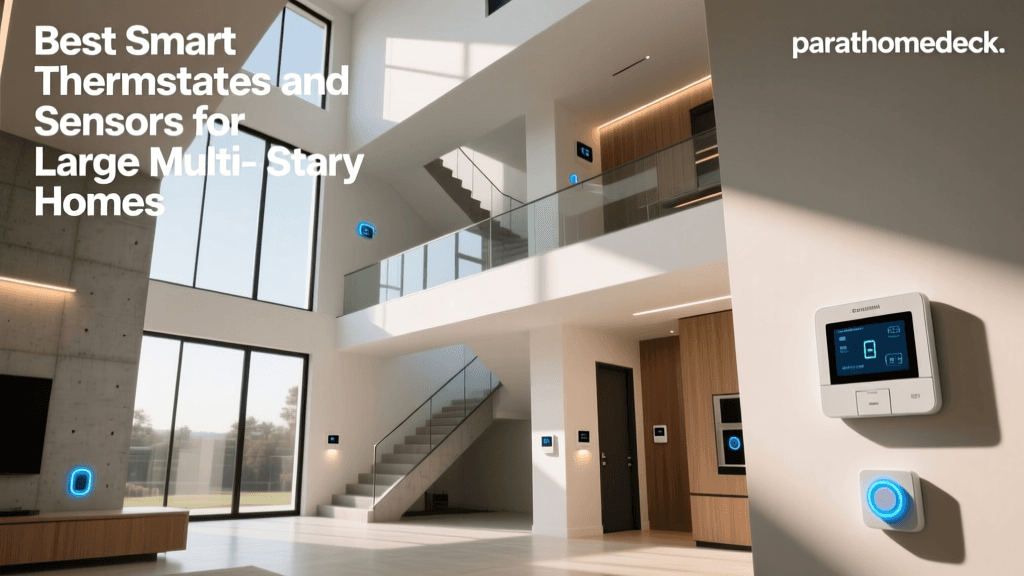
Traditional thermostats measure the temperature in a single hallway, often causing the system to overwork to compensate for poorly insulated rooms. Smart thermostats paired with wireless room sensors allow for precision zoning, ensuring you only expend energy heating or cooling the spaces you are actively occupying.
Top Picks: Best Eco-Friendly Smart Thermostats
1. Ecobee Smart Thermostat Premium: The Ultimate Eco-Innovator
The Ecobee Smart Thermostat Premium is widely regarded as the gold standard for eco-conscious smart home enthusiasts. Its standout feature is the proprietary 'eco+' software, which automatically adjusts your home's temperature based on local weather, humidity, and time-of-use electricity rates. If your utility provider offers dynamic pricing, eco+ will pre-cool or pre-heat your home during off-peak hours when renewable energy sources are more prevalent on the grid, saving you money and reducing carbon intensity.
Furthermore, Ecobee has made significant strides in sustainable manufacturing. The Premium model ships in 100% recyclable packaging, and the device itself is built with a focus on longevity and repairability. It also includes a built-in air quality monitor that tracks volatile organic compounds (VOCs) and CO2 levels, helping you balance energy efficiency with healthy indoor airflow. Priced around $250, it requires a C-wire for continuous power, ensuring it never relies on disposable batteries.
2. Google Nest Learning Thermostat: The Pioneer of Algorithmic Efficiency
The Google Nest Learning Thermostat revolutionized the industry by proving that beautiful design and environmental responsibility could coexist. The Nest's core eco-friendly feature is its Auto-Schedule capability. Rather than forcing users to program complex schedules that are inevitably overridden, the Nest learns your preferences over a week and builds an optimized, energy-efficient schedule automatically.
The iconic 'Nest Leaf' icon appears on the display when you select a temperature that saves energy, providing positive psychological reinforcement for eco-friendly habits. Additionally, the Auto-Away feature uses built-in occupancy sensors and your smartphone's location to shut down the HVAC system the moment you leave the house. Google's overarching corporate commitment to operating on 24/7 carbon-free energy by 2030 also adds a layer of corporate sustainability to your purchase. At approximately $250, it remains a top-tier choice for set-and-forget energy savings.
3. Honeywell Home T9: The Master of Multi-Room Efficiency
The Honeywell Home T9 takes a different approach to energy conservation by focusing on micro-zoning. The HVAC system in most homes wastes immense amounts of energy trying to satisfy a single thermostat located in an unrepresentative area, like a drafty hallway. The T9 comes with smart room sensors that detect both temperature and occupancy.
You can configure the T9 to prioritize only the occupied rooms in your home. If you are working in your home office, the T9 ensures that specific room is comfortable while allowing the rest of the house to drift into an eco-friendly energy-saving setback. This targeted approach prevents the HVAC system from overworking to cool empty guest rooms or sun-baked living areas. Retailing around $200, the T9 is an excellent choice for larger homes with diverse thermal profiles.
4. Amazon Smart Thermostat: The Budget-Friendly Green Pick
Sustainability should be accessible to everyone, and the Amazon Smart Thermostat proves that you do not need to spend over $200 to achieve significant energy savings. Developed in partnership with Honeywell, this $80 device is Energy Star certified and strips away the expensive touchscreens and premium materials of its competitors in favor of pure, app-based functionality.
The eco-friendly power of the Amazon Smart Thermostat lies in its deep integration with Alexa routines. You can create complex, condition-based automations—for example, telling Alexa to switch the thermostat to 'Eco Mode' if your smart lock detects that the front door has been closed and no motion has been detected for 30 minutes. While it lacks built-in occupancy sensors, its reliance on the broader smart home ecosystem makes it a highly capable, budget-friendly tool for reducing household emissions.
Comparison Table: Eco-Friendly Thermostats
| Model | Energy Star Certified | Key Eco-Feature | Smart Sensors | Approx. Price |
|---|---|---|---|---|
| Ecobee Premium | Yes | eco+ Time-of-Use Optimization | Occupancy & Temp | $250 |
| Nest Learning | Yes | Auto-Schedule & Nest Leaf | Built-in Occupancy | $250 |
| Honeywell T9 | Yes | Multi-Room Priority Zoning | Occupancy & Temp | $200 |
| Amazon Smart | Yes | Alexa Eco-Routines | None (App-based) | $80 |
Visualizing Energy Savings: Smart vs. Traditional Thermostats
To understand the true environmental impact of upgrading your climate control, it is helpful to look at the data. The U.S. Department of Energy notes that proper temperature setbacks can save up to 10% a year on heating and cooling. Smart thermostats automate and optimize these setbacks far better than human intervention. The chart below illustrates the estimated annual HVAC energy savings based on thermostat technology type.
As the data demonstrates, while programmable thermostats offer a baseline improvement, eco-learning smart thermostats that utilize geofencing and algorithmic scheduling can nearly triple the energy savings, drastically reducing a home's annual carbon output.
Key Features to Look for in a Green Thermostat
When shopping for an eco-friendly smart thermostat, not all devices are created equal. To ensure you are maximizing your environmental impact, look for the following features:
Geofencing Capabilities
Geofencing uses the GPS on your smartphone to create a virtual perimeter around your home. When the last person leaves the perimeter, the thermostat automatically triggers an 'Away' or 'Eco' mode. This eliminates the human error of forgetting to turn down the AC before leaving for work, which is a primary source of residential energy waste.
HVAC Health and Efficiency Monitoring
Premium eco-friendly thermostats track the runtime and performance of your HVAC system. If your system is taking 20% longer to reach the target temperature than it did last year, the app will alert you. This early warning system often indicates a clogged filter, a failing capacitor, or a refrigerant leak. Addressing these issues promptly restores your system's efficiency and prevents the release of harmful hydrofluorocarbon (HFC) refrigerants into the atmosphere.
Filter Change Reminders
A clogged air filter restricts airflow, forcing the blower motor to work harder and consume more electricity. Smart thermostats track exact blower runtime and send precise filter-change notifications to your phone, ensuring your system always operates at peak aerodynamic efficiency.
Utility Rebate Integration
Many local utility companies offer substantial rebates for installing Energy Star-certified smart thermostats. Some advanced apps, like Ecobee's, feature built-in rebate finders that scan your zip code and local utility provider to automatically apply available incentives, sometimes covering the entire cost of the device.
How to Maximize Your Thermostat's Eco-Friendly Potential
Purchasing an eco-friendly smart thermostat is only the first step. To truly minimize your carbon footprint, you must integrate the device into a broader home efficiency strategy. The U.S. Department of Energy emphasizes that thermostat settings must be paired with proper home weatherization to achieve maximum results.
1. Secure the C-Wire
While some smart thermostats claim to operate without a Common wire (C-wire) by 'power stealing' from the HVAC control board, this is not recommended for eco-conscious users. Power stealing can cause your HVAC system to short-cycle or prevent the smart thermostat from maintaining a constant Wi-Fi connection. A continuous C-wire ensures the device operates efficiently, maintains accurate sensor readings, and reliably executes cloud-based eco-algorithms without draining backup batteries.
2. Optimal Sensor Placement
If you invest in a multi-sensor ecosystem like the Honeywell T9 or Ecobee, placement is critical. Do not place sensors in direct sunlight, near drafty windows, or adjacent to heat-generating appliances like ovens or gaming consoles. Accurate ambient temperature readings prevent the HVAC system from overcompensating and wasting energy.
3. Implement Seasonal Setbacks
Use your smart thermostat's app to establish seasonal baselines. In the winter, aim for 68°F (20°C) while awake and lower it by 7°-10°F while asleep or away. In the summer, set the cooling to 78°F (26°C) when you are home. The algorithms will handle the micro-adjustments, but establishing these eco-friendly macro-baselines ensures the system never defaults to energy-intensive extremes.
4. Pair with Smart Blinds and Ceiling Fans
Climate control is a team effort. Integrate your smart thermostat with motorized smart blinds to automatically block out harsh afternoon solar heat gain during the summer. Additionally, wire your smart home to trigger ceiling fans when the AC kicks on; the wind-chill effect allows you to raise the thermostat setting by up to 4°F with no loss in perceived comfort, saving massive amounts of compressor energy.
Final Verdict: Which Green Thermostat is Right for You?
Transitioning to an eco-friendly smart thermostat is a high-impact, low-effort way to make your home more sustainable. If you want the absolute best in algorithmic efficiency, time-of-use optimization, and indoor air quality monitoring, the Ecobee Smart Thermostat Premium is our top overall pick for the green home. Its eco+ software is unparalleled in its ability to align your home's energy consumption with broader grid sustainability goals.
For those who prefer a hands-off, visually intuitive approach to energy savings, the Google Nest Learning Thermostat remains a formidable contender, utilizing its Auto-Schedule and Nest Leaf features to gently guide you toward greener habits. If your home suffers from uneven temperatures and you want to stop wasting energy heating empty rooms, the Honeywell Home T9 and its smart sensor network will revolutionize your zoning efficiency.
Finally, for budget-conscious renters or homeowners looking for an accessible entry point into eco-automation, the Amazon Smart Thermostat delivers certified energy savings and powerful Alexa routine integration at a fraction of the cost. No matter which device you choose, upgrading from a manual or outdated programmable thermostat is a definitive step toward a lower utility bill and a healthier planet.