The Power of Smart Home Scenes and Routines
Transitioning from manually controlling individual smart devices to orchestrating entire smart home ecosystems is where the true magic of home automation lies. Scenes and routines allow multiple devices to act in concert, triggered by specific events, times, or sensor readings. However, not all ecosystems are created equal. Amazon Alexa, Google Home, Apple HomeKit, and Samsung SmartThings each possess unique automation engines, varying levels of complexity, and distinct hardware compatibilities. In this comprehensive showcase, we break down the best, most practical automations for each major platform, complete with specific product recommendations, cost estimates, and setup logic to help you build a truly intelligent home.
Amazon Alexa: The Entertainment and Hunch Master
Amazon Alexa remains the most ubiquitous voice assistant, and its Routines engine is exceptionally robust, particularly for entertainment and proactive automation via Alexa Hunches. Alexa Hunches allow the system to take action based on learned behaviors, such as turning off the living room lights if it detects no motion and knows you are typically asleep.
Showcase Routine: The Cinematic Wind Down
This routine transforms your living room into a home theater with a single voice command or automated schedule.
- Trigger: Voice command (Alexa, movie time) or Time (Friday at 7:00 PM).
- Actions: Dim Philips Hue Play Gradient Lightstrip ($199) to 20% brightness with a deep blue color palette. Close SwitchBot Curtain ($89) via the SwitchBot Hub Mini. Turn on the Samsung QLED TV via an IR blaster or native Wi-Fi integration. Set the Sonos Beam soundbar to TV Audio mode.
- Advanced Logic: Insert a 5-second delay between the curtain closing and the TV turning on to prevent network congestion on your Wi-Fi router.
Total Estimated Cost: $350 - $450 (excluding TV and Soundbar).
Pro Tip: Utilize the Alexa app's 'Wait' feature to space out Zigbee and Wi-Fi commands. Sending 10 commands simultaneously can cause packet loss and result in lights failing to dim.
Google Home: Geofencing and Climate Intelligence
Google Home excels in context-aware automations, leveraging Google's superior location services and integration with Nest products. The Google Home app utilizes a simple 'Starter' (trigger) and 'While' (condition) logic that makes complex geofencing incredibly user-friendly.
Showcase Automation: Eco-Departure and Climate Sync
This automation focuses on energy savings and security the moment your home is empty, as detailed in the Google Nest routine documentation.
- Starter (Trigger): Geofencing (Everyone leaves home).
- While (Condition): Time is between 8:00 AM and 6:00 PM (prevents false triggers if you leave for a late-night dinner).
- Actions: Set the Nest Learning Thermostat ($249) to 'Eco' mode. Turn off all Kasa Smart Plugs ($25 for a 4-pack) connected to space heaters or coffee makers. Broadcast a message to the Nest Hub: 'Don't forget your keys and lunch' if the automation triggers before 9:00 AM.
Total Estimated Cost: $280 - $320.
Google's integration with Nest sensors means the automation can also check if any doors or windows are left open before arming your security system, sending a rich notification with a camera snapshot directly to your Android or iOS device.
Apple HomeKit: Privacy-First Security and Adaptive Lighting
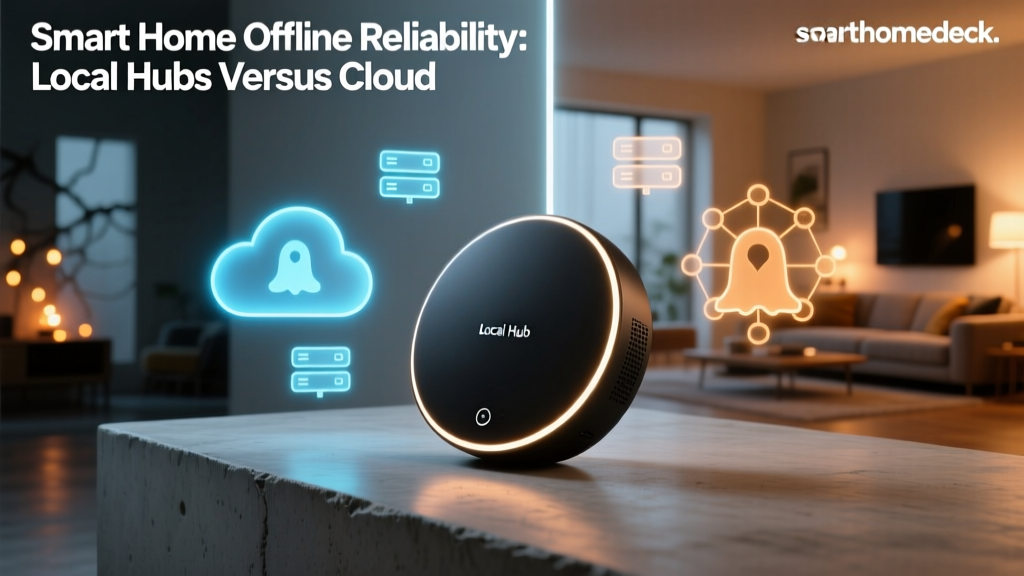
Apple HomeKit prioritizes local processing, meaning your automations execute via your Home Hub (HomePod or Apple TV) without bouncing off a cloud server. This results in sub-second execution speeds and stringent privacy. According to Apple's official Home app automation guide, HomeKit scenes can be triggered by NFC tags, user presence, and sophisticated sensor combinations.
Showcase Routine: Adaptive Night Security
This scene leverages HomeKit Adaptive Lighting and local security sensors to secure the perimeter while maintaining circadian-friendly illumination.
- Trigger: Time (11:00 PM) AND Eve Door & Window Sensor ($39) is closed.
- Actions: Lock the August Wi-Fi Smart Lock ($229). Turn on Nanoleaf Essentials Matter Bulbs ($19) in the hallway, automatically enabling Adaptive Lighting to shift the color temperature from a bright 4000K down to a warm 2200K as the night progresses. Arm the Ring Alarm base station to 'Home' mode.
Total Estimated Cost: $300 - $400.
Because HomeKit processes locally, the latency between the Eve sensor confirming the door is shut and the August lock engaging is typically under 500 milliseconds, vastly outperforming cloud-dependent ecosystems.
Samsung SmartThings: The Sensor and Appliance Hub
Samsung SmartThings is the undisputed king of granular sensor data and appliance monitoring. While other platforms focus on lights and locks, SmartThings thrives on power consumption metrics, virtual switches, and complex multi-condition logic.
Showcase Automation: Laundry Alert and Energy Dashboard
Instead of buying a proprietary 'smart' washing machine, SmartThings allows you to monitor a standard appliance's power draw using a smart plug with energy monitoring capabilities.
- Trigger: Smart Plug power draw drops below 5 watts for 3 continuous minutes (indicating the washing machine cycle has finished).
- Actions: Send a push notification to your Samsung Galaxy device. Announce via SmartThings Station ($59) in the living room: 'The laundry is ready to be moved to the dryer.' Log the total kilowatt-hours used to a SmartThings virtual energy dashboard.
Total Estimated Cost: $80 - $120 (using an Aeotec Smart Switch 7 or similar energy-monitoring plug).
SmartThings also integrates deeply with Samsung appliances, allowing you to create automations that preheat your Samsung Smart Oven when your phone crosses a 5-mile geofence radius on your way home from the grocery store.
Ecosystem Automation Comparison
To help you decide which platform aligns with your automation goals, review the comparison table below detailing complexity, strengths, and average starter costs.
| Ecosystem | Best Automation Type | Complexity Level | Execution Speed | Avg Starter Cost |
|---|---|---|---|---|
| Amazon Alexa | Entertainment & Voice Hunches | Low to Medium | Cloud-dependent (1-2s) | $150 - $250 |
| Google Home | Geofencing & Climate Control | Low | Cloud-dependent (1-2s) | $250 - $350 |
| Apple HomeKit | Security & Adaptive Lighting | Medium | Local Hub (under 500ms) | $300 - $450 |
| SmartThings | Appliance Monitoring & Sensors | High | Local/Edge (under 800ms) | $100 - $200 |
Trigger Capabilities Visualization
The depth of an automation engine is defined by the variety of triggers it supports. While all platforms support basic time and location triggers, platforms like SmartThings and Alexa offer significantly more advanced API and sensor-state variations. The chart below visualizes the supported trigger variations across the major ecosystems.
The Future: Matter and Cross-Platform Routines
Historically, the biggest hurdle in smart home automation was ecosystem lock-in. If you bought a HomeKit-only lock, you couldn't trigger it via an Alexa routine. The introduction of the Matter standard, operating over Thread and Wi-Fi networks, is dismantling these walls. Matter allows a single device to be paired to multiple ecosystems simultaneously. This means you can use a Thread-enabled Eve Motion Sensor to trigger an Alexa Routine, while simultaneously using that exact same sensor to trigger an Apple HomeKit Secure Video camera recording.
While Matter currently focuses on device-level control (lights, locks, thermostats), the upcoming Matter 1.3 and 1.4 updates are expected to bring robotics, EV charging, and advanced energy management into the unified routine fold. For now, power users often utilize Home Assistant as a bridge, running local servers to translate Zigbee and Z-Wave sensor data into webhooks that trigger cloud routines in Alexa or Google Home.
Final Verdict: Which Ecosystem Wins?
There is no single 'best' ecosystem; the right choice depends entirely on your primary automation goals. If your focus is on entertainment and voice-driven convenience, Amazon Alexa's vast skill library and Hunches make it the superior choice. For energy management and geofencing, Google Home's Nest integration is unmatched. If privacy, speed, and security are your top priorities, Apple HomeKit's local processing and Adaptive Lighting provide a premium, frictionless experience. Finally, for the tinkerers and appliance monitors, Samsung SmartThings offers the granular sensor data and energy tracking required to build a truly data-driven smart home.
By understanding the unique strengths of each platform's routine engine, you can move beyond simple voice commands and build a home that actively anticipates your needs, saves energy, and secures your property without you ever lifting a finger.