The End of Smart Home Fragmentation: Enter Matter and Thread
For over a decade, smart home enthusiasts and casual users alike have battled the same frustrating hurdles: fragmented ecosystems, cloud-dependent latency, and the dreaded "device offline" notification when the internet drops. You bought a smart lock that only works with one app, a lighting system that requires a proprietary hub, and a thermostat that refuses to talk to your motion sensors. The smart home dream was, for a long time, a tangled web of incompatibility.
Enter the Connectivity Standards Alliance (CSA) with a unified vision: Matter. But Matter is only half the story. To truly unlock the potential of a low-latency, local-first smart home, Matter relies heavily on its preferred networking layer for small devices: Thread. Together, Matter and Thread are fundamentally rewriting the rules of home automation, shifting the paradigm from cloud-reliant gimmicks to robust, local, and interoperable infrastructure.
In this comprehensive guide, we will demystify the Matter and Thread ecosystem, explore the essential hardware you need to build a Thread mesh network, review the best compatible devices on the market, and provide actionable advice on setting up a privacy-focused, lightning-fast smart home.
Demystifying the Stack: How Matter and Thread Work Together
To understand why this combination is revolutionary, we must separate the application layer from the network layer. A common misconception is that Matter is a wireless protocol like Wi-Fi or Bluetooth. It is not.
Matter: The Universal Language
Matter is an open-source, royalty-free application layer protocol. Think of it as the language your devices speak. Built on Internet Protocol (IP), Matter ensures that a smart bulb from Nanoleaf, a motion sensor from Eve, and a smart speaker from Apple can all understand each other natively. According to the CSA, Matter provides a unified, IP-based communication layer that works across Wi-Fi, Ethernet, and Thread. It guarantees that device commands are standardized, meaning a "turn on" command from Apple HomeKit looks identical to a "turn on" command from Google Home.
Thread: The Low-Power Mesh Highway
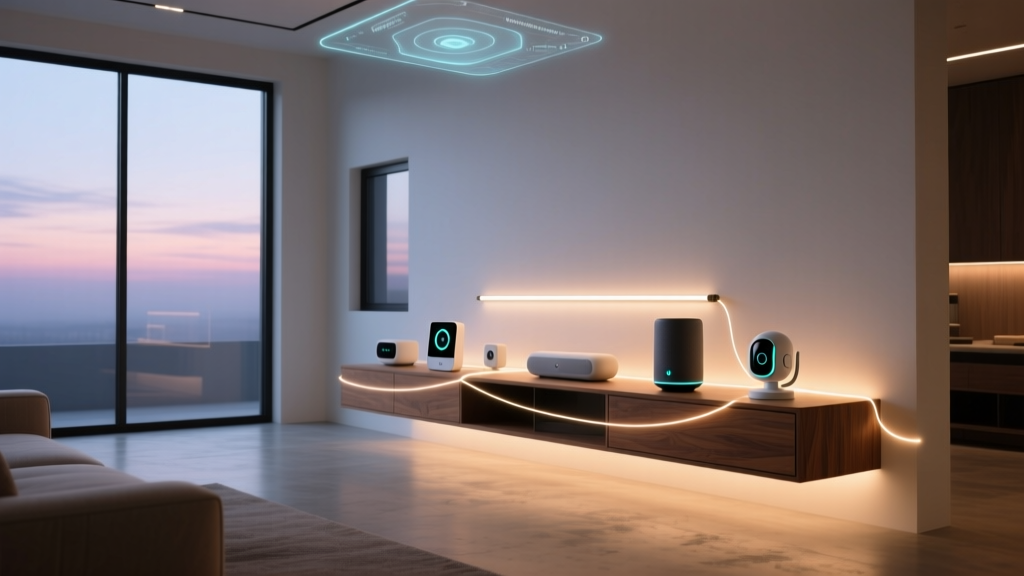
If Matter is the language, Thread is the dedicated phone line. The Thread Group defines Thread as an IP-based, low-power, wireless mesh networking protocol based on the IEEE 802.15.4 standard. Unlike Wi-Fi, which drains batteries and clogs up your router's bandwidth, Thread is designed specifically for IoT devices. It uses IPv6 natively, meaning every single Thread device gets its own IP address. Furthermore, Thread creates a self-healing mesh network. If one smart plug loses power, the network automatically reroutes the signal through neighboring devices, ensuring zero single points of failure.
The Backbone: Thread Border Routers Explained
You cannot simply plug a Thread device into your Wi-Fi router. Thread operates on a different radio frequency (2.4 GHz 802.15.4) than standard Wi-Fi. To bridge your Thread mesh network to your home's Wi-Fi or Ethernet (and thereby to the internet and your Matter controllers), you need a Thread Border Router.
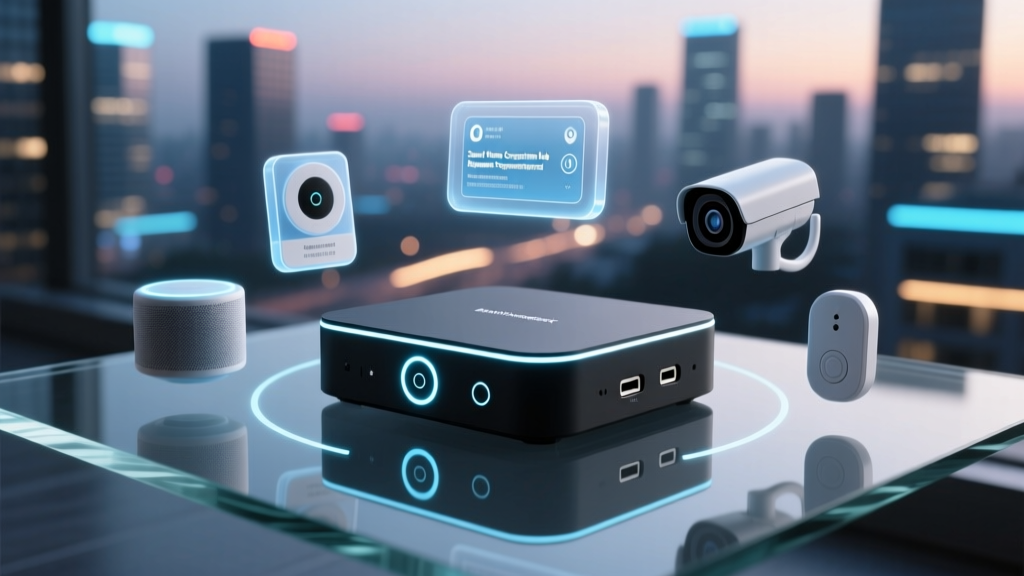
The beauty of the Thread ecosystem is that you likely already own a Border Router without realizing it. Major tech companies have quietly integrated Thread radios into their flagship smart home hubs.
Top Thread Border Routers to Anchor Your Mesh
- Apple TV 4K (3rd Generation, Wi-Fi + Ethernet): Priced around $129 to $149, this is widely considered the gold standard for Apple HomeKit users. It features a robust Thread radio and acts as a primary Matter controller, offering exceptional local processing speed.
- Google Nest Hub (2nd Gen) & Nest Wifi Pro: The Nest Hub ($99) and the newer Nest Wifi Pro routers ($199+) serve as excellent Border Routers for Google Home users, seamlessly bridging Thread devices to your Google ecosystem.
- Amazon Echo (4th Gen) & Echo Show 8 (3rd Gen): Amazon's spherical 4th Gen Echo ($99) includes a built-in Zigbee hub, a Matter controller, and a Thread Border Router, making it a versatile tri-protocol powerhouse.
- Eve Energy Strip: For those who want a dedicated, brand-agnostic Border Router that also serves a practical purpose, the Eve Energy Strip ($99) provides three smart plugs, energy monitoring, and a high-quality Thread Border Router.
Pro Tip: For large homes (over 2,000 sq ft), deploy at least two Border Routers on opposite ends of the house to ensure the Thread mesh network has strong boundary routing and optimal latency.
Best Matter over Thread Devices to Buy Today
Building a Thread network requires end devices. These are the sensors, locks, and lights that communicate via Thread and use Matter to talk to your apps. Here are the top-performing devices currently on the market, complete with pricing and use-case details.
1. Eve Motion (Thread / Matter)
- Cost: ~$39.99
- Type: PIR Motion & Light Sensor
- Why it shines: Eve was one of the first companies to adopt Thread. The Eve Motion sensor features a 120-degree field of view and adjustable sensitivity. Because it uses Thread, the latency between detecting motion and triggering a Matter-connected light is virtually imperceptible (often under 50ms locally).
2. Nanoleaf Essentials A19 Bulb & Lightstrip
- Cost: ~$29.99 (Bulb) / ~$79.99 (Lightstrip)
- Type: Smart Lighting
- Why it shines: Nanoleaf's Essentials line natively supports Thread. These bulbs offer 16 million colors, Tunable White, and support for Matter. They also feature "Circadian Lighting," automatically adjusting color temperature based on the time of day, processed locally without cloud lag.
3. Aqara Door and Window Sensor P2
- Cost: ~$29.99
- Type: Contact Sensor
- Why it shines: The P2 is Aqara's first Matter-over-Thread sensor. It boasts a massive battery life (up to 2 years on a single CR1632 coin cell) thanks to Thread's ultra-low sleep-state power consumption. It's perfect for triggering HVAC adjustments or security automations when doors are left open.
4. SwitchBot Lock Pro (with SwitchBot Hub 2)
- Cost: ~$179.99 (Bundle)
- Type: Smart Lock Retrofit
- Why it shines: While the lock itself uses Bluetooth Low Energy (BLE) to communicate with the Hub 2, the Hub 2 acts as a Matter bridge over Wi-Fi/Thread. This allows you to control your physical deadbolt via Apple Home, Google Home, or Alexa natively, complete with auto-unlock geofencing and local status reporting.
Network Performance: Thread vs. Wi-Fi vs. Zigbee
Why go through the trouble of building a Thread network instead of just buying Wi-Fi smart plugs? The answer lies in power consumption, mesh reliability, and network congestion. Below is a visual comparison of protocol performance metrics.
Protocol Comparison Data Table
| Protocol | Topology | Power Draw | IPv6 Native? | Local Control? | Best Use Case |
|---|---|---|---|---|---|
| Wi-Fi | Star (Hub dependent) | High | Yes | Varies | High-bandwidth (Cameras, Displays) |
| Zigbee 3.0 | Mesh | Low | No (Requires Gateway) | Yes (via Hub) | Legacy lighting, budget sensors |
| Z-Wave | Mesh | Low | No | Yes (via Hub) | Security, locks, motorized blinds |
| Thread | Self-Healing Mesh | Ultra-Low | Yes | Yes (Native) | Sensors, lighting, smart plugs |
| Bluetooth LE | Point-to-Point / Mesh | Low | No | Limited | Provisioning, proximity locks |
Setup, Automation, and the Power of Local Control
One of the most compelling arguments for Matter over Thread is the setup process and the resulting automation speed. Because Thread devices utilize IPv6 and Matter uses standardized commissioning, pairing a device takes seconds.
The Setup Process
- Power the Device: Insert batteries or plug in your Thread device (e.g., Eve Motion).
- Scan the QR Code: Open your preferred smart home app (Apple Home, Google Home, or Samsung SmartThings) and scan the Matter QR code on the device or its packaging.
- Thread Commissioning: If your phone is on the same Wi-Fi network as your Thread Border Router, the app will securely pass the network credentials to the device via Bluetooth LE. The device then joins the Thread mesh instantly.
- Assign and Automate: Name the device, assign it to a room, and begin creating automations.
Local Automations: Zero Cloud Lag
In a traditional cloud-based setup, a motion sensor detecting movement sends a signal to the manufacturer's server, which processes the rule, and sends a command back down to your smart bulb. This round-trip can take 500ms to 2 seconds—and fails entirely if your ISP is down.
With Matter and Thread, automations are processed locally on your Border Router or smart speaker. When the Thread motion sensor detects you walking into the kitchen, it sends an IPv6 packet directly through the local mesh to the Apple TV or Nest Hub, which instantly fires a local command to the Thread smart bulb. The result is instantaneous illumination that feels like a traditional wired switch. Furthermore, your automations will continue to function flawlessly during an internet outage.
Privacy, Security, and the Future of the Ecosystem
Security is not an afterthought in the Matter and Thread ecosystem; it is foundational. Both protocols were designed in an era where IoT vulnerabilities are a major consumer concern.
Thread's Network Security
Thread networks are secured using AES-128 encryption at the network layer. Every packet sent across the mesh is encrypted, and the network keys are securely distributed during the commissioning process. Furthermore, Thread does not broadcast its network name (PAN ID) publicly, making it highly resistant to casual scanning or targeted denial-of-service attacks.
Matter's Blockchain-Based Attestation
Matter introduces a rigorous security standard called Device Attestation. Every certified Matter device contains a secure cryptographic element (a hardware chip) that holds a unique certificate. When you pair a device, the controller checks this certificate against a distributed, blockchain-like ledger managed by the CSA. This guarantees that the device is genuine, has not been tampered with, and is running certified, secure firmware. It effectively eliminates the risk of cheap, malicious clone devices infiltrating your home network.
Conclusion: Is It Time to Switch to Thread?
The transition to Matter and Thread is not just a minor software update; it is a fundamental hardware shift in how smart homes operate. While Wi-Fi will always have a place for high-bandwidth devices like security cameras and smart displays, Thread is the undisputed king of low-power, high-reliability sensors and lighting.
If you are starting a new smart home installation, or looking to upgrade a laggy, cloud-dependent setup, investing in a Thread Border Router and Matter-compatible end devices is the smartest move you can make. The upfront cost of devices like the Eve Motion sensor or Nanoleaf bulbs is slightly higher than generic Wi-Fi alternatives, but the payoff in network stability, local privacy, and instantaneous automation is immeasurable. The fragmented smart home is dead; the unified, local-first home is here.