The Quest for the Most Open Smart Home API
When building custom smart home integrations, the 'smart' in smart home often hits a frustrating wall: proprietary APIs, restrictive rate limits, and cloud-only architectures. For developers, tinkerers, and advanced integrators, the true value of a smart home ecosystem lies in its Application Programming Interface (API). But which platform actually gives you the keys to the kingdom? Whether you are trying to build a custom dashboard, integrate niche hardware, or write complex automation scripts that bypass cloud latency, the openness of the underlying API is your most critical constraint.
Openness in a developer API is not just about having a public endpoint. It encompasses local network execution (bypassing the cloud), comprehensive documentation, support for push notifications via WebSockets or MQTT versus inefficient polling, and the freedom to use standard programming languages without jumping through proprietary certification hoops. In this deep dive, we evaluate the developer APIs of the major smart home ecosystems to determine which platform is truly the most open for custom development.
Home Assistant: The Undisputed Champion of Openness
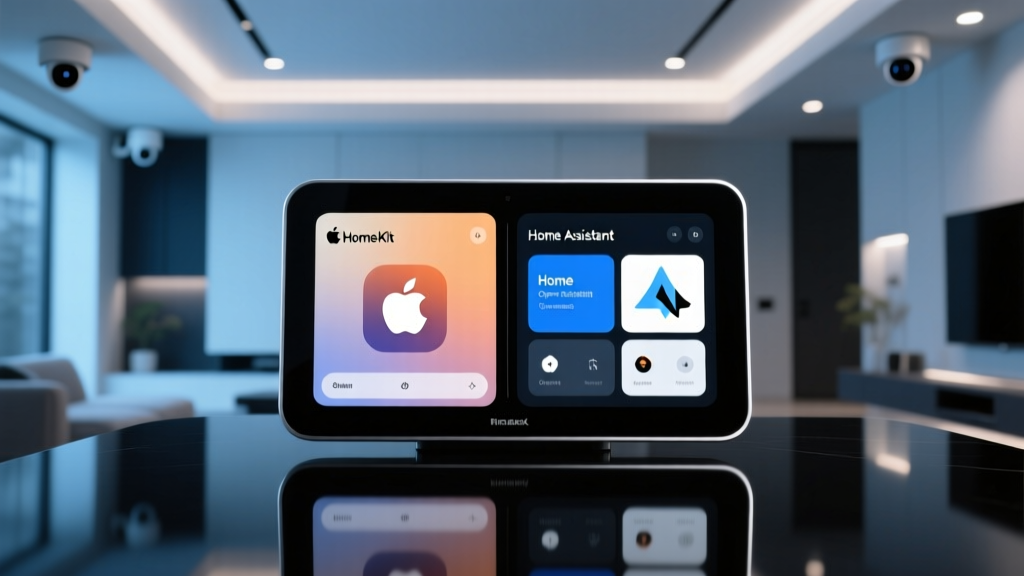
If you ask any smart home developer which ecosystem offers the most unrestricted API access, the answer is almost universally Home Assistant. Unlike commercial platforms that treat developers as third-party add-ons, Home Assistant is an open-source project built by developers for developers. The entire system is exposed via a robust, local-first API architecture.
Home Assistant provides two primary API interfaces: a standard RESTful API and a high-performance WebSocket API. The REST API is perfect for simple state checking and triggering services from external scripts or hardware like ESP32 microcontrollers. However, the WebSocket API is where the true power lies. It allows for real-time, bidirectional communication, meaning your custom applications can receive instant push notifications when a sensor state changes, completely eliminating the need for resource-heavy polling.
According to the Home Assistant Developer Portal, the platform natively supports Python, allowing developers to write custom integrations, components, and automations using the exact same language that powers the core system. Furthermore, because Home Assistant runs locally on your own hardware (like a Raspberry Pi or an Intel NUC), your API calls never traverse the public internet. This guarantees sub-millisecond latency and ensures that your automations survive internet outages.
Developer Takeaway: Home Assistant offers zero rate limits on local API calls, full local execution, and an entirely open-source codebase. It is the gold standard for smart home API openness.
Samsung SmartThings: Bridging Cloud and Edge
Samsung SmartThings occupies a fascinating middle ground. Historically, SmartThings relied heavily on cloud-based Groovy scripts, which were notorious for latency and server-side execution delays. However, Samsung has radically overhauled its developer ecosystem with the introduction of SmartThings Edge.
SmartThings Edge allows developers to write Edge Drivers using the Lua programming language. These drivers run directly on the local SmartThings Hub (such as the Hub v3 or the newer SmartThings Station), executing automations and device integrations locally on your LAN. This was a massive win for developer openness, as it allowed for the integration of local LAN devices, Zigbee, and Z-Wave hardware without relying on Samsung's cloud servers.
For external integrations, the Samsung SmartThings Developer Documentation outlines a comprehensive Cloud API. This REST-based API uses OAuth2 for authentication and allows external web services to read device states and send commands. While the Cloud API is robust and well-documented, it is subject to rate limits and requires your external application to be hosted on a public server with a valid SSL certificate to handle webhooks.
- Local API: Supported via Edge Drivers (Lua), but not a traditional open REST endpoint for arbitrary LAN queries.
- Cloud API: Excellent documentation, OAuth2 secured, supports WebSockets for event subscriptions.
- Best For: Developers who want local execution for Zigbee/Z-Wave devices but still want the commercial backing and mobile app polish of Samsung.
Amazon Alexa and Google Home: The Cloud Titans
When it comes to market share and voice control, Amazon Alexa and Google Home dominate. However, from a pure developer API perspective, they are heavily gated, cloud-centric walled gardens. Both platforms are designed primarily to allow device manufacturers to integrate their hardware into the Alexa or Google ecosystem, rather than allowing end-users to pull data out for custom local processing.
Amazon Alexa Smart Home Skill API
The Alexa API relies on the Alexa Skills Kit (ASK) and AWS Lambda functions. To build a custom integration, you must create a Smart Home Skill, which requires setting up AWS infrastructure, managing OAuth2 authorization flows, and formatting JSON directives that conform strictly to Amazon's schemas. There is no local API. Every command, even if you are sitting in the same room as the server, travels to Amazon's cloud, gets processed, and routes back down to your device. This introduces unavoidable latency and a hard dependency on internet connectivity.
Google Smart Device Management (SDM) API
Google's approach is similar, utilizing the Smart Device Management API for Nest and third-party devices. While Google provides excellent API documentation and integrates well with Google Cloud Platform (GCP) services like Pub/Sub for event streaming, it remains a strictly cloud-based architecture. You cannot query your local Nest Thermostat via a LAN IP address using an official API; you must authenticate via Google's servers.
For developers, these ecosystems are best viewed as 'output' destinations (e.g., exposing your custom Home Assistant entities to Alexa for voice control) rather than 'input' sources for raw data aggregation.
Apple HomeKit: The Walled Garden Evolving
Apple has historically maintained the most restrictive developer ecosystem in the smart home space. The HomeKit Accessory Protocol (HAP) was tightly controlled, requiring expensive MFi (Made for iPhone) certification and proprietary hardware chips. However, Apple has open-sourced the HomeKit ADK (Accessory Development Kit), allowing developers to build HomeKit-compatible accessories using standard microcontrollers like the ESP32 or Raspberry Pi.
While the ADK is a step toward openness, querying and controlling HomeKit devices programmatically from a custom external script remains difficult without relying on third-party bridges (like Homebridge) or shifting to the new Matter standard. Apple prioritizes user privacy and security over developer convenience, resulting in an API landscape that is highly secure but inherently closed to arbitrary data scraping or custom local dashboarding.
API Feature Comparison Matrix
To help you choose the right platform for your development stack, we have compiled a comparison matrix detailing the technical capabilities of each ecosystem's API.
| Ecosystem | Local API Access | Primary Language | Cloud Dependency | Push / WebSockets |
|---|---|---|---|---|
| Home Assistant | Full (REST & WebSocket) | Python | None (Optional) | Native WebSocket |
| SmartThings | Hub-level (Edge Drivers) | Lua (Edge) / Any (Cloud) | High (for Cloud API) | Webhooks / PubSub |
| Amazon Alexa | None | Node.js / Python (AWS) | 100% Required | AWS SNS / Directives |
| Google Home | None | Any (via REST/gRPC) | 100% Required | GCP Pub/Sub |
| Apple HomeKit | Restricted (HAP/Matter) | C / Swift (ADK) | None (Local HAP) | Event Notifications |
Visualizing Ecosystem Openness
The following chart visualizes how these ecosystems score across three critical metrics for developers: Local API Access, Documentation Quality, and Community/Open Source Support. Scores are rated out of 10 based on developer consensus and technical capability.
Practical Advice: Choosing Your Development Stack
Selecting the right ecosystem depends heavily on your project goals, budget, and programming expertise. Here is actionable advice on how to deploy your developer environment based on the API landscape.
1. The Local-First Custom Dashboard (Home Assistant)
If your goal is to build a custom web interface, aggregate data into a local database (like InfluxDB), or write complex Python scripts that react to sensor data in real-time, Home Assistant is your only viable choice.
- Hardware Cost: $60 - $150 (Raspberry Pi 4/5 or a refurbished Intel NUC).
- Setup: Install Home Assistant OS, generate a Long-Lived Access Token in the user profile, and use the WebSocket API via Python's
websocketslibrary or Node-RED for visual programming. - Use Case: Energy monitoring dashboards, custom HVAC logic based on local weather APIs, and privacy-first security camera automation.
2. The Commercial Product Integration (SmartThings Edge)
If you are a hardware developer or an advanced integrator looking to bring local LAN devices (like specialized IP cameras, custom ESP8266 sensors, or niche HVAC controllers) into a polished, consumer-friendly mobile app, SmartThings Edge is highly effective.
- Hardware Cost: $70 - $100 (SmartThings Hub v3 or Station).
- Setup: Use the SmartThings CLI to package your Lua driver and install it locally on your hub via your LAN.
- Use Case: Bridging proprietary local protocols into a unified app that family members can easily use without understanding the underlying code.
3. Voice-First Cloud Routing (Alexa / Google)
Use the Alexa or Google APIs only when you need to expose your existing local devices to voice assistants or when you are building a commercial SaaS product that needs to sync with users' existing cloud accounts (e.g., a utility company app that reads Nest Thermostat data via the SDM API). Expect to pay for cloud hosting (AWS/GCP) to handle the OAuth flows and webhook endpoints.
The Impact of Matter on Developer APIs
No discussion on smart home APIs is complete without addressing Matter. Developed by the Connectivity Standards Alliance (CSA), Matter is an open-source, IP-based connectivity protocol designed to unify the smart home.
For developers, Matter is a game-changer. It mandates local network control via standard IPv6 (using Thread or Wi-Fi). This means that as Matter adoption grows, the 'walled gardens' of Apple, Google, and Amazon are forced to expose local, standardized endpoints on your LAN. While the commercial ecosystems will still push their cloud APIs for remote access and voice processing, Matter allows developers to query device states, read sensor data, and send commands locally using the open-source Matter SDK, regardless of which company's logo is on the box.
Currently, the easiest way for developers to interact with Matter devices is still through Home Assistant, which has rapidly integrated Matter Server support, allowing you to pull Matter device data into your local REST/WebSocket pipelines seamlessly.
Conclusion
When evaluating which smart home ecosystem is the most open from a developer API perspective, Home Assistant wins by a landslide. Its commitment to local execution, unrestricted WebSocket access, and Python-centric architecture provides a level of freedom that commercial platforms simply cannot match due to their cloud-reliant business models.
However, if you require the polish of a commercial app with local execution capabilities, Samsung SmartThings Edge offers a compelling Lua-based alternative. Meanwhile, the advent of the Matter protocol promises to slowly erode the walls of Apple, Google, and Amazon, ensuring that the future of smart home development is local, standardized, and inherently more open than the proprietary silos of the past.