The Hidden Cost of Convenience: Smart Home Privacy
The modern smart home is built on a foundation of voice commands. Whether you are asking to dim the living room lights, check the weather, or lock the front door, voice assistants have become the central nervous system of our domestic lives. However, this convenience comes with a significant, often invisible cost: your personal data. As smart speakers and displays become ubiquitous, understanding how tech giants collect, store, and monetize your voice data and behavioral patterns is no longer optional—it is a critical component of home security.
In this comprehensive guide, we dissect the privacy architectures of the big three voice ecosystems: Amazon Alexa, Google Home, and Apple Siri. We will explore how wake-word detection functions, examine data retention policies, and provide actionable strategies to secure your smart home network. For the ultimate privacy advocate, we will also discuss local-first alternatives like Home Assistant.
Understanding Wake-Word Detection and Edge Processing
Before diving into specific ecosystems, it is vital to understand how smart speakers actually "listen." A common misconception is that devices like the Echo or Nest Audio are constantly streaming your conversations to the cloud. In reality, these devices utilize edge processing for wake-word detection.
The device's local neural engine continuously analyzes ambient audio for a specific acoustic signature (e.g., "Alexa" or "Hey Google"). This audio is processed locally on a dedicated low-power chip and is immediately discarded if the wake word is not detected. Only after the wake word is recognized does the device open a secure channel to the cloud, record the subsequent command, and transmit it for natural language processing (NLP). The privacy implications arise not from the passive listening, but from what happens to the data after the wake word triggers a recording.
Amazon Alexa: The E-Commerce Giant's Data Strategy
Amazon's Alexa ecosystem is the most expansive in the world, boasting tens of thousands of compatible third-party devices. However, Amazon's core business is retail, and its data strategy reflects a desire to understand consumer habits deeply.
Voice Recording Retention and Human Review
By default, Amazon stores your voice recordings indefinitely to "improve the service." Furthermore, Amazon has historically utilized human contractors to transcribe a small fraction of anonymized voice snippets to train their machine learning models. While Amazon introduced an auto-delete feature (allowing users to set deletion intervals of 3 or 18 months) and an opt-out for human review, these privacy controls are not enabled by default upon setup. Users must actively navigate the Alexa Privacy Hub to secure their data.
Amazon Sidewalk and Network Sharing
A major privacy concern unique to Amazon is Amazon Sidewalk. This is a shared network that uses a small portion of your Wi-Fi bandwidth and Bluetooth Low Energy (BLE) to keep compatible devices (like Ring cameras and Tile trackers) connected when they are out of range of your primary router. While Amazon encrypts the data passing through Sidewalk, the concept of your home network acting as a bridge for your neighbors' devices raises significant boundary and privacy questions for security-conscious users. Fortunately, Sidewalk can be disabled in the Alexa app settings.
Google Home: The Advertising Powerhouse
Google's smart home ecosystem, centered around Google Home and Nest devices, offers unparalleled integration with Google Workspace, YouTube, and Android. Yet, Google's primary revenue stream is targeted advertising, making its data handling practices a focal point for privacy advocates.
The Ad-Targeting Boundary
Google has explicitly stated that it does not use audio from your smart home devices or Nest cameras for ad targeting. However, Google does track the metadata of your interactions. If you ask your Google Nest Hub to show you a recipe, Google logs that interaction. This behavioral data contributes to your broader Google profile, which informs the ads you see on your phone, laptop, and smart displays. The line between "smart home data" and "search data" is blurred by Google's unified "Web & App Activity" setting.
Privacy Dashboard and Transparency
To its credit, Google offers one of the most transparent privacy dashboards in the industry. The Google My Activity portal allows users to see exactly what data has been collected, listen to their own voice recordings, and delete them with a single click. Google also offers auto-delete options (3, 18, or 36 months). However, the sheer volume of data Google collects across its entire ecosystem means that opting out of smart home tracking does not stop the broader profiling of your digital life.
Apple HomeKit & Siri: The Privacy-First Walled Garden
Apple has positioned privacy as a core pillar of its brand, and its HomeKit (now transitioning to the Matter standard) and Siri ecosystem reflects this philosophy. The trade-off for Apple's stringent privacy measures is a higher barrier to entry regarding hardware costs and a smaller pool of compatible third-party devices compared to Amazon or Google.
On-Device Processing and Differential Privacy
Unlike its competitors, Apple processes a significant amount of Siri requests directly on-device, utilizing the powerful A-series and S-series chips found in the HomePod and HomePod mini. When data must be sent to the cloud, Apple utilizes differential privacy, a technique that adds mathematical noise to the data so that broad patterns can be identified without linking the data back to a specific user or Apple ID.
HomeKit Secure Video
Apple's approach to smart home cameras is industry-leading. HomeKit Secure Video (HKSV) encrypts video footage end-to-end before it ever leaves your home hub (like an Apple TV or HomePod). The footage is then stored securely in your iCloud account. Even Apple engineers cannot access your camera feeds. This level of cryptographic security is unmatched by Amazon's Ring or Google's Nest, which rely on standard cloud encryption where the provider holds the decryption keys.
Data Comparison Table: Alexa vs. Google vs. Apple
The following table summarizes the core privacy and data handling differences between the three major voice assistant platforms.
| Feature | Amazon Alexa | Google Home / Nest | Apple HomeKit / Siri |
|---|---|---|---|
| Default Voice Retention | Indefinite (until manually changed) | Indefinite (until manually changed) | Not stored by default; on-device processing |
| Human Audio Review | Opt-out available in settings | Opt-out available in settings | Not applicable (no human review of Siri audio) |
| Ad Targeting from Audio | No (but uses data for retail profiling) | No (but metadata feeds broader ad profile) | No (Apple does not sell user data to advertisers) |
| Camera Video Encryption | Standard Cloud Encryption | Standard Cloud Encryption | End-to-End Encrypted (HomeKit Secure Video) |
| Ecosystem Entry Cost | Low ($25 - $50 for basic smart speakers) | Low ($25 - $50 for basic smart speakers) | High ($99+ for HomePod mini, requires Apple hub) |
Visualizing the Privacy Trade-Offs
When choosing an ecosystem, consumers are generally forced to balance privacy protections against hardware costs and device compatibility. The chart below illustrates the general consensus on privacy control scores versus the relative cost of entry for a basic smart home setup.
Privacy Score vs Ecosystem Entry Cost
The Local Alternative: Home Assistant
For users who find the data practices of Big Tech unacceptable, Home Assistant represents the gold standard in smart home privacy. Home Assistant is an open-source home automation platform that runs locally on a device like a Raspberry Pi or a dedicated Home Assistant Green server.
Zero Cloud Dependency
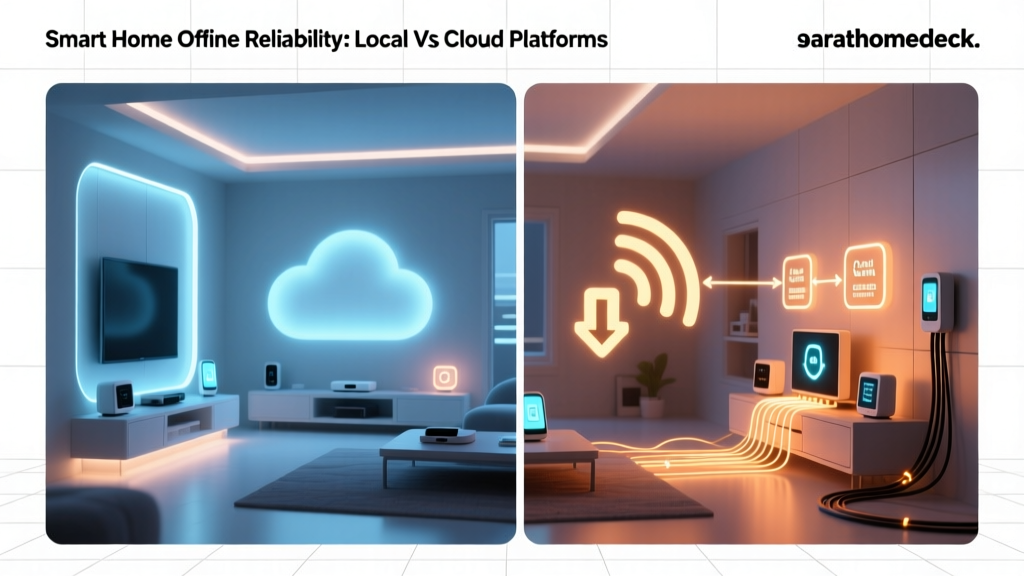
Unlike Alexa or Google Home, Home Assistant does not require an internet connection to function. Your voice commands (if using a local voice pipeline like Wyoming or Rhasspy), automations, and device states never leave your local network. There is no cloud server logging your routines, no third-party company analyzing your occupancy patterns, and no risk of a cloud outage rendering your smart switches useless. According to the Mozilla Foundation's Privacy Not Included guide, open-source and local-first platforms remain the safest bet for consumers wary of corporate surveillance.
Actionable Steps to Secure Your Voice Assistant
If you choose to remain within the Amazon, Google, or Apple ecosystems, you must take proactive steps to minimize your data footprint. The Federal Trade Commission (FTC) recommends regularly auditing your smart device settings to ensure they align with your privacy expectations.
1. Enable Auto-Delete for Voice Recordings
- Alexa: Open the Alexa App > More > Settings > Alexa Privacy > Manage Your Alexa Data > Select "Auto-delete recordings" (Choose 3 months).
- Google: Open the Google Home App > Settings > Google Assistant > Assistant Settings > My Activity > Auto-delete (Choose 3 months).
2. Opt-Out of Human Audio Review
Both Amazon and Google use human listeners to grade AI transcription accuracy. You must explicitly opt out of this.
- Alexa: Settings > Alexa Privacy > Manage How Your Data Improves Alexa > Toggle off "Help Improve Amazon Services".
- Google: Google Account > Data & Privacy > Web & App Activity > Uncheck "Include voice and audio activity".
3. Implement Network Segmentation (VLANs)
Smart home devices are notorious for having weak security protocols, making them vulnerable entry points for hackers. To protect your primary computers and smartphones, place all IoT devices and smart speakers on a separate Virtual Local Area Network (VLAN) or a dedicated "Guest Network" via your router. This ensures that if a smart speaker is compromised, the attacker cannot laterally move to access your personal NAS drives or work laptops.
4. Utilize Hardware Mute Switches
Every reputable smart speaker features a physical or electronic microphone mute button (usually indicated by a red LED ring or light). When discussing sensitive financial, medical, or legal matters in your home, physically mute your smart speakers. This severs the power to the microphone array, providing a hardware-level guarantee that no audio is being captured.
Final Verdict
The choice of a voice assistant ecosystem is ultimately a negotiation between convenience, cost, and privacy. Amazon Alexa offers the widest hardware compatibility but requires diligent management of its Sidewalk and data retention settings. Google Home provides the smartest natural language processing and search integration, but demands acceptance of Google's broader metadata profiling. Apple HomeKit delivers the most robust, cryptographically secure privacy protections, provided you are willing to pay the premium for its walled garden.
For the uncompromising privacy advocate, abandoning cloud assistants entirely in favor of a local Home Assistant setup is the only way to guarantee your home's data remains entirely your own. Regardless of your choice, treating your voice assistant as a potential data leak—and configuring it accordingly—is the hallmark of a truly smart, secure home.