The Evolution of Climate Control: Making the Right Automation Choice
Heating and cooling account for nearly half of the average home's energy consumption. When homeowners begin their journey into home automation, the thermostat is almost always the first device they consider upgrading. However, the market is split between two distinct categories: traditional programmable thermostats and fully connected smart thermostats. While both aim to regulate your home's climate, their approaches to automation, user interaction, and long-term energy savings differ drastically.
This comprehensive decision guide will break down the technical specifications, installation requirements, ecosystem compatibility, and true return on investment (ROI) of smart thermostats versus traditional programmable models. Whether you are outfitting a new build or retrofitting an older home, understanding these distinctions is critical for making an informed automation decision.
The Baseline: Traditional Programmable Thermostats
Traditional programmable thermostats have been the standard for energy-conscious homeowners since the late 1990s. These devices allow you to set a schedule for your HVAC system, adjusting the temperature based on the time of day and the day of the week.
How They Work
Most traditional models operate on a 'set it and forget it' philosophy. You manually input your desired temperatures for different blocks of time. Common configurations include:
- 7-Day Models: Allow you to create a unique schedule for every day of the week.
- 5-2 Models: Use one schedule for weekdays (Monday-Friday) and a different one for weekends.
- 5-1-1 Models: One schedule for weekdays, and separate schedules for Saturday and Sunday.
Popular models like the Honeywell Home RTH2300B or basic Emerson Blue series rely on internal battery backups or direct 24V AC power from the HVAC control board to maintain their memory and clock.
The Limitations of Traditional Automation
While programmable thermostats can save energy on paper, their real-world effectiveness is often hindered by user friction. The interfaces are notoriously clunky, relying on small LCD screens and tactile buttons that make complex scheduling frustrating. Consequently, many users abandon the programming features entirely, leaving the device in 'Hold' mode, which negates any potential energy savings. Furthermore, traditional thermostats lack environmental awareness; they will dutifully heat an empty house if you forget to adjust the schedule before leaving for an unexpected weekend trip.
The Upgrade: Smart Thermostats and Advanced Automation
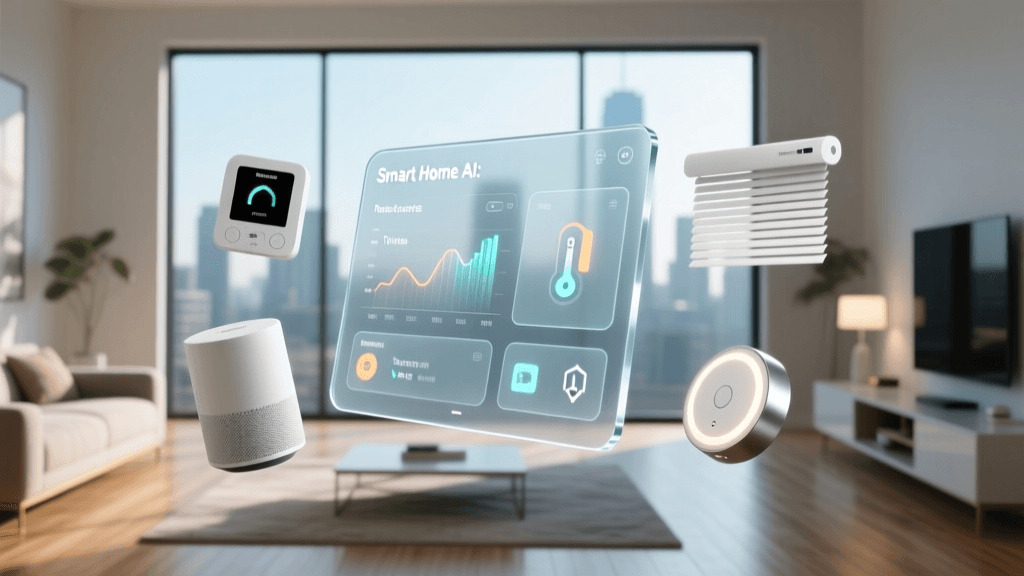
Smart thermostats represent a paradigm shift from scheduled automation to context-aware automation. Devices like the Google Nest Learning Thermostat, Ecobee SmartThermostat Premium, and Honeywell Home T9 connect to your home's Wi-Fi network, bridging the gap between your HVAC system and the broader smart home ecosystem.
Key Automation Features
Smart thermostats introduce several layers of automation that traditional models simply cannot match:
- Algorithmic Learning: Devices like the Nest observe your manual adjustments over a week and automatically generate a customized schedule based on your actual habits, eliminating the need for manual programming.
- Geofencing: By pairing with your smartphone's GPS, the thermostat can detect when the last person leaves the house and automatically set the HVAC to an eco-friendly 'Away' mode, resuming comfort settings when you are within a few miles of home.
- Room Sensors: Traditional thermostats only measure the temperature in the hallway or room where they are installed. Smart thermostats like the Ecobee and Honeywell T9 support remote Bluetooth or Zigbee room sensors, allowing the system to prioritize occupied rooms and eliminate hot/cold spots.
- Weather Integration: Smart models pull local forecast data to anticipate extreme temperature swings, pre-cooling or pre-heating your home during off-peak energy hours to save money.
Head-to-Head Feature Comparison
To visualize the differences, here is a structured comparison between a standard programmable thermostat and a premium smart thermostat.
| Feature | Traditional Programmable | Smart Thermostat (Wi-Fi) |
|---|---|---|
| Average Upfront Cost | $30 - $75 | $130 - $250 |
| Remote Access (App) | No | Yes (Anywhere via Internet) |
| Scheduling Method | Manual On-Device Entry | App, Voice, Auto-Learning |
| Occupancy Detection | No (Strictly Time-Based) | Yes (PIR Sensors, Geofencing) |
| Multi-Room Awareness | No | Yes (via Remote Sensors) |
| Voice Assistant Integration | No | Yes (Alexa, Google, Siri) |
| Energy Usage Reports | No | Yes (Monthly Email/App Reports) |
The Math: Energy Savings and ROI
The primary argument for upgrading to a smart thermostat is energy efficiency. According to the U.S. Environmental Protection Agency (EPA), ENERGY STAR certified smart thermostats can save households an average of 8% on heating and cooling bills annually. The U.S. Department of Energy (DOE) notes that you can save as much as 10% a year on heating and cooling by simply turning your thermostat back 7°-10°F for 8 hours a day from its normal setting—a task that smart thermostats automate flawlessly via geofencing and occupancy sensors.
Let's look at the long-term financial impact. Assume an average annual HVAC energy cost of $1,000. A traditional thermostat relies on the user to remember to adjust settings, often yielding minimal real-world savings. A smart thermostat, utilizing auto-away features and peak-hour optimization, realistically saves about 15% annually ($150/year).
As the chart illustrates, the higher upfront cost of a smart thermostat (e.g., $250 vs. $50) is typically offset by energy savings by the middle of the second year. Over a five-year period, the smart thermostat actually results in a net positive financial return compared to the traditional model, all while providing vastly superior comfort and convenience.
Installation, Wiring, and Compatibility
One of the most significant hurdles in the smart home vs. traditional home decision is physical compatibility. This is where the C-Wire (Common Wire) becomes a critical factor.
The C-Wire Dilemma
Traditional programmable thermostats require very little power. They can often run on AA batteries or 'power steal' from the heating/cooling control wires. Smart thermostats, however, power Wi-Fi radios, vibrant LCD/OLED touchscreens, and background processors. This requires a constant stream of 24V AC power, which is delivered via the C-Wire.
- If you have a C-Wire: Installation of a smart thermostat is usually a simple 15-minute DIY swap. You take a photo of your old wiring, label the wires, and connect them to the new baseplate.
- If you lack a C-Wire: You have a few options. Some brands, like Ecobee, include a Power Extender Kit (PEK) in the box, which wires into your HVAC control board to simulate a C-Wire. Alternatively, you can purchase a C-Wire adapter (like the Nest Power Connector) or hire an HVAC technician to run a new thermostat cable, which can add $100-$200 to your total project cost.
Before purchasing any smart thermostat, remove your current device's faceplate and check for a wire connected to the 'C' terminal. If your system is a high-voltage baseboard heater (120V/240V), standard smart thermostats will not work without specialized high-voltage smart relays, whereas some traditional line-voltage programmable thermostats will.
Ecosystems, Privacy, and the Matter Standard
When automating your home, the thermostat does not exist in a vacuum. It must communicate with your smart blinds, ceiling fans, and voice assistants.
Cloud vs. Local Control
Traditional thermostats operate entirely locally. If your internet goes down, your schedule continues uninterrupted. Early smart thermostats relied heavily on cloud servers; if the manufacturer's servers experienced an outage, remote access and sometimes even local automation routines would fail. Furthermore, privacy-conscious users were wary of companies tracking their occupancy data and daily routines.
Today, the landscape is improving thanks to the Matter smart home standard. Matter allows devices to communicate locally over your home network using Thread or Wi-Fi, reducing cloud reliance and improving response times. When shopping for a smart thermostat, look for devices that support local integrations like Apple HomeKit or those that have announced Matter compliance. This ensures that even if the internet drops, your automated routines (like turning on the AC when a smart window sensor detects the house is cool) will continue to function via your local smart home hub.
Don't Forget: Utility Rebates and Incentives
A major factor that skews the decision guide in favor of smart thermostats is the availability of utility rebates. Because smart thermostats reduce strain on the local power grid during peak summer and winter months, many local energy providers heavily subsidize them.
Before paying out of pocket, check the Database of State Incentives for Renewables & Efficiency (DSIRE) or your local utility company's website. It is incredibly common for utility companies to offer instant rebates ranging from $50 to $100, and in some cases, they will mail you a premium smart thermostat like the Google Nest or Ecobee completely free of charge in exchange for enrolling in their 'demand response' program (which allows the utility to slightly adjust your thermostat during extreme grid emergencies).
Final Verdict: Which Should You Choose?
The decision between a smart thermostat and a traditional programmable model ultimately comes down to your lifestyle, technical comfort level, and desire for integration.
Choose a Traditional Programmable Thermostat If:
- You are renting and cannot modify the HVAC wiring or access the control board to install a C-Wire adapter.
- You have a highly predictable schedule and do not mind spending 20 minutes manually programming the device twice a year (for summer and winter seasons).
- You have zero interest in smart home ecosystems, voice assistants, or mobile apps, and prefer a device with absolute zero privacy or data-tracking concerns.
- You are on a strict upfront budget and do not qualify for local utility rebates.
Choose a Smart Thermostat If:
- Your schedule is erratic, making manual programming useless. Geofencing and occupancy sensors will automatically save you money when you leave the house unexpectedly.
- You suffer from uneven heating or cooling and want to utilize remote room sensors to balance the climate in specific areas of your home.
- You want to integrate your HVAC system with other smart devices (e.g., automatically turning off the AC when smart window sensors detect that all windows are open).
- You want detailed monthly energy reports to track your carbon footprint and utility spending.
In the modern smart home landscape, the smart thermostat has transitioned from a luxury gadget to a foundational piece of home infrastructure. While the traditional programmable thermostat remains a reliable, low-tech baseline, the automation capabilities, sensor integration, and long-term ROI of smart thermostats make them the definitive choice for most homeowners looking to optimize their living space.