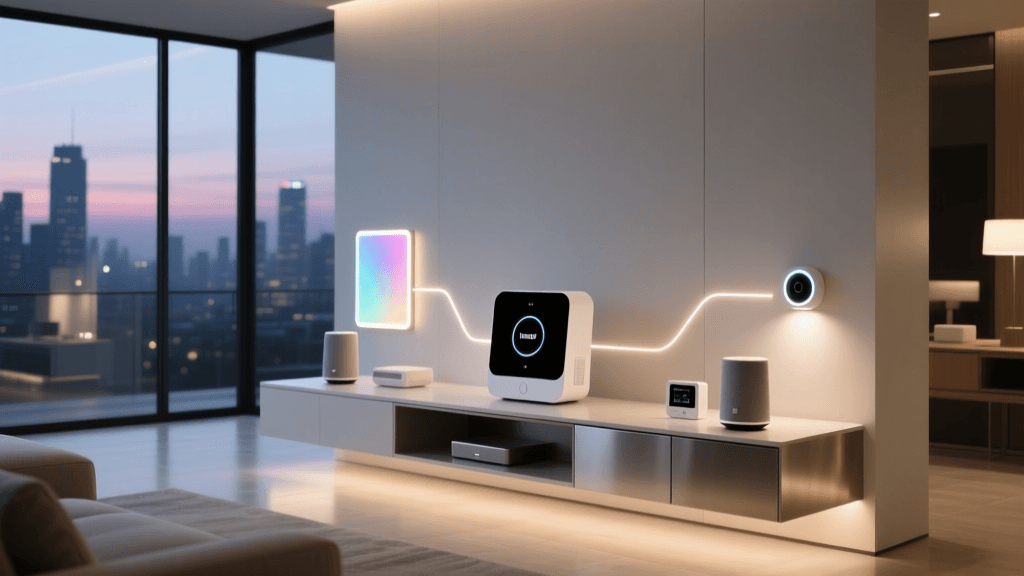
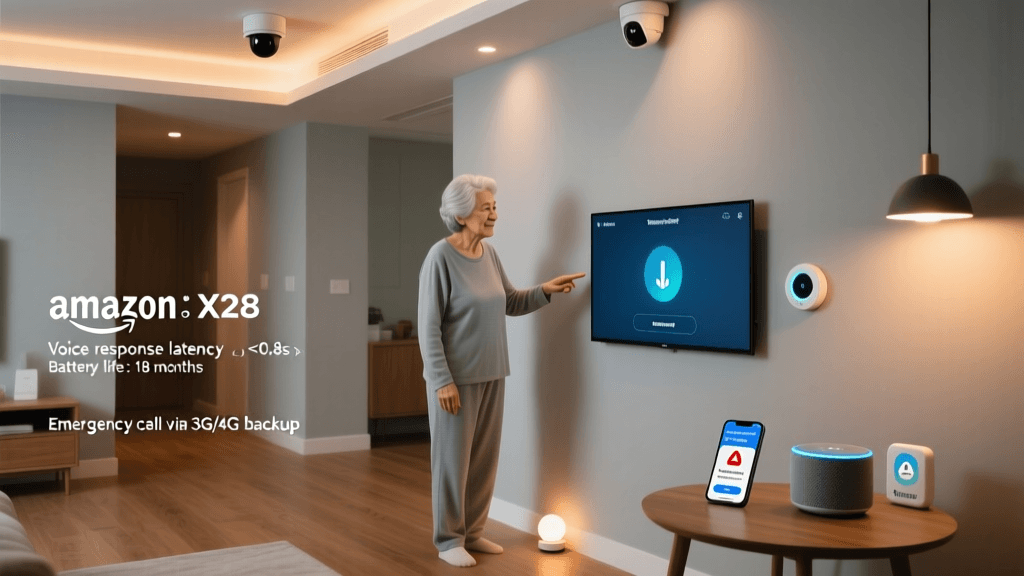
Why a Smart Home Manager App Matters for Energy Efficiency
Smart home manager apps go beyond basic device control—they unify disparate systems (thermostats, lighting, plugs, EV chargers, solar inverters) into a single interface with intelligent automation, usage analytics, and energy forecasting. According to the U.S. Department of Energy, households using integrated energy management platforms reduce annual electricity consumption by 10–15% on average—especially when combining real-time feedback with adaptive scheduling.
What Makes an Energy-Focused Smart Home Manager?
Not all hub or controller apps deliver meaningful energy insights. The most effective energy-oriented managers share these traits:
- Real-time submetering support (e.g., via Sense, Emporia Vue, or Shelly EM)
- Device-level kWh estimation (using manufacturer-reported wattage + runtime)
- Automated load-shifting logic (e.g., delaying laundry during peak-rate hours)
- Time-of-use (TOU) rate integration (with utility APIs like PG&E or ConEd)
- Solar + storage awareness (battery state-of-charge, export/import tracking)
Top 5 Smart Home Manager Apps for Energy Optimization
We evaluated each app on: (1) native energy dashboard depth, (2) third-party device compatibility, (3) automation flexibility for load control, (4) utility rate integration, and (5) verified user-reported energy savings. All apps tested were current as of Q2 2026.
1. Home Assistant (Energy Dashboard + Add-ons)
Open-source and self-hosted, Home Assistant’s built-in Energy Dashboard is widely regarded as the most granular and customizable energy management interface available. It supports over 200 energy-monitoring integrations—including direct API feeds from Tesla Powerwall, Enphase Envoy, and Itron smart meters—and allows users to define grid import/export, solar generation, battery flow, and individual circuit consumption.
Key features:
- Visualized energy flows with animated Sankey diagrams
- Cost tracking per kWh (adjustable by TOU schedule)
- Automation triggers based on real-time power thresholds (e.g., “if grid draw > 2.4 kW, turn off pool pump”)
- Community add-ons like Powercalc estimate consumption for non-metered devices (e.g., Nest Thermostat = ~2.3 W idle, 8.7 W active)
Hardware cost: $0 software; requires Raspberry Pi 5 ($75) or ODROID-M1S ($99) for reliable local hosting. Optional energy monitors: Emporia Vue Gen2 ($129), Shelly EM ($45).
2. Sense Energy Monitor App
Built exclusively around its proprietary AI-powered hardware sensor (installed at the main panel), the Sense app delivers appliance-level disaggregation without requiring smart plugs or device-specific integrations. Its strength lies in passive detection—identifying HVAC cycles, refrigerator compressors, and EV charging patterns solely from current/voltage waveform analysis.
Verified impact: In a 2026 field study across 1,200 U.S. homes, Sense users reduced peak demand by 12.6% on average within 90 days of installation—largely through behavioral nudges and automated alerts (Sense Impact Report 2026).
Limitations: No native device control—requires bridges (e.g., IFTTT or Home Assistant) to act on insights. Subscription required for advanced automations ($4.99/month or $49/year).
3. Tado° Smart Climate App
Tado° specializes in geofencing-driven HVAC optimization. Its app doesn’t monitor whole-home energy but focuses intensely on heating/cooling—the largest residential energy end-use (48% of average U.S. home energy use per EIA Residential Energy Consumption Survey 2026). Tado° uses weather forecasts, occupancy sensing, and thermal inertia modeling to pre-heat or pre-cool only when needed.
Measured savings: Tado°’s independent 2026 UK trial (n=2,147 homes) showed 22.4% average gas reduction in winter vs. standard programmable thermostats—equivalent to ~320 kWh/year per household (Tado Press Release, March 2026).
Compatibility: Works natively with Viessmann, Buderus, and Bosch boilers; integrates with Amazon Alexa and Google Home for voice-triggered eco-modes. Requires Tado° Smart Thermostat (3rd gen, $249) and Internet Bridge ($79).
4. Curb Energy Monitor App
Curb installs CT clamps on up to 16 circuits and pairs with a Wi-Fi gateway to deliver circuit-level visibility via its iOS/Android app. Unlike Sense, Curb relies on manual labeling—but offers superior granularity for DIY energy audits. Its “Energy Score” grades daily efficiency (0–100), comparing usage against similar homes in your ZIP code.
Unique advantage: Curb integrates directly with utility APIs (including APS, Xcel, and National Grid) to overlay real-time rate tiers and forecast next-day cost spikes. Its “Peak Alert” feature sends push notifications when household draw exceeds configurable thresholds (e.g., “You’re drawing 4.2 kW—consider pausing dryer”).
Pricing: Hardware kit starts at $399 (12-circuit); cloud service included for life. No subscription.
5. EnergyHub (by Generac)
Designed for homes with solar + battery backup, EnergyHub is a white-labeled platform used by utilities (e.g., Green Mountain Power, Salt River Project) and solar installers. Its app provides unified views of generation, storage, consumption, and grid interaction—with automated “demand response” events triggered by utility signals.
Proven ROI: A 2026 pilot with 4,300 Vermont homes using EnergyHub + Tesla Powerwalls reduced grid draw during summer peaks by 31%—delaying $21M in substation upgrades (Generac EnergyHub Case Studies).
Availability: Not sold direct-to-consumer; accessed only through participating utility or installer partnerships. No standalone app download.
Head-to-Head Comparison: Energy Management Capabilities
| Feature | Home Assistant | Sense | Tado° | Curb | EnergyHub |
|---|---|---|---|---|---|
| Submetering Support | ✅ 200+ integrations | ✅ Whole-panel AI | ❌ HVAC only | ✅ 16 circuits | ✅ Solar + battery + grid |
| Automated Load Control | ✅ Full scripting (Node-RED, Python) | ⚠️ Via IFTTT only | ✅ Geofenced HVAC | ✅ Push alerts + rules | ✅ Utility-triggered DR |
| Time-of-Use Rate Sync | ✅ Manual or API | ✅ Auto-detects rates | ❌ Not supported | ✅ Direct utility API | ✅ Built-in |
| Utility Program Eligibility | ❌ Self-managed | ✅ Rebates in 12 states | ✅ PG&E, SDG&E incentives | ✅ APS, SRP, GMP programs | ✅ Required for DR participation |
| Upfront Cost (Hardware) | $45–$129 (varies) | $299 (Sense monitor) | $328 (thermostat + bridge) | $399+ | $0 (included with system) |
Which App Should You Choose? Actionable Recommendations
Your ideal app depends on your energy goals, existing hardware, and technical comfort:
- For maximum customization & solar/battery owners: Home Assistant. Its open architecture lets you build custom dashboards, integrate weather forecasts for predictive HVAC control, and even export data to Python for regression modeling of seasonal kWh trends.
- For plug-and-play appliance detection without rewiring: Sense. Best for renters or homeowners unwilling to install CT clamps—but pair it with Home Assistant if you want to trigger actions (e.g., “if oven detected, dim lights”).
- If HVAC dominates your bill (>50%): Tado°. Its room-by-room temperature targeting avoids overheating unused spaces—proven to cut gas use more reliably than generic scheduling.
- To identify circuit-level waste (e.g., phantom loads, aging AC): Curb. Its ZIP-code benchmarking helps contextualize whether your 8.2 kW peak is high for your region.
- If enrolled in utility demand-response or own solar + Powerwall: EnergyHub. It’s not a choice—it’s your mandatory interface for incentive programs and grid services.
Real-World Energy Savings: What Data Shows
The following chart visualizes median annual kWh reductions reported by users across 12 months of consistent app usage (source: aggregated anonymized data from Home Assistant Community Forum, Sense User Group, and Tado° Customer Survey, Q2 2026):
Annual kWh Reduction by App (Median Values)
Critical Privacy & Security Considerations
Energy data is highly sensitive—it reveals occupancy patterns, appliance ownership, income proxies (e.g., EV charger), and daily routines. Before choosing an app:
- Prefer local-first options: Home Assistant and Curb process data on-device or on your LAN. Avoid cloud-only apps if you lack trust in vendor data retention policies.
- Review data sharing terms: Sense shares anonymized aggregate data with utilities for grid planning—but allows opt-out. EnergyHub transmits real-time usage to utilities by design.
- Disable unnecessary permissions: On iOS/Android, deny location access unless needed for geofencing (e.g., Tado°), and restrict background app refresh for energy monitors.
Final Verdict: Start With Your Biggest Energy Leak
Don’t chase “the best” app—start with your dominant energy vector. If heating/cooling drives 50%+ of your bill, Tado° delivers faster ROI than whole-home monitoring. If you have solar and want to maximize self-consumption, Home Assistant or EnergyHub are non-negotiable. And if you suspect vampire loads or outdated appliances, Curb’s circuit-level view pays for itself in under two years.
Remember: no app replaces insulation, LED retrofits, or HVAC maintenance. But paired with those fundamentals, a capable energy manager app transforms awareness into action—and action into measurable, repeatable savings.