The Hidden Cost of Phantom Loads and Inefficiency
As electricity rates continue to climb globally, homeowners are increasingly turning to smart home technology not just for convenience, but as a critical financial tool. The modern home is a complex network of energy-consuming devices, many of which operate silently in the background, driving up utility bills without providing any tangible benefit. This phenomenon, known as 'phantom load' or 'standby power,' occurs when electronics consume electricity while turned off or in standby mode.
According to the U.S. Department of Energy, standby power accounts for 5% to 10% of residential energy use. For the average household, this translates to roughly $100 to $2,150 wasted every single year on devices that aren't actively being used. By deploying smart energy monitors and intelligent plugs, you can gain granular visibility into your home's power consumption, identify the worst offenders, and automate your home to slash utility bills by 15% or more.
Whole-Home Energy Monitors vs. Smart Plugs
When building an energy management ecosystem, you generally have two approaches: whole-home circuit monitoring and point-of-use smart plugs. A comprehensive energy reduction strategy utilizes both.
| Feature | Emporia Vue 2 | Sense Energy Monitor | Kasa Smart Plug (EP25) |
|---|---|---|---|
| Price Range | $120 - $150 | $280 - $320 | $10 - $20 (per plug) |
| Installation | Electrical Panel (CT Clamps) | Electrical Panel (CT Clamps) | Plug-and-Play (120V Outlet) |
| Granularity | Individual Circuits & Mains | Mains + AI Device Detection | Single Appliance |
| Solar Tracking | Yes (Highly Accurate) | Yes (Via Mains Net Metering) | No |
| Best For | Solar owners, circuit-level data | Users wanting AI appliance sorting | Targeting specific phantom loads |
Deep Dive: Whole-Home Energy Monitors
Whole-home energy monitors connect directly to your electrical panel using split-core Current Transformer (CT) clamps. These non-invasive clamps measure the magnetic field around your main power lines and individual circuit wires, translating that data into real-time wattage readings sent to your smartphone via Wi-Fi.
Emporia Vue 2
The Emporia Vue 2 is widely considered the best value in whole-home monitoring. Priced around $120 for the base unit, it monitors your main mains and up to eight individual circuits. With expansion modules, you can monitor up to 32 individual circuits. Its standout feature is its native solar integration. If you have solar panels, the Vue 2 accurately tracks production versus consumption, allowing you to create automations that divert excess solar energy to high-draw appliances like electric water heaters or EV chargers.
Sense Energy Monitor
Sense takes a different approach. Priced closer to $300, it only clamps onto your main power lines. Instead of measuring individual circuits, Sense uses advanced machine learning algorithms to analyze the high-frequency electrical noise on your main lines. It 'listens' for the unique electrical signatures of your appliances, eventually identifying your refrigerator, HVAC system, and toaster individually. While magical when it works, Sense can struggle to identify modern variable-speed inverter appliances or devices with switching power supplies.
Strategic Smart Plug Deployment for Maximum Savings
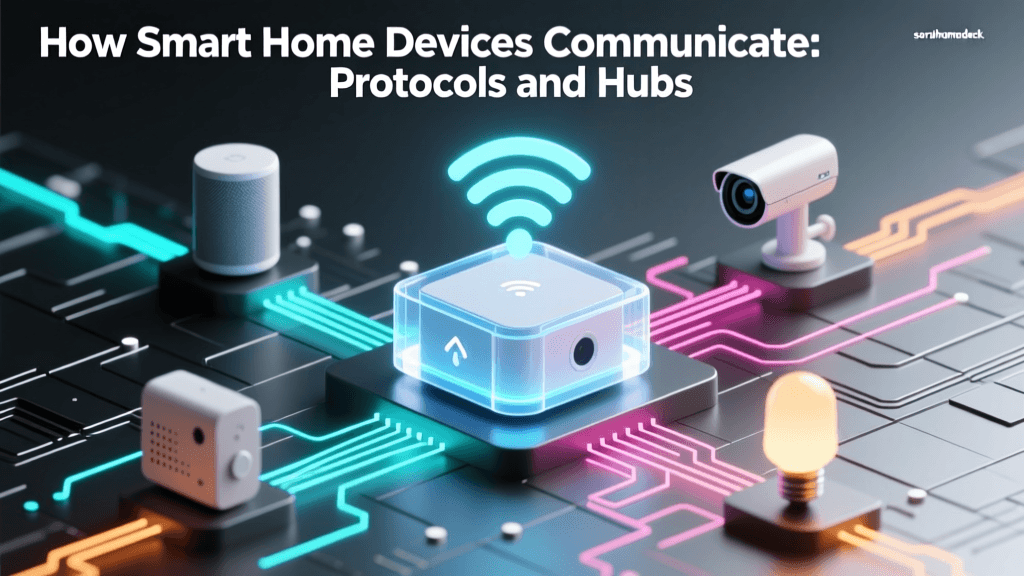
While whole-home monitors provide the macro view, smart plugs offer micro-level control. However, deploying Wi-Fi smart plugs indiscriminately can overwhelm your router. If you plan to use more than 15 smart plugs, consider Zigbee or Thread/Matter protocols via a dedicated hub like Hubitat or Home Assistant to maintain network stability.
Top Targets for Smart Plugs
- Entertainment Centers: Gaming consoles, AV receivers, and smart TVs are notorious for phantom loads. A smart power strip or plug can cut power entirely when the room is unoccupied.
- Home Offices: Desktop PCs, dual monitors, and laser printers draw significant standby power. Automate a 'shutdown' routine triggered by your smart home hub when you leave the house.
- Dehumidifiers and Window ACs: Many older, high-draw 120V appliances lack internal scheduling. Heavy-duty smart plugs (rated for 15A/1800W) allow you to schedule these units to run only during specific hours or when humidity/temperature thresholds are met via external sensors.
Visualizing Your Energy Savings
Understanding the financial impact of smart energy optimization requires looking at year-over-year data. The following chart illustrates the average monthly utility bill of a 2,500 sq. ft. home before and after implementing a comprehensive smart monitoring and automation strategy, including TOU shifting and phantom load elimination.
Mastering Time-of-Use (TOU) Rates
One of the most powerful ways to reduce your utility bill is to understand your rate plan. Many utility companies are transitioning to Time-of-Use (TOU) pricing. According to the U.S. Energy Information Administration, TOU rates charge different prices for electricity depending on the time of day, with peak rates (often 4 PM to 9 PM) costing two to three times more than off-peak rates.
Smart home technology allows you to automate your load shifting. By integrating your energy monitor with your smart home hub, you can program your home to pre-cool or pre-heat during off-peak hours. The U.S. Environmental Protection Agency notes that ENERGY STAR certified smart thermostats can automatically learn your schedule and adjust temperatures to maximize savings during peak pricing windows. Furthermore, you can delay your dishwasher, washing machine, and EV charging to initiate only after 10 PM when electricity is at its cheapest.
'Real-time feedback is the most effective behavioral driver in energy conservation. When consumers can see the exact financial cost of running their HVAC system or EV charger at that exact second, they naturally adjust their habits to optimize for savings.'
Actionable Steps to Reduce Your Bill by 15%
To achieve significant utility bill reductions, follow this structured deployment plan:
Step 1: Conduct a Smart Audit
Install a whole-home monitor like the Emporia Vue 2. Spend two weeks simply observing the data. Identify which circuits draw the most power and look for the 'baseline' load at 3 AM when the house is asleep. If your baseline is above 300-400 watts, you have a severe phantom load problem.
Step 2: Isolate and Automate Phantom Loads
Deploy smart plugs on entertainment centers and office equipment. Create a 'Goodnight' routine in your smart home app that physically cuts power to these circuits via smart plugs or smart switches, ensuring zero standby draw while you sleep.
Step 3: Optimize HVAC and Water Heating
HVAC and water heating typically account for over 50% of a home's energy use. Install a smart thermostat and, if possible, a smart water heater controller. Set your water heater to lower its temperature to 120°F during the day and only heat to 140°F an hour before your scheduled shower time.
Step 4: Shift Loads to Off-Peak or Solar Windows
If you are on a TOU plan, use smart plugs to lock out high-draw appliances during peak hours. If you have solar, use your energy monitor's API to trigger smart switches only when solar production exceeds your home's baseline consumption, effectively running heavy appliances for free.
Step 5: Maintain and Review
Energy monitoring is not a 'set it and forget it' task. Review your monthly energy reports. A sudden spike in a specific circuit's baseline usage often indicates a failing appliance (such as a refrigerator compressor running continuously) or a degraded HVAC filter, allowing you to perform maintenance before a catastrophic failure occurs.
Conclusion
Transitioning to a smart home is often marketed as a luxury upgrade for convenience and security. However, the foundational layer of smart home technology—energy monitoring and automated load management—offers a tangible, measurable return on investment. By combining whole-home circuit monitors with targeted smart plugs and intelligent automations, you can take total control of your energy footprint, eliminate wasteful phantom loads, and significantly reduce your monthly utility bills for years to come.