The Foundation of Smart Home Energy Management
When most consumers think of smart home technology, they envision voice-activated lights, automated blinds, and the sheer convenience of controlling their environment from a smartphone. However, the most compelling and financially rewarding aspect of the Internet of Things (IoT) is its capacity for intelligent energy management. As global energy prices fluctuate and environmental concerns become increasingly pressing, transforming a traditional house into an energy-aware smart home is no longer just a luxury—it is a practical necessity for modern homeowners and renters alike.
Smart home energy management revolves around the continuous monitoring, analysis, and automated optimization of your household's power consumption. By deploying a network of connected sensors, intelligent thermostats, and advanced energy monitors, you can shift from a passive consumer of electricity to an active manager of your home's energy profile. This comprehensive guide will explore the mechanics of smart energy devices, break down the data behind household power usage, and provide actionable strategies to significantly reduce your monthly utility bills without sacrificing comfort.
Understanding Your Home's Energy Profile
Before investing in smart home hardware, it is crucial to understand where your energy is actually going. According to the U.S. Energy Information Administration (EIA), space heating and cooling account for the largest share of residential energy consumption, followed closely by water heating and everyday appliances. However, a hidden culprit known as 'phantom load' or 'vampire power' also siphons a significant percentage of your monthly budget.
As the visualization above demonstrates, targeting your HVAC (Heating, Ventilation, and Air Conditioning) system and eliminating phantom loads will yield the highest return on investment. Smart home technology addresses these specific areas through automated scheduling, machine learning algorithms, and granular device-level monitoring.
Smart Thermostats: The Heavy Lifters of Energy Savings
The smart thermostat is the cornerstone of any energy-efficient home. Unlike traditional programmable thermostats—which notoriously waste energy due to confusing interfaces and rigid schedules that fail to adapt to real life—modern smart thermostats utilize advanced algorithms, geofencing, and remote sensors to optimize HVAC runtime.
How Smart Thermostats Save Energy
- Machine Learning and Adaptation: Devices like the Google Nest Learning Thermostat observe your manual adjustments over the first week of use. They learn your preferred temperatures for waking, working, and sleeping, automatically generating a schedule that minimizes HVAC runtime when the house is empty.
- Geofencing Technology: By linking to your smartphone's GPS, smart thermostats can detect when the last person leaves the house and automatically engage 'Eco' temperatures. When you cross a virtual perimeter on your way home, the system pre-conditions the house to your desired comfort level.
- Room Sensors and Occupancy Detection: Premium models, such as the Ecobee SmartThermostat Premium, utilize remote Bluetooth or Zigbee sensors placed in distant bedrooms. This ensures the HVAC system only runs when occupied rooms are in use, preventing the system from overworking to heat or cool empty spaces based on a single hallway sensor.
- Thermal Modeling: Advanced thermostats calculate the thermal mass of your specific home. They factor in outdoor weather forecasts, humidity levels, and how quickly your home retains or loses heat, ensuring the AC or furnace turns off before the target temperature is reached, coasting to the setpoint using residual thermal energy.
Cost, Compatibility, and Rebates
Top-tier smart thermostats typically range from $150 to $250. However, because of their proven efficacy in reducing grid strain, many local utility companies offer substantial rebates. The EPA's ENERGY STAR program certifies smart thermostats that meet rigorous energy-saving criteria, and purchasing a certified model often qualifies you for utility rebates ranging from $50 to $100, effectively halving the upfront cost.
Eradicating Phantom Loads with Smart Plugs
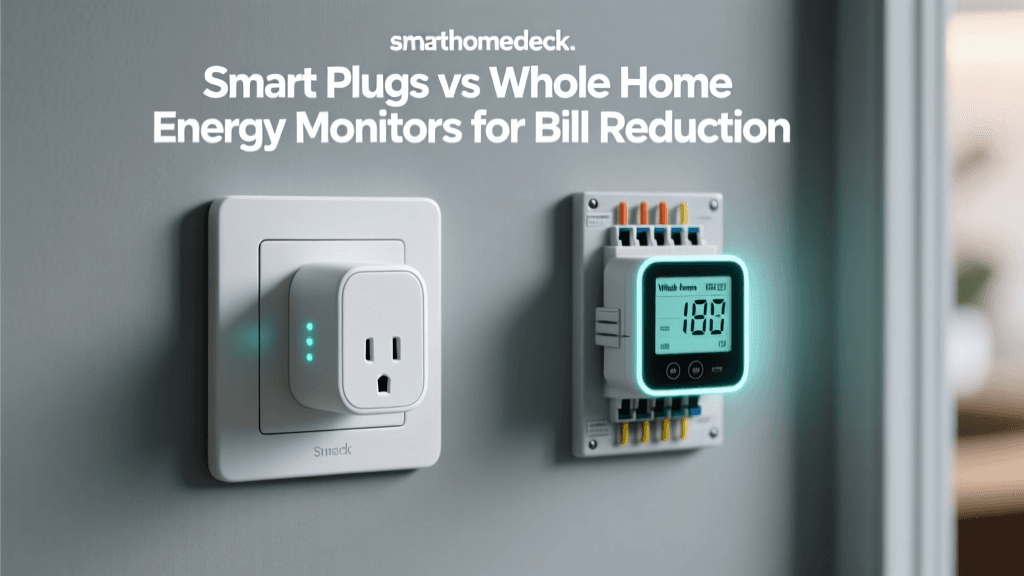
Phantom loads occur when electronics draw power while turned off or in standby mode. Televisions, gaming consoles, coffee makers, and desktop computers are notorious vampire devices. The Lawrence Berkeley National Laboratory estimates that standby power can account for 5% to 10% of residential energy use. Smart plugs equipped with energy monitoring capabilities are the most cost-effective solution to this problem.
How Energy-Monitoring Smart Plugs Work
Standard smart plugs simply act as remote-controlled relays, cutting or supplying power via Wi-Fi or Bluetooth. However, energy-monitoring smart plugs (like the Kasa EP25 or Wyze Plug) contain internal shunt resistors or current transformers that measure the exact wattage flowing through the device in real-time. This data is transmitted to your smart home hub, allowing you to see exactly how much an individual appliance costs to run per day, week, or month.
By plugging your entertainment center into a heavy-duty smart power strip or a high-amperage smart plug, you can create an automation routine: when your smart TV is turned off, the smart plug cuts power to the soundbar, gaming consoles, and streaming boxes, entirely eliminating their standby power draw. Over a year, this single automation can save dozens of dollars on devices that never truly sleep.
Whole-Home Energy Monitors: The Ultimate Visibility
While smart thermostats and plugs handle specific endpoints, whole-home energy monitors provide a macro-level view of your entire electrical panel. Devices like the Emporia Vue 2 or the Sense Energy Monitor install directly into your main breaker box.
The Technology Behind Panel-Level Monitoring
These systems use Current Transformer (CT) clamps that physically wrap around the main service lines and individual breaker circuits. The CT clamps measure the magnetic field generated by the alternating current, translating it into precise amperage and wattage readings without ever making direct electrical contact with the live wires. This data is processed by an onboard AI that can 'disaggregate' the electrical noise on the line, identifying the unique electronic signature of specific appliances (e.g., recognizing the exact moment the refrigerator compressor kicks on versus the microwave).
Whole-home monitors typically cost between $80 and $150, plus the potential cost of a licensed electrician for installation. They are invaluable for identifying aging, inefficient appliances that are drawing excessive power and for verifying the efficiency of solar panel installations or EV chargers.
Device Comparison: Building Your Energy Ecosystem
Selecting the right combination of devices depends on your budget, technical expertise, and specific energy goals. Below is a comparison of the primary smart energy management tools available on the market.
| Device Category | Top Product Examples | Estimated Cost | Primary Function | Best Suited For |
|---|---|---|---|---|
| Smart Thermostats | Nest Learning Thermostat, Ecobee Premium | $150 - $250 | HVAC optimization, geofencing, thermal modeling | Homeowners with central heating/cooling systems |
| Smart Plugs (Energy Monitoring) | Kasa EP25, Wyze Plug, Eve Energy | $15 - $30 each | Eliminating phantom loads, tracking appliance cost | Renters and targeted appliance management |
| Whole-Home Monitors | Emporia Vue 2, Sense, Span Panel | $80 - $150+ | Panel-level circuit tracking, AI appliance detection | Tech-savvy homeowners, solar/EV adopters |
| Smart Radiator Valves | Eve Thermo, tado° Smart Radiator | $60 - $90 each | Zonal heating control for individual rooms | Homes with boiler/radiator heating systems |
The Role of Protocols: Matter, Thread, and Zigbee
When building an energy management system, the communication protocol your devices use is critical. Wi-Fi is ubiquitous but can be power-hungry and congested. For battery-operated sensors and localized energy monitoring, low-power mesh networks are superior.
- Zigbee and Z-Wave: These legacy mesh protocols are highly reliable for smart home sensors and require a dedicated hub. They excel in environments with thick walls where Wi-Fi struggles.
- Thread and Matter: The new industry standard, Matter, built on the Thread networking protocol, promises unprecedented interoperability. Thread is a low-power, mesh-networking protocol that allows energy sensors to communicate locally without relying on cloud servers. This local processing is vital for energy management, ensuring your automated eco-routines trigger instantly even if your internet connection drops.
Step-by-Step Guide to Optimizing Your Smart Energy Ecosystem
To maximize your return on investment, follow this actionable setup guide:
- Conduct a Baseline Audit: Before installing new devices, review your past 12 months of utility bills to establish your baseline kWh usage and identify seasonal spikes.
- Install the Smart Thermostat: Upgrade your HVAC control first, as this yields the fastest and most significant savings. Ensure you have a 'C-wire' (common wire) for continuous power, or use a power extender kit provided by the manufacturer.
- Deploy Smart Plugs on Vampires: Identify your entertainment centers, home office setups, and kitchen appliances. Install energy-monitoring smart plugs and leave them in 'always on' mode for two weeks to gather baseline phantom load data.
- Create 'Leave Home' Automations: Using your preferred ecosystem (Apple HomeKit, Google Home, or Home Assistant), create a master automation. When the system detects no one is home, set the thermostat to Eco mode, turn off all smart plugs connected to entertainment systems, and ensure smart lighting is disabled.
- Leverage Time-of-Use (TOU) Rates: If your utility provider charges more for electricity during peak evening hours, configure your smart home to delay high-draw tasks. Set your smart plugs to only allow EV chargers, dishwashers, or laundry machines to draw power during off-peak overnight hours.
- Review Monthly Dashboards: Dedicate 15 minutes at the end of each month to review the energy dashboards on your whole-home monitor or thermostat app. Look for anomalous spikes that might indicate a failing HVAC capacitor or a refrigerator with degrading door seals.
Future Trends: AI and the Virtual Power Plant
The future of smart home energy management extends beyond the walls of your house. Utility companies are beginning to integrate smart thermostats and home batteries into Virtual Power Plants (VPPs). During periods of extreme grid stress, such as a summer heatwave, the utility can send a signal to your smart thermostat to raise the temperature by two degrees, or command your home battery to discharge power back into the grid. In exchange for participating in these automated demand-response programs, homeowners receive significant financial credits on their utility bills, effectively turning the smart home into a passive income generator while stabilizing the local energy grid.
Conclusion
Smart home energy management is a highly effective way to reduce your carbon footprint and reclaim lost dollars from your monthly budget. By strategically deploying smart thermostats to tame your HVAC system, utilizing smart plugs to eradicate phantom loads, and installing whole-home monitors for granular visibility, you can transform your residence into an optimized, energy-efficient ecosystem. As interoperability standards like Matter mature and AI-driven grid integration becomes mainstream, the financial and environmental benefits of a smart home will only continue to grow.