Why Smart Energy Management Matters Now More Than Ever
Residential energy consumption accounts for nearly 21% of total U.S. energy use, according to the U.S. Energy Information Administration (EIA). With electricity prices rising — up over 12% nationally between 2022 and 2026 — optimizing home energy use isn’t just eco-conscious; it’s financially urgent. Smart home energy management systems empower homeowners to monitor, automate, and reduce consumption in real time — without sacrificing comfort.
How Smart Energy Management Works: The Core Components
Effective smart energy management relies on three interlocking layers:
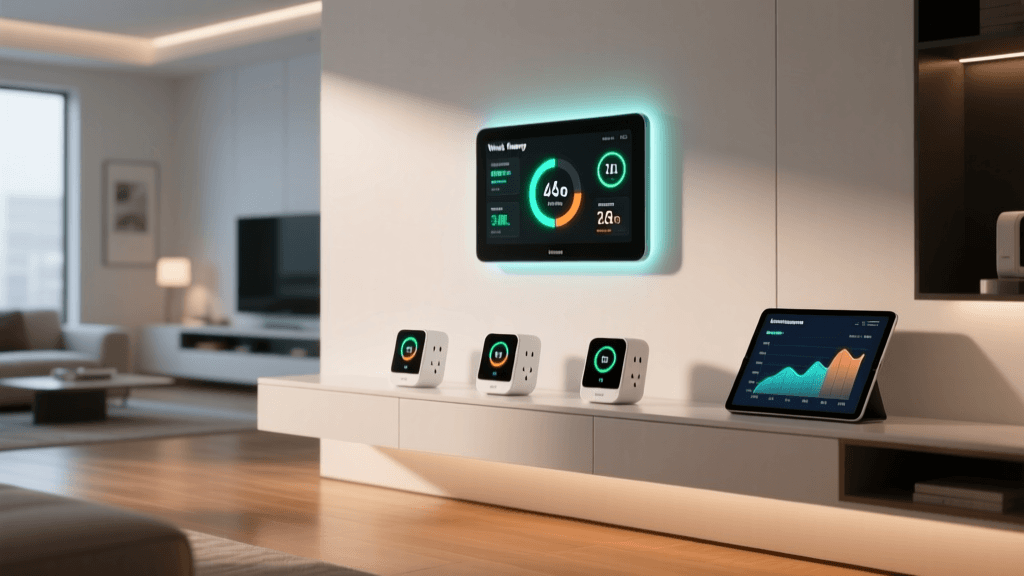
- Monitoring: Real-time tracking of whole-home or circuit-level usage via smart meters or submeters (e.g., Emporia Vue 2 or CircuitMeter Pro).
- Control: Automated or remote adjustment of devices — thermostats, lights, plugs, and appliances — using rules, schedules, or AI-driven decisions.
- Insight & Optimization: Analytics dashboards that identify waste patterns (e.g., phantom loads, HVAC runtime inefficiencies) and suggest actionable fixes.
Unlike traditional 'set-and-forget' automation, modern energy management integrates with utility programs (like demand-response events), weather forecasts, and even solar production data — enabling dynamic, context-aware decisions.
The Smart Thermostat: Your #1 Energy-Saving Device
No single device delivers more consistent energy savings than a smart thermostat — especially when installed and configured correctly. According to a 2026 field study by the National Renewable Energy Laboratory (NREL), properly used smart thermostats reduce heating energy use by 10–12% and cooling energy by 14–15% annually.
Top Performing Models (2026)
| Model | Key Energy Features | Ecosystem Compatibility | MSRP | Estimated Annual Savings* |
|---|---|---|---|---|
| Nest Learning Thermostat (5th Gen) | Auto-schedule learning, seasonal savings reports, utility integration (e.g., PG&E’s SmartRate) | Works natively with Google Home; limited Matter support (via firmware update) | $249 | $130–$180 |
| Ecobee SmartThermostat Premium | Room sensors (up to 32), occupancy-based HVAC zoning, built-in air quality monitor | Fully Matter 1.2 & Thread certified; native Apple Home, Alexa, Google | $299 | $150–$210 |
| Honeywell Home T9 Plus | Smart room sensors, geofencing, adaptive recovery, utility rebate eligibility | Alexa & Google only; no Matter or Thread | $229 | $110–$160 |
*Based on NREL’s median household gas/electric HVAC usage (7,000 kWh/year heating + 1,200 kWh/year cooling) and regional utility rates (U.S. average: $0.16/kWh). Savings assume proper installation, sensor placement, and use of auto-scheduling features for ≥8 months/year.
Actionable Setup Tips for Maximum Savings
- Install room sensors strategically: Place at least one in the most-used living area and another in a bedroom — avoid closets, near vents, or in direct sunlight.
- Enable 'Away Mode' with geofencing: Ecobee and Nest both adjust temperature automatically when all phones leave the geo-fence — but verify your phone’s location services are enabled for the app.
- Opt into utility demand-response programs: Many utilities (e.g., ConEdison, ComEd, SRP) offer bill credits for allowing brief, automated HVAC adjustments during peak grid stress. Check your provider’s website for “smart thermostat rebate” or “demand response” pages.
Smart Plugs & Power Strips: Taming Phantom Loads
Phantom (or standby) load — energy consumed by devices in 'off' mode — accounts for 5–10% of residential electricity use, per the U.S. Department of Energy. Smart plugs let you eliminate this waste with scheduling, motion-triggered shutoffs, or voice commands.
Recommended Energy-Focused Smart Plugs (2026)
- TP-Link Kasa KP125: Measures real-time wattage and kWh usage per outlet; compatible with Matter and Thread; $29.99. Ideal for entertainment centers or home offices.
- Wemo Mini Smart Plug: Offers precise energy monitoring (±2% accuracy), IFTTT integration, and works with Apple HomeKit Secure Video (for automations triggered by camera motion); $34.99.
- Belkin Wemo Insight Switch (discontinued but widely available refurbished): Still among the most accurate (<1.5% error) for historical kWh logging; requires Wemo app only — no Matter support; $24–$32 used.
Pro Tip: Use smart plugs on devices that draw >1W in standby — like game consoles (Xbox Series X: ~15W off), cable boxes (up to 25W), and desktop PCs. Avoid plugging in refrigerators, medical devices, or anything requiring constant power.
Whole-Home Energy Monitoring: See What You’re Really Using
Without visibility, optimization is guesswork. Whole-home monitors install at your main electrical panel and provide circuit-level or appliance-level insights — often down to the watt.
Comparison: Emporia Vue 2 vs. Sense Energy Monitor
| Feature | Emporia Vue 2 (Gen 2) | Sense Energy Monitor |
|---|---|---|
| Installation | CT clamps on main lines + up to 16 circuits; DIY-friendly (no electrician needed for basic setup) | CT clamps on mains only; circuit-level detection is AI-inferred (not hardware-measured) |
| Accuracy | ±1% at 120V/240V; UL-listed for revenue-grade measurement | ±2–3% typical; not UL-listed for billing-grade use |
| Appliance Detection | Manual circuit labeling required; no AI appliance ID | AI-powered identification (e.g., “Fridge,” “AC Compressor”) — improves over time |
| Price (Hardware Only) | $279 (16-channel kit) | $299 (base unit) |
If your priority is precision and granular circuit control (e.g., turning off a pool pump remotely), Emporia Vue 2 is superior. If you want intuitive, hands-off appliance identification and trend alerts (“Your dryer ran 23 minutes longer today”), Sense excels — though its AI may mislabel older or low-power devices.
Real-World Savings: What Data Shows
To illustrate the cumulative impact of layered smart energy strategies, consider a typical 2,200 sq ft U.S. home with gas furnace, central AC, and moderate electronics usage:
Annual energy cost reduction from smart home upgrades (baseline = $2,150)
This projection assumes:
- Baseline: EIA’s 2026 median residential electricity + natural gas cost ($1,570 + $580 = $2,150)
- Smart thermostat: 12% HVAC savings (~$230)
- Five smart plugs on high-phantom devices: ~$80/year (based on 24/7 standby load averaging 45W × 5 devices × $0.16/kWh)
- Whole-home monitor: Enables behavioral changes and targeted optimizations adding ~$50/year (e.g., shifting laundry to off-peak hours, replacing inefficient bulbs)
Energy-Saving Automation Rules You Can Set Today
You don’t need advanced coding skills — most platforms offer simple if-then logic. Here are battle-tested automations:
Google Home / Matter-Compatible Hubs (e.g., Aqara M3, Home Assistant)
- “If indoor humidity > 60% AND AC is off → turn on dehumidifier mode on thermostat” (reduces AC runtime while improving comfort)
- “If outdoor temp < 45°F AND no motion detected in living room for 30 min → lower thermostat by 3°F”
Apple HomeKit (with HomePod or iPad hub)
- “When sunset occurs → dim all living room lights to 30% and turn off entertainment center smart plug”
- “If kitchen motion stops for 15 minutes after 9 PM → shut off coffee maker, toaster, and microwave plugs”
Privacy & Security Considerations
Energy data is sensitive: it reveals occupancy patterns, lifestyle routines, and even appliance ownership (e.g., EV charger detection). Always:
- Review permissions: Disable cloud analytics unless necessary (e.g., Emporia offers local-only data mode; Sense does not).
- Prefer locally processed devices: Home Assistant integrations with Shelly or Tasmota firmware allow full on-device energy logging without vendor servers.
- Use strong, unique passwords and 2FA on all associated apps — especially utility portals linked to your thermostat.
Future-Proofing Your Setup
Invest in Matter 1.2–certified devices whenever possible. As of mid-2026, Matter enables:
- Seamless cross-platform control (no vendor lock-in)
- Thread-based low-power mesh networking (more reliable than Wi-Fi for sensors)
- Standardized energy reporting attributes (e.g.,
instantaneousPower,totalEnergy) — paving the way for unified dashboards
Look for the Matter logo + Thread icon on packaging. Devices like the Ecobee SmartThermostat Premium, TP-Link Tapo P125M, and Sengled Pulse Pro already support both.
Final Recommendation: Start Small, Scale Intelligently
Don’t overhaul your home in one weekend. Begin with one high-impact device:
- Month 1: Install a smart thermostat and enroll in your utility’s demand-response program.
- Month 2: Add two smart plugs to your entertainment center and desktop PC.
- Month 3: Install a whole-home monitor and spend one evening reviewing your top 5 energy-consuming circuits.
Within 90 days, most users cut baseline energy use by 8–12% — with payback periods under 2 years for thermostats and plugs. And unlike insulation or window upgrades, these tools keep delivering value as software and AI improve.
Smart energy management isn’t about austerity — it’s about intentionality. By making energy use visible, controllable, and responsive, you transform your home from a passive consumer into an active participant in a cleaner, more resilient grid.