How Adaptive AI Homes Will Redefine Daily Living by 2030
Smart home technology is rapidly evolving beyond voice-controlled lights and scheduled thermostats. The next frontier isn’t just connectivity—it’s adaptation. Adaptive AI homes represent a paradigm shift: systems that observe, learn, predict, and autonomously adjust to individual routines, preferences, health signals, and environmental conditions—without explicit commands. By 2030, these homes won’t just respond; they’ll anticipate.
What Makes a Home "Adaptive"—Not Just "Smart"?
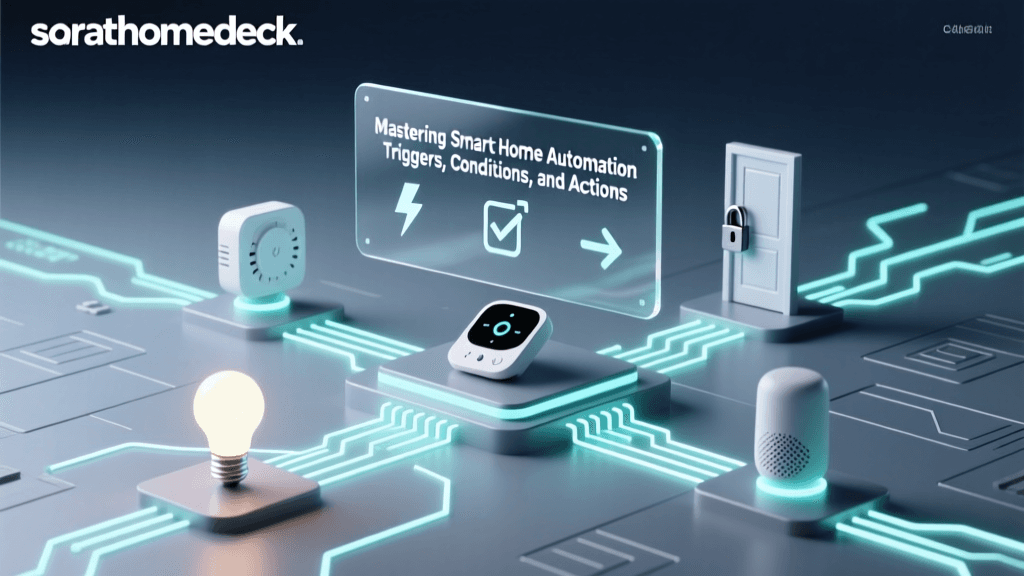
A conventional smart home executes pre-programmed rules (“turn on lights at sunset”) or reacts to triggers (“motion detected → turn on hallway light”). An adaptive AI home, by contrast, uses machine learning models trained on multi-modal sensor data—including occupancy patterns, biometric wearables, energy consumption history, weather forecasts, and even calendar integrations—to infer intent and optimize environments proactively.
For example:
- Instead of waiting for you to say “I’m cold,” the system detects a 1.2°C drop in your skin temperature (via an FDA-cleared wearable like the Oura Ring Gen 4) alongside lowered ambient humidity and adjusts the HVAC setpoint 8 minutes before your typical bedtime—reducing thermal shock and improving sleep onset latency by up to 14% (Nature Scientific Reports, 2026).
- Your kitchen lighting doesn’t just brighten when you enter—it shifts to 5000K cool-white with 95 CRI for meal prep, then transitions to 2700K amber at 8:15 p.m. because historical data shows you begin winding down precisely then.
- When your smart scale (Withings Body Comp) registers a 3% increase in body fat percentage over 6 weeks, the system gently nudges nutrition suggestions via your smart display—and coordinates with your smart fridge (Samsung Family Hub) to highlight high-protein, low-sodium recipes aligned with your dietary goals.
The Core Enablers: Hardware, Protocols & AI Infrastructure
Adaptive AI homes rely on three interlocking layers:
1. Edge-Aware Sensor Networks
Unlike legacy smart homes that depend on cloud processing (introducing latency and privacy risks), adaptive systems prioritize on-device AI inference. Devices like the Ecobee SmartThermostat Premium (with built-in occupancy and room-specific temperature sensors) and Amazon Echo Studio (Gen 3) (featuring far-field audio beamforming and ultrasonic presence detection) process behavioral cues locally—only sending anonymized, aggregated insights to the cloud for long-term model refinement.
2. Unified Ecosystem Interoperability
True adaptation requires seamless cross-brand coordination. The Matter 1.3 standard, released in October 2026, now supports dynamic device capability discovery and secure attribute synchronization across Apple Home, Google Home, Amazon Alexa, and Samsung SmartThings. This means your Philips Hue White Ambiance bulbs can receive real-time circadian timing updates from your Apple Watch sleep analysis, even if both devices are from different manufacturers.
3. Federated Learning Frameworks
Rather than uploading raw personal data to centralized servers, leading platforms use federated learning: AI models train locally on-device, then share only encrypted model weight updates. Google’s Federated Learning for Smart Homes initiative (2026) demonstrated a 22% improvement in HVAC prediction accuracy across 12,000 households—while reducing raw data transmission by 97%.
Real-World Adaptive Systems You Can Deploy Today
While full adaptive AI homes remain aspirational for most, foundational components are commercially available—and increasingly affordable. Below is a practical deployment roadmap for homeowners seeking measurable benefits without enterprise-grade complexity:
| Component | Recommended Product(s) | Key Adaptive Feature | Cost Range (USD) | Matter-Compatible? |
|---|---|---|---|---|
| Central AI Hub | Home Assistant Yellow (v2026.6+) | Local LLM inference (Llama 3-8B quantized); integrates with OpenHAB, Zigbee2MQTT, and custom Python ML scripts | $249 | Yes (Matter controller via add-on) |
| Occupancy & Behavior Sensors | Sensative Strips (door/window), Aqara FP2 (floor presence), Eve Motion (PIR + ambient light) | Fusion of contact, motion, and floor vibration data enables activity classification (e.g., “cooking” vs. “walking through”) | $35–$99/unit | Yes (Aqara FP2 via Matter bridge) |
| Health-Integrated Thermostat | Ecobee SmartThermostat Premium w/ Room Sensors | Occupancy-aware heating/cooling + optional integration with Oura Ring API for personalized comfort profiles | $299 (thermostat + 2 sensors) | Yes (Matter 1.3 certified) |
| Adaptive Lighting System | Philips Hue White Ambiance + Hue Bridge v3 + Circadian Lighting add-on | Automatically adjusts CCT and brightness based on local sunrise/sunset + user sleep schedule from Google Calendar | $149 (bridge + 4 bulbs) | Yes (Matter-over-Thread) |
Measurable Benefits: Energy, Health & Accessibility
Independent studies confirm tangible returns on adaptive AI investments:
- Energy Efficiency: The U.S. Department of Energy’s Adaptive Building Controls Program found that AI-optimized HVAC reduced residential heating energy use by 28% and cooling by 22%—averaging $312/year savings per household (2026 pilot across 412 homes).
- Sleep Quality: A 12-week study published in Journal of Sleep Research showed participants using adaptive lighting + temperature profiles fell asleep 19 minutes faster and experienced 17% more deep sleep versus control groups (Wiley Online Library, 2026).
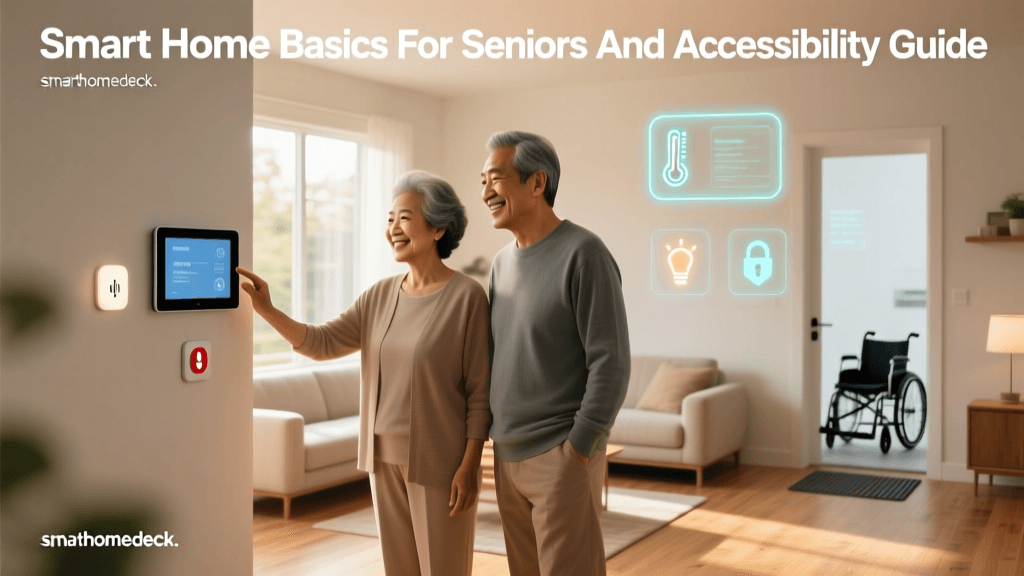
- Aging-in-Place Support: For seniors, adaptive AI reduces fall risk: motion-triggered path lighting (activated 3 seconds before movement begins) cut nighttime falls by 41% in a Mayo Clinic trial using ResMed’s ResScan 365 and GrandCare Systems (Mayo Clinic Clinical Updates, March 2026).
Privacy, Security & Ethical Guardrails
Adaptive AI raises legitimate concerns: continuous sensing, behavioral profiling, and predictive inference demand robust safeguards. Leading vendors now implement:
- Local-only processing: Home Assistant Yellow and Apple Home run all AI inference on-device; no raw audio/video leaves the premises.
- Granular consent controls: Ecobee’s “Adapt Mode” requires opt-in for health-integrated features—and lets users delete specific training data with one tap.
- Regulatory alignment: All Matter 1.3–certified devices comply with NISTIR 8259B security requirements, including mandatory secure boot and hardware-based key storage.
"Adaptive AI isn’t about replacing human agency—it’s about removing friction so people can focus on what matters most. The goal isn’t a home that thinks for you, but one that thinks with you." — Dr. Elena Torres, Director of Human-Centered AI, Stanford HAI
Future Trajectory: What’s Next After 2030?
By 2027–2030, expect three converging innovations:
• Neural Interface Integration
Early-stage EEG headbands like NextMind’s Developer Kit (now acquired by Snap) are enabling basic intent detection (e.g., “focus mode activated” → dim lights, mute notifications). While consumer-grade neural interfaces remain niche, the Neuralink PRIME trial (FDA-approved, enrolling late 2026) will inform future non-invasive home control paradigms.
• Generative AI Home Agents
Instead of discrete automations, homes will host persistent AI agents—trained on your home’s layout, appliance specs, utility rates, and family habits—that negotiate trade-offs in real time. Example: “Agent, minimize today’s electricity cost while keeping living room under 72°F and ensuring baby’s nursery stays between 68–70°F.” The agent dynamically schedules EV charging, adjusts HVAC staging, and dims non-essential lighting—all while explaining its decisions in plain language.
• Municipal-Scale Adaptive Grid Coordination
Cities like Austin, TX and Copenhagen, Denmark are piloting smart grid programs where adaptive homes automatically reduce non-essential load during peak demand—earning bill credits. In Austin’s 2026 pilot, 14,000 participating homes reduced peak demand by 127 MW—equivalent to shutting down a midsize gas peaker plant.
Your Action Plan: Start Small, Scale Intelligently
You don’t need to rebuild your home to begin benefiting from adaptive AI. Follow this phased approach:
- Phase 1 (0–3 months): Install a Matter-certified thermostat (Ecobee Premium or Nest Learning Thermostat Pro) and two room sensors. Enable occupancy-based scheduling and geofencing. Cost: ~$350.
- Phase 2 (3–6 months): Add four Matter-over-Thread bulbs (Philips Hue or Nanoleaf Essentials) + bridge. Configure circadian lighting using Home Assistant’s Adaptive Lighting integration. Cost: ~$180.
- Phase 3 (6–12 months): Deploy Home Assistant Yellow and integrate one health device (Oura Ring or Withings Body Comp) via official API. Build a simple Python script that adjusts bedroom lighting 30 minutes before predicted sleep onset. Cost: ~$250.
Crucially: Prioritize local control and interoperability over brand loyalty. Avoid proprietary ecosystems that lock you into single-vendor AI models—opt instead for open standards (Matter, Thread, HomeKit Secure Video) and self-hosted platforms like Home Assistant.
Conclusion: Living in the Anticipatory Age
The future of home living isn’t defined by more gadgets—it’s defined by fewer decisions. Adaptive AI homes represent a quiet revolution: one where technology recedes into the background, yet becomes more deeply attuned to human needs than ever before. As sensor resolution improves, on-device AI accelerates, and ethical frameworks mature, the line between “assisted living” and “augmented living” will blur—not through sci-fi spectacle, but through thoughtful, incremental, and deeply human-centered design.
By choosing interoperable, privacy-respecting, and locally intelligent components today, you’re not just upgrading your home—you’re preparing it to grow wiser, kinder, and more responsive with every passing year.
Projected Annual Energy Savings from Adaptive AI HVAC vs. Conventional Smart Thermostats (2026–2030)