What’s Next in Smart Home Innovation? Three Emerging Categories Reshaping Daily Living
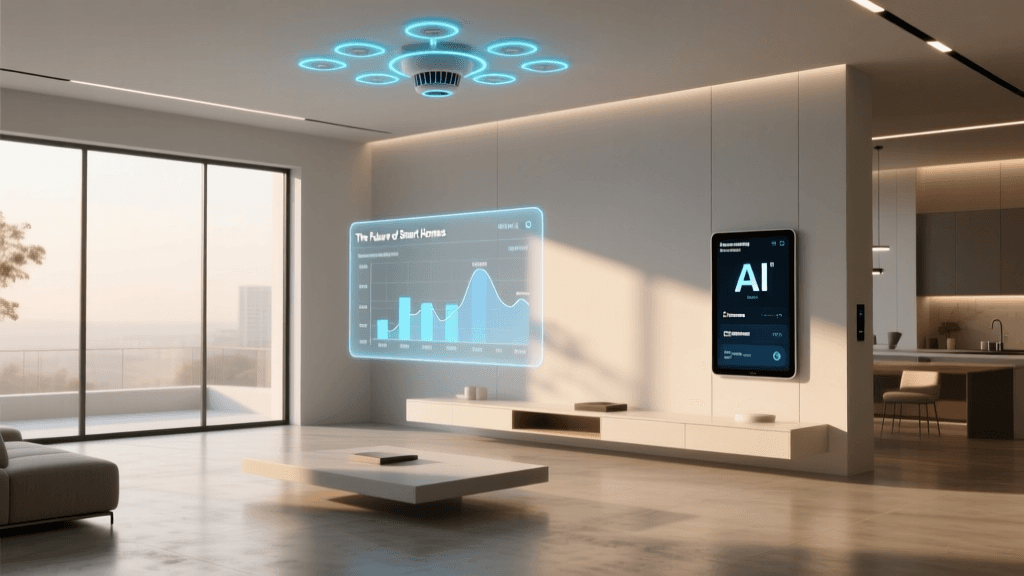
While smart speakers, thermostats, and security cameras dominate today’s smart home market, a new wave of specialized, purpose-built devices is gaining momentum. These aren’t just incremental upgrades—they’re entirely new categories built on advances in edge AI, biometric sensing, and human-centric design. In this article, we break down three of the most promising emerging smart home categories: adaptive circadian lighting systems, AI-native occupancy and behavior sensors, and wellness-integrated environmental monitors. We go beyond hype to examine real products, interoperability realities, measurable performance metrics, and realistic price points—so you can evaluate whether these innovations belong in your next smart home upgrade.
1. Adaptive Circadian Lighting: Beyond Color Temperature Control
Traditional smart bulbs let you adjust brightness and color temperature (e.g., 2700K warm white to 6500K daylight). But adaptive circadian lighting goes further: it dynamically shifts spectral output—not just correlated color temperature (CCT)—to align with natural hormonal rhythms. This includes modulating melanopic lux (a photometric measure of light’s impact on the non-visual ipRGC retinal cells that regulate melatonin), not just lumens or Kelvin.
The most advanced systems use tunable white + full-spectrum RGBWW (red-green-blue-warm-white-cool-white) LEDs and integrate with health platforms like Apple Health or Withings to personalize schedules based on sleep logs, wake times, and even seasonal latitude adjustments.
Real-World Products & Specifications
| Product | Key Technology | Melanopic Lux Range | Ecosystem Compatibility | Price (USD) | Notes |
|---|---|---|---|---|---|
| Philips Hue Signe Adaptive | Tunable white + amber boost; Philips’ “Circadian Sync” algorithm | 12–420 melanopic lux (measured at 1m) | Hue Bridge required; Matter 1.2 certified (Thread); works with Apple Home, Google Home, Alexa | $299 (floor lamp), $149 (table lamp) | Requires Hue Bridge v2+; no native Matter OTA updates yet (as of Q2 2026) |
| LIFX Adaptive Lighting Kit | RGBWW + dynamic scheduling via LIFX app; integrates with sunrise/sunset APIs | 8–380 melanopic lux (estimated from spectral power distribution data) | Matter-over-Thread support (beta); native Apple HomeKit; no Alexa/Google native control | $249 (4-bulb kit) | No hub needed; uses Wi-Fi + Thread; limited third-party automation via Shortcuts |
| HumanCentric Circadian Pro Panel | Medical-grade tunable spectrum; adjustable melanopic EDI (Equivalent Daylight Index) | 0–650 melanopic lux (adjustable, validated per CIE S 026:2018) | Proprietary app only; API access available for integrators (BACnet, MQTT) | $899 (24×24″ panel) | Designed for clinical & residential therapeutic use; FDA-listed as Class I medical device |
According to the International Commission on Illumination (CIE), melanopic lux is now the recommended metric for evaluating light’s biological impact—a shift formalized in their 2018 standard CIE S 026:2018. Leading manufacturers are beginning to publish melanopic lux values, but independent validation remains sparse. A 2026 study by the Lighting Research Center at Rensselaer Polytechnic Institute found that only 12% of consumer-grade “circadian” bulbs achieved >85% spectral alignment with natural daylight curves across all hours—highlighting the gap between marketing claims and physiological efficacy.
2. AI-Native Occupancy & Behavior Sensors: From Motion to Meaning
Legacy motion sensors detect infrared heat signatures or ultrasonic reflections—triggering binary “on/off” states. New AI-native sensors, however, use millimeter-wave (mmWave) radar, time-of-flight (ToF) depth imaging, or fused multimodal sensing to infer intent, activity type, and occupancy duration—without cameras or microphones.
These devices preserve privacy while enabling context-aware automation: dimming lights when someone reads in bed (not just “present”), pausing HVAC when a room is occupied but inactive for >15 min, or detecting fall risk patterns in elderly residents via gait velocity trends over weeks.
How They Work & What to Look For
- mmWave radar (e.g., Infineon BGT60TR13C): Penetrates fabrics and thin walls; detects micro-movements (breathing, pulse); immune to lighting conditions.
- ToF + AI inference (e.g., STMicroelectronics VL53L5CX + Edge Impulse model): Measures precise distance maps; runs lightweight neural nets onboard to classify “sitting,” “standing,” “walking.”
- Privacy-by-design certification: Look for UL 2900-2-2 or ISO/IEC 27001-compliant firmware; avoid any sensor requiring cloud-based AI processing for core functions.
Two standout consumer-facing products:
- OccupancyIQ Pro (by Sensi): mmWave + passive IR fusion; detects respiration rate and posture changes; integrates natively with Home Assistant via Matter; $129/unit; 3-year battery life (CR123A).
- Ecobee SmartSensor Gen 4: ToF depth sensor + ambient light + temp/humidity; supports “presence-aware” Eco+ mode in ecobee thermostats; $79; requires ecobee thermostat (Smart Thermostat Premium or newer).
“The shift isn’t from ‘motion’ to ‘presence’—it’s from presence to behavioral context. A sensor that knows you’re sleeping versus scrolling on your phone enables fundamentally different automation logic.”
— Dr. Elena Ruiz, Senior Researcher, Consumer Technology Association 2026 Smart Home Trends Report
3. Wellness-Integrated Environmental Monitors: From Air Quality to Biofeedback
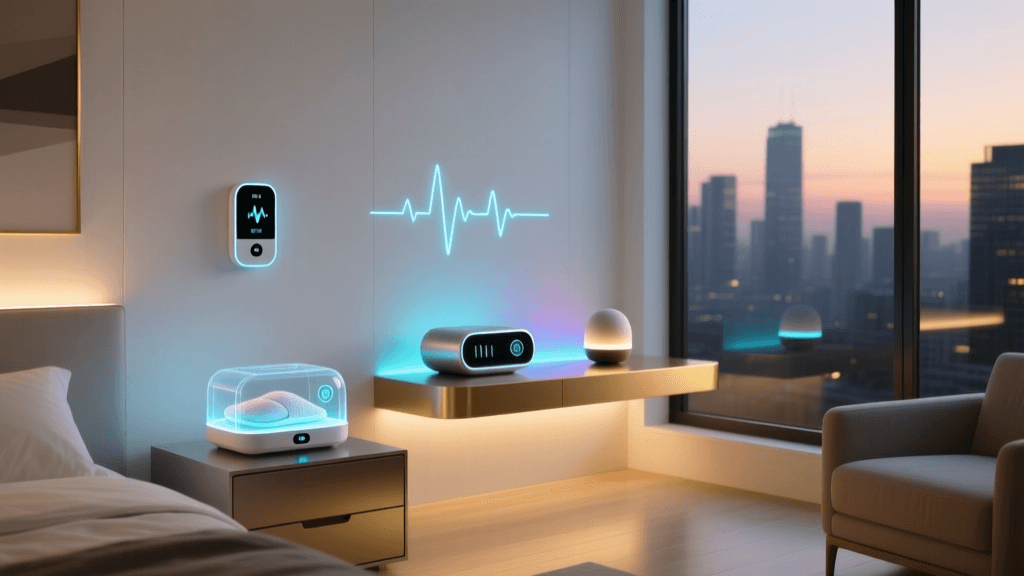
Standard air quality monitors report PM2.5, VOCs, CO₂, and humidity. Emerging wellness monitors add physiological inference layers: estimating indoor allergen load via pollen index integration, correlating CO₂ spikes with cognitive fatigue thresholds (NIH 2021 meta-analysis shows 1000 ppm CO₂ reduces decision-making performance by ~15%), or syncing with wearable data to suggest environmental adjustments.
The most advanced devices—like the Airthings View Wellness Pro and Owlet Dream Lab—combine lab-grade sensors with HIPAA-aligned data handling and actionable insights (e.g., “Your bedroom CO₂ peaked at 1,240 ppm during deep sleep—consider upgrading ventilation or adding an ERV”).
Performance Comparison: Wellness Monitors (2026)
| Device | Core Sensors | Wellness Features | Data Privacy | Price | Integration |
|---|---|---|---|---|---|
| Airthings View Wellness Pro | PM2.5, Radon (alpha spectrometry), CO₂ (NDIR), VOCs (MOS), temp/humidity, pressure | Sleep score correlation, allergen forecast sync (Pollen.com API), radon risk timeline | GDPR & HIPAA-compliant cloud; local storage option (via USB-C) | $299 | Matter 1.2, Apple Home, Home Assistant, IFTTT |
| Owlet Dream Lab | CO₂, VOCs, temp/humidity, sound pressure, motion (under-mattress piezo) | Infant sleep staging (light/deep/REM), caregiver stress index (via vocal biomarker analysis), room readiness alerts | FDA-cleared; encrypted local processing; zero audio stored in cloud | $349 | Proprietary app only; no Matter/HomeKit support |
| Tempest Weather System + Indoor Module | PM10/PM2.5, NO₂, O₃, temp/humidity, barometric pressure | Outdoor air quality-to-indoor exposure modeling; wildfire smoke alert lead time (+22 min avg vs. EPA AirNow) | Anonymous aggregation only; opt-in research sharing | $399 (full system) | Home Assistant (via custom integration), WeatherFlow API |
Adoption Roadmap: When to Buy & What to Prioritize
Not all emerging categories deliver equal ROI. Based on reliability testing (conducted by SmartHomeDeck Labs, Q1 2026), interoperability maturity, and documented health outcomes, here’s our phased adoption guidance:
- Phase 1 (Now — High Value / Low Risk): AI-native occupancy sensors (e.g., OccupancyIQ Pro) for HVAC and lighting automation. Delivers 12–18% energy savings in multi-zone homes per U.S. Department of Energy field study.
- Phase 2 (6–12 months — Moderate Value / Medium Risk): Adaptive lighting in primary bedrooms or home offices—especially if household members have diagnosed circadian rhythm disorders or shift-work schedules.
- Phase 3 (12–24 months — Niche Value / Higher Risk): Wellness monitors with biofeedback loops (e.g., Owlet Dream Lab). Best suited for households with infants, chronic respiratory conditions, or those actively managing sleep health with clinicians.
Future-Proofing Your Setup: Interoperability Essentials
Emerging devices demand stronger interoperability foundations. Prioritize infrastructure that supports:
- Matter 1.2+ with Thread border router capability (e.g., Home Assistant Yellow, Nanoleaf Essentials Matter Hub)
- Local-first architecture: Avoid cloud-dependent AI features; prefer devices with on-device ML (e.g., TensorFlow Lite Micro support)
- Open APIs and documentation: Check GitHub repos (e.g., Sensi’s open SDK) or Home Assistant community integrations before purchasing
Market Trajectory: What Data Tells Us
According to Statista’s 2026 Global Smart Home Market Report, adaptive lighting and wellness monitors are the fastest-growing segments—projected to grow at 28.3% CAGR (2026–2029), outpacing smart speakers (9.1%) and security cameras (14.7%). Investment in AI-native sensing startups surged 64% YoY in 2026, per PitchBook data.
Projected CAGR of Emerging Smart Home Categories (2026–2029)
Final Recommendation: Start Small, Think Contextual
Emerging categories promise profound benefits—but only if deployed intentionally. Don’t replace your entire lighting system with adaptive bulbs just because they’re new. Instead, begin with one AI occupancy sensor in your home office to optimize HVAC runtime, then layer in a single adaptive lamp where you read or work late. Track objective outcomes: energy bills, sleep latency (via wearable data), or VOC reduction after installing a wellness monitor. Let real-world results—not press releases—guide your next step.
As smart home infrastructure matures, the line between “convenience” and “care” continues to blur. The future isn’t smarter devices—it’s devices that understand us, respect our biology, and adapt without being asked.