Introduction: The 'AI' Buzzword in Smart Homes
The smart home industry is currently undergoing a massive rebranding. 'Smart' is out; 'AI-powered' is in. From lighting to security, manufacturers are eager to attach the artificial intelligence label to their products to justify premium price tags and capture consumer imagination. But nowhere is this trend more prevalent—or more misunderstood—than in smart climate control. When a box promises that a thermostat 'learns your lifestyle' or 'predicts your comfort needs,' what is actually happening behind the plastic faceplate? Is it genuine machine learning, or just a repackaged set of basic IF/THEN rules?
In this comprehensive guide, we separate the marketing hype from the technical reality of AI in smart thermostats. We will explore what these devices can actually do, the specific hardware that powers them, what they cost, and whether they are a worthwhile investment for your home's energy ecosystem. Whether you are upgrading a legacy HVAC system or building a new Matter-compatible smart home, understanding the truth behind AI climate control is essential.
What 'AI' Actually Means in Today's Smart Thermostats
To separate fact from fiction, we must first define our terms. When consumers hear 'AI,' they often imagine Artificial General Intelligence (AGI)—a system that thinks, reasons, and anticipates needs much like a human. The reality of smart home AI is much narrower. Today's smart thermostats utilize Narrow AI, specifically relying on supervised machine learning (ML), heuristic algorithms, and sensor fusion.
The Hype: 'Your House Will Think For You'
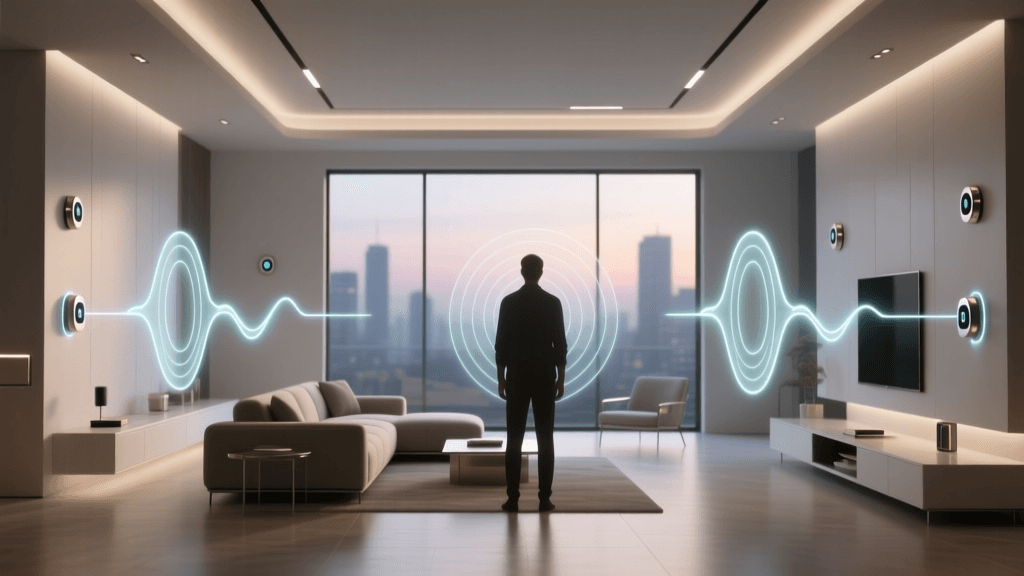
Marketing materials often suggest that an AI thermostat will intuitively know you are cold before you do, adjusting the ambient temperature based on your mood or biological rhythms. The implication is that the device possesses a level of contextual awareness that borders on the psychic.
The Reality: Advanced Algorithms and Sensor Fusion
In reality, these devices do not 'think'; they recognize patterns in vast datasets. A modern AI thermostat ingests data from multiple sources: time of day, local weather APIs, HVAC runtime history, and physical occupancy sensors. It then applies a mathematical model to achieve your preferred setpoint in the most energy-efficient way possible. It is less about 'thinking' and more about predictive optimization. The AI calculates the exact thermal decay rate of your specific home and starts the HVAC system at the precise moment required to reach your target temperature exactly when you walk through the door.
Real vs. Hype: Feature Breakdown and Product Comparison
Let's break down the most common 'AI' features marketed to consumers and examine the technical reality of how they function in leading products like the Google Nest Learning Thermostat (4th Gen), the Ecobee Smart Thermostat Premium, and the Honeywell Home T9.
| Feature | Marketing Hype | Technical Reality | Verdict |
|---|---|---|---|
| Auto-Scheduling | 'It learns your life and builds a custom schedule automatically.' | Uses statistical clustering to group your manual temperature adjustments into time blocks, creating a baseline schedule over 7-14 days. | Real, but requires patience. You will still need to manually override it during the first two weeks. |
| Occupancy Sensing | 'It knows exactly who is home and what rooms they are in.' | Relies on PIR (Passive Infrared), Wi-Fi triangulation, or millimeter-wave radar to detect motion and presence. | Mostly Real. Radar (like Nest's Soli sensor) is highly accurate; PIR struggles with stationary occupants. |
| Weather Prediction | 'It predicts the weather to keep you comfortable.' | Pulls data from cloud-based meteorological APIs to adjust HVAC runtime based on humidity and solar gain forecasts. | Real. Highly effective for managing humidity and pre-cooling homes before heatwaves. |
| Voice Control AI | 'Talk to your house like a person.' | Uses basic Natural Language Processing (NLP) to map spoken commands to specific API calls (e.g., 'Set temp to 72'). | Hype. Current on-device voice assistants lack contextual reasoning for complex, multi-variable climate requests. |
Hardware Spotlight: Where the AI Actually Lives
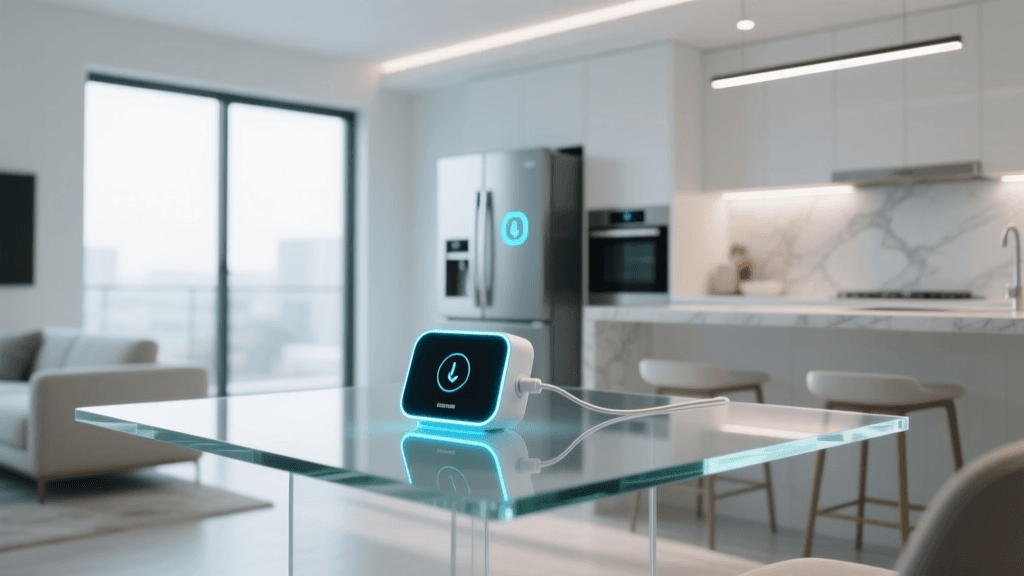
- Google Nest Learning Thermostat (4th Gen): Priced around $279, this device features a built-in Soli radar sensor. This is genuine edge-AI; the radar uses machine learning models locally to differentiate between a human sitting still and a piece of furniture, vastly reducing the 'false empty' triggers that plague older PIR sensors.
- Ecobee Smart Thermostat Premium: Retailing for approximately $249, Ecobee's 'eco+' feature is a cloud-based ML algorithm. It analyzes local electrical grid demand, time-of-use pricing, and weather to shift your cooling cycles to off-peak hours, saving money without sacrificing comfort.
- Honeywell Home T9: At roughly $199, the T9 relies less on predictive ML and more on robust, multi-room logic via remote sensors. It is an excellent choice for homes with uneven heating/cooling, prioritizing spatial logic over behavioral prediction.
Predictive Energy Management: Does It Actually Save Money?
The primary justification for the premium cost of an AI thermostat is energy savings. Manufacturers frequently boast that their devices can cut HVAC bills by 20% to 25%. However, independent testing and government data paint a more conservative, yet still impressive, picture.
According to the EPA's Energy Star program, certified smart thermostats save an average of about 8% on heating and cooling bills annually. Meanwhile, The U.S. Department of Energy notes that homeowners can save up to 10% a year on heating and cooling by simply turning their thermostat back 7°-10°F for 8 hours a day from its normal setting. The true value of AI is not necessarily that it saves more energy than a disciplined human, but that it automates this 10% savings flawlessly, removing human error and forgetfulness from the equation.
Bar chart comparing marketing claims vs verified average energy savings for AI thermostats
As the data illustrates, while marketing claims push toward the 20%+ mark, verified, real-world averages hover closer to 8-10%. For a household spending $2,000 annually on HVAC, an 8% savings equates to $160 a year. At a $250 hardware cost, the AI thermostat pays for itself in roughly 18 months, making it a financially sound investment regardless of the hype.
The Infrastructure: Matter, Thread, and Local AI Processing
AI requires data, and it requires it quickly. Historically, smart thermostats relied heavily on cloud processing. If your internet connection dropped, your 'smart' thermostat reverted to a basic digital thermostat, and geofencing features failed entirely.
This is where the new Matter and Thread protocols are changing the reality of smart home AI. The Connectivity Standards Alliance (CSA) developed Matter to ensure local, secure, and unified communication across ecosystems. Thread, the underlying low-power mesh networking protocol, allows remote room sensors to feed occupancy and temperature data to the thermostat with millisecond latency.
Why does this matter for AI? Because Edge Computing is replacing Cloud Computing. Modern thermostats are increasingly processing ML models locally on the device's silicon. When a Thread motion sensor detects you walking into the living room, the local mesh network instantly relays this to the thermostat, which immediately adjusts the damper or fan speed. This local processing ensures that your AI climate control remains responsive and functional even during internet outages, bridging the gap between marketing promises and reliable reality.
Actionable Advice: Preparing Your HVAC for an AI Thermostat
Before you purchase an AI-powered thermostat based on its predictive capabilities, you must ensure your home's physical infrastructure can support it. The most advanced AI in the world cannot compensate for improper wiring or incompatible HVAC hardware.
1. The C-Wire (Common Wire) Requirement
Almost all premium AI thermostats (Nest, Ecobee, Honeywell) require a C-wire. This wire provides a continuous 24-volt power supply to the thermostat. Without it, the device will attempt to 'steal' power from the heating/cooling wires, which can cause your HVAC system to short-cycle or the thermostat's Wi-Fi radio to drop offline, severing its connection to cloud-based AI features. Action: Check your current thermostat's wiring. If you lack a C-wire, budget an extra $30-$50 for a C-wire adapter kit, or hire an HVAC technician to run a new wire.
2. HVAC System Compatibility
AI algorithms are trained primarily on standard central forced-air systems. If you have a complex setup—such as a dual-fuel system (heat pump + gas furnace), a geothermal system, or high-voltage baseboard heaters—the AI's predictive pre-heating algorithms may misinterpret system runtimes, leading to comfort issues. Action: Use the compatibility checkers on the manufacturer's website before purchasing. For high-voltage systems, you will need specialized thermostats like the Mysa, which utilize different AI load-balancing logic.
3. Ecosystem Lock-In and Geofencing
AI thermostats rely heavily on your smartphone's location for geofencing (knowing when you leave and return). If you have a mixed household (some users on iOS/Apple HomeKit, others on Android/Google Home), ecosystem friction can break the AI's occupancy logic. Action: Choose a thermostat that supports Matter or native multi-platform integrations (like Ecobee) to ensure the AI receives accurate location data from every family member's phone.
The Future: Generative AI and Ambient Computing
What lies beyond the current generation of machine learning thermostats? The next frontier is Generative AI and Large Language Models (LLMs) integrated into ambient computing. Currently, voice control is rigid. You must say, 'Set the temperature to 72 degrees.'
In the near future, powered by on-device LLMs and advanced semantic understanding, you will be able to say, 'I'm feeling a bit stuffy and I have a headache.' The AI will interpret the semantic meaning of this request. It will cross-reference the Ecobee Premium's built-in VOC (Volatile Organic Compound) air quality sensor, detect poor air circulation, lower the temperature slightly, and trigger the HVAC fan to run continuously to filter the air—all without you needing to know the specific technical commands. Companies like Josh.ai and Amazon's upcoming Alexa LLM upgrades are already laying the groundwork for this conversational, context-aware climate control.
Conclusion
So, is AI in smart thermostats real or just marketing hype? The answer is a nuanced mix of both. The sci-fi vision of a sentient house that reads your mind is pure hype. However, the reality—narrow machine learning, sensor fusion, and predictive thermal algorithms—is incredibly effective.
Devices like the Nest 4th Gen and Ecobee Premium use genuine AI to automate energy-saving setbacks, optimize HVAC runtimes based on weather forecasts, and utilize advanced radar for accurate occupancy detection. While they may not save the 25% claimed on the box, a verified 8-10% reduction in energy bills makes them a smart financial investment. By understanding the technical reality, ensuring your home has the proper wiring (C-wire), and leveraging modern local protocols like Thread and Matter, you can cut through the marketing noise and build a truly intelligent, responsive climate ecosystem.