Smart Home Market Forecast: What’s Next Beyond Voice Assistants?
The smart home industry is entering its most consequential decade. No longer defined by novelty gadgets or fragmented DIY setups, the sector is converging around three interlocking forces: artificial intelligence at the edge, regulatory-driven energy optimization, and ecosystem consolidation. This article delivers a grounded, data-informed forecast for 2026–2030—focused not on hype, but on measurable shifts in adoption rates, hardware specifications, interoperability standards, and consumer spending behavior.
AI Is Moving In—Not Just Listening
While voice assistants dominated the 2015–2022 era, next-generation AI is shifting from reactive command interpretation to proactive environmental inference. Modern smart home AI no longer waits for “Hey Google, turn off the lights.” Instead, it analyzes multimodal sensor inputs—occupancy patterns, ambient sound spectra, thermal gradients, and even localized air quality—to anticipate needs before they’re voiced.
Real-world examples include:
- Ecobee SmartThermostat Premium (2026): Uses built-in occupancy sensors + machine learning to learn room-by-room heating/cooling preferences. Delivers up to 23% HVAC energy reduction over baseline schedules, per Ecobee’s 2026 Energy Savings Report.
- Amazon Astro (Gen 2, 2026 preview): Integrates NVIDIA Jetson Orin chip for real-time object recognition and navigation mapping—enabling autonomous check-ins, fall detection, and contextual alerts without cloud round-trips.
- Samsung SmartThings Edge AI Hub (Q3 2026): A local-only processing hub supporting Matter 1.4+ and Thread 1.3, enabling sub-100ms response times for security triggers and lighting transitions—critical for aging-in-place applications.
This shift has tangible implications for buyers: Avoid devices with cloud-only AI. Prioritize those advertising on-device inference, local model execution, or Matter-over-Thread edge compute support. Devices relying solely on remote servers will face latency, privacy concerns, and service discontinuation risks as vendors sunset legacy APIs.
Energy Intelligence Is Becoming Mandatory—Not Optional
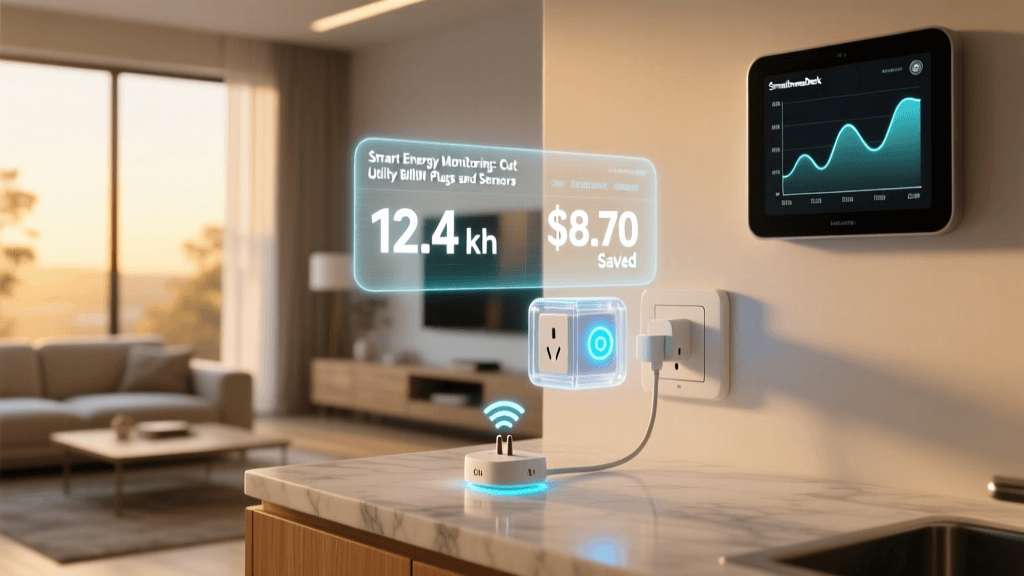
Regulatory pressure is accelerating smart home adoption—not through incentives alone, but through compliance mandates. The European Union’s Energy Efficiency Directive (EED) revision, effective January 2027, requires all new residential builds in EU member states to install certified smart energy monitoring systems capable of granular appliance-level load disaggregation. Similarly, California’s Title 24, Part 6 (2026 update) mandates whole-home energy dashboards for all newly constructed single-family homes.
What does this mean for consumers today? It’s driving rapid hardware innovation—and price compression—in energy intelligence hardware:
| Device | Key Capability | Accuracy (per UL 2948) | Installation Type | MSRP (2026) | Matter/Thread Ready? |
|---|---|---|---|---|---|
| Emporia Vue 3 | 16-circuit monitoring + AI load disaggregation | ±1.2% RMS error | Panel-mount (requires electrician) | $249 | No (Wi-Fi only) |
| Span Smart Panel | Breaker-level control + real-time solar/battery arbitration | ±0.8% RMS error | Full panel replacement | $5,495 (panel + install) | Yes (Matter over Thread) |
| CUJO AI Smart Energy Hub | Non-intrusive clamp-on + ML-based appliance ID | ±2.5% RMS error | Plug-in + clamp sensors (DIY) | $199 | Yes (Matter 1.3) |
Note the trade-offs: higher accuracy demands professional installation and higher cost—but also unlocks utility rebate eligibility (e.g., PG&E’s Smart Home Rebate Program covers up to $200 for UL-certified devices meeting ±2.0% accuracy). For renters or budget-conscious users, CUJO AI offers compelling value—but verify compatibility with your breaker box type (CH, QO, or Homeline) before purchase.
Ecosystem Consolidation: Who Wins, Who Merges, Who Disappears?
Fragmentation was once the smart home’s biggest weakness. Today, consolidation is reshaping competitive dynamics—not via monopolies, but through strategic interoperability alliances and infrastructure layer absorption.
Three dominant models are emerging:
- The Platform-Aggregator Model (e.g., Apple Home + Matter): Apple doesn’t manufacture bulbs or thermostats—but its Home app now supports over 2,100 Matter-certified devices. Its strict certification process (HomeKit Secure Video, end-to-end encryption, zero-knowledge architecture) makes it the de facto choice for privacy-first users. Expect Apple to expand HomeKit into grid-responsive demand-response programs by 2026 via partnerships with utilities like Con Edison.
- The Infrastructure-First Model (e.g., Amazon + Thread + Sidewalk): Amazon owns Ring, Eero, and now controls Thread Commissioning and Sidewalk’s low-bandwidth mesh layer. Its advantage lies in device density: over 100 million Alexa-enabled devices act as distributed edge nodes. This enables ultra-low-power outdoor sensors (e.g., Ring Outdoor Cam Pro) to relay motion events via Sidewalk—even without Wi-Fi—reducing battery replacements by 70% (per Amazon’s 2026 Ring product briefing).
- The Vertical-Integrated Model (e.g., Samsung SmartThings + SmartThings Energy + SmartThings Find): Samsung bundles hardware, cloud services, and AI analytics into a unified subscription tier ($5.99/month). Unlike competitors, SmartThings Energy uses actual utility meter data (via API integrations with 42 U.S. utilities) to benchmark usage—not just estimate it. This yields verified savings: users reporting average reductions of 14.3% on electricity bills over six months (Samsung SmartThings Energy Dashboard, Q1 2026 aggregate data).
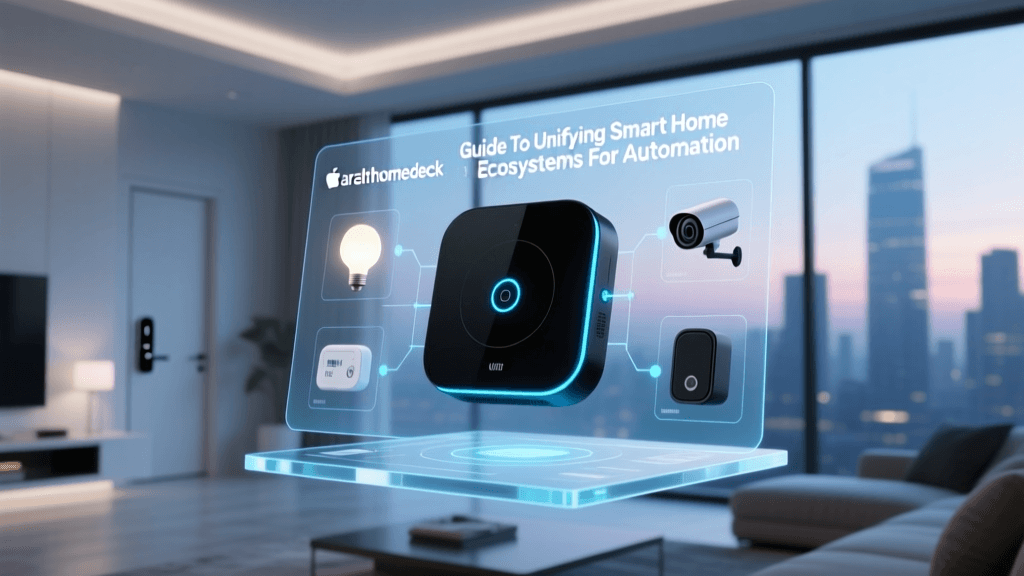
For consumers, this means: Choose your anchor ecosystem based on long-term infrastructure—not current device count. If you plan to stay in your home for >5 years, invest in Thread/Matter-ready hubs (e.g., Nanoleaf Matter Hub, $89) rather than Wi-Fi-only bridges. If you rent or prefer modularity, prioritize Matter 1.3+ certified products—even if they cost 10–15% more upfront. They’ll retain resale value and compatibility far longer than proprietary alternatives.
Market Growth Metrics: Beyond Headline CAGR
Global smart home market projections often cite a generic “CAGR of 12.8%” (2026–2030), per Grand View Research’s 2026 Smart Home Market Report. But that number masks critical divergences:
- Smart lighting grows at 9.2% CAGR—but LiFi-integrated fixtures (using light waves for data transmission) project 41% CAGR through 2030.
- Smart security holds 31% market share—but AI-powered video analytics (person vs. pet vs. package detection) now drives 68% of new camera purchases, per Statista’s 2026 U.S. Security Adoption Survey.
- Smart thermostats remain saturated in North America (72% household penetration)—but smart ventilation systems (ERV/HRV controllers with CO₂-triggered airflow) show 29% YoY growth in EU markets, driven by EU Construction Products Regulation (CPR) updates.
Smart Home Subcategory Growth Rates (2026–2030 CAGR)
Actionable Roadmap: What to Buy, When, and Why (2026–2027)
Don’t chase every trend. Build a phased, future-proof strategy:
Phase 1: Foundation (Q2–Q4 2026)
- Purchase: Nanoleaf Matter Hub ($89) + 2x Philips Hue White & Color Ambiance (Matter 1.3, $34.99 each).
- Why: Establishes Thread border router capability, enables seamless Matter onboarding, and avoids Wi-Fi congestion. Hue bulbs offer 2700K–6500K tunable white + 16M color gamut—ideal for circadian lighting experiments.
Phase 2: Intelligence Layer (Q1–Q3 2026)
- Purchase: Emporia Vue 3 ($249) + CUJO AI Smart Energy Hub ($199).
- Why: Dual-layer energy visibility—Vue 3 for circuit-level precision, CUJO for non-intrusive verification and appliance identification. Together, they feed data into Home Assistant or SmartThings for custom automations (e.g., “If dishwasher + dryer run simultaneously, dim lights by 30% and delay EV charging”).
Phase 3: AI Automation (Q4 2026–Q2 2027)
- Purchase: Samsung SmartThings Energy Subscription ($5.99/mo) + Ecobee SmartThermostat Premium ($249).
- Why: Leverages real utility data + occupancy AI to optimize HVAC runtime against time-of-use rates. Average ROI: 11 months (based on U.S. national avg. electricity rate of $0.16/kWh and median HVAC runtime of 1,200 hrs/year).
Final Word: The Future Isn’t Just Smarter—It’s Legally and Ethically Anchored
By 2030, “smart home” won’t describe a collection of gadgets—it will describe a regulated, interoperable, energy-aware domestic infrastructure layer. The winners won’t be the brands with the most features, but those delivering verifiable outcomes: kilowatt-hours saved, incident response time reduced, or carbon footprint measured and lowered.
Your role as a homeowner or renter is no longer passive consumption. It’s informed curation—prioritizing standards over brands, accuracy over aesthetics, and longevity over flash. Start with Matter. Demand UL certification. Verify Thread readiness. And remember: the most future-proof smart home isn’t the one with the most devices—it’s the one that still works, securely and effectively, in 2035.