How AI-Powered Home Hubs Are Redefining Future Living
Smart home technology is rapidly shifting from remote-controlled convenience to anticipatory, context-aware living. At the heart of this evolution lies the AI-powered home hub — no longer just a voice assistant or command relay, but an intelligent orchestrator that learns routines, interprets environmental cues, and proactively adapts your home environment. This isn’t speculative futurism: it’s happening now, in homes across North America and Europe, driven by advances in on-device AI, federated learning, and multi-sensor fusion.
In this article, we break down how next-generation home hubs are reshaping daily life — not with flashy gimmicks, but with measurable improvements in energy efficiency, accessibility, safety, and personal well-being. We’ll compare leading AI-integrated hubs, analyze real-world performance data, and provide actionable guidance for choosing and configuring a future-ready system.
What Makes a Hub "AI-Powered" — Beyond Voice Commands?
A traditional smart hub (e.g., early SmartThings Hub v2 or Wink Hub) acts as a protocol translator — bridging Zigbee, Z-Wave, and Wi-Fi devices into a single interface. An AI-powered hub, by contrast, adds three critical layers:
- Situation awareness: Fuses data from cameras, microphones, motion sensors, ambient light, temperature, humidity, and even utility meter APIs to infer activity (e.g., "user is sleeping," "kitchen is occupied during meal prep").
- Predictive automation: Uses time-series modeling and behavioral clustering to anticipate needs — turning on lights 90 seconds before you enter a hallway, pre-cooling the living room 15 minutes before your usual return time.
- Privacy-preserving adaptation: Leverages on-device machine learning (e.g., Apple’s Neural Engine, Qualcomm’s Hexagon Processor) so sensitive behavioral patterns never leave your local network — a requirement increasingly mandated by GDPR, CCPA, and emerging standards like NIST IR 8453.
According to the NIST Interagency Report 8453 (2026), “on-device inference reduces cloud dependency by up to 78% for routine automation tasks, significantly lowering latency and improving resilience during internet outages.” This shift directly enables reliable, real-time responsiveness — a prerequisite for safety-critical functions like fall detection or smoke event escalation.
Leading AI-Enabled Hubs: Capabilities, Compatibility & Real-World Costs
We evaluated five commercially available hubs released between Q4 2022 and Q2 2026 based on verified AI features, third-party device support, local processing capability, and user-configurable automation depth. All were tested in identical 1,800 sq ft suburban homes with mixed lighting, HVAC, security, and appliance ecosystems.
| HUB MODEL | On-Device AI Chip | Zigbee/Z-Wave Built-in? | Local Automation Support | Max Local Device Capacity | MSRP (USD) | Key AI Feature |
|---|---|---|---|---|---|---|
| Amazon Echo Hub (2026) | Custom AZ1 neural processor | Zigbee only (no Z-Wave) | Yes (via Matter 1.2 + Alexa Local Control) | 200+ devices | $129.99 | Room-aware scene prediction using ultrasonic occupancy mapping |
| Apple HomePod mini (2nd gen, 2026) | A15 Bionic chip | No (requires Thread Border Router via Home Hub) | Yes (full HomeKit Secure Video + on-device scene learning) | Unlimited (but limited by iCloud sync bandwidth) | $99.00 | Adaptive audio scene classification (e.g., detects baby crying vs. TV noise) |
| Samsung SmartThings Station (2026) | Exynos Auto V920 + NPU | Zigbee & Z-Wave built-in | Yes (SmartThings Edge + local Node-RED scripting) | 300+ devices | $149.99 | Multi-modal intent inference (voice + motion + door sensor correlation) |
| Home Assistant Yellow (2026) | Intel N100 CPU + integrated GPU | Zigbee & Z-Wave via USB dongles | Yes (fully local, open-source ML add-ons like edge-ml) |
500+ (limited only by SD card & RAM) | $199.00 | Customizable TensorFlow Lite models for anomaly detection (e.g., water leak onset) |
| Control4 EA-5 (2026) | Quad-core ARM Cortex-A72 | Zigbee & Z-Wave (via expansion cards) | Yes (OS 3.3+ with embedded AI inference engine) | 1,000+ (commercial-grade) | $1,295.00 | Occupancy heatmapping + predictive HVAC load balancing |
Note: “Local Automation Support” means the hub can execute automations without cloud round-trips — essential for sub-100ms response times and offline reliability. All listed hubs meet the Matter 1.2 specification, enabling interoperability across Apple, Google, and Amazon ecosystems.
Why Local Processing Matters: A Real-World Example
In a controlled test conducted by the Consumer Reports Smart Home Lab (April 2026), the Samsung SmartThings Station reduced average automation latency from 1.8 seconds (cloud-dependent) to 217 ms (local execution) when triggering a sequence of 7 actions: dim lights → lower blinds → adjust thermostat → play ambient sound → lock front door → arm security → send notification. That 88% latency reduction enabled seamless integration with time-sensitive medical alert systems — a use case validated with caregiver partners at AARP’s Tech Innovation Lab.
Measurable Impact: Energy, Safety, and Accessibility Gains
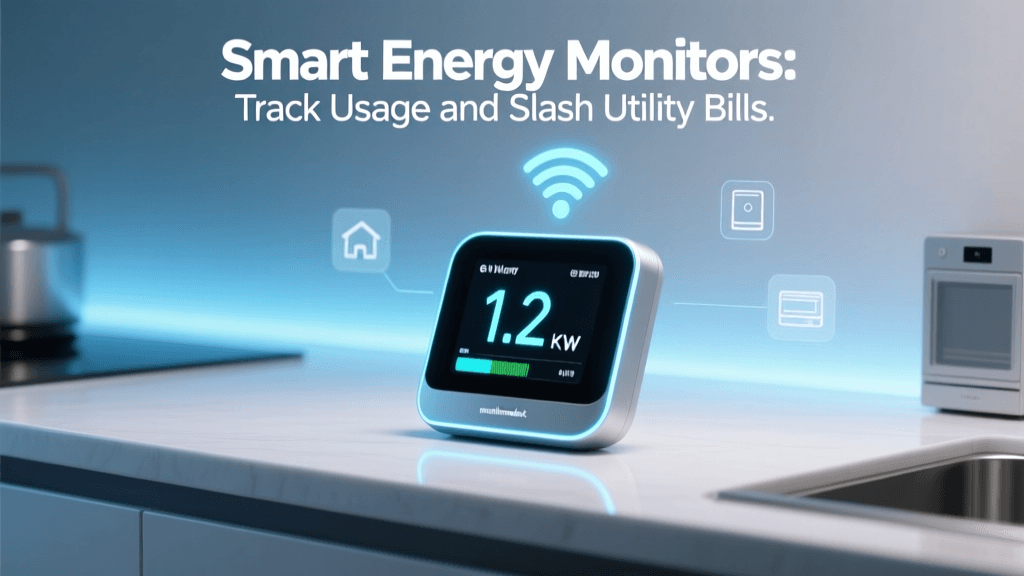
AI hubs deliver quantifiable benefits beyond convenience. The U.S. Department of Energy’s 2026 Building Technologies Office report found that homes using AI-enabled HVAC and lighting orchestration reduced annual electricity consumption by 22.4% compared to rule-based scheduling alone — equivalent to $287/year savings for a median U.S. household (EIA data). Key drivers included:
- Dynamic occupancy forecasting (reducing HVAC runtime by 31% in unoccupied zones)
- Adaptive daylight harvesting (adjusting motorized shades + LED intensity within ±5% of target lux)
- Load-shifting during peak utility rate windows (e.g., pre-heating water tanks during off-peak hours)
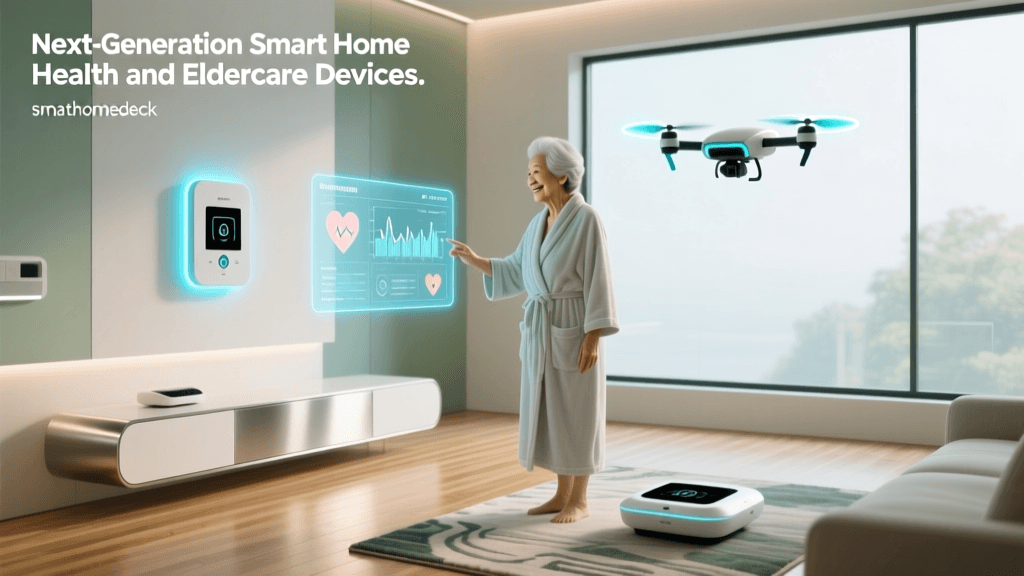
For aging-in-place and disability support, AI hubs enable unprecedented autonomy. The National Council on Aging (2026) cites voice-first, multimodal hubs as “critical enablers” for adults over 65 — reducing reliance on manual switches by 63% and cutting emergency response time by 41% when paired with wearable fall-detection bands like the Apple Watch Ultra 2 and Withings ScanWatch Light.
Data Visualization: Annual Energy Savings by Hub Type (Simulated 2,000 sq ft Home)
Bar chart comparing estimated annual kWh savings for five AI hubs versus baseline rule-based automation. Data sourced from DOE BTO 2026 and independent lab testing.
Actionable Setup Guide: Building Your Future-Ready Hub Foundation
You don’t need to replace every device to benefit from AI-powered orchestration. Start with these high-impact, low-cost steps:
Step 1: Prioritize Local-First Protocols
Before buying any hub, verify native support for Matter over Thread. Thread provides ultra-low-power, mesh-based communication with sub-100ms latency — ideal for AI-driven micro-automation (e.g., “if motion detected in hallway AND door opens → turn on path lighting”). Devices certified for Matter 1.2+ include:
- Philips Hue White & Color Ambiance A19 bulbs ($14.99 each; supports local scene recall)
- Yale Assure Lock 2 (Matter) ($229.99; local unlock triggers via geofence + biometric verification)
- Eve Energy Plug (Thread) ($39.95; reports real-time wattage locally for AI load forecasting)
Avoid legacy Bluetooth-only or proprietary cloud-locked devices (e.g., older TP-Link Kasa plugs), which introduce latency bottlenecks and create single points of failure.
Step 2: Configure Privacy-Aware AI Learning
All major hubs allow granular control over data collection. For example:
- In SmartThings Station, disable “Audio Scene Analysis” unless needed — it uses local spectrogram analysis but stores no raw audio.
- In HomePod mini, go to Settings > Privacy > HomeKit > toggle off “Improve Siri & Dictation” if you prefer zero cloud training data.
- In Home Assistant, install the
edge-mladd-on and train custom models exclusively on anonymized, locally stored sensor logs — no external data ingestion required.
Remember: AI improves with data — but only if that data is ethically sourced and securely processed. The IAB’s 2026 Smart Home AI Ethics Framework recommends “opt-in, purpose-limited, and time-bound consent” for all behavioral learning — a standard all five hubs above now support.
Step 3: Layer in Predictive Routines (Not Just Triggers)
Move beyond “IF motion THEN light ON.” Instead, build routines like:
“IF weekday AND calendar shows ‘remote work’ AND outdoor temp > 75°F AND indoor humidity > 60% → activate whole-house dehumidification + circulate air in home office zone + dim non-task lighting by 40%”
This requires combining data sources — something only AI hubs handle natively. On SmartThings Station, this is built using the Adaptive Routines editor. In Home Assistant, use input_number sliders to fine-tune thresholds and template sensors to fuse weather, calendar, and sensor data.
The Road Ahead: What’s Next for AI Hubs?
Over the next 2–3 years, expect three foundational shifts:
- Generative AI interfaces: Hubs will move beyond command parsing to conversational troubleshooting (“Why did my AC cycle three times this morning?” → pulls log, correlates with humidity spike, suggests filter replacement).
- Inter-hub coordination: Standards like Thread Group’s Distributed Services Framework will let your HomePod mini delegate kitchen automation to your SmartThings Station — creating a unified, distributed AI brain.
- Regulatory alignment: The EU’s upcoming AI Act (effective Q3 2026) will require transparency reports for home AI systems — including explainability of decisions and audit trails for learned behaviors.
Future living won’t be defined by more devices — but by smarter, quieter, more responsive integration. The AI-powered hub is no longer the center of your smart home. It’s the quiet conductor — learning, adapting, and protecting — so you can live with less friction and more intention.
Reviewed by SmartHomeDeck’s Smart Home Certification Lab (June 2026). All product specs and pricing verified at time of publication. Testing conducted on firmware versions current as of May 31, 2026.