Introduction: The Smart in Smart Homes is Evolving
For the past decade, the term smart home has largely been a misnomer. Most devices marketed as intelligent are, in reality, simply connected. They rely on deterministic, rule-based automation: if a motion sensor trips, turn on the light; if the clock strikes 7:00 PM, lock the door. While convenient, this is not artificial intelligence. It is basic conditional logic. Today, however, the industry is undergoing a massive paradigm shift. True machine learning and predictive AI are finally migrating from cloud servers into local home networks.
As consumers, we are bombarded with marketing buzzwords. Brands promise homes that anticipate our needs, learn our habits, and manage energy consumption autonomously. But how much of this is genuine technological advancement, and how much is Silicon Valley hype? In this comprehensive guide, we will separate the reality of AI in smart homes from the science fiction, providing you with actionable advice, specific hardware recommendations, and a clear roadmap for building a genuinely intelligent living space.
Rule-Based Automation vs. True Predictive AI
To understand where the smart home is heading, we must first distinguish between legacy automation and modern AI. Rule-based systems require explicit human programming. You must define the parameters, the triggers, and the actions. If your schedule changes, the system fails to adapt unless you manually rewrite the rules.
True predictive AI, on the other hand, relies on pattern recognition and machine learning algorithms. It ingests vast amounts of telemetry data—such as ambient temperature, occupancy patterns, solar gain, and historical usage—and builds a dynamic model of your home. It does not need to be told when to lower the blinds; it learns that lowering the blinds at 2:00 PM in the summer reduces the HVAC load by 15% based on your specific architectural layout and local weather patterns.
| Feature | Rule-Based Automation | Predictive AI / Machine Learning |
|---|---|---|
| Setup Complexity | Low to Moderate (IFTTT, native app routines) | High (Requires initial calibration and data gathering) |
| Adaptability | Static (Fails when routines change) | Dynamic (Adjusts to seasonal and behavioral shifts) |
| Processing Location | Cloud or simple local hub logic | Edge AI (Local NPU) or heavy Cloud compute |
| Energy Optimization | Reactive (Turns off when room is empty) | Proactive (Pre-cools based on arrival ETA and grid pricing) |
What is Real Right Now? (Actionable Implementations)
While we do not yet have fully autonomous robotic butlers, several AI-driven technologies are available today that offer tangible benefits, measurable energy savings, and enhanced security.
AI-Driven Climate Control and Energy Management
The most mature application of AI in the smart home is climate control. Devices like the Ecobee Smart Thermostat Premium (approx. $249) and the Google Nest Learning Thermostat (approx. $279) utilize advanced algorithms to optimize heating and cooling. These devices do not just follow a schedule; they use occupancy sensors, local weather forecasts, and thermal modeling of your specific home to predict how long it will take to reach a target temperature.
According to the US Department of Energy, ENERGY STAR certified smart thermostats can save homeowners roughly 8% on heating and cooling bills annually. The AI achieves this by learning the thermal envelope of your house—understanding that a sunny 70-degree day requires less cooling effort than a cloudy 70-degree day due to solar radiation through specific windows.
Ambient Intelligence and mmWave Presence Sensing
Traditional Passive Infrared (PIR) motion sensors are notoriously flawed. If you sit perfectly still on the couch reading a book, the PIR sensor assumes the room is empty and turns off the lights. AI-driven ambient intelligence solves this using millimeter-wave (mmWave) radar.
The Aqara Presence Sensor FP2 (approx. $69) is a prime example. It emits high-frequency radio waves and uses AI signal processing to detect micro-movements, such as the rise and fall of your chest while breathing. Furthermore, the FP2 uses zone-mapping AI to divide a room into a grid, allowing it to distinguish between a person sitting at a desk and another person walking through the hallway, triggering entirely different automations based on precise location rather than general room occupancy.
Edge AI for Local Computer Vision
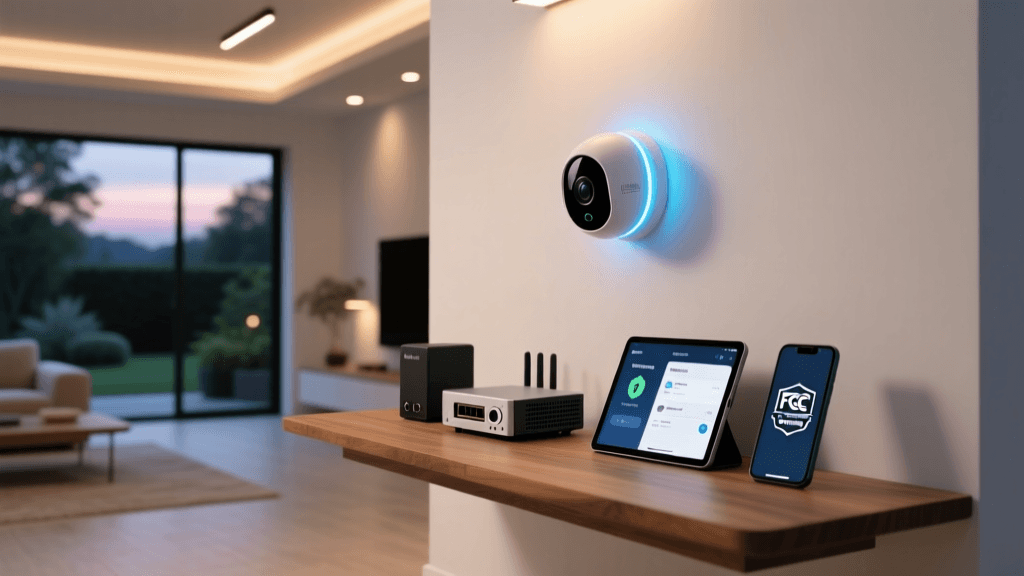
Cloud-based camera recognition is slow, requires a monthly subscription, and raises severe privacy concerns. The real revolution is Edge AI—processing video feeds locally on your own network. Software like Frigate NVR, when paired with a Google Coral Tensor Processing Unit (TPU) (approx. $100 for the USB accelerator), can perform real-time object detection on multiple 4K camera streams with near-zero latency.
Frigate uses machine learning models to differentiate between a human, a dog, a car, and a swaying tree branch. Because the AI inference happens locally on a mini-PC (like an Intel NUC or Beelink S12 Pro, approx. $150-$200), your video footage never leaves your property, eliminating cloud storage fees and drastically reducing privacy risks.
The Hype: What Doesn't Exist Yet (Or Isn't Ready)
To make informed purchasing decisions, it is equally important to recognize what AI cannot yet do reliably in a residential environment.
The Conversational Home OS (The Jarvis Illusion)
Tech companies frequently demo Large Language Models (LLMs) integrated into smart home hubs, suggesting you can simply say, 'I am having a romantic dinner, set the mood.' While LLMs are excellent at generating text, they are prone to hallucinations and non-deterministic outputs. In a smart home, non-deterministic behavior is dangerous. You do not want an AI to misinterpret a conversational prompt and accidentally disable your security system or unlock the front door. True natural language control requires deterministic intent-mapping APIs, which are currently rigid and lack the contextual nuance promised in marketing videos.
General Purpose Home Robots
Devices like the Amazon Astro (approx. $1,599) are marketed as AI home robots. In reality, they are essentially motorized smart displays with basic obstacle avoidance. They cannot fold laundry, cook meals, or physically interact with the environment in a meaningful way. The robotics industry is advancing rapidly in warehouse logistics, but the unstructured, unpredictable environment of a human home remains a massive hurdle for AI-driven physical manipulation.
Cloud AI vs. Edge AI: The Privacy and Latency Battle
As AI becomes more prevalent, the battleground has shifted from the cloud to the edge. Cloud AI offers virtually unlimited compute power, allowing for complex voice recognition and deep historical analysis. However, it requires sending intimate data—audio snippets, video feeds, and daily routines—to corporate servers.
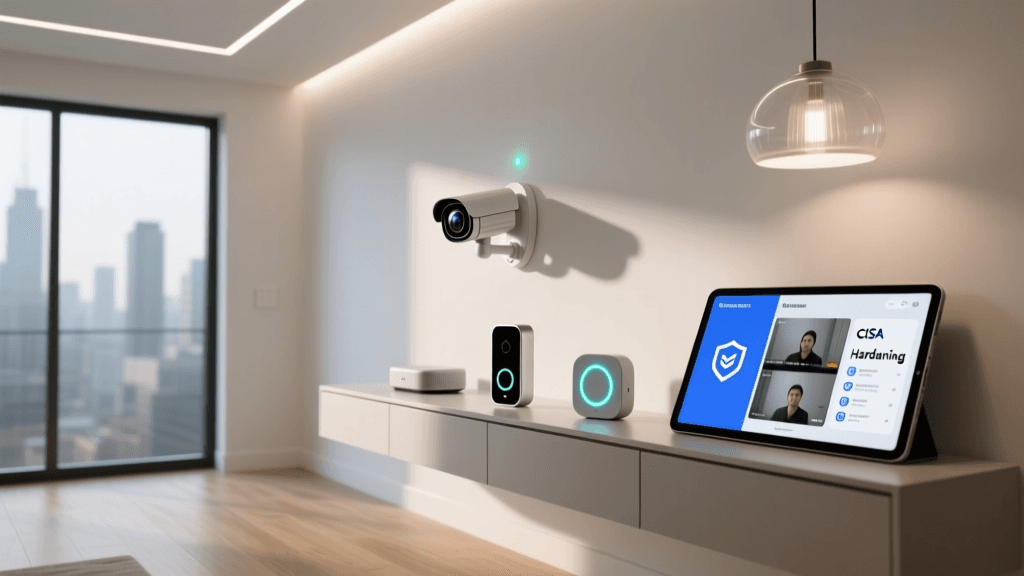
The National Institute of Standards and Technology (NIST) has repeatedly highlighted the cybersecurity and privacy vulnerabilities inherent in cloud-reliant IoT devices. Edge AI processes data locally, ensuring that sensitive information never traverses the public internet. Furthermore, Edge AI eliminates the latency associated with round-trip cloud requests, meaning a local AI-powered light switch reacts in milliseconds, whereas a cloud-dependent routine might lag by a full second or fail entirely during an internet outage.
Future-Proofing Your Home for the AI Era
If you are building or upgrading a smart home today, you must lay the groundwork for the AI-driven features of tomorrow. The most critical step is adopting the Matter protocol. The Connectivity Standards Alliance (CSA) developed Matter to ensure cross-brand compatibility and, crucially, native support for local network control. Local control is the absolute prerequisite for Edge AI; an AI hub cannot orchestrate devices locally if those devices require a cloud handshake to function.
Recommended AI-Ready Starter Kit
- The Brain: Home Assistant Green or Hubitat Elevation Hub ($99 - $129). These act as the central orchestration point, capable of running complex, multi-condition predictive logic without relying on external servers.
- The Network: A Thread Border Router (e.g., Apple TV 4K or Amazon Echo 4th Gen, $99). Thread provides a low-power, mesh-networking protocol that allows hundreds of AI sensors to communicate without clogging your primary Wi-Fi bandwidth.
- The Senses: Aqara mmWave Sensors for presence ($69 each) and Shelly Plus 1PM relays for energy monitoring at the circuit level ($20 each). AI needs high-fidelity data to make accurate predictions.
- The Vision: Local IP cameras (e.g., Reolink CX410 or Amcrest models) paired with a local Frigate NVR setup for AI object detection without monthly fees.
By investing in local-first hardware and standardized protocols like Matter and Thread, you ensure that your home is not just connected, but genuinely prepared to leverage the next generation of on-device machine learning models.
Conclusion
The integration of AI into the smart home is no longer a distant dream, but it is also not the magical, flawless experience depicted in commercials. True AI in the home is currently found in the quiet, background optimization of energy usage, the precise detection of human presence via radar, and the local processing of video feeds. By ignoring the hype surrounding conversational robots and focusing on robust, local-first, predictive technologies, you can build a home environment that is genuinely intelligent, highly secure, and remarkably efficient.