The Paradigm Shift: From Reactive to Proactive Living
The smart home industry is currently undergoing a massive paradigm shift. For the past decade, consumers have been trapped in the era of manual and reactive control—where you must pull out your smartphone to turn off a light, use a voice assistant to set a timer, or manually program a thermostat schedule. While these conveniences were revolutionary at first, they represent only the infancy of home automation. The next era of smart home technology is defined by two foundational pillars: Ambient Intelligence (AmI) and the Matter protocol. Together, these technologies are transitioning our living spaces from collections of disjointed, app-dependent gadgets into cohesive, predictive environments that anticipate our needs without requiring explicit commands.
As we look toward the future of smart home basics and education, understanding how artificial intelligence, advanced sensor arrays, and unified communication standards intersect is crucial for any homeowner, renter, or tech enthusiast looking to invest in future-proof technology. This guide explores the upcoming wave of ambient AI, the interoperability promised by Matter, and how you can prepare your home for the next generation of intelligent living.
The Rise of Ambient Intelligence (AmI)
Ambient Intelligence refers to environments filled with electronic devices that can recognize and adapt to the presence of human beings in a seamless, unobtrusive manner. In the context of the smart home, AmI relies on a dense network of advanced sensors and local machine learning algorithms to understand context, rather than just detecting simple triggers.
Beyond PIR: The mmWave Revolution
Traditional smart homes rely on Passive Infrared (PIR) motion sensors. PIR sensors are inexpensive and battery-friendly, but they possess a critical flaw: they only detect active movement. If you sit still on the couch reading a book, a PIR sensor assumes the room is empty and turns off the lights. The future belongs to millimeter-wave (mmWave) radar sensors. Devices like the Aqara FP2 Presence Sensor utilize mmWave technology to detect micro-movements, including the subtle rise and fall of human breathing. This allows the home to maintain accurate occupancy states, enabling true ambient lighting and climate control that reacts to your actual presence, not just your physical pacing.
Contextual AI and Routine Prediction
Future smart home hubs will leverage on-device AI to learn the contextual nuances of your household. Instead of a rigid "Good Morning" routine triggered at 7:00 AM, the home will analyze your sleep cycles (via under-mattress sensors or wearable integration), the ambient light outside, and the indoor temperature to gently wake you at the optimal moment. The AI will recognize that if it is a rainy Tuesday and you are working from home, the office lights should shift to a cool, focus-enhancing color temperature, while the HVAC system adjusts for all-day occupancy in a single zone.
Matter and Thread: The Backbone of Interoperability
For years, the smart home market has been fractured by walled gardens. Consumers were forced to choose between Apple HomeKit, Amazon Alexa, Google Home, or Samsung SmartThings, often buying incompatible hardware. The introduction of the Matter protocol, spearheaded by the Connectivity Standards Alliance (CSA), is fundamentally rewriting the rules of device manufacturing and consumer choice.
How Matter Changes the Game
Matter is an open-source, royalty-free connectivity protocol that operates over existing networking technologies, primarily Wi-Fi and Thread. It ensures that a smart lock bought from one brand will natively communicate with a smart hub from another brand, without relying on third-party cloud servers. This local-first approach drastically reduces latency and ensures your home continues to function even if your internet connection drops.
Thread: The Unsung Hero of the Smart Home
While Matter gets the marketing spotlight, Thread is the networking protocol that makes it scalable. Thread is a low-power, mesh-networking protocol based on IPv6. Unlike Wi-Fi, which can become congested when dozens of smart bulbs and plugs compete for router bandwidth, Thread devices talk to each other, creating a self-healing mesh network. To prepare for this future, homeowners need Thread Border Routers. Devices like the Apple TV 4K, Amazon Echo (4th Gen), and Google Nest Hub Pro act as bridges between your Thread mesh network and your home's Wi-Fi, ensuring seamless data flow.
Predictive Energy Management
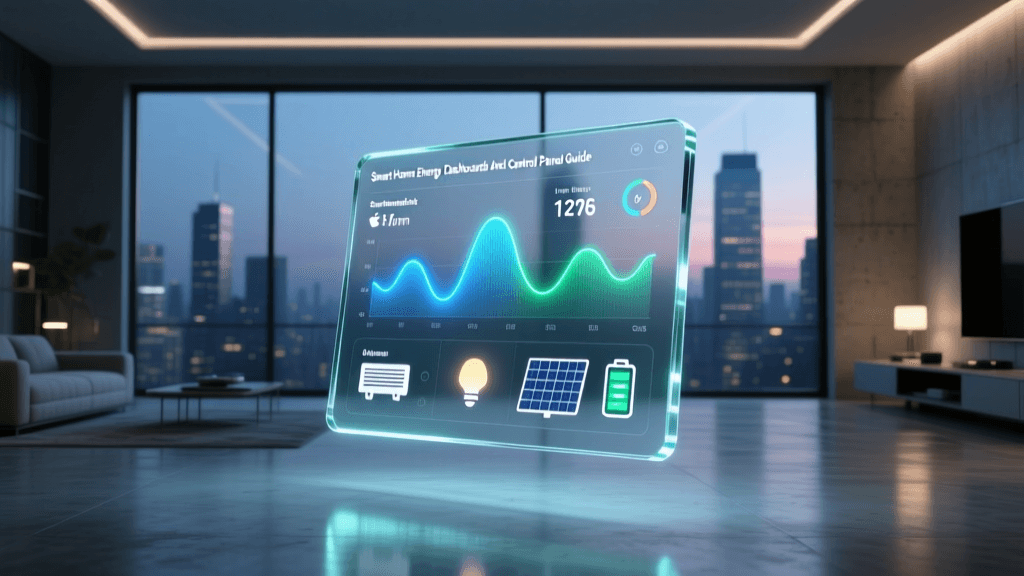
One of the most impactful applications of ambient AI and unified protocols is in energy management. The smart homes of the near future will not merely react to your thermostat adjustments; they will proactively manage your energy footprint by integrating with local utility grids, weather forecasts, and solar production data.
According to the U.S. Department of Energy, smart thermostats can significantly reduce heating and cooling costs, but the next generation of AI-driven energy management systems will take this further by participating in Demand Response programs automatically. The home will pre-cool itself during off-peak hours when electricity is cheap and abundant, then coast through peak pricing hours using thermal mass and predictive algorithms.
Reactive vs. Predictive Energy Management
| Feature | Reactive Smart Home (Current) | Predictive Ambient Home (Future) |
|---|---|---|
| Climate Control | Adjusts based on set schedules or manual geofencing. | Pre-cools/heats based on weather forecasts, grid pricing, and learned thermal properties of the house. |
| Lighting | Turns on/off via motion or time of day. | Dims dynamically based on natural sunlight ingress, circadian rhythm data, and room occupancy. |
| Appliance Usage | User delays dishwasher to off-peak hours manually. | AI automatically queues high-draw appliances to run when solar production peaks or grid rates drop. |
| Grid Interaction | Passive consumption. | Active VPP (Virtual Power Plant) participation, selling stored battery power back to the grid. |
Visualizing the Protocol Shift
As Matter and Thread mature, industry analysts project a rapid decline in proprietary, cloud-dependent legacy protocols. The chart below illustrates the projected crossover in global device adoption over the next five years.
Projected Global Smart Home Protocol Adoption showing Matter overtaking legacy systems
Proactive Health and Wellness Monitoring
The future smart home will double as a passive health and wellness monitor. Rather than requiring users to wear intrusive devices, the home itself will track vital environmental and biometric indicators.
- Air Quality Optimization: Advanced VOC (Volatile Organic Compound) and CO2 sensors will not only alert you to poor air quality but will proactively trigger HVAC dampers to increase fresh air intake or activate HEPA purifiers before you even notice a drop in air quality.
- Sleep and Fall Detection: Using the aforementioned mmWave radar, homes will monitor sleep quality through respiratory rate tracking without cameras. For aging-in-place scenarios, these same sensors can detect falls with high accuracy, instantly alerting emergency contacts without the privacy invasion of optical cameras.
- Water Quality and Leak Prevention: Smart water shutoff valves equipped with acoustic AI will learn the "sound" of your plumbing. If a pipe bursts or a toilet runs continuously, the AI recognizes the anomalous acoustic signature and shuts off the main water valve within seconds, preventing catastrophic damage.
Edge Computing: Solving the Privacy Dilemma
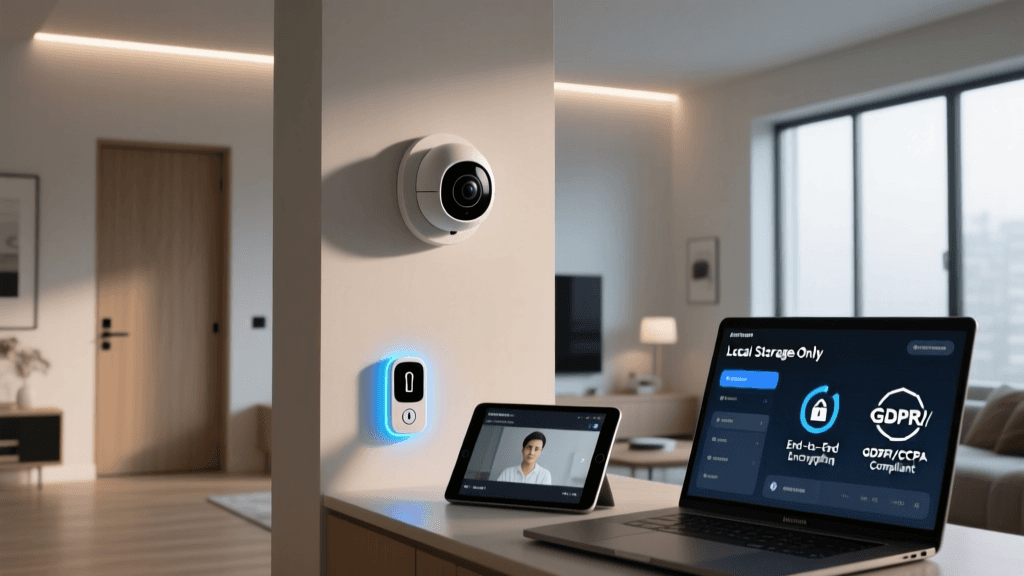
As homes become saturated with microphones, radar, and behavioral tracking, privacy concerns naturally escalate. The industry's answer to this is Edge Computing. Instead of sending your voice commands, occupancy data, and daily routines to distant cloud servers for processing, future smart home hubs will feature dedicated Neural Processing Units (NPUs) capable of running Large Language Models (LLMs) and machine learning algorithms locally.
The National Institute of Standards and Technology (NIST) emphasizes that securing IoT devices requires minimizing data exposure and ensuring robust local cybersecurity frameworks. Edge AI aligns perfectly with this mandate. When you ask your local AI assistant to "turn off the lights in the room where I left my laptop," the hub uses local spatial awareness and device states to execute the command. The audio and contextual data never leave your home network, effectively neutralizing the risk of cloud data breaches.
How to Future-Proof Your Home Today
While the full realization of Ambient AI is still on the horizon, the foundational infrastructure is available right now. If you are upgrading your home or starting a new smart home build, follow these actionable steps to ensure your setup is ready for the next era:
1. Invest in Thread Border Routers
Do not rely solely on your Wi-Fi router to handle dozens of IoT devices. Purchase dedicated Thread Border Routers or smart speakers that include Thread radios.
Recommended Gear: Apple HomePod Mini, Amazon Echo (4th Gen), or the Nanoleaf Skylight (which acts as a hidden Thread router).
Cost Range: $50 - $150 per unit.
2. Prioritize Matter-Certified Devices
When shopping for new smart plugs, switches, or sensors, look for the official Matter logo on the packaging. Even if you currently use a single ecosystem, buying Matter devices ensures that if you switch from Google to Apple (or vice versa) in the future, your hardware will not become obsolete e-waste.
Recommended Gear: Eve Energy Smart Plugs, Philips Hue Bridge (Matter updated), Aqara U100 Smart Lock.
Cost Range: $30 - $250 depending on device category.
3. Upgrade to Local Processing Hubs
To prepare for Edge AI and protect your privacy, transition away from cloud-dependent hubs. Explore local-first automation platforms that process logic on your own hardware.
Recommended Gear: Hubitat Elevation, Home Assistant Green, or Apple HomeKit (which processes most automations locally via the Apple TV).
Cost Range: $99 - $150.
4. Deploy mmWave Presence Sensors
Replace your aging PIR motion sensors with mmWave alternatives in high-traffic or stationary areas like home offices and living rooms. This will immediately unlock advanced ambient lighting and climate automations that feel truly magical.
Recommended Gear: Aqara FP2, PresenceOne, or Everything Presence One (for Home Assistant users).
Cost Range: $50 - $80 per sensor.
Conclusion
The transition from reactive smart gadgets to proactive, ambient intelligence represents the most significant leap in home automation since the invention of the Wi-Fi router. By leveraging the interoperability of the Matter protocol, the resilience of Thread mesh networks, and the privacy-preserving power of Edge AI, the smart homes of the near future will operate silently in the background. They will manage our energy, protect our health, and adapt to our routines without demanding our constant attention. By understanding these foundational concepts and investing in the right infrastructure today, you can ensure your home is not just smart for the current moment, but intelligent enough to evolve with the technologies of tomorrow.