The End of the "App Era" in Smart Homes
For the past decade, the smart home industry has been trapped in what technologists call the "App Era." We have essentially replaced physical wall switches with digital ones on our smartphones. While being able to turn off your living room lights from your bed is convenient, it is not truly "smart." It is merely remote control. The next massive leap in smart home technology is not about building better apps; it is about eliminating the need for them entirely.
As we look toward the future of home automation, the industry is pivoting toward ambient computing and predictive AI. Instead of waiting for a voice command or a tap on a screen, the next generation of smart homes will anticipate your needs, adjusting environments based on behavioral patterns, biometric data, and contextual awareness. This shift marks the transition from reactive gadgets to proactive, intuitive living spaces.
What is Ambient Computing?
Ambient computing refers to a network of hardware and software that works seamlessly in the background, blending into your environment until it is needed. The concept, originally coined as "ubiquitous computing" by Mark Weiser in the early 1990s, envisions technology that is so deeply integrated into daily life that it becomes invisible.
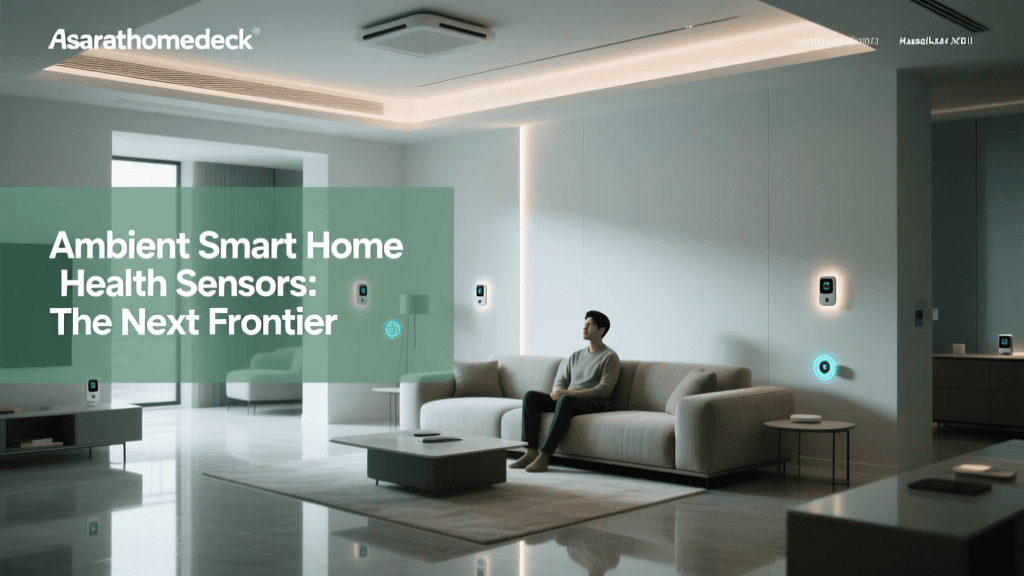
In a modern smart home context, ambient computing means your house uses a mesh of invisible sensors, local processing, and machine learning to understand the context of a room. It knows the difference between you walking through a hallway to get a glass of water at 2:00 AM versus walking into the kitchen to start your morning routine. The lighting, temperature, and audio adjust accordingly, without you ever issuing a command.
The Shift from Reactive to Predictive
Most current smart home setups are reactive. A sensor detects a trigger, and an automation executes a response. The future is predictive. Predictive smart homes utilize machine learning algorithms to analyze historical data and environmental variables to forecast what you will need before you ask for it.
| Feature | Reactive Smart Home (Current) | Predictive Smart Home (Future) |
|---|---|---|
| Lighting | Turns on when motion is detected. | Adjusts color temperature based on your circadian rhythm and time of day. |
| Climate Control | Adjusts when a smart thermostat detects you are home. | Pre-cools the house based on your GPS trajectory and real-time weather shifts. |
| Security | Sends an alert when a door opens unexpectedly. | Recognizes the gait of family members vs. strangers using local AI vision. |
| Energy Management | Runs appliances on a set schedule. | Predicts grid peak pricing and automatically shifts heavy loads to off-peak hours. |
Edge AI: Processing Data Where It Happens
The backbone of the predictive smart home is Edge AI. Historically, smart home devices sent data to the cloud for processing, which introduced latency, required constant internet connectivity, and raised severe privacy concerns. Edge AI flips this model by processing data locally on the device or a local hub.
By keeping data on the edge, predictive models can react in milliseconds. For example, a local AI hub can process audio from a baby monitor to distinguish between a cough and a cry, adjusting the nursery's white noise machine instantly without sending audio to a remote server.
Projected Market Share of Edge AI vs Cloud AI in Smart Home Devices
According to industry analyses on TinyML and Edge AI, the proliferation of low-power neural processing units (NPUs) in everyday silicon is making local intelligence cheaper and more accessible than ever before.
Core Technologies Driving the Predictive Home
To build a home that anticipates your needs, several converging technologies are stepping out of the lab and into consumer products.
mmWave Radar Sensors
Standard Passive Infrared (PIR) motion sensors only detect large movements. If you sit still reading a book, a PIR sensor assumes the room is empty and turns off the lights. Millimeter-wave (mmWave) radar operates at high frequencies (typically 60GHz) and can detect micro-movements, including the rise and fall of your chest as you breathe.
- Product to Watch: Aqara FP2 Presence Sensor (approx. $60). It maps rooms in 3D zones and can detect falls, sleep states, and precise location without using cameras.
- Cost Range: $30 to $80 per sensor.
Local Large Language Models (LLMs)
Voice assistants are evolving from rigid command-responders to conversational agents powered by local LLMs. Hardware like the Home Assistant Green or custom ODROID setups are now capable of running quantized models (like Llama 3 or Whisper) locally. This means you can say, "It's a bit stuffy in here and I'm trying to read," and the local AI will understand the context, dimming the lights to a warm 2700K and turning on the air purifier, all without an internet connection.
Matter and Thread Interoperability
Predictive AI requires massive amounts of contextual data from diverse sensors. The Matter protocol, built on the Thread mesh network, ensures that devices from different manufacturers can share state data locally and instantly. Thread's low-latency, self-healing mesh network is the perfect nervous system for ambient computing, allowing hundreds of low-power sensors to communicate without clogging up your home's Wi-Fi bandwidth.
Energy Management and Predictive HVAC
One of the most practical applications of predictive AI is in energy management. The U.S. Department of Energy highlights that smart thermostats can save households up to 10-15% on heating and cooling costs. However, next-generation predictive HVAC systems go beyond simple geofencing.
Future systems will integrate with local weather APIs, grid pricing data, and your home's thermal mass profile. If the system predicts a heatwave hitting at 4:00 PM and knows your utility company charges peak rates between 5:00 PM and 8:00 PM, it will pre-cool your home at 2:00 PM using cheaper, off-peak electricity, then coast through the evening using the retained thermal inertia of your house. Devices like the Ecobee SmartThermostat Premium (approx. $250) are already laying the groundwork for this by integrating occupancy sensors and grid-aware eco+ features.
"The smart home of the future isn't about controlling your devices; it's about your devices understanding you. The ultimate interface is no interface at all."
Privacy in an Always-On Environment
A predictive home requires constant observation. It needs to know when you wake up, what rooms you occupy, and what your habits are. This raises significant privacy concerns. The Electronic Privacy Information Center (EPIC) has long warned about the vulnerabilities of internet-connected IoT devices and the data harvesting practices of major tech conglomerates.
The solution to the privacy paradox of ambient computing is localization. By utilizing Edge AI and local hubs (like Apple's HomePod with its Secure Enclave, or open-source platforms like Home Assistant), the behavioral models are trained and stored strictly on your local network. Your daily routines never touch a cloud server, ensuring that your most intimate domestic data remains entirely yours.
How to Future-Proof Your Smart Home Today
You do not need to wait a decade to experience the benefits of predictive ambient computing. Here is how you can prepare your home infrastructure for the shift:
- Upgrade Your Border Routers: Invest in Thread border routers. Devices like the Apple TV 4K (3rd Gen) or Amazon Echo (4th Gen) act as bridges for low-power Thread sensors, allowing you to deploy dozens of ambient sensors without degrading your Wi-Fi.
- Replace PIR with mmWave: Identify the high-friction areas in your home where lights turn off while you are sitting still. Replace standard motion sensors with mmWave presence sensors like the SwitchBot Presence Sensor or Aqara FP2.
- Centralize with a Local Hub: Move away from cloud-dependent ecosystems. Set up a Home Assistant Green (approx. $99) to act as your local brain. This allows you to write complex, multi-variable predictive automations that execute instantly, regardless of your internet status.
- Focus on Contextual Sensors: Instead of buying more smart bulbs, invest in environmental sensors that measure VOCs (Volatile Organic Compounds), CO2, and ambient lux. Feeding this data into your local hub allows your HVAC and lighting to react to the actual quality of the room, not just a timer.
Conclusion
The transition from reactive smart homes to predictive ambient computing represents the maturation of the IoT industry. We are moving away from the novelty of voice-controlled lightbulbs and entering an era where our homes act as silent, intelligent partners in our daily lives. By investing in local processing, Thread networks, and advanced presence detection today, you are building the foundation for a home that doesn't just respond to your commands, but genuinely understands your life.