The Shift from Convenience to Care
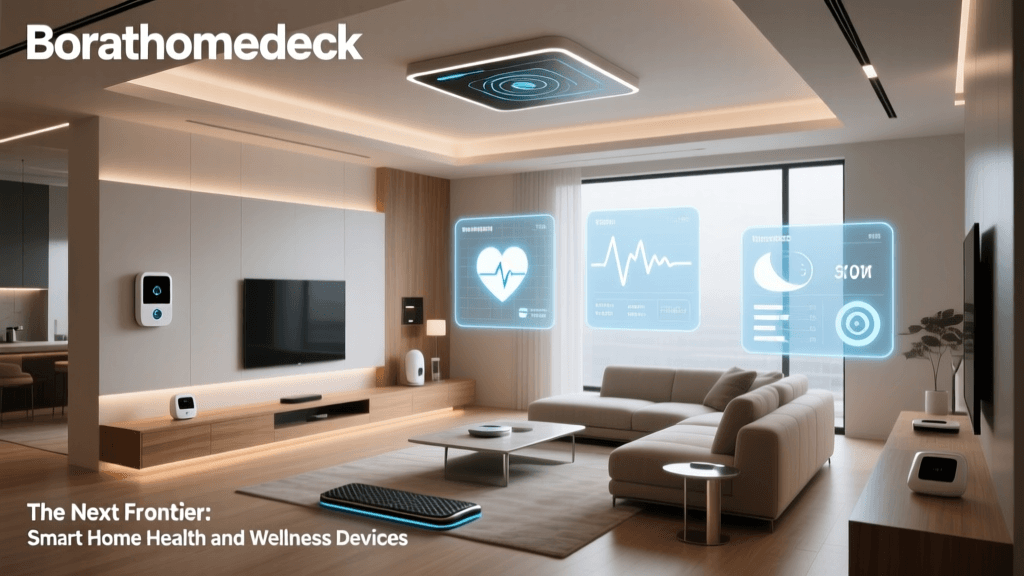
For the past decade, the smart home industry has been primarily driven by convenience and entertainment. We have grown accustomed to voice-activated lights, automated thermostats, and robotic vacuums. However, a profound paradigm shift is currently underway. The next frontier of the Internet of Things (IoT) is not just about making our lives easier; it is about making our lives healthier, safer, and longer. This emerging category is known as ambient health monitoring, and it represents the most significant evolution in smart home technology to date.
Unlike wearable devices that require user compliance—remembering to charge a smartwatch or strap on a chest monitor—ambient health devices operate invisibly in the background. They transform the physical structure of your home into a proactive wellness hub. From radar-based fall detection for aging in place to biometric sleep trackers that adjust your bedroom's microclimate, these emerging smart home categories are bridging the gap between consumer electronics and preventative healthcare.
According to the Centers for Disease Control and Prevention (CDC), aging in place is a top priority for older adults, and smart home technology is becoming a critical enabler of independent living. By leveraging ambient sensors, families can monitor the well-being of loved ones without compromising their privacy or dignity with invasive cameras.
What is Ambient Health Monitoring?
Ambient health monitoring refers to the continuous, non-intrusive collection of physiological and environmental data using sensors integrated into the home's infrastructure. The core philosophy is "zero-friction tracking." You do not need to press a button, wear a gadget, or interact with an app. The home simply observes and reacts.
This is achieved through a variety of advanced sensor technologies:
- mmWave Radar (Millimeter Wave): Uses high-frequency radio waves to detect micro-movements, such as the rise and fall of a chest during breathing, even through thick bedding or walls.
- Ballistocardiography (BCG): Measures the mechanical forces generated by the heart's ejection of blood, often via under-mattress pneumatic or piezoelectric sensors.
- Environmental Spectrometry: Laser and chemical sensors that detect microscopic particulate matter, volatile organic compounds (VOCs), and carbon dioxide levels in real-time.
Core Categories of Emerging Wellness Devices
1. Radar-Based Fall Detection and Vitals Tracking
Camera-based monitoring in private areas like bathrooms and bedrooms is a major privacy concern. Enter mmWave radar. Devices like the Vayyar Care sensor use 4D imaging radar to map a room and track human movement. If a sudden change in elevation and subsequent stillness is detected, the system triggers an alert to caregivers or emergency services. Furthermore, advanced radar units placed on a nightstand can track resting heart rate and respiratory rate without any physical contact, providing vital baseline health metrics over time.
2. Smart Sleep Ecosystems
Sleep is the foundation of cognitive and physical recovery. The Sleep Foundation notes that while wearables are popular, under-mattress and active-bed trackers are gaining traction for their superior comfort and continuous environmental adjustments. The Eight Sleep Pod 4 is a prime example of an active wellness device. It doesn't just track your heart rate variability (HRV) and sleep stages; it uses that data to dynamically adjust the temperature of your side of the bed, cooling you down during deep sleep and warming you up to trigger a natural circadian wake-up.
Alternatively, the Withings Sleep Tracking Mat slides under the mattress to detect sleep apnea disturbances, snoring patterns, and heart rate anomalies, syncing seamlessly with Apple Health and Google Fit.
3. Advanced Environmental Wellness
Indoor air quality (IAQ) has a direct impact on respiratory health, cognitive function, and sleep quality. High CO2 levels in a closed bedroom can lead to grogginess, while elevated VOCs from household cleaners can trigger asthma. Devices like the Awair Element monitor PM2.5, VOCs, CO2, humidity, and temperature. When paired with smart HVAC systems or purifiers like the Dyson Purifier Humidify+Cool Formaldehyde, the home can automatically flush the room with fresh air or activate HEPA filtration the moment air quality degrades.
Device Comparison: Top Ambient Trackers
Choosing the right ambient health device depends on your specific wellness goals, budget, and ecosystem compatibility. Below is a comparison of three leading devices shaping the future of smart home health.
| Device | Primary Function | Sensor Technology | Ecosystem / App | Approx. Cost |
|---|---|---|---|---|
| Withings Sleep Tracking Mat | Sleep Apnea & Heart Rate | Pneumatic / BCG | Withings+ / Apple Health | $129 |
| Eight Sleep Pod 4 | Thermoregulation & Biometrics | Pressure / Temp Sensors | Eight Sleep (Standalone) | $2,295+ |
| Vayyar Care | Fall Detection & Room Occupancy | 60GHz mmWave Radar | Vayyar App / Smart Home Hubs | $300 (est.) |
| Awair Element | Indoor Air Quality (IAQ) | Chemical / Laser Spectrometry | Awair / HomeKit / Alexa | $299 |
Market Growth: Ambient vs. Wearable Health Tech
While wearable fitness trackers currently dominate the consumer health market, ambient smart home devices are experiencing a faster growth rate in the healthcare and aging-in-place sectors. The chart below illustrates the projected market expansion of ambient health devices compared to traditional wearables over the next few years.
Projected Market Size: Ambient vs. Wearable Health Tech
As the data suggests, the ambient sector is rapidly closing the gap, driven by advancements in radar miniaturization and the increasing demand for non-intrusive eldercare solutions.
Ecosystem Integration and Automations
The true power of ambient health monitoring is unlocked when devices communicate with your broader smart home ecosystem. Standalone data is interesting; automated environmental responses are life-changing.
Scenario 1: The Circadian Bedroom
Imagine your Withings Mat detects that you have entered REM sleep. It signals your smart home hub (such as Apple HomeKit or Home Assistant) to ensure the smart thermostat drops the bedroom temperature to 65°F (18°C), which is clinically proven to optimize deep sleep. Simultaneously, the smart blinds ensure they are fully closed to block ambient streetlights. When the mat detects you are entering a light sleep phase near your target wake-up time, it triggers your smart bulbs to slowly fade up to a warm 2700K, simulating a natural sunrise and suppressing melatonin production gently.
Scenario 2: Cognitive Air Quality Management
If you work from home, cognitive fatigue is a real issue. By integrating an Awair Element with your smart HVAC system via IFTTT or native routines, you can create a "Brain Fog Prevention" automation. When CO2 levels in your home office exceed 1,000 ppm, the system automatically turns on the smart exhaust fan, opens the motorized window actuator, and sends a notification to your phone suggesting a 5-minute stretch break.
Scenario 3: Aging in Place Safety Nets
For elderly relatives living alone, a Vayyar radar sensor in the bathroom can be integrated with smart lighting and alerts. If the sensor detects a fall, it can immediately flash all smart lights in the house red (to alert other occupants), unlock the smart front door for paramedics, and initiate an automated voice call to a designated caregiver.
Privacy, Security, and HIPAA Considerations
Health data is the most sensitive category of personal information. When bringing medical-grade sensors into your home, privacy must be a primary consideration. It is crucial to understand that most consumer smart home devices are not HIPAA-compliant. They are regulated as consumer electronics or general wellness products, not medical devices.
To protect your biometric data, prioritize devices and ecosystems that support local processing. The Connectivity Standards Alliance (CSA) has developed the Matter protocol, which not only ensures cross-brand compatibility but also mandates robust, end-to-end encryption for data in transit. Furthermore, platforms like Apple HomeKit process a significant amount of health and occupancy data locally on the HomePod hub, minimizing the amount of biometric data sent to third-party cloud servers.
Pro-Tip: Always review a device's privacy policy to see if your sleep patterns or room occupancy data is being sold to third-party data brokers or used to train external AI models. Opt for devices that offer a "local-only" or "privacy mode" toggle.
Actionable Guide: Building Your Wellness Home
Transitioning your home into an ambient wellness environment does not require a complete tear-down and rebuild. You can adopt these emerging categories in phases based on your budget and immediate needs.
Phase 1: The Sleep Sanctuary (Budget: $150 - $350)
Start with the room where you spend a third of your life. Purchase an under-mattress tracker like the Withings Sleep Tracking Mat ($129) or a dedicated smart air quality monitor like the Awair Element ($299). Link these to your existing smart bulbs and thermostat. Actionable Step: Create a "Sleep Hygiene" routine in your smart home app that turns off all screens and dims lights to 20% brightness one hour before your tracker's historical average bedtime.
Phase 2: The Active Environment (Budget: $500 - $1,500)
Upgrade your environmental controls. Invest in a smart air purifier with HEPA and carbon filters that responds to your IAQ monitor. If you suffer from night sweats or sleep disruptions, consider upgrading to an active cooling mattress cover like the BedJet or the Eight Sleep Pod system. Actionable Step: Set up geofencing automations that trigger the air purifier to run on "High" when you are leaving work, ensuring the home is scrubbed of allergens before you arrive.
Phase 3: Comprehensive Care & Aging in Place (Budget: $500 - $2,000+)
For multi-generational homes or those caring for aging parents, install mmWave radar sensors in high-risk areas like bathrooms, hallways, and kitchens. Pair these with smart speakers equipped with voice-activated emergency calling. Actionable Step: Establish a "No-Movement Alert" routine. If the radar sensor in the bedroom detects zero movement and zero respiration for more than 8 hours (indicating the occupant has left for the day), the system logs a safe "Out of Bed" status. If no movement is detected by 11:00 AM, it sends a check-in push notification to family members.
Conclusion
The narrative of the smart home is maturing. We are moving past the novelty of asking a speaker to play music and stepping into an era where our homes actively participate in our biological well-being. Ambient health monitoring represents the perfect intersection of interior design, advanced sensor technology, and preventative medicine. By carefully selecting non-intrusive, privacy-focused devices and integrating them into automated routines, you can transform your living space from a passive shelter into an active partner in your long-term health and longevity. Whether you are optimizing your sleep architecture, managing indoor air toxins, or ensuring the safety of an aging loved one, the future of smart home wellness is already here, quietly working in the background.