The Paradigm Shift: From Reactive to Predictive
The smart home industry is standing on the precipice of a monumental shift. For the past decade, home automation has largely been defined by reactive commands: you speak to a speaker, tap a screen, or set a rigid schedule to control your environment. However, the next era of smart home technology is moving away from manual inputs and cloud-dependent latency. We are entering the age of Edge Artificial Intelligence (Edge AI) and universal interoperability driven by the Matter protocol. This transition promises to turn our homes from remotely controlled houses into autonomous, predictive environments that anticipate our needs while fiercely guarding our privacy.
As we look toward the future of smart home basics and education, understanding the convergence of local processing power and unified communication standards is critical. Whether you are a seasoned home automation enthusiast or just beginning to research smart home ecosystems, the hardware and software decisions you make today will dictate how seamlessly your home adapts to tomorrow's innovations. The days of relying on distant servers to turn on your living room lights are numbered, replaced by intelligent, localized networks that operate with the speed and reliability of biological reflexes.
What is Edge AI and Why Does It Matter?
Edge AI refers to the deployment of artificial intelligence algorithms directly on local hardware devices—such as smart hubs, cameras, and thermostats—rather than relying on distant cloud servers. In the current smart home landscape, a simple voice command or motion detection event often requires data to travel to a remote server, be processed, and send a signal back. This introduces latency, requires a constant internet connection, and raises significant privacy concerns regarding who owns and stores your household data.
By integrating Neural Processing Units (NPUs) directly into smart home hubs and endpoints, Edge AI enables instantaneous, local decision-making. Major tech companies are already embedding specialized silicon, like Amazon's AZ1 Neural Edge processor or Apple's M-series chips, into home hubs to handle complex machine learning tasks locally. Here is how Edge AI will redefine the smart home experience:
- Zero-Latency Automation: Local processing reduces response times from seconds to mere milliseconds. When a motion sensor detects you entering a room, the lighting and climate adjustments happen instantly, without waiting for a cloud server to approve the action.
- Enhanced Privacy and Security: With Edge AI, sensitive data like voice recordings and camera feeds never leave your local network. The AI processes the data on-site, extracting only the necessary metadata (e.g., "person detected" or "command recognized") and discarding the raw media immediately.
- Offline Resilience: A smart home should not become a "dumb" home when your internet service provider experiences an outage. Edge AI ensures that your critical automations, security routines, and lighting schedules continue to function flawlessly without an active WAN connection.
- Local Natural Language Processing: The next generation of smart speakers will utilize localized Large Language Models (LLMs) to understand context, nuance, and conversational follow-ups without sending your private conversations to the cloud for transcription.
The Next Phase of the Matter Protocol
The introduction of the Matter protocol was the first step toward ending the fragmented "walled garden" ecosystem of smart home devices. Backed by the Connectivity Standards Alliance (CSA), Matter ensures that devices from different manufacturers can communicate seamlessly over your local IP network. But what comes next? The future of Matter lies in its expanding device categories and its synergy with Thread.
Thread is a low-power, mesh-networking protocol that acts as the ideal transport layer for Matter devices. According to the Thread Group, this IPv6-based mesh network eliminates the Wi-Fi congestion that plagues modern homes with dozens of connected devices. Upcoming revisions to the Matter standard are slated to include complex device types such as robot vacuums, electric vehicle (EV) chargers, and advanced water management systems. This means your smart home will not only control your lights and locks but will actively manage your home's energy grid, water consumption, and physical maintenance.
According to the U.S. Department of Energy, smart home energy management systems are pivotal for future grid stability. As Matter integrates with solar inverters and home battery storage, Edge AI will predict your energy needs, automatically charging your EV or home battery when grid prices are lowest, and selling power back to the grid during peak hours—all without cloud intervention.
Hardware Comparison: Preparing Your Hub Infrastructure
To take advantage of Edge AI and the expanding Matter ecosystem, your home requires a robust local hub capable of acting as a Thread Border Router and an Edge AI processor. Below is a comparison of current and upcoming hub architectures designed for the future of local automation.
| Hub Model | Local Processing | Protocol Support | Price Range | Best For |
|---|---|---|---|---|
| Homey Pro (2023) | Yes (Advanced) | Matter, Thread, Zigbee, Z-Wave | $399 | Power users wanting total local control |
| Apple TV 4K (3rd Gen) | Yes (Siri/HomeKit) | Matter, Thread, Wi-Fi | $129 - $149 | Apple ecosystem loyalists |
| Hubitat Elevation | Yes (Rule Machine) | Zigbee, Z-Wave, Matter (via update) | $149 | DIY automation enthusiasts |
| Amazon Echo (4th Gen) | Partial (AZ1 Neural Edge) | Matter, Thread, Zigbee | $99 | Budget-friendly smart home starters |
Visualizing the Transition to Local Intelligence
The industry is rapidly moving away from cloud-dependent architectures. The following chart illustrates the projected market shift toward Edge AI and local processing over the next five years, driven by consumer demand for privacy, speed, and reliability.
Projected adoption of Edge AI vs Cloud-dependent smart home devices over the next five years.
Five Bold Predictions for the Next Generation of Smart Homes
Based on current hardware trajectories and protocol development, here are five actionable predictions for what is coming next in the smart home space:
1. Ambient Computing and Invisible Interfaces
The need to open a smartphone app or shout a wake word will diminish. Edge AI will utilize mmWave (millimeter wave) radar and localized acoustic sensors to track occupancy, breathing patterns, and gestures. Devices like the Aqara FP2 Presence Sensor are just the beginning. Soon, your home will adjust lighting color temperature based on your circadian rhythm and detect if a resident has fallen, all without requiring wearable devices or invasive cameras.
2. Hyper-Personalized Climate Micro-Zones
Instead of a single thermostat governing an entire floor, Edge AI will coordinate with smart vents, localized ceiling fans, and radiant floor heating to create micro-climates. The system will learn that one occupant prefers a cooler environment while reading in the den, and will dynamically route HVAC airflow to match individual preferences in real-time, drastically reducing overall energy consumption while maximizing comfort.
3. Decentralized Security and Local Facial Recognition
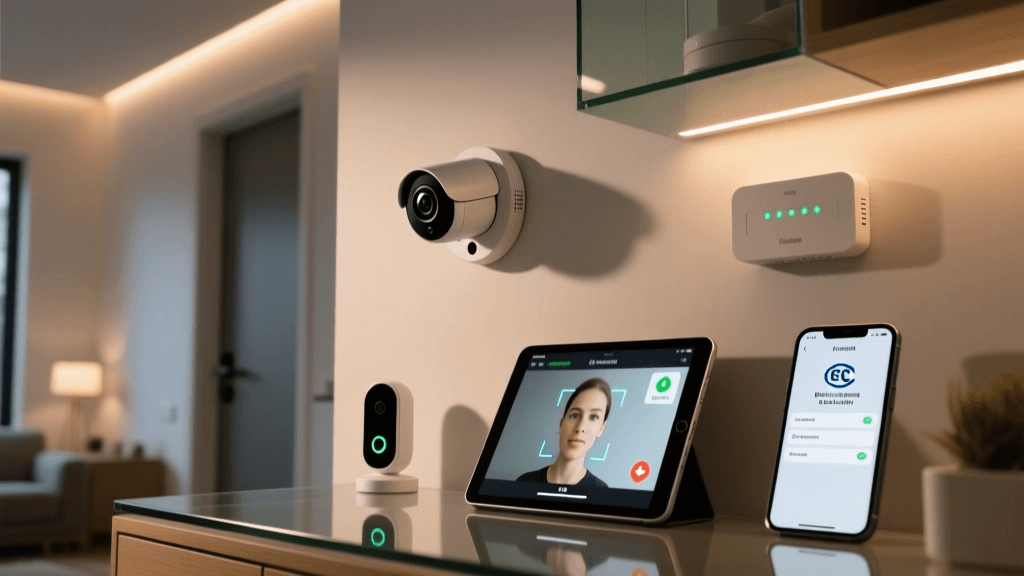
Security cameras will no longer require monthly cloud subscriptions for facial recognition. Next-generation cameras equipped with local NPUs will identify family members, friends, and potential threats entirely on the edge. This eliminates the risk of cloud data breaches and ensures that your private property footage remains strictly on your local network-attached storage (NAS) or encrypted hub.
4. Autonomous Water and Leak Mitigation
Water damage is one of the most costly home insurance claims. Future smart homes will feature AI-driven acoustic leak detectors that listen for the specific frequency of pressurized water escaping a pipe. Coupled with Matter-compatible smart water shutoff valves, the home will autonomously sever the main water line within milliseconds of detecting a catastrophic leak, preventing thousands of dollars in damage.
5. Predictive Maintenance for Appliances
Major appliances will utilize Edge AI to monitor their own mechanical health. By analyzing the vibration patterns of a washing machine motor or the power draw of a refrigerator compressor, the local hub will predict component failures weeks before they happen, automatically ordering replacement parts or scheduling a technician before a breakdown occurs.
Actionable Steps to Future-Proof Your Home Today
You do not need to wait for the future to arrive to start preparing your home's infrastructure. Here are practical, cost-effective steps you can take today to ensure your smart home is ready for the Edge AI and Matter revolution:
- Invest in a Thread Mesh Network: Thread is the backbone of the future smart home. Purchase devices that double as Thread Border Routers, such as the Apple TV 4K, Nest Hub (2nd Gen), or Amazon Echo (4th Gen). This creates a self-healing, low-latency mesh network that will support the next generation of Matter sensors without clogging your Wi-Fi bandwidth.
- Prioritize Local-First Hubs: If you are serious about automation, invest in a hub that prioritizes local execution. The Homey Pro ($399) or Hubitat Elevation ($149) are excellent choices that allow you to build complex automations that survive internet outages and keep your data strictly on your local network.
- Look for the Matter Badge: When purchasing new smart plugs, lighting, or sensors, ensure they carry the official Matter logo. This guarantees that the device uses standardized local IP communication, protecting your investment from proprietary ecosystem lock-in and ensuring cross-platform compatibility.
- Upgrade Your Network Infrastructure: A local-first smart home generates significant internal network traffic. Upgrade to a Wi-Fi 6 or Wi-Fi 7 mesh router system with robust IoT network segmentation (VLAN support) to ensure your smart devices have dedicated bandwidth and are isolated from your personal computing devices for enhanced security.
- Deploy a UPS for Critical Hubs: To truly achieve local resilience, connect your primary smart home hub, router, and Thread border routers to an Uninterruptible Power Supply (UPS). This ensures that your security automations, smart locks, and local lighting routines continue to function even during localized power grid failures.
Conclusion
The future of the smart home is not about adding more screens or requiring more manual inputs; it is about creating an environment that intuitively understands and adapts to its inhabitants. The convergence of Edge AI and the Matter protocol will finally deliver on the original promise of home automation: a seamless, secure, and highly efficient living space. By understanding these foundational shifts and investing in local-first, Thread-enabled hardware today, you can build a smart home ecosystem that is not only relevant for the current market but fully prepared for the autonomous innovations on the horizon. The smart home is growing up, and it is learning to think for itself.