The Shift from Wearables to Ambient Sensing
For the past decade, the smart home health narrative has been dominated by wearables. Smartwatches and fitness rings have successfully introduced consumers to biometric tracking, measuring everything from heart rate variability (HRV) to blood oxygen levels. However, wearables suffer from a fundamental flaw: user friction. Charging requirements, skin irritation, and the simple discomfort of wearing a device to bed lead to significant gaps in data collection.
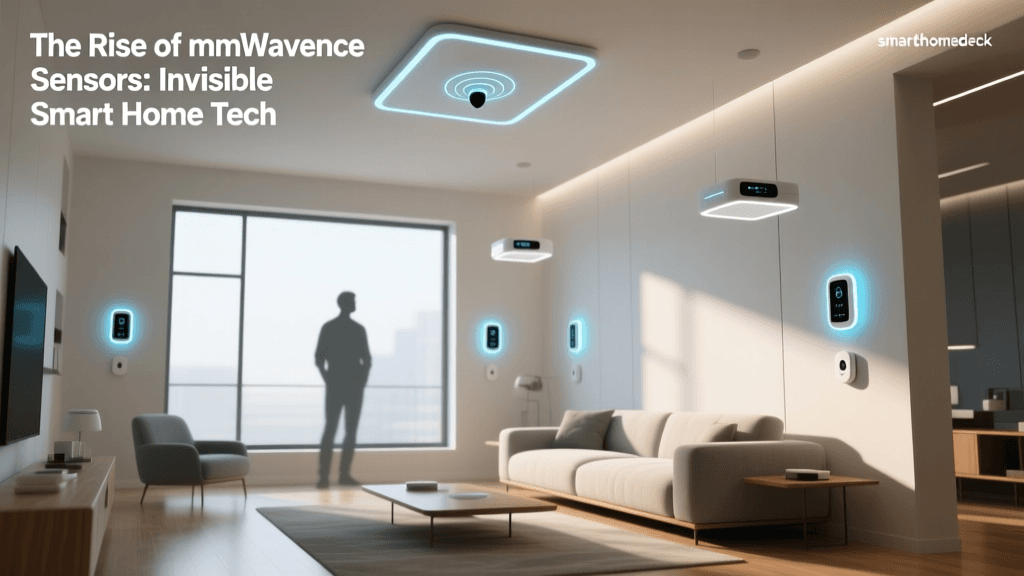
The next frontier in smart home basics and education is ambient sensing. This emerging category transforms the physical structure of your home into a passive, continuous health monitor. By utilizing advanced radar, ballistocardiography, and hyperspectral environmental sensors, next-generation smart home health monitoring devices track your well-being without requiring you to wear, charge, or interact with them. This shift moves the smart home from a reactive tool for convenience into a proactive ecosystem for longevity and preventive care.
Core Categories of Emerging Health Devices
To understand how to build a comprehensive wellness ecosystem, we must break down the three primary categories of ambient health technology currently entering the consumer market.
1. Sleep Architecture and Vitals Monitoring
Sleep is the foundation of human health, yet traditional smartwatches often disrupt it. Emerging under-mattress sensors utilize ballistocardiography (BCG)—a technique that measures the micro-movements of the body caused by the sudden ejection of blood into the great vessels with each heartbeat.
- Withings Sleep Tracking Mat ($129): Slips under the mattress and tracks sleep cycles (Light, Deep, REM), heart rate, and snoring patterns. It integrates with IFTTT to trigger smart home routines, such as turning off the lights when you fall asleep or raising the thermostat if your body temperature drops.
- Emfit QS Active ($299): Geared toward biohackers and athletes, this medical-grade sensor provides highly accurate HRV data and recovery scores without any physical contact. It operates via Wi-Fi and pushes data directly to platforms like Apple HealthKit and Garmin Connect.
2. Environmental Health and Air Quality
The air inside your home can be up to five times more polluted than outdoor air, according to the EPA. Emerging environmental monitors go far beyond basic thermometers, tracking invisible cognitive and respiratory disruptors.
- Awair Element ($299): Tracks PM2.5 (fine particulate matter), VOCs (volatile organic compounds from off-gassing furniture and cleaning supplies), CO2, temperature, and humidity. High indoor CO2 levels (above 1,000 ppm) are scientifically linked to cognitive decline and poor sleep quality. The Awair integrates with smart HVAC systems to automatically trigger ventilation when VOCs spike.
- Airthings View Plus ($299): The gold standard for radon detection. Radon is a radioactive gas that is the second leading cause of lung cancer. The View Plus monitors radon, PM2.5, and airborne chemicals, providing long-term trend analysis that is critical for home buyers and those living in high-radon geological zones. For more on understanding local outdoor baselines, you can cross-reference your data with AirNow.gov.
3. Privacy-First Fall Detection and Mobility Tracking
For aging-in-place and elderly care, cameras are a massive privacy violation. The future of smart home elder care relies on 60GHz RF (Radio Frequency) radar.
- Vayyar Care ($300 - $500 per sensor): This device emits harmless radio waves that map the room in 3D. It can distinguish between a person, a pet, and a piece of furniture based on micro-Doppler signatures. If a user falls, the sensor detects the sudden change in elevation and posture, automatically triggering an alert to caregivers or emergency services. Furthermore, it tracks passive mobility metrics, such as bathroom frequency, which can be an early indicator of urinary tract infections (UTIs) in elderly patients.
Device Comparison Matrix
When selecting devices for your health ecosystem, compatibility and data aggregation are just as important as the hardware itself. Below is a comparison of top emerging devices.
| Device | Category | Price Range | Connectivity | Ecosystem / Data Aggregator |
|---|---|---|---|---|
| Withings Sleep Mat | Sleep & Vitals | $129 | Wi-Fi 2.4GHz | Apple Health, IFTTT, Google Fit |
| Awair Element | Air Quality | $299 | Wi-Fi | Awair API, SmartThings, Alexa |
| Airthings View Plus | Air & Radon | $299 | Wi-Fi, Thread, BLE | Airthings Cloud, Home Assistant |
| Vayyar Care | Fall Detection | $300+ | Wi-Fi, BLE | Proprietary Cloud, Caregiver Apps |
Visualizing the Ambient Health Market
While wearables currently hold a larger market share, the adoption rate of ambient home sensors is growing exponentially as consumers seek passive, frictionless monitoring. The chart below illustrates the projected household adoption rates over the next five years.
The Role of AI and Predictive Analytics
The true power of next-generation smart home health monitoring devices lies not in isolated data points, but in AI-driven cross-correlation. Modern smart home hubs and cloud platforms are beginning to overlay environmental data with biometric data to uncover hidden health triggers.
For example, an AI algorithm might notice that your deep sleep phases (tracked by your under-mattress sensor) consistently decrease by 15% on nights when your bedroom CO2 levels exceed 1,200 ppm (tracked by your Awair Element). The system can then autonomously adjust your smart HVAC damper or trigger a smart window actuator to introduce fresh air at 11:00 PM, proactively solving a health issue you didn't even know you had.
This level of predictive automation is the holy grail of the smart home. It transitions the technology from a dashboard of metrics into an active participant in your biological well-being.
Privacy, Security, and Data Ownership
Health data is the most sensitive category of personal information. When your home is tracking your sleep apnea indicators, heart rate, and bathroom habits, the security architecture of your devices is paramount.
When evaluating emerging health devices, prioritize those that utilize edge computing and local processing. Devices like Vayyar process radar point-clouds locally on the device's internal chip, meaning only metadata (e.g., 'Fall Detected') is sent to the cloud, not the raw spatial mapping of your room.
Furthermore, as the FDA begins to regulate certain consumer health devices that claim to detect medical conditions like Atrial Fibrillation (AFib) or Sleep Apnea, the line between consumer electronics and medical devices is blurring. You can track the evolving regulatory landscape for digital health tools via the FDA Digital Health Center of Excellence.
For general IoT security, ensure your home network is segmented. Place all health and environmental sensors on a dedicated IoT VLAN or guest network to prevent potential vulnerabilities in a smart air monitor from providing a backdoor to your personal computers or smartphones. Adhering to frameworks like the NIST IoT Cybersecurity Guidelines is highly recommended for advanced smart home users.
Actionable Buying Guide: Building Your Health Ecosystem
If you are ready to integrate health monitoring into your smart home, follow this phased approach to ensure compatibility and avoid sensor fatigue.
Step 1: Audit Your Baseline Environment
Before buying biometric trackers, fix your environment. Start with an air quality monitor like the Awair Element or Airthings View Plus. Identify if your home suffers from high VOCs, poor ventilation, or radon risks. There is no use in optimizing your sleep schedule if your bedroom air quality is causing respiratory distress.
Step 2: Implement Frictionless Sleep Tracking
Ditch the smartwatch for sleep. Invest in an under-mattress BCG sensor. Ensure the device you choose supports the data aggregator you prefer (Apple HealthKit is currently the most robust for third-party health data ingestion). Set up automations: use the 'Sleep Detected' trigger to arm your security system, lock smart locks, and dim smart lighting.
Step 3: Consider Ambient Care for Aging Relatives
If you are managing the care of an elderly parent living alone or in an in-law suite, bypass cameras entirely. Install 60GHz radar sensors in high-risk areas like bathrooms and hallways. Ensure the device offers multi-user caregiver alerts via SMS or push notifications, and verify that the hardware can differentiate between a dropped object and a human fall to prevent alert fatigue.
Step 4: The Matter Protocol and Future-Proofing
While the Matter smart home protocol currently focuses heavily on utility and convenience (lights, locks, thermostats), its underlying Thread networking layer is vital for health sensors. Thread allows low-power environmental sensors to run on batteries for years while maintaining a robust, self-healing mesh network. When purchasing new air quality or leak/moisture detectors, look for 'Thread-enabled' or 'Matter-ready' badges to ensure they will integrate seamlessly with future hub ecosystems from Apple, Google, and Amazon.
Conclusion
The future of the smart home is deeply biological. By moving away from active, screen-based interactions and embracing passive, ambient sensing, we can create living spaces that actively nurture our health. From tracking the micro-vibrations of our heartbeats to monitoring the invisible gases we breathe, next-generation smart home health monitoring devices represent the most meaningful evolution in domestic technology to date. By carefully selecting privacy-first, highly integrated devices, you can transform your home into a proactive sanctuary for long-term wellness.