The Next Frontier: Interoperability and Intelligence
For over a decade, the smart home industry has been plagued by fragmentation. Consumers were forced to choose between walled gardens, juggling multiple apps, and dealing with devices that refused to communicate across different ecosystems. However, a massive market shift is currently underway. The future of smart home technology is no longer defined by proprietary lock-in, but by universal interoperability and localized intelligence. As we analyze current smart home industry trends, two major technological pillars are emerging as the primary market drivers: the Matter connectivity standard and the rise of Edge AI.
These innovations are fundamentally altering the economics of smart home adoption, shifting the value proposition from cloud-dependent novelties to robust, privacy-first home infrastructure. For consumers and investors alike, understanding these shifts is critical. This comprehensive market analysis explores how Matter and Edge AI are reshaping the landscape, what specific hardware is leading the charge, and how you can future-proof your home automation investments today.
The Matter Standard: Ending the Ecosystem Wars
The introduction of Matter represents the most significant structural change in the smart home market since the advent of Wi-Fi. Developed by the Connectivity Standards Alliance (CSA), Matter is an open-source, royalty-free connectivity protocol built on standard Internet Protocol (IP). This means that whether a device uses Wi-Fi, Ethernet, or Thread, it speaks the same underlying language at the application layer.
From a market analysis perspective, Matter drastically reduces the barrier to entry for consumers. Previously, a homeowner had to verify if a new smart plug worked with their specific hub or voice assistant. Today, the 'Works with Matter' logo guarantees native compatibility with Apple HomeKit, Amazon Alexa, Google Home, and Samsung SmartThings simultaneously. This interoperability is driving a surge in market confidence, encouraging higher average order values as consumers buy multiple devices from different brands without fear of incompatibility.
Thread Networking: The Backbone of Matter
While Matter is the language devices speak, Thread is the transport layer that makes the network reliable. Based on the IEEE 802.15.4 standard, Thread creates a low-power, self-healing mesh network. Unlike traditional Wi-Fi, where every device connects directly to a central router (often causing network congestion), Thread devices connect to each other. If one node fails, the network automatically reroutes data through another node.
To utilize Thread, a home requires a Thread Border Router. Many modern smart home hubs already include this hardware. For example, the Apple TV 4K (starting at $129), the Amazon Echo (4th Gen, $99), and the Google Nest Hub Max ($229) all feature built-in Thread Border Routers. For dedicated smart home enthusiasts, the Nanoleaf Shapes router ($199) or the Eve Energy strip ($80) serve as excellent entry points into building a robust Thread mesh network.
Edge AI: Processing Power Moves to the Hub
The second major trend redefining the smart home market is the migration of Artificial Intelligence from the cloud to the 'edge'—meaning the processing happens locally on the device or a local hub. Early smart home devices relied heavily on cloud servers to process voice commands, analyze video feeds, and trigger automations. This architecture introduced severe latency, required constant internet connectivity, and raised significant privacy concerns.
As highlighted by the Electronic Frontier Foundation (EFF), cloud-dependent smart home devices inherently require users to trust third-party servers with intimate data about their daily routines, audio feeds, and video footage. Edge AI solves this by utilizing localized neural processing units (NPUs) to handle inference tasks directly on the hardware. When a smart camera detects a person, or a voice assistant processes a command, the data never leaves the home network.
Hardware Driving the Edge AI Revolution
The market is seeing a proliferation of Edge AI hardware that offers superior performance and privacy. A prime example is the Aqara Presence Sensor FP2 (priced at $69.99). This device utilizes 24GHz mmWave radar technology combined with local Edge AI to detect human presence, breathing patterns, and even falls, without using any optical cameras. Because the processing is done locally, it offers sub-50ms latency and complete privacy.
Similarly, the Hubitat Elevation hub ($149.95) has captured a significant share of the enthusiast market by prioritizing local processing for automations. Unlike cloud-heavy alternatives, Hubitat executes complex 'if-this-then-that' logic locally, ensuring that your smart lights and security systems continue to function perfectly even during an internet outage. This shift toward local processing is creating a new premium tier in the smart home market, where consumers are willing to pay a 20-30% premium for hardware that guarantees offline reliability and data sovereignty.
Market Analysis: Where the Investment is Flowing
The transition toward open standards and local processing is heavily influencing venture capital and R&D spending within the IoT sector. Manufacturers are pivoting away from proprietary ecosystems and investing heavily in Matter certification and localized silicon. The following chart illustrates the projected shift in global smart home device shipments, highlighting the aggressive market capture by Matter-certified devices compared to legacy proprietary ecosystems.
Cloud AI vs. Edge AI: A Technical Comparison
To understand why the market is shifting toward Edge AI, it is essential to compare the technical and economic realities of both architectures. The table below outlines the core differences that are driving consumer and enterprise purchasing decisions.
| Feature | Cloud-Dependent AI | Edge AI (Local Processing) |
|---|---|---|
| Latency | High (200ms - 1000ms+) | Ultra-Low (<50ms) |
| Privacy | Data sent to remote servers | Data stays on local hub/device |
| Offline Capability | Non-functional without internet | Fully functional offline |
| Cost of Hardware | Lower upfront, subscription fees | Higher upfront, no subscriptions |
| Network Load | High bandwidth consumption | Minimal bandwidth required |
Energy Management and the Smart Grid
Beyond convenience and security, the most lucrative future trend in the smart home market is energy management. As utility grids face unprecedented strain from extreme weather and the mass adoption of electric vehicles (EVs), smart homes are evolving into active participants in the electrical grid. According to the U.S. Department of Energy's Smart Grid initiatives, the integration of residential smart devices with utility demand-response programs is critical for grid stability.
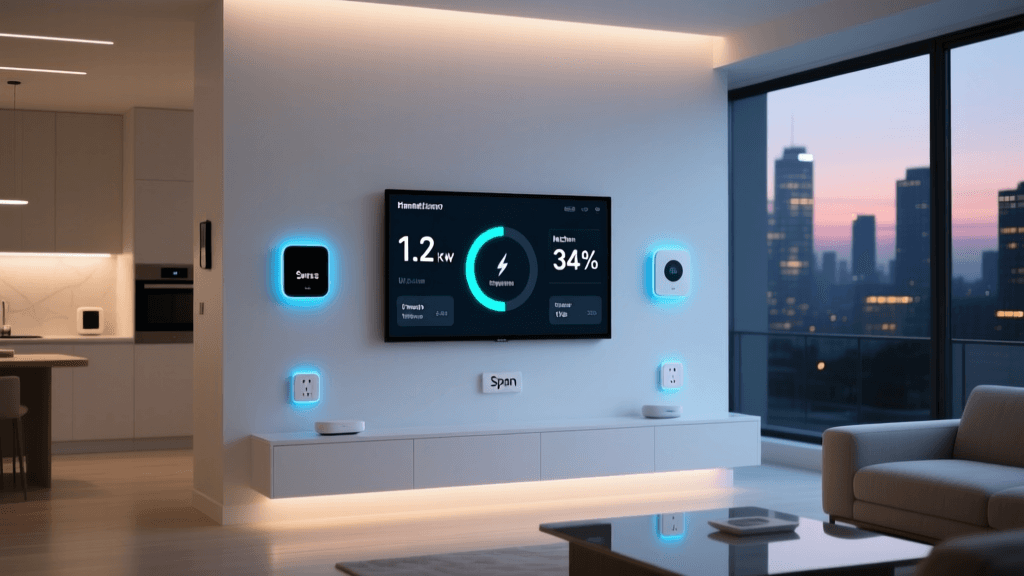
We are seeing a surge in the adoption of smart electrical panels, such as the Span Smart Panel. Priced between $5,000 and $8,000 (including installation), the Span panel replaces traditional circuit breakers with software-defined, IoT-enabled controls. This allows homeowners to monitor energy usage at the individual circuit level and prioritize essential loads during a power outage when paired with a home battery system like the Tesla Powerwall or Enphase IQ Battery.
Furthermore, smart thermostats are becoming vital grid assets. Devices like the Ecobee Smart Thermostat Premium ($249) and the Google Nest Learning Thermostat ($249) are increasingly enrolled in utility Virtual Power Plant (VPP) programs. During peak demand hours, utilities can remotely adjust these thermostats by a few degrees to reduce grid load, compensating the homeowner with bill credits or direct cash rebates. This transforms smart home devices from passive energy consumers into active revenue-generating assets.
The Role of the Smart Home Hub in the 2020s
With the rise of Matter and Edge AI, the central smart home hub is experiencing a renaissance. While early industry predictions suggested that smartphones and cloud servers would render dedicated hubs obsolete, the exact opposite has occurred. The modern hub is no longer just a bridge for Zigbee or Z-Wave signals; it is the localized brain of the Edge AI ecosystem and the primary Thread Border Router for the Matter network.
Products like the Homey Pro (priced at $399) exemplify this trend. The Homey Pro supports Matter, Thread, Zigbee, Z-Wave, and Bluetooth, while executing all automations locally. It also features built-in energy monitoring and solar integration capabilities. For consumers, investing in a high-quality, multi-protocol local hub is the single most effective way to ensure long-term compatibility and protect against the planned obsolescence of cloud-reliant devices.
Actionable Advice: Future-Proofing Your Home Today
Navigating the transition period between legacy proprietary systems and the new Matter/Edge AI paradigm requires a strategic approach. Based on current market analysis and hardware capabilities, here are actionable steps to future-proof your smart home investments:
- Prioritize Matter and Thread: When purchasing new sensors, smart plugs, or lighting, look for the Matter logo. If buying Thread devices, ensure you have at least one dedicated Thread Border Router (like an Apple TV 4K or Amazon Echo 4th Gen) to anchor the mesh network.
- Demand Local Control: Before purchasing a security camera or smart lock, check the manufacturer's documentation for 'local API' support or local processing capabilities. Avoid devices that strictly require a cloud connection to execute basic automations.
- Invest in a Universal Hub: If you mix ecosystems (e.g., Apple and Google), invest in a universal hub like the Hubitat Elevation or Homey Pro. These devices bridge different protocols locally, ensuring your automations run instantly and reliably without internet dependency.
- Explore mmWave Sensors: Upgrade from traditional PIR (Passive Infrared) motion sensors to mmWave radar sensors (like the Aqara FP2 or ThirdReality mmWave sensor). They provide accurate static human presence detection, enabling advanced automations like turning off lights only when a room is truly empty.
- Enroll in VPP Programs: Contact your local utility provider to inquire about Virtual Power Plant (VPP) or demand-response programs. Purchasing a smart thermostat or smart water heater that qualifies for these programs can yield hundreds of dollars in annual rebates, effectively subsidizing the hardware cost.
Conclusion
The smart home industry is maturing from a fragmented landscape of novelty gadgets into a cohesive, intelligent, and essential layer of modern residential infrastructure. The adoption of the Matter standard is finally dismantling the walled gardens that stifled early market growth, while Edge AI is returning privacy, speed, and reliability to the consumer. Furthermore, as smart homes integrate with the broader energy grid, these devices are transitioning from luxury upgrades to financial assets. By prioritizing open standards, local processing, and energy management, consumers can build resilient smart home ecosystems that will not only survive the next decade of technological evolution but actively enhance their daily lives and bottom line.