The Paradigm Shift: From Fragmented Gadgets to Unified Ecosystems
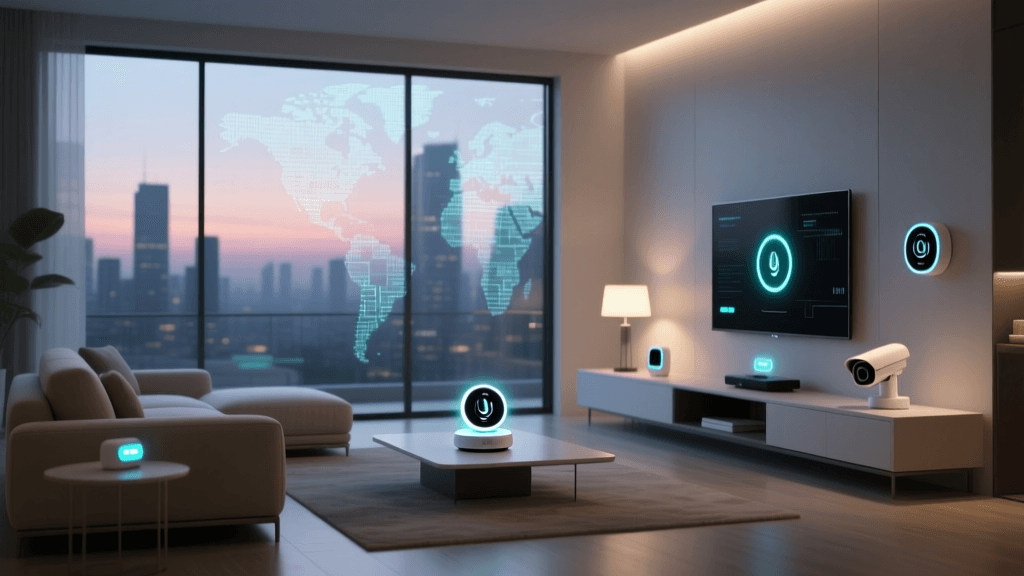
For the past decade, the smart home industry has been defined by rapid innovation but equally rapid fragmentation. Consumers have historically been forced to navigate a labyrinth of incompatible ecosystems, proprietary hubs, and redundant mobile applications. However, as we look toward the future of smart home technology, a massive market correction is underway. The industry is pivoting from isolated, reactive gadgets to unified, proactive environments driven by open interoperability standards and artificial intelligence.
Market analysis indicates that the global smart home market is projected to grow exponentially, but the nature of this growth is changing. Early adopters driven by novelty are being replaced by mainstream consumers who demand reliability, privacy, and seamless integration. This shift is forcing manufacturers to abandon walled gardens in favor of universal protocols and edge-based machine learning. Understanding these macro-level industry trends is critical for anyone looking to invest in smart home technology today, ensuring that your purchases will not become obsolete tomorrow.
The Matter Protocol: The Backbone of Future Interoperability
The most significant market disruptor in the smart home space is the Matter protocol. Developed by the Connectivity Standards Alliance (CSA), Matter is an open-source, royalty-free connectivity protocol that operates over IP networks, specifically Wi-Fi and Thread. According to the Connectivity Standards Alliance (CSA), Matter allows devices from different manufacturers to communicate locally without relying on third-party cloud servers, fundamentally solving the latency and reliability issues that have plagued the industry.
From a market perspective, Matter represents a unifying force. Apple, Amazon, Google, and Samsung have all committed to the standard, meaning a smart lock purchased from Yale will natively integrate with an Apple TV hub, a Google Nest display, and a Samsung SmartThings station simultaneously. This eliminates the "ecosystem lock-in" that previously dictated consumer purchasing behavior.
To understand why Matter and its underlying mesh network, Thread, are replacing legacy protocols, consider the following technical and market comparison:
| Protocol | Network Topology | Power Consumption | Cloud Dependency | Future Market Viability |
|---|---|---|---|---|
| Z-Wave | Mesh (Sub-GHz) | Low | High (via proprietary hubs) | Declining (Legacy) |
| Zigbee | Mesh (2.4 GHz) | Low | Medium (Hub dependent) | Stable (Transitioning) |
| Wi-Fi (Legacy) | Star (Router direct) | High | High (Cloud reliant) | Declining for IoT sensors |
| Matter over Thread | IPv6 Mesh | Ultra-Low | None (Local IP control) | Dominant Standard |
As noted by the Thread Group, Thread provides a self-healing mesh network that uses IPv6 addressing, meaning every smart sensor or switch gets its own IP address on your local network. This allows for direct, instantaneous communication between devices, such as a motion sensor triggering a smart bulb in milliseconds, entirely independent of your internet connection.
Ambient Computing and Predictive AI Automation
While Matter solves the connectivity problem, Artificial Intelligence (AI) is solving the user interface problem. The current paradigm of smart homes relies heavily on explicit commands: tapping a smartphone screen or shouting a voice command to a smart speaker. The future market trend is shifting toward "ambient computing"—environments that anticipate user needs without requiring direct input.
Predictive AI automation utilizes machine learning algorithms to analyze historical data, occupancy patterns, local weather forecasts, and real-time energy grid pricing. For example, next-generation climate control systems do not merely follow a static schedule. They use geofencing, localized room sensors, and predictive weather models to pre-cool or pre-heat a home based on the thermal mass of the building and the estimated time of arrival of the occupants.
Market data suggests that AI-driven devices—which include smart thermostats with learning algorithms, cameras with local facial recognition, and lighting systems that adjust circadian rhythms based on biometric feedback—are capturing an increasingly dominant share of new shipments. Consumers are willing to pay a premium for devices that reduce cognitive load, effectively making the home a proactive partner rather than a reactive tool.
Grid-Interactive Efficient Buildings (GEBs) and Energy Autonomy
Another major market trend intersecting with smart home technology is the rise of Grid-Interactive Efficient Buildings (GEBs). As global energy grids face instability and the adoption of residential solar and electric vehicles (EVs) surges, the smart home is evolving into a localized microgrid.
Future smart homes will not just consume energy; they will negotiate with the grid. Smart electrical panels, such as the Span Smart Electrical Panel, allow homeowners to monitor energy usage at the individual circuit level via an app. During a grid outage or peak-pricing event, AI-driven energy management systems can automatically shed non-essential loads (like a water heater or EV charger) to preserve battery storage for critical systems (like medical equipment or refrigeration).
Bidirectional charging (Vehicle-to-Home or V2H) is also entering the market, allowing EV batteries to power the home during outages. The integration of solar inverters, home batteries (like the Tesla Powerwall or Enphase IQ), and smart panels into a single, cohesive app interface represents a multi-billion dollar growth sector in the residential technology market.
Edge Computing: Solving the Privacy and Latency Crisis
As smart homes incorporate cameras, microphones, and health-monitoring sensors, consumer awareness regarding data privacy has reached an all-time high. The market is responding with a decisive shift toward edge computing. Edge computing involves processing data locally on a physical hub within the home, rather than sending raw video or audio feeds to remote cloud servers for analysis.
According to privacy advocates and cybersecurity frameworks outlined by organizations like Mozilla's Privacy Not Included, consumers are increasingly penalizing brands that require mandatory cloud subscriptions for basic local functionality. Future-proof smart home security cameras, such as those utilizing local HomeKit Secure Video or local AI NVR (Network Video Recorder) systems, process facial recognition and object detection locally. The metadata is encrypted and stored on a local hub, ensuring that a server breach at the manufacturer's headquarters does not expose the interior of a consumer's home.
Actionable Guide: Future-Proofing Your Smart Home Investment
Given these market trends, how should consumers approach purchasing smart home devices today to ensure longevity and compatibility? Here is a strategic buying guide based on current industry trajectories:
1. Invest in Matter-Ready Border Routers and Hubs
To utilize the Thread mesh network and Matter protocol, you need a "border router" that bridges the low-power Thread mesh to your high-bandwidth Wi-Fi network. Instead of buying proprietary hubs, invest in multifunctional devices that already act as border routers.
- Apple TV 4K (3rd Generation): Priced around $129, this acts as a premium Thread border router and Matter controller, ideal for iOS users.
- Amazon Echo (4th Gen): Often on sale for $70-$99, it includes a built-in Zigbee hub, Matter support, and Thread border routing capabilities.
- Hubitat Elevation: Priced at $150, this is the gold standard for privacy-focused enthusiasts who want 100% local processing and advanced rule-machine automation.
2. Prioritize mmWave Presence Sensors Over PIR Motion Sensors
Traditional Passive Infrared (PIR) motion sensors fail to detect stationary humans, leading to lights turning off while you are reading on the couch. The market is rapidly adopting millimeter-wave (mmWave) radar sensors for true "presence" detection.
- Aqara Presence Sensor FP2: Costing around $75, this Matter-compatible sensor maps rooms in zones, detects multiple people, and even monitors breathing rates for fall detection, representing the cutting edge of ambient sensing.
3. Upgrade to Local-First Climate Control
Move away from basic Wi-Fi thermostats that fail when the internet drops.
- Ecobee SmartThermostat Premium ($249): Features built-in air quality monitoring, local processing capabilities, and acts as a smart home hub, utilizing remote room sensors to balance temperatures based on actual occupancy rather than just hallway ambient air.
Conclusion
The smart home industry is maturing from a fragmented landscape of novelty gadgets into a standardized, AI-driven ecosystem. The widespread adoption of the Matter protocol ensures that future devices will interoperate seamlessly, while advancements in edge computing and predictive AI are making homes more private, responsive, and energy-efficient. By focusing your investments on Thread-compatible hubs, local-processing sensors, and grid-interactive energy management tools, you can build a resilient smart home infrastructure that will adapt to the technological shifts of the coming decade.