Introduction: The Shift from Fragmented Ecosystems to Unified Intelligence
For the past decade, the smart home industry has been defined by fragmentation. Consumers have historically been forced to choose sides, locking themselves into proprietary ecosystems like Apple HomeKit, Amazon Alexa, or Google Home. Purchasing a smart lock meant checking compatibility badges; setting up a smart thermostat often required juggling multiple apps and third-party integration hubs like IFTTT. However, the market is currently undergoing a massive structural shift driven by two foundational technologies: the Matter protocol and Edge Artificial Intelligence (AI). Together, these innovations are transitioning the smart home from a collection of reactive, remote-controlled gadgets into a cohesive, predictive, and energy-efficient living environment.
From a market analysis perspective, the integration of universal communication standards and localized machine learning is not just a technological upgrade; it is the catalyst for mainstream adoption. According to industry forecasts, the global smart home market is expected to surpass $300 billion by the end of the decade, driven largely by interoperability and energy management solutions. This article explores the technical foundations of these trends, analyzes market data, and provides actionable advice for consumers looking to future-proof their homes.
The Matter Protocol: Unifying the Smart Home Market
Developed by the Connectivity Standards Alliance (CSA), Matter is an open-source, royalty-free connectivity protocol designed to allow smart home devices to communicate seamlessly, regardless of the manufacturer or the voice assistant you prefer. Built on Internet Protocol (IP), Matter operates over Thread, Wi-Fi, and Ethernet, ensuring high-bandwidth and low-latency communication.
How Matter Changes the Consumer Experience
Before Matter, a smart plug from Brand A might only work with Amazon Alexa, while a smart bulb from Brand B required a proprietary Zigbee hub. Matter eliminates this friction. When you purchase a Matter-certified device, you can pair it simultaneously with Apple Home, Google Home, and Amazon Alexa. This multi-admin capability means that one household member can use Siri while another uses the Google Home app, without triggering synchronization errors.
From a hardware perspective, Matter heavily relies on Thread, a low-power, mesh-networking protocol. Unlike Wi-Fi, which can congest your home router when dozens of IoT devices are connected, Thread creates a self-healing mesh network. Devices like the Eve Energy Smart Plug ($40) or the Nanoleaf Essentials LED Strip ($80) act as Thread nodes, extending the network's range and reliability without burdening your primary Wi-Fi router.
Protocol Comparison: Matter/Thread vs. Legacy Standards
| Feature | Matter over Thread | Zigbee 3.0 | Z-Wave | Wi-Fi 6 |
|---|---|---|---|---|
| Network Topology | Mesh (Self-healing) | Mesh | Mesh | Star (Hub-dependent) |
| Power Consumption | Ultra-Low | Low | Low | High |
| IP Addressable | Yes (Native IPv6) | No (Requires Gateway) | No (Requires Gateway) | Yes |
| Ecosystem Lock-in | None (Multi-admin) | High (Proprietary Hubs) | Moderate | Moderate |
| Typical Device Cost | $30 - $150 | $20 - $80 | $40 - $100 | $25 - $200 |
To utilize Thread-based Matter devices, consumers need a Thread Border Router. Devices such as the Apple TV 4K (Wi-Fi + Ethernet model, $149), the Google Nest Hub Max ($229), and the Amazon Echo (4th Gen, $99) already feature integrated Thread radios, acting as the bridge between your Thread mesh network and your home's Wi-Fi.
Artificial Intelligence: From Reactive to Predictive Automation
While Matter solves the communication problem, Artificial Intelligence solves the usability problem. Historically, smart homes were 'reactive'—they required explicit voice commands or rigid, time-based schedules. The future of the smart home market lies in 'predictive' automation powered by Edge AI and advanced sensor fusion.
Edge AI vs. Cloud AI in the Smart Home
Cloud AI relies on sending data to remote servers for processing, which introduces latency and raises significant privacy concerns. Edge AI, conversely, processes data locally on the device or a local hub. This ensures that sensitive data, such as camera feeds or audio recordings, never leaves your home network. Furthermore, Edge AI guarantees that automations continue to function even if your internet connection drops.
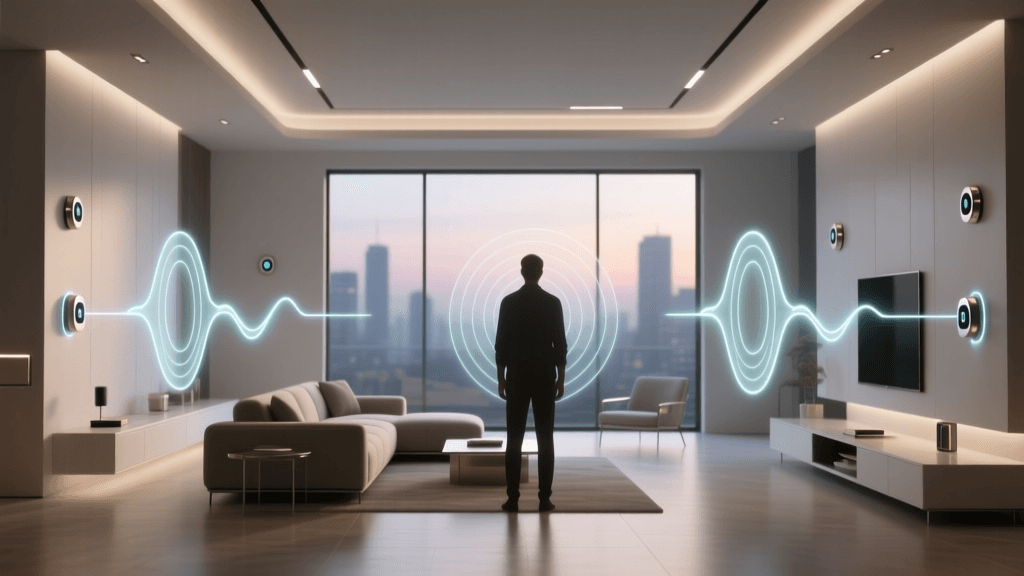
A prime example of Edge AI in action is the Aqara Presence Sensor FP2 ($70). Unlike traditional passive infrared (PIR) motion sensors that only detect gross movement and turn off lights when you sit still, the FP2 uses millimeter-wave (mmWave) radar and local AI to detect human presence, breathing patterns, and even posture. It can map a room into 30 distinct zones, allowing you to create automations like 'turn on the reading lamp only when someone is sitting in the armchair,' without relying on cloud processing.
Predictive Climate and Energy Management
AI is also revolutionizing HVAC control. The Ecobee Smart Thermostat Premium ($249) utilizes local sensors and machine learning algorithms to learn your household's thermal dynamics. It factors in local weather forecasts, the thermal mass of your home, and real-time occupancy to pre-cool or pre-heat your home efficiently. By shifting from reactive temperature adjustments to predictive climate modeling, these AI-driven thermostats can reduce HVAC energy consumption by up to 26%, according to independent market studies.
Market Analysis: Where the Industry is Heading
The smart home market is transitioning from early-adopter novelty to essential home infrastructure. As interoperability increases via Matter, the barrier to entry drops, shifting consumer spending from basic smart lighting toward high-value segments like security, climate control, and energy management.
As illustrated in the market projection above, while smart lighting and entertainment have dominated the early market, climate control and smart appliances are projected to capture significant market share. This is largely driven by the rising cost of energy and the integration of smart homes with the broader electrical grid.
The Rise of the Smart Electrical Panel
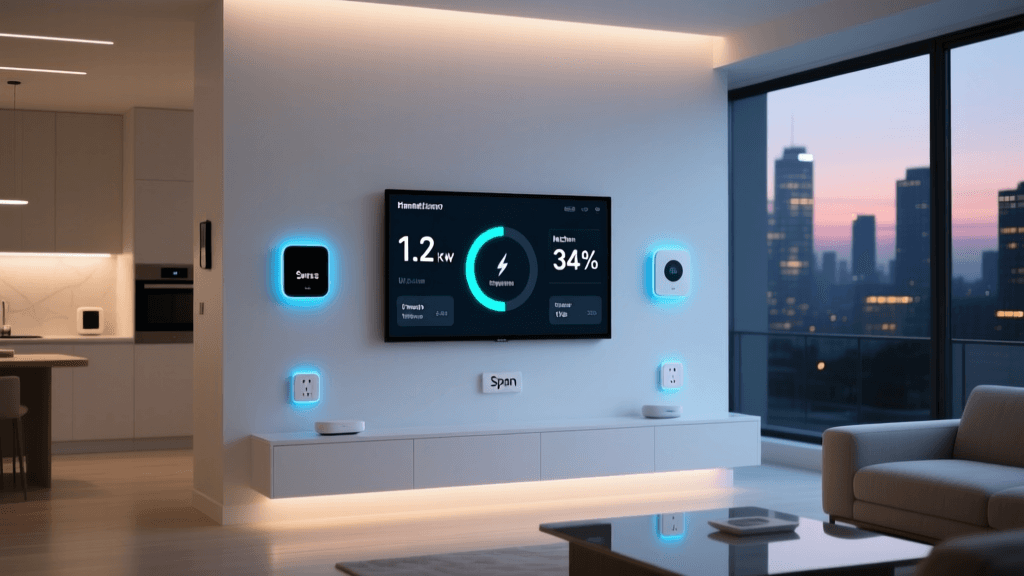
One of the most significant hardware trends in the high-end smart home market is the smart electrical panel. Products like the Span Smart Panel (starting at $5,000 installed) replace traditional circuit breakers with digitally controlled, AI-monitored switches. The Span app provides circuit-level energy monitoring, allowing homeowners to see exactly how much power their EV charger, HVAC, or pool pump is consuming in real-time. During a power outage, the AI automatically prioritizes essential circuits (like the fridge and Wi-Fi router) to extend the life of a backup battery like the Tesla Powerwall.
Energy Management and the Smart Grid Integration
The future smart home will not exist in a vacuum; it will be an active participant in the local power grid. Through protocols like Matter and specialized energy APIs, homes will engage in 'demand response' programs. Utility companies will communicate with your home's AI hub to temporarily reduce power consumption during peak grid hours in exchange for financial credits.
According to the ENERGY STAR Smart Home Guidelines, connected devices that can modulate their energy use based on grid signals are becoming a priority for both consumers and regulators. Smart EV chargers, such as the ChargePoint Home Flex ($699), can be scheduled via your smart home hub to charge your vehicle only when electricity rates are lowest or when your home's solar panels are generating excess power. This convergence of IoT, AI, and renewable energy represents the most lucrative growth vector in the smart home industry.
Privacy and Security in the Next-Gen Smart Home
As homes become more intelligent and interconnected, the attack surface for cyber threats expands. The National Institute of Standards and Technology (NIST) has continuously updated its IoT cybersecurity guidelines to address the unique vulnerabilities of connected home devices. Matter addresses many of these concerns at the protocol level by mandating end-to-end encryption and blockchain-based device attestation, ensuring that a device is genuinely what it claims to be before it joins your network.
However, consumers must still practice robust network hygiene. Future-proofing your home's security involves:
- Network Segmentation: Utilizing a modern mesh router (like the Eero Pro 6E, $399) to place all IoT devices on a dedicated 'Guest' or 'IoT' VLAN, isolating them from your personal computers and smartphones.
- Local Processing Priority: Prioritizing devices that support Edge AI and local control (like Home Assistant or Apple HomeKit) over devices that require constant cloud polling.
- Firmware Automation: Ensuring that your primary smart home hub is configured to automatically install security patches without user intervention.
'The transition to Matter and Edge AI is not just about convenience; it is a fundamental shift toward data sovereignty. By processing automations locally, consumers regain control over their digital footprint while enjoying a more responsive home environment.' — SmartHomeDeck Industry Analysis Team
Actionable Guide: Future-Proofing Your Smart Home Today
You do not need to tear out your existing wired infrastructure to prepare for the future of the smart home. By making strategic purchasing decisions today, you can build a foundation that will seamlessly integrate with tomorrow's AI-driven, Matter-unified ecosystem.
1. Upgrade Your Border Routers
Before buying Thread-enabled Matter devices, ensure you have a capable Thread Border Router. If you are in the Apple ecosystem, ensure you have an Apple TV 4K (3rd Gen) or a HomePod mini. For Amazon users, the Echo (4th Gen) or Eero 6 routers will suffice. Google users should utilize the Nest Hub (2nd Gen) or Nest Wifi Pro. These devices act as the critical bridge for the new Matter standard.
2. Invest in Multi-Protocol Hubs for Legacy Devices
If you have existing Zigbee or Z-Wave devices (like older Philips Hue bulbs or Aeotec door sensors), you do not need to replace them. Purchase a universal hub like the Homey Pro ($399) or the Aeotec Smart Home Hub ($140). These hubs translate legacy protocols into Matter, allowing your older devices to appear in Apple Home, Google Home, or Alexa alongside your newest purchases.
3. Prioritize Local Control and Edge AI Sensors
When upgrading lighting or presence detection, skip the basic Wi-Fi bulbs and invest in Thread-enabled or Zigbee devices paired with mmWave sensors. The Aqara FP2 or the Everything Presence One ($60) will provide the granular, privacy-respecting occupancy data that next-generation AI automations require to function predictively.
4. Monitor Circuit-Level Energy Data
If you are planning a renovation or an electrical panel upgrade, consult your electrician about installing a Span Smart Panel or adding a Sense Energy Monitor ($299) to your existing panel. Gathering baseline energy data now will allow your future AI home assistant to optimize your energy usage and integrate with utility demand-response programs seamlessly.
Conclusion
The smart home industry is maturing from a fragmented landscape of novelty gadgets into a unified, intelligent infrastructure. The rollout of the Matter protocol is finally delivering on the promise of true interoperability, freeing consumers from ecosystem lock-in and encouraging market competition based on hardware quality and AI capabilities rather than proprietary walled gardens. Simultaneously, the shift toward Edge AI ensures that our homes are becoming predictive, energy-efficient, and privacy-conscious. By understanding these market trends and strategically selecting Matter-compatible, locally-processing devices, consumers can build a resilient smart home that will adapt and evolve alongside the technologies of tomorrow.