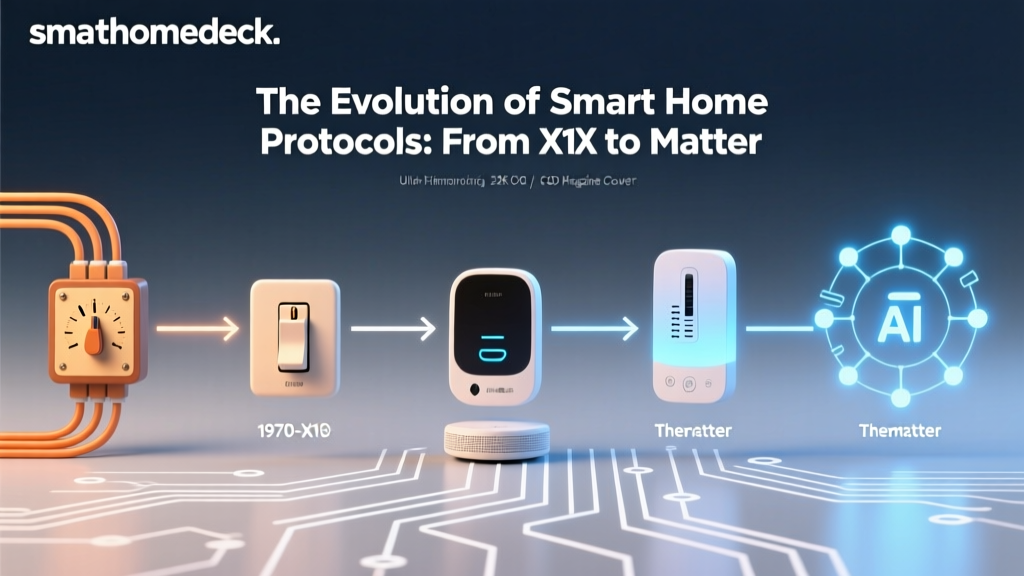
The Evolution of Smart Building Protocols in Multi-Family Real Estate
The landscape of multi-family housing and commercial real estate is undergoing a massive technological shift. Property managers, developers, and facility operators are no longer satisfied with basic Wi-Fi thermostats or standalone smart locks. Today, the focus is on integrated, scalable, and secure building automation systems (BAS) that reduce operational expenditures (OPEX), improve energy efficiency, and elevate the tenant experience. However, designing a smart infrastructure for a 200-unit apartment complex or a mixed-use commercial high-rise requires a fundamentally different approach than outfitting a single-family home. The sheer scale, the need for centralized management, and the strict requirements for tenant privacy dictate the use of robust, enterprise-grade protocols.
When planning a smart building deployment, integrators and engineers typically evaluate three distinct categories of protocols: the legacy commercial backbones (BACnet and KNX) and the modern wireless mesh networks (Thread and Matter). Each serves a unique purpose within the building's ecosystem. Understanding the technical nuances, deployment costs, and interoperability of these standards is critical for maximizing return on investment (ROI) and ensuring long-term system viability.
BACnet: The Heavyweight Backbone for HVAC and Building Management
Developed under the auspices of ASHRAE (American Society of Heating, Refrigerating and Air-Conditioning Engineers), BACnet (Building Automation and Control Networks) is the undisputed standard for commercial HVAC, lighting control, and access management. According to BACnet International, the protocol is designed specifically to allow equipment from different manufacturers to communicate seamlessly, making it the backbone of almost every modern Building Management System (BMS).
In a multi-family or commercial setting, BACnet is typically deployed in two primary flavors: BACnet MS/TP and BACnet/IP. BACnet MS/TP (Master-Slave/Token-Passing) utilizes standard RS-485 twisted-pair cabling and operates at speeds ranging from 9.6 kbps to 76.8 kbps. It is highly cost-effective for connecting field devices like Variable Air Volume (VAV) controllers, room sensors, and exhaust fans. On the other hand, BACnet/IP encapsulates BACnet data within UDP packets (typically on port 47808), allowing it to traverse standard Ethernet and fiber-optic networks at gigabit speeds. This is used for the building's main supervisory controllers, chillers, boiler plants, and central air handling units.
For property managers, BACnet's primary advantage is centralized visibility and sub-metering. A BACnet-enabled BMS allows facility teams to monitor energy consumption per floor or per commercial tenant, schedule HVAC setbacks during unoccupied hours, and receive predictive maintenance alerts before a chiller fails. However, BACnet is not designed for direct consumer interaction. It lacks the native, user-friendly mobile app integrations that residential tenants expect, making it strictly a backend infrastructure protocol.
KNX: The Premium Wired Standard for Lighting and Shading
While BACnet dominates the mechanical rooms, KNX reigns supreme in architectural lighting, automated shading, and premium in-unit environmental controls. Governed by the KNX Association, this protocol is an ISO/IEC 14543 global standard that utilizes a decentralized, peer-to-peer topology. Unlike traditional centralized lighting systems where a single point of failure can darken an entire floor, KNX distributes intelligence across every switch, actuator, and sensor.
KNX operates primarily over a dedicated 29V DC twisted-pair bus (often recognizable by its distinctive green cabling). This bus provides both power and data to low-voltage sensors and switches, while line-powered actuators in the electrical panels handle the heavy lifting of switching 120V/277V loads or dimming 0-10V LED drivers. Because the logic is distributed, a KNX system is incredibly resilient; if one room's keypad fails, the rest of the building's lighting remains unaffected.
In multi-family developments, KNX is frequently deployed in high-end penthouse units, luxury common areas, lobbies, and amenity spaces. It enables complex scenes (e.g., a 'Welcome' scene that adjusts motorized blinds, tunes white-temperature lighting, and sets the HVAC) that dramatically increase property valuation. The primary drawback of KNX is the cost of entry. Programming a KNX system requires specialized engineers using the proprietary ETS (Engineering Tool Software), and the hardware cost per node is significantly higher than wireless alternatives. Furthermore, while KNX IP interfaces exist, the protocol is not natively designed for the high-bandwidth, IP-based routing that modern IT departments prefer.
Thread and Matter: The Wireless Challenger for Tenant-Facing IoT
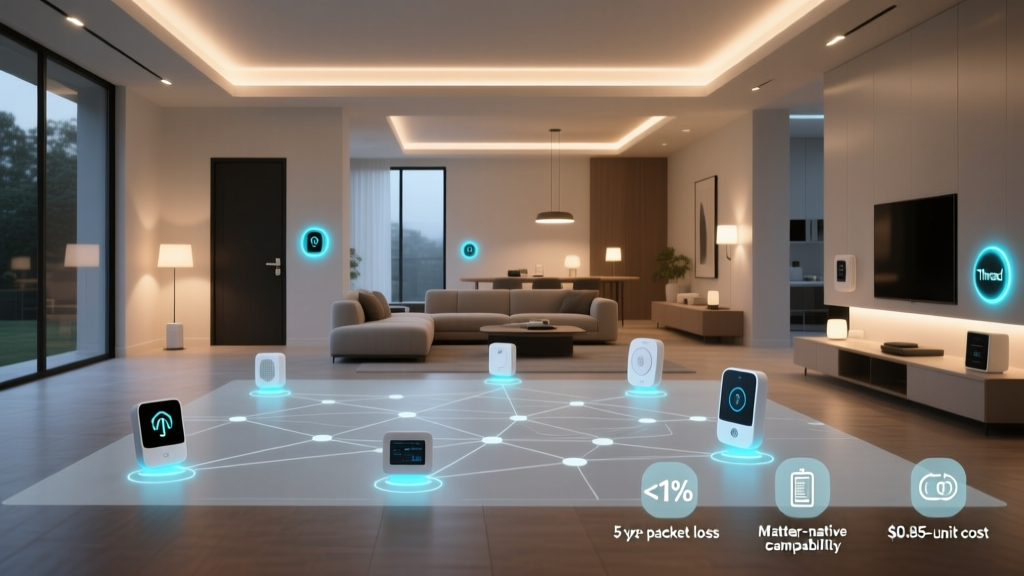
For in-unit tenant amenities—such as smart locks, leak detectors, occupancy sensors, and consumer-facing thermostats—running dedicated BACnet or KNX cabling to every apartment is cost-prohibitive and logistically difficult. This is where Thread, and by extension the Matter application layer, enters the picture. As detailed by the Thread Group, Thread is an IPv6-based, low-power, wireless mesh networking protocol built on the IEEE 802.15.4 radio standard (operating at 2.4 GHz).
Thread solves the historical pitfalls of Wi-Fi and Zigbee in high-density environments. Wi-Fi consumes too much power for battery-operated sensors and congests easily in buildings with hundreds of tenants streaming video. Zigbee requires proprietary hubs and struggles with IP routing. Thread, however, creates a self-healing mesh network where every mains-powered device (like a smart plug or light bulb) acts as a router, extending the network's range and reliability. More importantly, Thread is natively IP-addressable. This means a Thread-based smart lock can communicate directly with a cloud-based property management platform via a Thread Border Router, without needing a proprietary, single-point-of-failure hub.
When paired with the Matter standard, Thread allows property managers to deploy a standardized, vendor-agnostic ecosystem. A landlord can install a Matter-over-Thread smart lock from one vendor and a smart thermostat from another, knowing both will integrate seamlessly into a centralized access and energy management dashboard. For tenants, it offers the flexibility to use their preferred voice assistants or mobile apps without compromising the building's underlying network security.
Protocol Comparison: BACnet vs. KNX vs. Thread
| Feature | BACnet (IP / MS/TP) | KNX (Twisted Pair) | Thread (802.15.4) |
|---|---|---|---|
| Primary Use Case | Central HVAC, Chillers, BMS | Lighting, Shading, Premium Controls | In-Unit IoT, Locks, Sensors |
| Topology | Star / Bus / IP Network | Decentralized Bus / Free Topology | Self-Healing Wireless Mesh |
| Medium | Ethernet / RS-485 | 29V DC Twisted Pair | 2.4 GHz Radio Frequency |
| Scalability | Enterprise (Thousands of nodes) | Large (Up to 65,000+ devices) | High Density (Mesh routing) |
| Tenant Interaction | Low (Backend only) | Medium (Premium wall switches) | High (Mobile apps, Voice) |
| Relative Cost | High (Infrastructure) | Very High (Hardware + Labor) | Low (Wireless deployment) |
Visualizing Deployment Costs in Multi-Family Housing
When budgeting for a 100-unit apartment complex, the capital expenditure (CAPEX) varies wildly depending on the protocol chosen for specific building layers. The chart below illustrates the estimated infrastructure and hardware costs per unit when deploying these protocols for their respective ideal use cases.
Bridging the Gap: Interoperability and Gateway Integration
A modern smart building rarely relies on a single protocol. Instead, it utilizes a layered architecture where BACnet manages the macro-environment, KNX handles the architectural aesthetics, and Thread manages the micro-environment (tenant spaces). The challenge for integrators is making these disparate systems communicate. For example, if a tenant uses a Thread-based smart lock to leave their apartment, the building's BMS (via BACnet) should ideally register the unit as unoccupied and adjust the VAV box to an energy-saving setback mode.
To achieve this, enterprise-grade protocol translators are required. Companies like Intesis and Schneider Electric manufacture robust gateways that map KNX group addresses to BACnet objects, allowing the lighting system to report energy usage directly to the central BMS. Similarly, contemporary IT/OT (Operational Technology) convergence platforms utilize API-driven middleware to pull data from Thread Border Routers and inject it into the BACnet IP network via MQTT or RESTful APIs. When specifying gateways, ensure they support secure, encrypted tunneling and can handle the high polling rates required for real-time building analytics without overwhelming the local network.
Network Security, Segmentation, and Tenant Privacy
In multi-family housing, security is not just about preventing unauthorized physical access; it is about digital privacy and network segmentation. A critical mistake developers make is placing tenant-facing IoT devices on the same VLAN as the building's critical BACnet infrastructure. If a tenant's compromised smart TV or Wi-Fi camera gains access to the building's IP network, a malicious actor could theoretically intercept BACnet UDP traffic, potentially gaining control over the building's elevators, fire alarm interfaces, or HVAC systems.
To mitigate this, commercial smart buildings must implement strict 802.1Q VLAN tagging. The BACnet/IP backbone should reside on an isolated, air-gapped, or heavily firewalled OT network that has no direct internet access. Tenant-facing Thread and Wi-Fi devices should be provisioned on a separate, secure IoT VLAN utilizing WPA3-Enterprise or captive portals with per-tenant pre-shared keys (PPSK). Thread inherently provides strong security through AES-128 encryption at the network and application layers, but the Thread Border Routers (such as enterprise-grade models from Nanoleaf or Apple TV 4K acting as hubs) must be hardwired to secure switch ports to prevent physical tampering in common areas.
Actionable Implementation Strategy for Property Developers
If you are developing a new multi-family property or retrofitting a commercial space, follow this phased protocol deployment strategy to balance cost, performance, and tenant satisfaction:
- Phase 1: The BACnet Backbone (Pre-Construction): Work with mechanical engineers to specify BACnet/IP native controllers for all central plants, AHUs, and common area HVAC. Install CAT6A cabling to all mechanical rooms and BMS control panels. This ensures the building meets modern energy codes and provides the facility team with granular control over the largest energy consumers.
- Phase 2: KNX for High-Value Spaces (Rough-In): Run KNX twisted-pair cabling exclusively to high-traffic, high-visibility areas: the main lobby, co-working spaces, rooftop amenity decks, and premium penthouse units. The upfront cost of the green bus cable is negligible during rough-in, and it future-proofs these spaces for high-end, decentralized lighting control that impresses prospective buyers and tenants.
- Phase 3: Thread/Matter for Tenant Units (Post-Construction): Skip the expensive wired automation for standard apartment units. Instead, deploy a managed Thread mesh network using hardwired Thread Border Routers in the hallways and common walls. Provide tenants with Matter-over-Thread smart locks, leak sensors, and smart thermostats. This reduces unit turnover costs, prevents water damage via automated shut-off valves, and offers a premium 'smart home' amenity without the cost of running dedicated automation cabling to every room.
Conclusion
The choice between BACnet, KNX, and Thread is not a matter of finding a single 'best' protocol, but rather assigning the right tool to the right layer of the building's architecture. BACnet remains the indispensable workhorse for heavy mechanical and energy management. KNX offers unparalleled reliability and elegance for architectural lighting and premium spaces. Meanwhile, Thread and Matter are rapidly becoming the standard for scalable, secure, and privacy-respecting tenant IoT deployments. By understanding the technical boundaries and deployment costs of each standard, property developers and integrators can build multi-family ecosystems that are not only technologically advanced but also financially sustainable and highly attractive to the modern tenant.