The Matter Plateau: Interoperability Solved, Context Missing
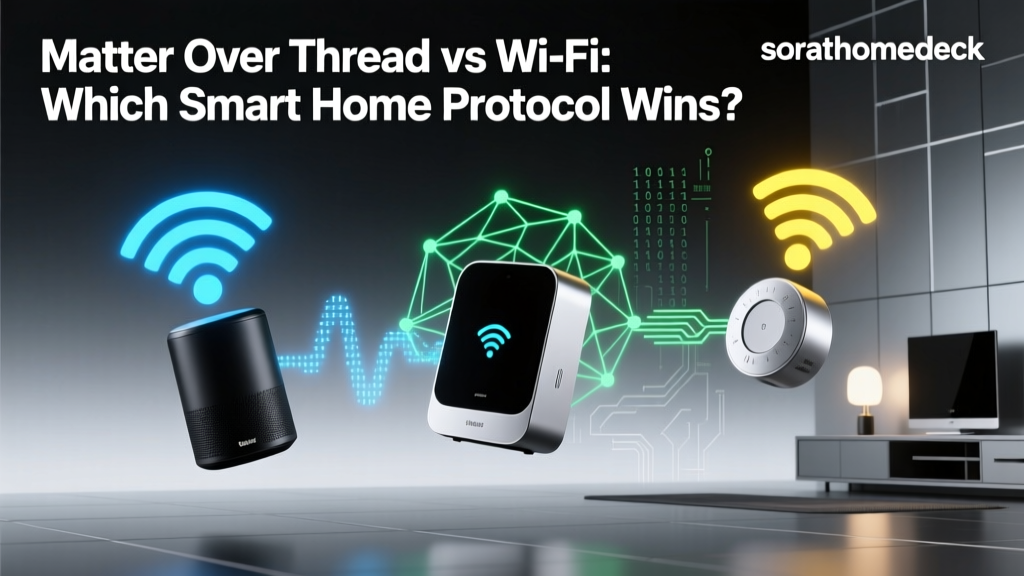
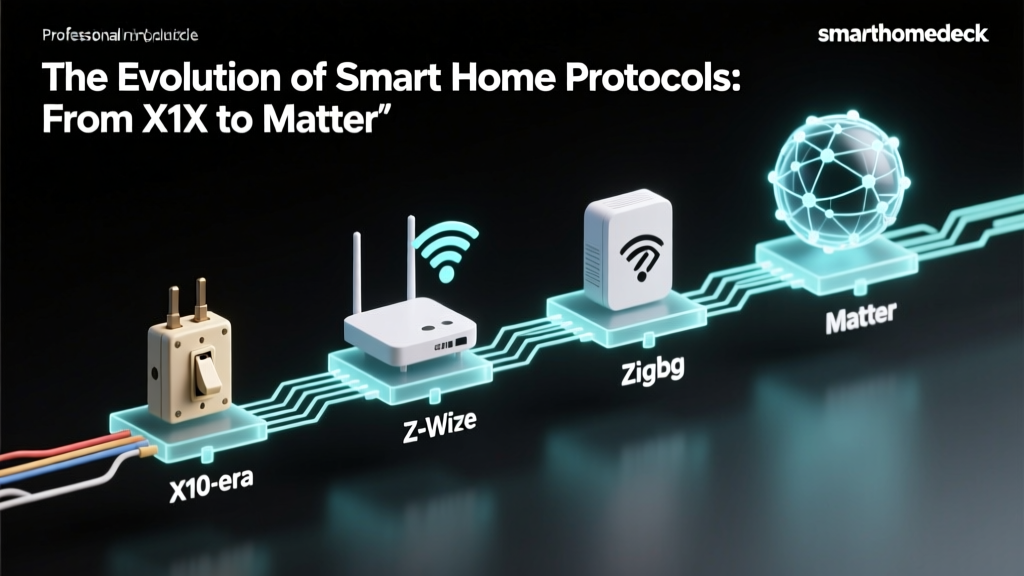
The introduction of the Matter protocol was a watershed moment for the smart home industry. Backed by the Connectivity Standards Alliance (CSA), Matter finally dismantled the walled gardens of Apple, Google, Amazon, and Samsung, allowing a unified application layer to run over Thread and Wi-Fi. For the first time, consumers could buy a smart plug or a lighting fixture without agonizing over ecosystem lock-in. However, as the dust settles and Matter-certified devices flood the market, industry engineers are already looking toward the next horizon. Matter solved the interoperability problem, but it did not solve the power or spatial awareness problems.
Today's smart home still relies on lithium coin cells that degrade over time, wired power sources that limit placement, and Passive Infrared (PIR) sensors that can only detect gross human movement. The future of smart home protocols is not about how devices talk to the cloud; it is about how devices perceive the physical world without requiring human intervention or battery replacements. Welcome to the post-Matter frontier: Ambient IoT, Ultra-Wideband (UWB), and Wi-Fi Sensing.
Ambient IoT: The Zero-Power Revolution
The most significant limitation of current wireless protocols like Zigbee, Thread, and Bluetooth Low Energy (BLE) is their reliance on stored power. Even the most efficient Thread sensors require battery replacements every 12 to 24 months. Ambient IoT (often associated with 3GPP Release 19 and the broader 5G Advanced/6G roadmap) shifts the paradigm by utilizing energy harvesting to power micro-controllers and radios.
How RF and Kinetic Energy Harvesting Works
Ambient IoT devices do not have batteries. Instead, they scavenge microwatts of power from their environment. There are three primary methods currently being deployed in residential and commercial spaces:
- Kinetic Harvesting: Mechanical switches use electromagnetic induction. Pressing a physical button generates a small electrical current (typically 10 to 50 microwatt-seconds) that powers a quick radio burst.
- RF Backscatter: Devices harvest ambient radio frequency (RF) energy from existing Wi-Fi, cellular, or Bluetooth signals in the air. They communicate not by generating a new signal, but by selectively reflecting (backscattering) existing RF waves.
- Indoor Photovoltaics: Advanced amorphous silicon cells harvest energy from low-lux indoor LED lighting, providing continuous trickle power to low-energy Thread or BLE mesh nodes.
Practical Ambient IoT Devices and Costs
The EnOcean Alliance has been pioneering this space for years, and their technology is now bridging into the Matter ecosystem via Thread. The EnOcean PTM 215Z is a kinetic switch module that requires zero wiring and zero batteries. When integrated with a Thread-to-Matter bridge, it offers instantaneous, battery-free lighting control. Expect to pay between $60 and $90 per kinetic switch module, a premium offset by the complete elimination of maintenance.
On the micro-sensor front, companies like Wiliot are producing 'Ambient Data Pixels'—sticker-sized tags that harvest RF energy from nearby Wi-Fi routers to transmit temperature and location data. While currently more prevalent in supply chain logistics, residential HVAC integration using Wiliot tags (costing pennies per tag, with a $150 gateway) is the next logical step for hyper-local climate control.
Ultra-Wideband (UWB): Centimeter-Level Spatial Awareness
If Matter is the language devices use to speak, UWB is the sensory organ they use to see. Traditional presence detection relies on PIR sensors, which fail if you sit still, or Bluetooth RSSI (Received Signal Strength Indication), which is notoriously inaccurate for distance measurement due to signal multipath and interference. UWB operates differently.
The Mechanics of Time-of-Flight (ToF)
UWB transmits data using extremely short, sub-nanosecond pulses across a wide spectrum of frequencies (typically between 6.5 GHz and 8 GHz). By measuring the exact Time-of-Flight (ToF) of these pulses bouncing between a hub and a tag, UWB calculates distance with centimeter-level accuracy. Furthermore, using multiple antennas, UWB hubs can determine the precise Angle-of-Arrival (AoA), meaning your smart home knows exactly which room you are in, and even which direction you are facing.
The FiRa Consortium governs the UWB standard, ensuring interoperability across silicon vendors like NXP, Qorvo, and Apple. UWB is also highly secure against relay attacks, making it the ultimate protocol for smart locks and garage doors.
UWB Products and Integration
UWB is already silently embedded in the smart home ecosystem, waiting for broader software integration:
- Apple HomePod Mini & Apple TV 4K: Equipped with the U1 and U2 chips, these devices act as UWB spatial anchors. They currently enable precise Handoff for audio and directional Siri Remote finding, but Apple's HomeKit architecture is primed for room-level UWB presence automation.
- Samsung SmartThings Station: Priced around $59, this hub includes UWB for precise device finding and spatial awareness, integrating deeply with Samsung's SmartThings ecosystem to trigger routines based on your exact location in the house.
- Smart Locks (e.g., Nuki Ultra, Bosch):** UWB-enabled smart locks (ranging from $250 to $350) allow for true passive entry. Unlike Bluetooth geofencing, which triggers 10 feet away, a UWB lock waits until you are exactly 12 inches from the door before unlatching, preventing accidental unlocks if you are just walking past the exterior wall.
Wi-Fi Sensing (IEEE 802.11bf): The Invisible Radar
While UWB requires dedicated hardware and tags, Wi-Fi Sensing leverages the infrastructure you already own. The upcoming IEEE 802.11bf standard formalizes the use of Wi-Fi signals for environmental sensing. As Wi-Fi waves travel through your home, they are absorbed and reflected by physical objects—including the water in the human body.
By analyzing the Channel State Information (CSI) of the signal between two standard Wi-Fi nodes (like a router and a mesh extender), the system can detect micro-movements. Wi-Fi sensing is sensitive enough to detect the rise and fall of a human chest during breathing, making it a revolutionary, camera-free alternative for elderly fall detection, sleep monitoring, and occupancy-based HVAC control. Companies like Qualcomm and Linksys are already testing these algorithms in consumer mesh systems (e.g., Linksys Velop Pro), which typically retail between $200 and $400 for a multi-node setup.
Protocol Comparison: Matter vs. The Next Frontier
To understand how these emerging standards complement rather than replace Matter, review the technical comparison below:
| Protocol / Standard | Primary Function | Power Requirement | Range / Accuracy | Best Use Case |
|---|---|---|---|---|
| Matter (over Thread) | Interoperability & Control | Low (Batteries/Wired) | Mesh Network / N/A | Unifying smart plugs, lights, and sensors |
| Ambient IoT (RF/Kinetic) | Zero-Power Triggering | Zero (Harvested) | 10m - 30m | Battery-free switches, passive temp tags |
| Ultra-Wideband (UWB) | Spatial Awareness | Moderate (Rechargeable) | Centimeter Precision | Passive smart locks, precise room tracking |
| Wi-Fi Sensing (802.11bf) | Environmental Perception | High (Mains Powered) | Room-level / Breathing | Camera-free fall detection, sleep tracking |
Market Adoption Trajectory
The transition from basic interoperability to context-aware computing will take time. While Matter dominates the current market, UWB and Ambient IoT are projected to see exponential growth as silicon costs drop and hub integration becomes standard.
Projected Smart Home Protocol Adoption (2024-2030)
How to Future-Proof Your Smart Home Today
You do not need to wait for 2030 to begin building a context-aware, zero-power smart home. Here is an actionable guide to preparing your infrastructure for the post-Matter era:
- Invest in UWB-Ready Hubs: If you are upgrading your smart home brain, choose hubs with built-in UWB silicon. The Apple TV 4K (3rd Gen) (~$129) and the **Samsung SmartThings Station** (~$59) are excellent entry points. Even if the software features are limited today, the hardware anchors are in place for future spatial automations.
- Upgrade to Wi-Fi Mesh with Sensing Capabilities: When replacing your router, look for Wi-Fi 6E or Wi-Fi 7 mesh systems from brands like Linksys, TP-Link, or Netgear that explicitly mention 'AI sensing' or 'mesh presence detection' in their firmware roadmaps. This eliminates the need for dedicated PIR motion sensors in every hallway.
- Replace High-Traffic Switches with Kinetic Alternatives: Bathrooms, kitchens, and garages are prime locations for EnOcean-based kinetic switches. By pairing a Niko or EnOcean kinetic wall plate with a Thread border router, you eliminate battery waste and ensure your most-used switches never fail due to dead power cells.
- Prioritize Thread Border Routers: Ambient IoT devices will likely rely on Thread's low-latency, low-power mesh to communicate with Matter bridges. Ensure you have robust Thread Border Routers (like the Aeotec Smart Home Hub or multiple Eero 6+ nodes) distributed throughout your home to catch the micro-watt signals from energy-harvesting sensors.
Conclusion: The Shift from Command to Context
Matter was a necessary evolution, a diplomatic treaty that ended the smart home's civil war. But the ultimate goal of home automation is not simply to allow an Apple user to control a Google-compatible bulb; the goal is for the home to anticipate needs without explicit commands. The protocols that come after Matter—Ambient IoT, UWB, and Wi-Fi Sensing—are shifting the paradigm from command-based control to context-aware ambient computing. By understanding and strategically investing in these emerging standards today, you are not just building a smart home; you are building an intuitive, battery-free, and deeply perceptive living space.