The Genesis of the Connected Home: From Powerlines to IP Mesh
The journey of the smart home is a fascinating tale of engineering workarounds, proprietary walled gardens, and the eventual triumph of open standards. Today, we take for granted the ability to control a living room light bulb from a smartphone on the other side of the planet. However, the underlying protocols that make this possible have undergone a radical evolution over the last five decades. For smart home enthusiasts, interior designers, and tech adopters, understanding this history is not just an academic exercise; it is crucial for making informed purchasing decisions, ensuring device compatibility, and future-proofing your home automation network.
In this comprehensive guide, we will trace the lineage of smart home protocols from the noisy powerline signals of X10 to the unified, IP-based ecosystem of Matter. We will explore the technical limitations of early systems, the mesh networking revolution of the 2000s, and how modern standards like Thread and Matter are finally solving the fragmentation crisis.
The Dawn of Home Automation: X10 (1970s–1990s)
Long before Wi-Fi routers and voice assistants, there was X10. Developed in Scotland in 1975 by Pico Electronics, X10 was a revolutionary concept: use the existing electrical wiring in a home to transmit control signals. X10 modules and transmitters communicated by superimposing a 120 kHz radio frequency signal onto the standard 60 Hz (or 50 Hz in Europe) alternating current (AC) power lines.
How X10 Worked and Its Limitations
X10 signals were transmitted in short bursts when the AC waveform crossed the zero-voltage point. A standard command took nearly a full second to transmit, which was acceptable for turning on a lamp but utterly useless for real-time automation or dimming. Furthermore, X10 was highly susceptible to electrical noise. The rise of modern appliances with switching power supplies, dimmers, and motors in the 1990s and 2000s introduced massive amounts of high-frequency noise onto household wiring, effectively drowning out X10 signals.
Another major hurdle was phase coupling. In North American homes, power is delivered in two 120V legs. An X10 signal transmitted on one leg would not naturally cross over to the other leg without a dedicated hardware phase coupler installed at the breaker panel. Despite these flaws, X10 democratized home automation. Legacy products like the X10 TM751 Transceiver and the ActiveHome Pro kits allowed early adopters to build basic motion-triggered lighting scenes for under $15 per module.
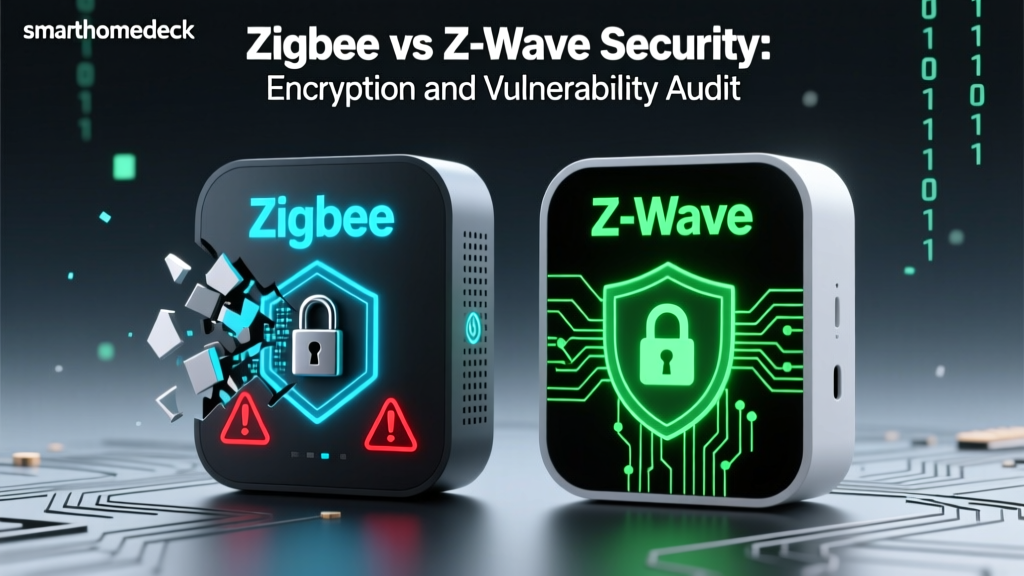
The Wireless Mesh Revolution: Zigbee and Z-Wave (2000s)
As wireless technology became cheaper and more reliable, the industry moved away from noisy powerlines to dedicated radio frequencies. This era birthed the two titans of low-power mesh networking: Zigbee and Z-Wave.
Zigbee: The Open Standard
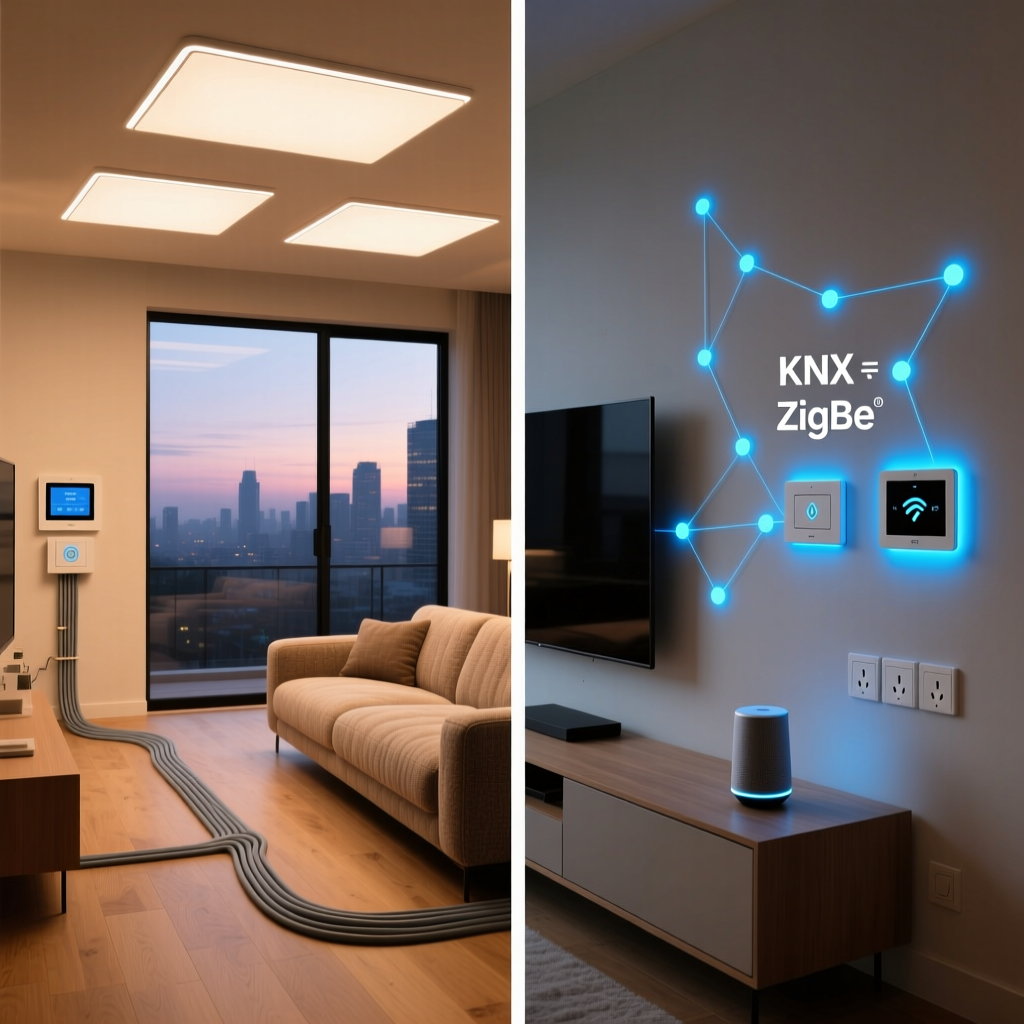
Built upon the IEEE 802.15.4 standard for low-rate wireless personal area networks (LR-WPANs), Zigbee operates primarily on the crowded 2.4 GHz band globally (though it also supports 915 MHz in the Americas and 868 MHz in Europe). Zigbee's greatest strength is its mesh topology. Unlike Wi-Fi, where every device must connect directly to a central router, Zigbee devices can pass messages through one another. Every mains-powered Zigbee device (like a smart plug or a wired light switch) acts as a router, extending the network's range.
The most famous implementation of Zigbee is the Philips Hue ecosystem. However, Zigbee's reliance on the 2.4 GHz band means it competes directly with Wi-Fi and Bluetooth, occasionally leading to signal interference in dense urban environments or homes with heavy network traffic.
Z-Wave: The Proprietary Powerhouse
Developed by Danish company Zensys (later acquired by Silicon Labs), Z-Wave took a different approach. It operates in the sub-GHz spectrum (908.42 MHz in the US, 868.42 MHz in Europe). Because it avoids the 2.4 GHz band entirely, Z-Wave is virtually immune to Wi-Fi interference and offers superior wall-penetration capabilities. Z-Wave is a strictly controlled, proprietary standard, meaning every Z-Wave chip must be certified. This resulted in near-perfect interoperability between brands. An Aeotec Z-Wave MultiSensor will seamlessly communicate with a GE Enbrighten Z-Wave switch, regardless of the hub being used.
The primary drawback of Z-Wave has historically been cost and bandwidth. Z-Wave chips are more expensive to manufacture than Zigbee chips, and the lower frequency means lower data transfer rates, making it unsuitable for high-bandwidth devices like cameras.
The Bandwidth Trap: Wi-Fi and Bluetooth LE (2010s)
With the explosion of the smartphone, consumer electronics companies realized they could bypass dedicated smart home hubs entirely by connecting devices directly to the home's existing Wi-Fi router. Brands like Belkin WeMo, TP-Link Kasa, and LIFX championed this approach.
While Wi-Fi offers massive bandwidth and eliminates the need for a proprietary hub, it is fundamentally poorly suited for low-power IoT devices. Wi-Fi radios consume significant energy, making them impractical for battery-operated sensors or smart locks. Furthermore, consumer Wi-Fi routers are generally designed to handle 20 to 40 high-bandwidth clients (laptops, phones, streaming boxes). Flooding a router with 50 low-bandwidth smart bulbs often leads to network congestion, dropped packets, and router crashes.
Bluetooth Low Energy (BLE) emerged as a solution for battery-powered devices, offering excellent proximity-based control. However, BLE's traditional point-to-point topology meant it lacked the whole-home range required for robust automation, relegating it mostly to smart locks and localized sensors.
The IP Awakening: Thread (2015–Present)
The smart home industry recognized that the future lay in IP (Internet Protocol) networking, but Wi-Fi was too power-hungry. Enter Thread. Launched by the Thread Group (founded by ARM, Google, Nest, and others), Thread utilizes the same IEEE 802.15.4 radio hardware as Zigbee but completely replaces the upper networking layers with IPv6 over Low-Power Wireless Personal Area Networks (6LoWPAN).
According to the Thread Group, this means every Thread device gets its own unique IP address, just like a computer on your Wi-Fi network. Thread creates a self-healing, low-power mesh network that natively speaks the language of the internet. Crucially, Thread has no single point of failure and requires a 'Border Router' to bridge the Thread mesh to your home's Wi-Fi/Ethernet. Today, many mainstream devices already double as Thread Border Routers, including the Apple TV 4K (Wi-Fi + Ethernet), the Google Nest Hub Max, and the Amazon Echo (4th Gen).
The Great Unifier: Matter (2022–Present)
While Thread solved the transport layer problem, the application layer remained a fragmented mess of proprietary clouds and incompatible apps. In 2022, the Connectivity Standards Alliance (CSA) launched Matter. Backed by Apple, Google, Amazon, Samsung, and hundreds of other companies, Matter is an open-source, royalty-free application layer that runs over Thread, Wi-Fi, and Ethernet.
As detailed by the Connectivity Standards Alliance (CSA), Matter ensures that a smart plug from one brand will natively appear and function in Apple HomeKit, Google Home, and Amazon Alexa simultaneously without relying on third-party cloud servers. Matter introduces 'Multi-Admin' capabilities, allowing multiple family members to control devices using their preferred ecosystems, and employs blockchain-backed Device Attestation Certificates (DAC) for enterprise-grade security.
Early Matter-over-Thread devices, such as the Eve Energy Smart Plug and Nanoleaf Essentials LED Strip, have demonstrated the protocol's incredible responsiveness and low power consumption, setting the stage for the next decade of home automation.
Protocol Comparison Matrix
To help you visualize the technical differences across the decades of smart home evolution, refer to the comparison table below:
| Protocol | Frequency Band | Topology | Hub Required? | Max Theoretical Devices | Best Use Case |
|---|---|---|---|---|---|
| X10 | 120 kHz (Powerline) | Point-to-Point | Transceiver | 256 addresses | Legacy lighting (Deprecated) |
| Z-Wave | Sub-GHz (908/868 MHz) | Mesh | Yes | 232 nodes | Sensors, Locks, Switches |
| Zigbee | 2.4 GHz (Global) | Mesh | Yes | 65,000+ nodes | Lighting, Plugs, Sensors |
| Wi-Fi | 2.4 / 5 / 6 GHz | Star | No (Uses Router) | ~50 (Router dependent) | Cameras, Displays, High-bandwidth |
| Thread | 2.4 GHz (IPv6) | Mesh | Border Router | Millions (IPv6) | Battery Sensors, Locks, Lighting |
| Matter | Runs over Thread/Wi-Fi | Application Layer | Controller | N/A | Unified Ecosystem Control |
Visualizing the Cost of Connectivity
One of the most significant factors for consumers upgrading their homes is the hardware cost. While legacy X10 modules were incredibly cheap, modern mesh networking chips and secure silicon carry a premium. The chart below illustrates the average device cost across different protocol eras.
Actionable Advice: Migrating Your Smart Home to Matter
If you are currently operating a home filled with legacy Zigbee, Z-Wave, or Wi-Fi devices, you do not need to throw everything away to embrace Matter. Here is a practical, step-by-step migration and purchasing strategy:
1. Audit Your Current Ecosystem
Identify which devices are strictly cloud-dependent (e.g., older TP-Link Kasa plugs) versus those that use local hubs (e.g., Philips Hue Bridge, Aeotec Z-Stick). Cloud-dependent devices are the first candidates for replacement, as they are vulnerable to server shutdowns and latency issues.
2. Invest in a Matter-Capable Hub or Bridge
To bridge your existing local devices into the Matter ecosystem, consider a universal hub like the Home Assistant Green paired with the Home Assistant SkyConnect USB dongle. Home Assistant can expose your legacy Zigbee and Z-Wave devices as Matter devices to Apple Home, Google Home, and Samsung SmartThings. Alternatively, if you are heavily invested in Philips Hue, the latest Hue Bridge firmware update natively supports Matter-over-Thread bridging for all your Hue lights.
3. Strategic Purchasing for New Devices
- For Smart Locks and Battery Sensors: Exclusively buy Matter-over-Thread devices. Thread's low power consumption ensures your door locks and leak sensors will run for over a year on standard batteries, while providing instant, local response times.
- For Smart Plugs and Lighting: Matter-over-Thread is ideal, but high-quality Matter-over-Wi-Fi devices (like those from Eve or Meross) are acceptable if you have a robust Wi-Fi 6 mesh network (e.g., Eero or Ubiquiti) that can handle the extra client load.
- For Cameras and Video Doorbells: Thread lacks the bandwidth for video. Continue to purchase high-quality Wi-Fi or Ethernet cameras, but look for models that support the Matter standard for basic trigger events (e.g., a camera detecting motion and triggering a Matter smart light to turn on).
4. Ensure You Have Thread Border Routers
A Thread network is only as strong as its Border Routers. Before buying Thread devices, ensure you have at least two Border Routers placed on opposite sides of your home to ensure seamless mesh routing and failover. An Apple TV 4K in the living room and a Google Nest Hub (2nd Gen) in the bedroom will create a robust, redundant Thread backbone.
Conclusion
The evolution from X10's noisy powerline signals to Matter's secure, IP-based application layer represents one of the most significant shifts in consumer electronics history. While the fragmented landscape of the 2010s caused frustration and vendor lock-in, the industry's convergence on Thread and Matter has finally delivered on the original promise of the smart home: true interoperability, local reliability, and user choice. By understanding the technical foundations of these protocols, you can build a resilient, future-proof smart home that responds in milliseconds and works seamlessly across whatever ecosystem you choose to use.