The Matter Revolution: Unifying the Smart Home
For years, the smart home ecosystem has been plagued by fragmentation. Consumers were forced to choose sides between Apple HomeKit, Amazon Alexa, Google Home, and Samsung SmartThings, often resulting in a cluttered smartphone full of disparate apps and incompatible hardware. Enter Matter, the industry-wide unifying standard designed to eliminate these barriers. Backed by the Connectivity Standards Alliance (CSA), Matter ensures that certified devices work seamlessly across all major platforms, prioritizing local control, robust security, and simplified setup.
In this comprehensive roundup, we explore the best Matter-compatible devices currently available. From foundational hubs and border routers to smart plugs and lighting solutions, we break down the technical specifications, compatibility details, and practical use cases to help you build a future-proof, unified smart home.
Understanding the Matter Architecture
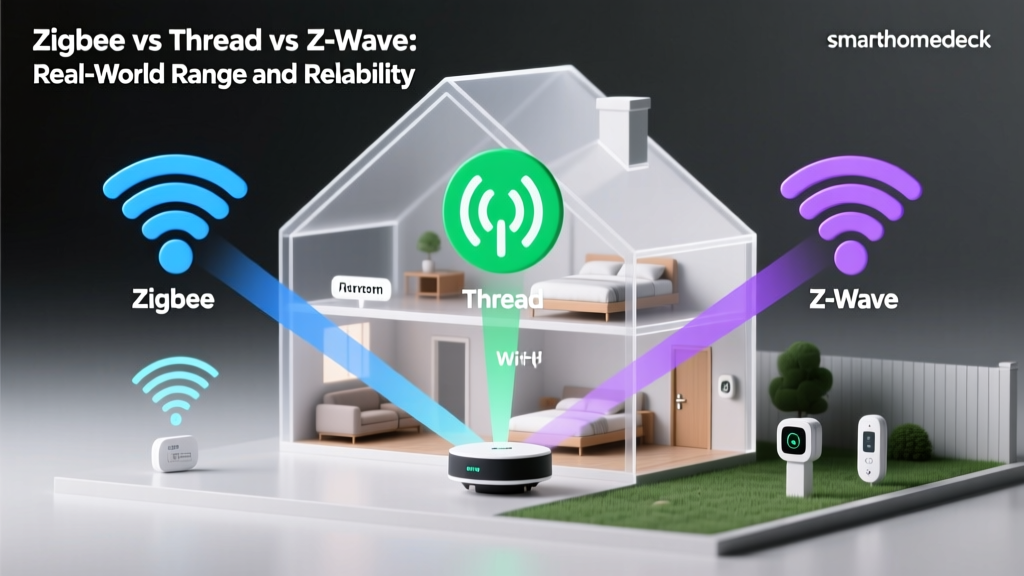
Matter is not a wireless protocol in the traditional sense; rather, it is an application layer that runs on top of existing IP-based networking technologies. Currently, Matter supports Wi-Fi for high-bandwidth devices (like cameras and smart displays) and Thread for low-power, battery-operated sensors and accessories. Ethernet is also supported for primary hubs and bridges.
The magic of Matter lies in its Multi-Admin capability. A single Matter device can be simultaneously controlled by an Apple HomePod, an Amazon Echo, and a Google Nest Hub without requiring complex cloud-to-cloud linking. Furthermore, Matter mandates local network communication, meaning your smart lights will still respond to physical switches and local automations even if your internet connection goes down.
Matter Over Thread vs. Matter Over Wi-Fi
When selecting Matter devices, understanding the underlying transport layer is crucial:
- Matter over Thread: Thread is a low-power, mesh-networking protocol. According to the Thread Group, Thread networks are self-healing and do not rely on a single central router. If one Thread device drops, the network automatically reroutes data. Thread devices require a 'Thread Border Router' (like an Apple TV 4K or Amazon Echo 4th Gen) to bridge the Thread mesh to your home's Wi-Fi network.
- Matter over Wi-Fi: Best suited for devices plugged into wall power that require higher data throughput or do not need the mesh benefits of Thread. While easier to set up for beginners (as it connects directly to your existing router), Wi-Fi devices consume more power and can congest your network if deployed in massive quantities.
Top Matter-Compatible Hubs and Controllers
To utilize Matter over Thread, or to bridge older Zigbee devices into your new Matter ecosystem, you need a capable hub. These devices act as the brain of your smart home and serve as Thread Border Routers.
Amazon Echo (4th Generation)
The spherical Amazon Echo (4th Gen) is a powerhouse for Matter adoption. It serves as a primary Matter controller, a Thread Border Router, and a Zigbee hub. This tri-fold capability makes it an incredible value for users transitioning from older smart home standards to Matter.
- Connectivity: Wi-Fi 5, Bluetooth 5.0, Zigbee, Thread Border Router
- Est. Price: $99.99
- Best For: Alexa users who want a single device to bridge legacy Zigbee sensors and new Matter/Thread accessories.
Apple TV 4K (3rd Generation)
For Apple HomeKit users, the Apple TV 4K (Wi-Fi + Ethernet model) is the ultimate Matter and Thread hub. It features a built-in Thread Border Router and supports the latest Matter specifications, ensuring blazing-fast local response times for HomeKit automations. The Ethernet model is highly recommended for stability and smart home hub duties.
- Connectivity: Wi-Fi 6, Gigabit Ethernet, Thread Border Router
- Est. Price: $149.00
- Best For: Dedicated Apple ecosystem users requiring rock-solid local automation and HomeKit Secure Router support.
Aqara Smart Hub M2
The Aqara M2 is a unique bridge designed specifically to bring Aqara's massive lineup of legacy Zigbee sensors into the Matter fold. It connects to your router via Ethernet or Wi-Fi and exposes all connected Aqara Zigbee child devices as native Matter accessories to your preferred platform.
- Connectivity: Wi-Fi 2.4GHz, Ethernet, Zigbee 3.0, IR Blaster
- Est. Price: $59.99
- Best For: Users with existing Zigbee sensor networks who want to expose them to Google Home or Alexa via Matter.
Best Matter Smart Plugs and Switches
Smart plugs are the entry point for most smart home enthusiasts. With Matter, these plugs now feature instant response times and unified energy monitoring across platforms.
Eve Energy (Thread)
Eve Energy is widely considered the gold standard for Matter smart plugs. It utilizes Thread, ensuring low latency and mesh network extension. Beyond simple on/off control, it provides granular energy monitoring, tracking voltage, current, and power consumption, projecting costs directly in your Apple Home or Eve app.
- Protocol: Matter over Thread
- Measurements: Energy monitoring (W, kWh, V, A)
- Est. Price: $39.95
- Pros: Zero cloud reliance, extends Thread mesh, premium build quality.
Meross Matter Smart Plug (Wi-Fi)
For those without a Thread Border Router, the Meross Matter Smart Plug is an excellent, budget-friendly alternative. It connects directly to your 2.4GHz Wi-Fi network and supports Matter natively out of the box. It lacks energy monitoring but makes up for it in reliability and affordability.
- Protocol: Matter over Wi-Fi
- Measurements: Standard on/off, scheduling
- Est. Price: $15.99
- Pros: Highly affordable, compact design that doesn't block adjacent outlets.
Leading Matter Lighting Solutions
Lighting is where Matter's local control truly shines, eliminating the cloud latency that often causes smart bulbs to pop on a second after flipping a switch.
Nanoleaf Essentials A19 Bulb
The Nanoleaf Essentials line was among the first to adopt Thread and Matter. This A19 bulb offers 1100 lumens of brightness, a wide color gamut, and tunable white temperatures (2700K to 6500K). Because it uses Thread, it responds instantaneously to commands and acts as a routing node for other Thread devices in your home.
- Protocol: Matter over Thread
- Brightness: 1100 Lumens
- Est. Price: $29.99
- Best For: High-output lighting needs and expanding Thread mesh coverage.
Comprehensive Matter Device Comparison
To help you decide which devices fit your specific network topology and budget, review the comparison table below.
| Device Name | Protocol | Category | Est. Price | Key Feature |
|---|---|---|---|---|
| Amazon Echo (4th Gen) | Wi-Fi / Thread / Zigbee | Hub / Speaker | $99.99 | Tri-protocol bridge |
| Apple TV 4K (Ethernet) | Wi-Fi 6 / Thread | Hub / Media | $149.00 | HomeKit Secure Router |
| Aqara Smart Hub M2 | Wi-Fi / Ethernet / Zigbee | Bridge | $59.99 | Zigbee-to-Matter exposure |
| Eve Energy | Thread | Smart Plug | $39.95 | Precision energy monitoring |
| Meross Matter Plug | Wi-Fi | Smart Plug | $15.99 | Budget-friendly local control |
| Nanoleaf Essentials | Thread | Smart Bulb | $29.99 | 1100 Lumens, Thread routing |
Visualizing Matter Device Value
The chart below illustrates the average retail price of the top Matter-compatible devices reviewed in this roundup, helping you budget for your ecosystem upgrade.
Security, Privacy, and Multi-Admin Capabilities
Security is not an afterthought in Matter; it is baked into the foundational architecture. Every Matter device must pass strict certification processes involving Device Attestation Certificates (DAC). This cryptographic verification ensures that the device communicating with your hub is genuine, unaltered, and manufactured by a certified vendor.
Furthermore, as highlighted in the Apple Developer Matter documentation, all Matter communications are encrypted end-to-end using standard IP security protocols. Because Matter prioritizes local LAN communication, your device states and telemetry data are not unnecessarily routed through third-party cloud servers, vastly reducing the attack surface and preserving user privacy.
The Multi-Admin feature is equally revolutionary. In the past, linking a device to a second platform required 'skill' linking or cloud-based workarounds that often broke. With Matter, a device can hold multiple administrative fabric credentials simultaneously. You can scan the Matter QR code with your iPhone to add it to Apple Home, and then use the Alexa app to scan the same code (or select the discovered device) to add it to Amazon Alexa. Both platforms act as equal administrators, and neither can lock the other out.
How to Build Your Matter Ecosystem: Step-by-Step
- Audit Your Current Hubs: Check if your existing smart speakers (Echo, Nest, HomePod) support Matter and Thread via firmware updates. If not, invest in a dedicated hub like the Aqara M2 or Apple TV 4K.
- Map Your Thread Mesh: If you are buying Thread devices (like Eve Energy or Nanoleaf), distribute them evenly throughout your home. Thread devices act as routers, extending the mesh network's range and reliability.
- Locate the Matter QR Code: Every certified Matter device features a unique QR code on the packaging and the device itself. This code contains the setup payload and cryptographic keys required for secure commissioning.
- Commission via BLE: When you scan the code with your phone, the phone uses Bluetooth Low Energy (BLE) to securely pass your Wi-Fi or Thread network credentials to the new device. Once connected, BLE is no longer needed.
- Assign Rooms and Automations: Once the device appears in your preferred app, assign it to a room and integrate it into your local automations.
Frequently Asked Questions
Will my older smart home devices work with Matter?
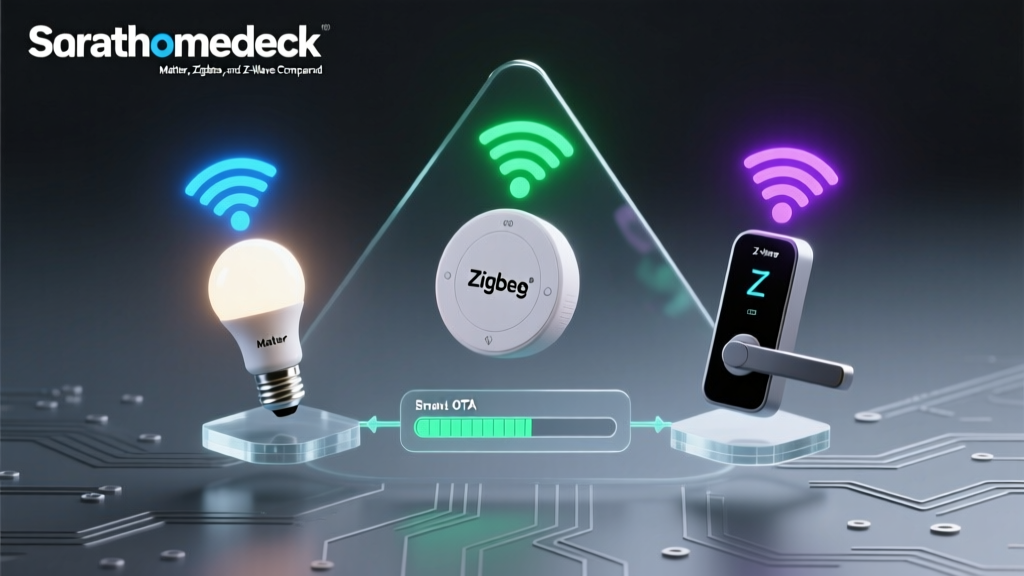
Not natively, but many manufacturers are releasing software updates to bridge the gap. For example, the Philips Hue Bridge and Aqara M2 act as translators, taking older Zigbee signals and exposing them as Matter devices to your network. Always check the manufacturer's website for firmware update roadmaps.
Do I need an internet connection for Matter to work?
No. One of the primary benefits of Matter is local control. As long as your devices and your controller (like a HomePod or Echo) are on the same local area network (LAN), your automations, schedules, and voice commands will function perfectly even during an internet outage. However, remote access away from home still requires an active internet connection and a designated hub.
Is Thread better than Wi-Fi for smart homes?
For low-power accessories like sensors, locks, and smart plugs, Thread is vastly superior. It consumes significantly less power (allowing batteries to last for years) and creates a self-healing mesh network that doesn't bog down your primary Wi-Fi router with dozens of low-bandwidth IoT connections. Wi-Fi remains the better choice for high-bandwidth devices like security cameras and smart displays.
Final Thoughts
The transition to Matter is a marathon, not a sprint. While the ecosystem is still growing, the foundational devices available today—like the Eve Energy plug, Nanoleaf bulbs, and versatile hubs from Amazon and Apple—provide a robust starting point. By prioritizing Matter over Thread where possible and ensuring your hubs are up to date, you can build a smart home that is faster, more secure, and entirely platform-agnostic.