Introduction to the Matter Ecosystem
The smart home industry has long been plagued by fragmentation. Consumers have historically been forced to choose between competing ecosystems like Apple HomeKit, Amazon Alexa, and Google Home, often resulting in a disjointed experience filled with incompatible devices and clunky third-party workarounds. Enter Matter, the great unifier. Developed by the Connectivity Standards Alliance (CSA), Matter is an open-source, IP-based connectivity protocol designed to ensure that smart home devices communicate seamlessly, securely, and reliably, regardless of the manufacturer or the voice assistant you prefer.
In this comprehensive roundup, we are focusing on the foundational building blocks of any smart home: smart plugs and smart lighting. These are often the first devices consumers purchase, and thanks to Matter, they are now faster, more reliable, and entirely cloud-independent for local control. According to the Connectivity Standards Alliance, Matter operates over existing IP networks, primarily utilizing Wi-Fi for high-bandwidth devices and Thread for low-power, battery-operated, or mesh-networked devices like light bulbs and sensors.
Matter doesn't replace Wi-Fi or Thread; it sits on top of them as a universal language, ensuring that a Nanoleaf bulb and an Eve plug can talk to your Apple TV and Amazon Echo simultaneously without needing a cloud server to translate.
Below, we break down the best Matter-compatible smart plugs and lighting options on the market, comparing their underlying network protocols (Thread vs. Wi-Fi), performance metrics, pricing, and practical use cases to help you build a future-proof smart home.
Why Choose Matter for Smart Lighting and Plugs?
Before diving into specific products, it is crucial to understand why upgrading to Matter-compatible lighting and plugs is worth your investment. The primary advantages include:
- True Local Control: Unlike legacy cloud-based protocols that route your 'turn on' command through a server halfway across the world, Matter operates locally over your LAN. If your internet goes down, your smart switches and automations will still work flawlessly.
- Multi-Admin Capability: A single Matter device can be controlled by multiple ecosystems simultaneously. You can use Apple Home on your iPhone while your partner uses Google Home on their Android device, without needing to reset or bridge the device.
- Unified QR Code Commissioning: Setting up a Matter device is as simple as scanning a standardized QR code with your smartphone camera. The protocol handles the secure onboarding process via Bluetooth Low Energy (BLE) automatically.
- Reduced Network Congestion: By utilizing Thread mesh networking for bulbs and plugs, you offload dozens of devices from your primary Wi-Fi router, significantly improving overall network stability.
Matter Over Thread vs. Matter Over Wi-Fi
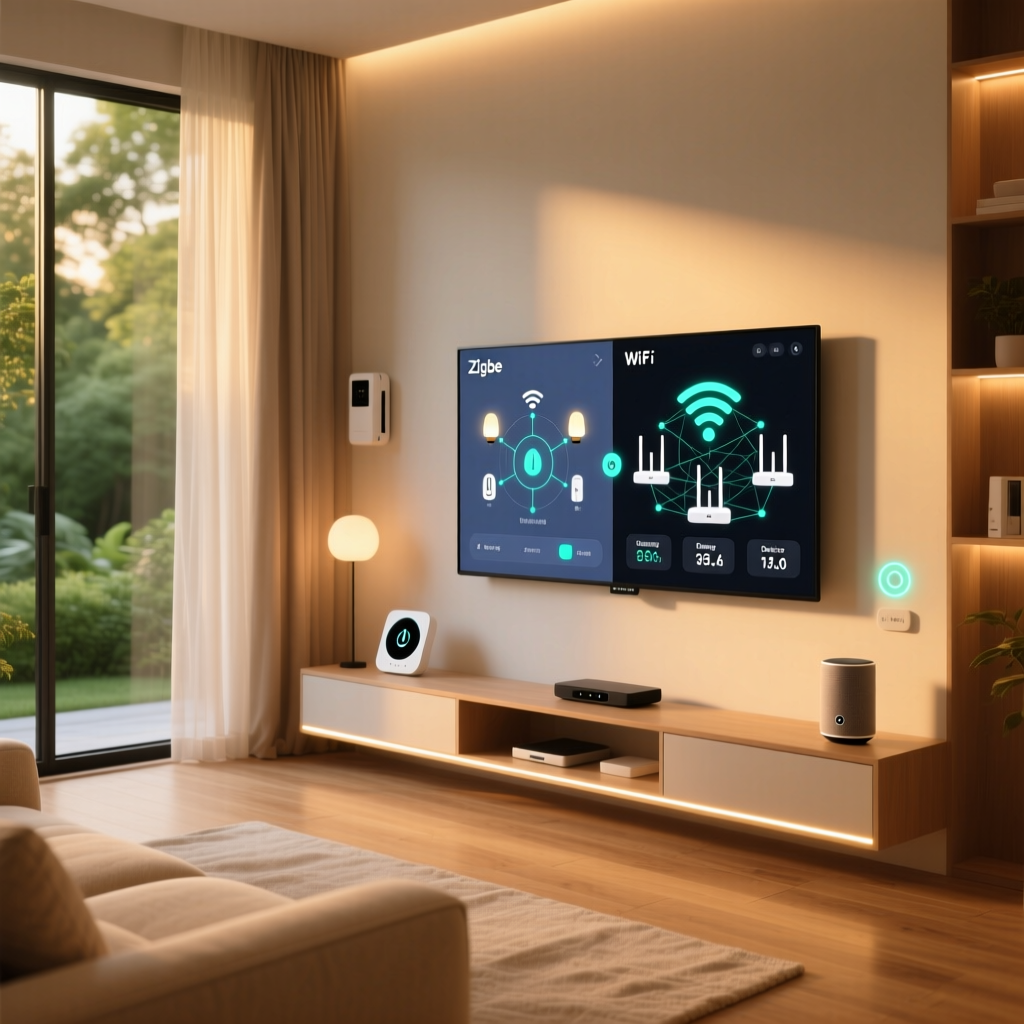
When shopping for Matter devices, you will notice they are built on one of two primary transport layers: Thread or Wi-Fi. Understanding the difference is key to optimizing your home's network topology.
Matter Over Thread (Ideal for Lighting)
Thread is a low-power, mesh-networking protocol based on the IEEE 802.15.4 radio standard. Every Thread-enabled device (like a smart bulb or plug) acts as a 'node' that can route signals for other devices. This creates a self-healing mesh network. If one bulb is turned off at the wall switch, the network instantly reroutes the signal through a neighboring bulb. Thread is exceptionally fast, highly reliable for large deployments, and keeps your Wi-Fi bandwidth free for streaming and gaming. As noted by the Thread Group, the protocol's IPv6 native support makes it a perfect, secure foundation for Matter.
Matter Over Wi-Fi (Ideal for Plugs and Hubs)
Wi-Fi offers high bandwidth, which is great for cameras and displays, but it can suffer from congestion when dozens of smart plugs are connected to a single router. Matter over Wi-Fi is best suited for standalone smart plugs where a mesh network isn't strictly necessary, or for devices that already require high data throughput. Modern Matter over Wi-Fi devices support local LAN control, eliminating the latency associated with legacy cloud-based Wi-Fi plugs.
Top Matter-Compatible Smart Plugs
Smart plugs are the easiest way to make 'dumb' appliances smart. Here are the top Matter-certified plugs currently available.
1. Eve Energy (Matter over Thread)
Price: ~$39.95 | Protocol: Thread | Features: Energy Monitoring, 120V/15A
The Eve Energy plug is a premium offering that utilizes Thread for lightning-fast response times. Its standout feature is built-in energy monitoring, allowing you to track the voltage, wattage, and historical power consumption of connected devices like space heaters or window AC units. Because it runs on Thread, it actively strengthens your home's mesh network. The build quality is exceptional, featuring a physical pass-through design that doesn't block adjacent outlets.
2. Meross Smart Plug Mini (Matter over Wi-Fi)
Price: ~$14.99 | Protocol: Wi-Fi | Features: Compact Design, 120V/10A
For budget-conscious consumers, the Meross Matter Smart Plug Mini is a fantastic entry point. Operating over Wi-Fi, it doesn't require a Thread Border Router, making it perfect for homes that only have a standard smart speaker. It is strictly a 10A plug, meaning it is best suited for lamps, fans, and coffee makers rather than heavy-duty appliances. The local Matter control eliminates the lag previously associated with Meross's cloud-dependent models.
Best Matter-Compatible Smart Lighting
Lighting sets the mood of a home. Matter ensures that your color scenes and circadian rhythms trigger instantly, without the 'pop-on' effect common in older cloud-based bulbs.
1. Nanoleaf Essentials A19 Bulb (Matter over Thread)
Price: ~$24.99 | Protocol: Thread | Features: 1100 Lumens, 16M Colors, CRI 80+
Nanoleaf was one of the first brands to fully embrace Matter over Thread. The Essentials A19 is incredibly bright (1100 lumens) and supports smooth color transitions. Because it uses Thread, adding 20 of these bulbs to your home won't slow down your Wi-Fi; instead, it creates a robust, self-healing lighting mesh. It also supports 'Circadian Lighting,' automatically adjusting the color temperature from cool daylight to warm amber as the sun sets.
2. WiZ v2 Matter Bulbs (Matter over Wi-Fi)
Price: ~$12.97 | Protocol: Wi-Fi | Features: 1100 Lumens, Tunable White, SpaceSense
Owned by Signify (the parent company of Philips Hue), WiZ v2 bulbs offer incredible value. While they operate over Wi-Fi, they support local Matter control, ensuring fast switching. A unique feature of WiZ is 'SpaceSense,' which uses the Wi-Fi radio signals between multiple bulbs to detect motion in a room, eliminating the need for dedicated physical motion sensors in some scenarios.
3. Philips Hue (Matter via Hue Bridge)
Price: ~$50.00+ per bulb | Protocol: Zigbee (Bridged to Matter) | Features: Premium Color, Unmatched Reliability
Philips Hue bulbs themselves do not speak Matter natively; they use Zigbee. However, the updated Hue Bridge is Matter-certified. This means you can expose your entire Hue ecosystem to Matter-compatible platforms like Apple Home and Google Home. While it is the most expensive route, Hue remains the gold standard for color accuracy, scene synchronization (Hue Sync), and third-party app support.
Comparison Chart: Matter Plugs & Lights
| Device | Protocol | Energy Monitoring | Avg Price | Best Use Case |
|---|---|---|---|---|
| Eve Energy Plug | Thread | Yes | $39.95 | High-draw appliances & mesh routing |
| Meross Plug Mini | Wi-Fi | No | $14.99 | Budget lamps & basic scheduling |
| Nanoleaf Essentials | Thread | No | $24.99 | Whole-home color lighting mesh |
| WiZ v2 A19 | Wi-Fi | No | $12.97 | Affordable tunable white lighting |
| Philips Hue (Bridged) | Zigbee/Matter | No | $50.00+ | Premium entertainment & scenes |
Visualizing Matter Device Performance
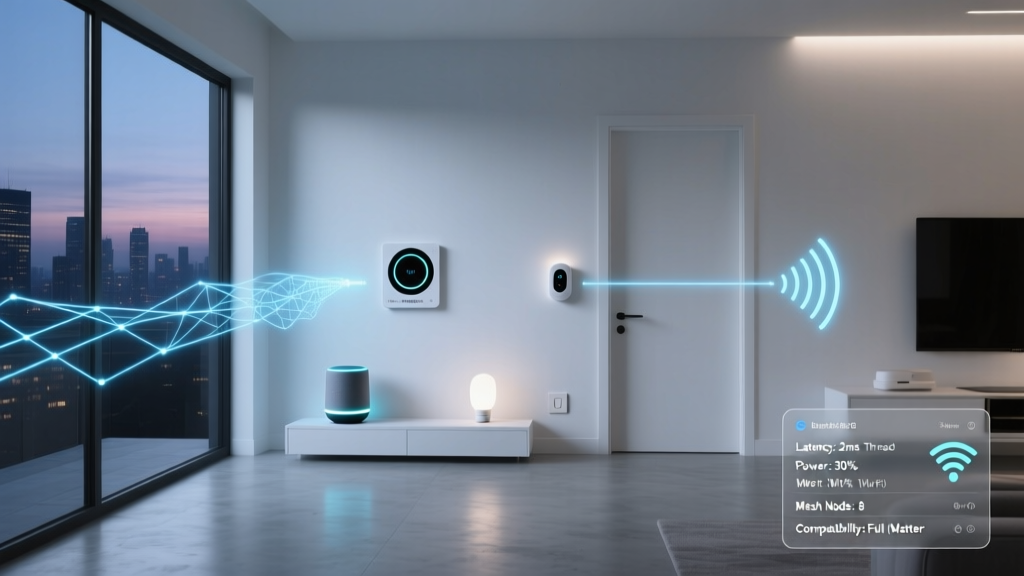
One of the most significant selling points of Matter, particularly when paired with Thread, is latency. The chart below illustrates the average command response time (the delay between tapping 'On' in your app and the device reacting) across different protocols. As The Verge's comprehensive Matter explainer highlights, local execution completely eliminates the round-trip to cloud servers, resulting in near-instantaneous physical responses.
Essential Hubs and Thread Border Routers
To utilize Matter over Thread, your home requires a Thread Border Router. This device bridges the low-power Thread mesh network to your home's high-bandwidth Wi-Fi/Ethernet network. Fortunately, many modern smart speakers already have this hardware built-in.
- Apple TV 4K (Wi-Fi + Ethernet): One of the most reliable Thread Border Routers available. The Ethernet model is highly recommended for stable smart home routing.
- Apple HomePod Mini / HomePod (2nd Gen): Excellent Thread support, though placing them centrally is key for mesh coverage.
- Amazon Echo (4th Gen) / Echo Show 8 (3rd Gen): Amazon has integrated Thread and Zigbee radios into their premium Echo devices, making them versatile Matter controllers.
- Google Nest Hub (2nd Gen) / Nest Wifi Pro: Google's ecosystem fully supports Thread routing, seamlessly integrating with the Google Home app's Matter commissioning flow.
If you are buying Matter over Wi-Fi plugs, you do not need a Thread Border Router, but you will still need a Matter-compatible 'Controller' (like the apps mentioned above) to manage the devices and set up local automations.
Security Architecture and Device Attestation
Security is a cornerstone of the Matter protocol. Every certified Matter device must undergo a rigorous certification process that includes the implementation of a Device Attestation Certificate (DAC). When you scan the QR code to pair a new smart plug or bulb, your smartphone checks the device's cryptographic certificate against the Matter Distributed Compliance Ledger (DCL). This ensures that the device is genuinely certified, hasn't been tampered with, and is running secure, encrypted firmware. This hardware-level security makes Matter vastly superior to legacy protocols that relied on easily spoofed cloud API tokens.
Actionable Setup Tips & Troubleshooting
While Matter aims to be plug-and-play, early adopters may encounter hurdles. Follow these actionable tips for a smooth deployment:
- Update Your Firmware First: Before commissioning a new Matter bulb, ensure your Thread Border Routers (Apple TV, HomePod, Echo) are running the latest OS updates. Matter support is frequently patched and improved via firmware.
- Use the Native App for Initial Setup: While you can scan a Matter QR code directly in the Apple Home or Google Home app, it is often more reliable to use the manufacturer's native app (e.g., Eve or Nanoleaf) for the initial Wi-Fi/Thread credential provisioning, then link it to your preferred ecosystem.
- Network Isolation (IoT VLANs): If you run a prosumer network (like UniFi or pfSense) and isolate your IoT devices on a separate VLAN, you must enable mDNS (Multicast DNS) reflection and allow UDP port 5353 and TCP port 5540 between your IoT VLAN and your primary device VLAN. Matter relies heavily on local multicast discovery to find devices on your network.
- Thread Mesh Routing Issues: If a Thread bulb is unresponsive, it may be on the edge of your mesh range. Thread requires mains-powered devices (like smart plugs or other bulbs) to act as routers. Ensure you have at least 3-4 mains-powered Thread devices distributed throughout your home to create a stable routing backbone.
The Future of Matter in Energy Management
The CSA is continuously updating the Matter specification. Recent releases (Matter 1.2 and 1.3) have expanded the protocol beyond simple lighting and plugs to include robot vacuums, EV chargers, and solar inverters. For smart plugs and lighting, the future points toward advanced Energy Management. Imagine your Matter-enabled EV charger communicating directly with your Matter-enabled smart thermostat and solar inverter to optimize your home's power draw during peak grid pricing hours, all handled locally and securely without relying on third-party cloud servers.
Conclusion
The transition to Matter is the most significant shift in the smart home industry in over a decade. For smart plugs and lighting, the benefits are immediate: blazing-fast local response times, elimination of cloud dependencies, and the freedom to mix and match brands without sacrificing functionality. Whether you choose the mesh-networking reliability of Thread-based Nanoleaf bulbs and Eve plugs, or the budget-friendly convenience of Wi-Fi-based Meross and WiZ devices, adopting Matter ensures your home automation setup is secure, resilient, and ready for the future.