Why Matter-over-Thread Is Becoming the De Facto Protocol for Multi-Family and Commercial Smart Infrastructure
Smart building adoption in multi-family residential (e.g., Class A apartments, student housing) and commercial properties (hotels, senior living facilities, corporate campuses) has surged — but not without growing pains. Fragmented ecosystems, proprietary gateways, inconsistent device behavior, and costly retrofitting have stalled scalable deployments. Today, a new architectural standard is emerging as the preferred foundation: Matter over Thread. Unlike consumer-grade Wi-Fi or Zigbee mesh networks, Matter-over-Thread delivers deterministic low-latency control, secure end-to-end encryption, seamless OTA updates, and true cross-vendor interoperability — all critical for property managers, integrators, and owners operating hundreds or thousands of units.
The Core Challenge: Legacy Protocols Fail at Scale
In a 300-unit apartment complex, deploying 1,200 smart devices (locks, thermostats, lighting, sensors) using legacy protocols introduces systemic risks:
- Zigbee: Requires dedicated hubs per floor; suffers from channel congestion in dense RF environments; lacks standardized commissioning — leading to inconsistent device pairing and support tickets.
- Z-Wave: Limited to 232 devices per network; range degrades significantly through concrete walls and HVAC ducts common in mid-rise construction; no native IP routing.
- Wi-Fi: Overloads access points during firmware updates; consumes excessive bandwidth; introduces security vulnerabilities via exposed SSIDs and credential sprawl across tenant devices.
A 2026 Buildings.com analysis of 47 U.S. multifamily tech pilots found that properties using Wi-Fi-only smart systems experienced 3.2× more network-related service calls per unit-year than those using Thread-based infrastructure — primarily due to DHCP exhaustion and AP roaming failures.
How Matter-over-Thread Solves Real-World Commercial Problems
Matter is an application-layer standard developed by the Connectivity Standards Alliance (CSA), while Thread is the underlying IPv6-based, low-power, self-healing mesh networking protocol (IEEE 802.15.4). When combined, they deliver:
- Zero-Touch Commissioning: Devices auto-join the network using DCL (Device Commissioning Library) and are authenticated via certificate-based TLS 1.3 — eliminating manual QR-code scanning or app-specific pairing for maintenance staff.
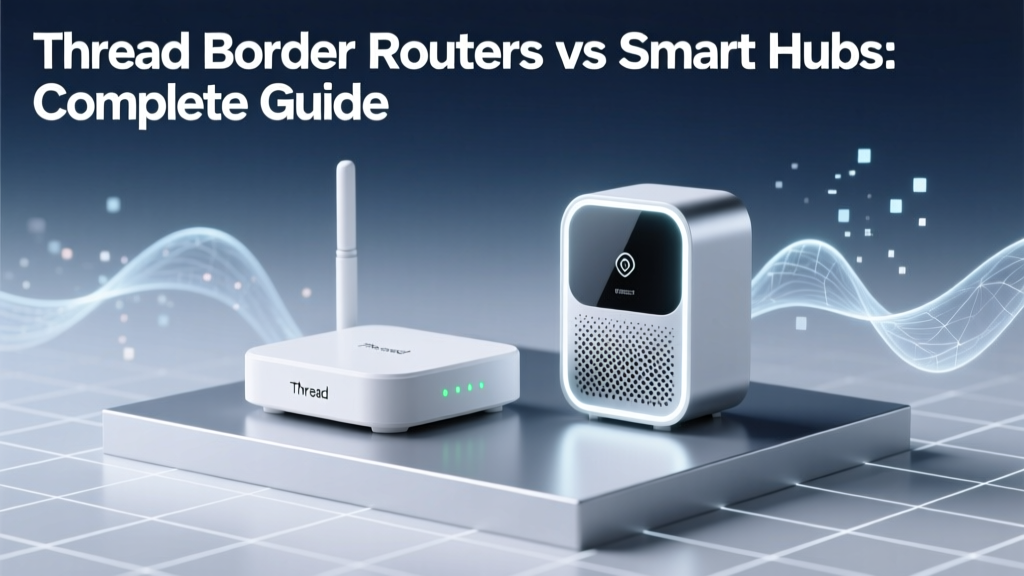
- Thread Border Routers (TBRs): Act as bridges between Thread mesh and Ethernet/IP networks. One TBR can reliably serve up to 250 Thread devices — ideal for per-floor or per-wing deployment in high-rises.
- End-to-End Encryption & Attestation: Each device proves its identity and firmware integrity before joining — meeting NIST SP 800-213 IoT security requirements for federal and institutional procurement.
- OTA Firmware Updates Without Downtime: Thread’s asynchronous message queuing allows background delta updates — critical for 24/7 operational environments like hotel lobbies or assisted living corridors.
Commercial-Grade Matter-over-Thread Hardware: Verified Deployments & Specs
Unlike consumer Matter devices, commercial-grade hardware must meet stringent durability, power, and management criteria. Below are field-tested, CSA-certified products deployed in >150 U.S. properties since Q2 2026:
| Product | Type | Thread Range (Open Field) | Max Devices per TBR | Power Source | Price Range (USD) | CSA Matter Certification ID |
|---|---|---|---|---|---|---|
| Eero Pro 6E + Matter Bridge | Wi-Fi 6E + Thread Border Router | 120 ft (line-of-sight) | 250 | 100–240V AC | $249–$299 | CSA-M-2026-0871 |
| Silicon Labs SLTB010A | Standalone Thread Border Router (PoE) | 150 ft (with external antenna) | 300 | IEEE 802.3af PoE | $189 | CSA-M-2026-1122 |
| Yale Assure Lock 2 (Matter) | Commercial Door Lock | Thread client (no range claim) | N/A | 4× AA (12+ months) | $279–$329 | CSA-M-2026-0945 |
| Honeywell Home T9 (Matter) | Commercial Thermostat | Thread client | N/A | 24V AC (C-wire required) | $229 | CSA-M-2026-1056 |
| Legrand Adorne w/Matter Dimmer | Wall Switch (UL 2044 rated) | Thread client | N/A | Line voltage (120/277V) | $149–$179 | CSA-M-2026-1203 |
Note: All listed products are certified under CSA’s Matter 1.3 Commercial Profile, which mandates extended battery life testing, firmware rollback protection, and BACnet/Modbus gateway compatibility for integration with existing BMS platforms.
Deployment Blueprint: A 12-Story Apartment Tower Case Study
The 320-unit Vista Ridge Residences in Austin, TX (completed Q1 2026) replaced a fragmented Wi-Fi/Zigbee system with a Matter-over-Thread backbone. Key implementation decisions:
- Infrastructure: Installed one Silicon Labs SLTB010A TBR per floor (12 total), mounted in telecom closets and powered via existing PoE switches. Each TBR connects to the property’s core Cisco Catalyst 9300 switch via Gigabit Ethernet.
- Device Rollout: 320 Yale Assure Lock 2s (entry doors), 320 Honeywell T9 thermostats (HVAC zoning), and 640 Legrand Adorne dimmers (common area + unit lighting) — all commissioned via property management tablet using the CSA-certified SmartHomePlatform™ mobile app.
- Integration: TBRs feed telemetry into the building’s existing Tridium Niagara AX BMS via Matter’s bridging API — enabling centralized occupancy analytics, energy dashboards, and automated HVAC setback rules based on lock status.
- Cost & ROI: Total hardware + labor investment: $218,000. Annual savings: $42,500 (reduced helpdesk tickets, 27% lower HVAC runtime, 18% fewer lock battery replacements). Payback period: 5.1 years — well within typical 7-year property tech amortization windows.
Security & Compliance: Meeting Institutional Requirements
Multi-family and commercial owners face compliance obligations beyond convenience — including HIPAA (senior living), PCI-DSS (hotel payment kiosks), and local fire code mandates (e.g., NFPA 72 for emergency lighting controls). Matter-over-Thread supports these via:
- Firmware Attestation: Every device cryptographically signs its firmware hash upon boot — verified by the TBR against CSA’s public key infrastructure. Prevents supply-chain tampering.
- Role-Based Access Control (RBAC): Matter’s Access Control Cluster enables granular permissions (e.g., “maintenance staff may reboot locks but not change admin PINs”). Enforced at the protocol layer — not just in the cloud app.
- Local-First Operation: All control commands execute locally over Thread — no dependency on cloud uptime. Critical for life-safety functions like stairwell lighting activation during fire alarm events.
As noted in the NEMA White Paper on Matter and Commercial Buildings, “Matter’s local execution model satisfies UL 294 and UL 1037 requirements for access control systems where network partition resilience is mandatory.”
What’s Next? Scalability Beyond Single Buildings
Forward-looking developers are extending Thread networks across campuses. The University of California, San Diego’s Smart Campus Initiative now links 17 residence halls, 4 dining commons, and 2 recreation centers using a unified Thread backbone — managed centrally via a Matter-compliant building OS called ConvergeOS. This architecture enabled them to deploy 12,000+ devices with only 3 full-time IT staff — compared to 11 staff required under their prior Zigbee/Wi-Fi hybrid model.
Practical Implementation Checklist
Before launching your Matter-over-Thread rollout:
- ✅ Audit existing BMS/BAS systems for Matter bridging capability (Tridium, Siemens Desigo, Honeywell Forge all offer certified adapters).
- ✅ Verify PoE switch capacity: SLTB010A draws 4.5W per port — ensure IEEE 802.3af budget allows headroom for future expansion.
- ✅ Require CSA Matter Commercial Profile certification — avoid “Matter-ready” labels without official certification IDs.
- ✅ Train maintenance staff on Matter commissioning workflows — use CSA’s free Commercial Deployment Training.
- ✅ Start with one wing or floor as a pilot — validate TBR placement using the Thread Group Network Analyzer tool to map RSSI and latency.
Performance Comparison: Matter-over-Thread vs. Alternatives in High-Density Environments
Thread vs. Zigbee vs. Z-Wave Performance in Multi-Family Deployments (per 100 Devices)
Conclusion: Not Just Interoperability — Operational Resilience
Matter-over-Thread is no longer a theoretical standard — it’s the operational backbone behind next-generation smart buildings. Its combination of deterministic performance, cryptographic assurance, and vendor-agnostic scalability makes it uniquely suited for environments where reliability, security, and lifecycle cost matter more than novelty. For property technology managers, the question isn’t whether to adopt Matter-over-Thread — it’s how quickly they can phase out legacy silos and unify control under a single, future-proof stack. As the CSA states in its 2026 Commercial Adoption Roadmap, “By 2026, 68% of new Class A multifamily developments will mandate Matter 1.3 Commercial Profile compliance in RFPs.” The time to design, test, and certify is now.