The Application Layer vs. The Transport Layer
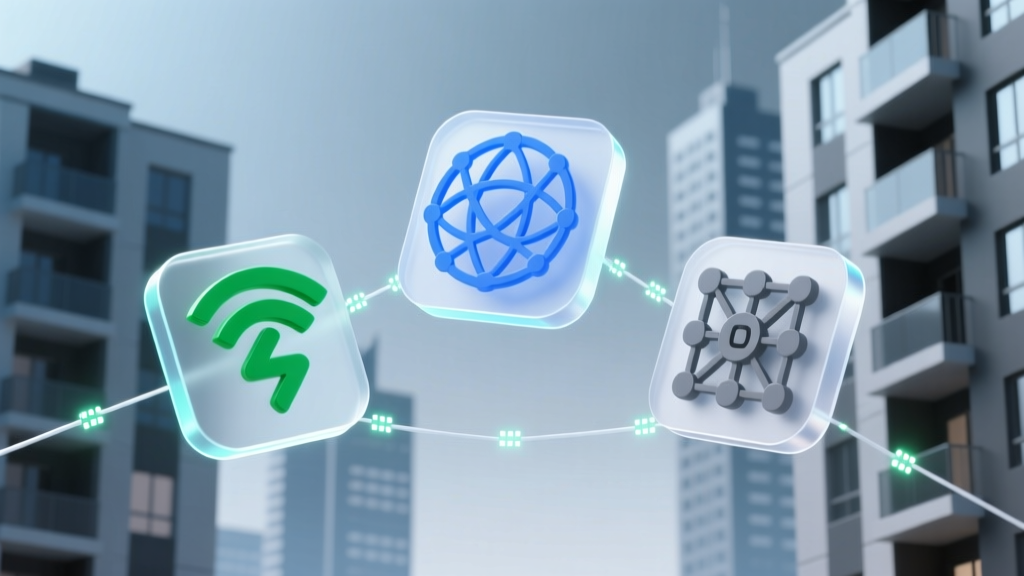
When the Connectivity Standards Alliance (CSA) introduced Matter, it was hailed as the ultimate unifier for the fragmented smart home industry. However, a common misconception among consumers is that Matter is a single, monolithic wireless signal. In reality, Matter is an application layer protocol. It dictates the "language" that smart devices use to communicate with one another and with your smartphone, but it does not dictate the "roads" upon which that language travels. For the transport layer, Matter relies primarily on two distinct wireless standards: Wi-Fi and Thread.
Choosing between Matter over Thread and Matter over Wi-Fi is not a matter of picking a favorite ecosystem; it is about matching the underlying transport protocol to the specific hardware requirements of the device in question. According to the Connectivity Standards Alliance, Matter is designed to run over Internet Protocol (IP), which allows it to seamlessly bridge high-bandwidth networks like Wi-Fi with low-power mesh networks like Thread. But how do these two transport layers compare in real-world smart home deployments? Let us break down the technical specifications, practical use cases, and device recommendations for both.
Matter Over Wi-Fi: The High-Bandwidth Heavyweight
Wi-Fi (based on the IEEE 802.11 standard) is the undisputed king of local area networking. When a device uses Matter over Wi-Fi, it connects directly to your home’s existing wireless router or mesh access point, just like your laptop or smartphone. This architecture provides massive bandwidth, making it ideal for devices that need to transmit large amounts of data or stream high-definition media.
Pros of Matter Over Wi-Fi
- Ubiquity and Infrastructure: You already have a Wi-Fi network. There is no need to purchase additional hubs or border routers to get a Wi-Fi-based Matter device online.
- High Bandwidth: Capable of handling hundreds of megabits per second (Mbps), Wi-Fi is mandatory for smart home devices that process video, audio, or complex visual data.
- Direct Cloud and Local Access: Wi-Fi devices can easily communicate with local servers and cloud APIs simultaneously without requiring a specialized bridge.
Cons of Matter Over Wi-Fi
- Power Consumption: Wi-Fi radios are power-hungry. Matter over Wi-Fi is strictly limited to mains-powered devices or those with large, frequently rechargeable batteries. You will never see a battery-operated door sensor using Wi-Fi.
- Network Congestion: The 2.4GHz spectrum is notoriously crowded. Most consumer routers begin to struggle with latency and packet loss when more than 30 to 50 IoT devices are connected directly to the access point. Adding dozens of Matter smart bulbs via Wi-Fi can choke your home network.
Matter Over Thread: The Low-Power Mesh Champion
Thread is a low-power, wireless mesh networking protocol built on the IEEE 802.15.4 standard (the same radio frequency used by Zigbee). Unlike Wi-Fi’s "star" topology where every device talks directly to a central router, Thread utilizes a "mesh" topology. Every mains-powered Thread device acts as a router, passing encrypted IPv6 packets from one node to the next. According to the Thread Group, this creates a self-healing network that becomes stronger and more reliable as you add more devices.
Pros of Matter Over Thread
- Ultra-Low Power Consumption: Thread radios draw mere microamps in sleep mode. Battery-operated devices like motion sensors, smart locks, and leak detectors can run for years on a single coin cell or set of AA batteries.
- Mesh Reliability and Range: Because devices route signals for one another, a Thread network easily covers large homes, thick walls, and dead zones without requiring high-power repeaters.
- No Router Choke Points: Thread devices do not connect to your Wi-Fi router. They operate on their own dedicated mesh, freeing up your Wi-Fi bandwidth for your phones, TVs, and laptops.
Cons of Matter Over Thread
- Low Bandwidth: Thread maxes out at roughly 250 kbps. It is perfect for sending "turn on" commands or temperature readings, but completely incapable of streaming audio or video.
- Border Router Requirement: To translate the Thread mesh network to your IP network (so your phone can control the devices), you must own a Thread Border Router. Devices like the Apple TV 4K, HomePod Mini, Nest Hub Pro, and Amazon Echo (4th Gen) contain Thread radios that act as these vital bridges.
Head-to-Head Comparison
To visualize the stark differences between these two transport layers, review the comparison table below:
| Feature | Matter Over Wi-Fi | Matter Over Thread |
|---|---|---|
| Underlying Standard | IEEE 802.11 (Wi-Fi 4/5/6) | IEEE 802.15.4 |
| Network Topology | Star (Device to Access Point) | Mesh (Device to Device to Border Router) |
| Bandwidth | High (100+ Mbps) | Low (~250 kbps) |
| Power Source | Mains / Large Battery | Mains / Coin Cell / AA Batteries |
| Scalability | Limited by Router Capacity (30-50 devices) | Highly Scalable (100+ nodes easily supported) |
| Best Device Types | Displays, Cameras, Vacuums, Hubs | Sensors, Locks, Bulbs, Switches, Blinds |
Visualizing Protocol Capabilities
The following chart illustrates the trade-off between bandwidth and power efficiency across popular smart home protocols. Notice how Thread sacrifices raw speed to achieve near-perfect power efficiency, making it the undisputed champion for battery-operated IoT devices.
Protocol Bandwidth vs Power Efficiency
Real-World Device Recommendations
Understanding the theory is important, but how does this translate to the products you should actually buy for your smart home? Here is a practical breakdown of device categories and specific product recommendations based on their transport layer.
When to Choose Matter Over Thread
Any device that requires low-latency local control, operates on battery power, or is part of a massive deployment of lighting and sensors should be Thread-based.
- Smart Lighting: Nanoleaf Essentials A19 Bulbs ($25) and light strips utilize Thread to ensure that when you flip a switch, an entire room of 20 bulbs illuminates simultaneously without the "popcorn effect" (where bulbs turn on sequentially) often seen on Wi-Fi networks.
- Sensors: Aqara Door and Window Sensors or Eve Motion Sensors ($20 - $40). These rely on Thread’s ultra-low sleep-state power draw to guarantee 1 to 2 years of battery life while maintaining instant response times.
- Motorized Blinds: Eve MotionBlinds ($150+). Thread allows these battery-powered motors to receive signals through thick walls via mesh routing, eliminating the need to run unsightly power cables to every window.
When to Choose Matter Over Wi-Fi
If the device is plugged into a wall outlet, requires high-speed data transfer, or serves as a central hub for other ecosystems, Wi-Fi is the mandatory choice.
- Smart Plugs and Relays: TP-Link Tapo Matter Smart Plugs ($15 - $25). Since they are already connected to mains power, utilizing Wi-Fi eliminates the need for a Thread border router while providing robust, high-bandwidth connectivity.
- Robot Vacuums: Devices like the Roborock S8 or Ecovacs Deebot require Wi-Fi to download firmware updates, stream camera feeds, and map large homes via cloud processing.
- Smart Displays and Thermostats: The Echo Show or Nest Thermostat utilize Wi-Fi to stream music, display video doorbell feeds, and process voice commands via the cloud.
The Border Router Bottleneck
The most critical factor in adopting Matter over Thread is the availability of a Thread Border Router. Without one, Thread devices cannot communicate with your smartphone or the cloud. Fortunately, the major smart home ecosystems have quietly integrated Thread radios into their flagship devices over the last few years. As noted by Apple Support documentation, devices like the HomePod Mini and Apple TV 4K automatically act as Thread Border Routers and Home Hubs, seamlessly bridging the gap between your Thread mesh and your IP network. Google’s Nest Hub (2nd Gen) and Nest WiFi Pro routers do the same for the Google Home ecosystem.
If you are heavily invested in Apple HomeKit or Google Home, you likely already own a Thread Border Router without realizing it. However, if you rely solely on a basic smart speaker without a Thread radio, you will either need to purchase a dedicated Border Router (like the Eve Border Router or a Nanoleaf Hub) or restrict your purchases to Matter over Wi-Fi devices.
Network Scalability: What Happens at 100+ Devices?
The true test of a smart home protocol is not how it performs with five devices, but how it handles fifty. Modern homes are increasingly dense with IoT nodes. A standard living room might contain four smart bulbs, two sensors, a smart plug, a leak detector, and a motorized blind.
When you scale this across a 2,000-square-foot home, you can easily exceed 100 smart home endpoints. If all 100 endpoints are using Matter over Wi-Fi, your ISP-provided router will likely suffer from ARP table exhaustion, 2.4GHz spectrum saturation, and severe latency spikes. Your smart lights will lag, and your streaming video will buffer. Matter over Thread entirely bypasses this issue. Because Thread creates a separate, self-healing mesh network that only requires a single IPv6 connection to your main router via the Border Router, your primary Wi-Fi network remains completely unburdened, ensuring your laptops and TVs retain maximum bandwidth.
Security and Privacy Architecture
Both Matter over Thread and Matter over Wi-Fi benefit from the stringent security requirements mandated by the CSA. Every certified Matter device must possess a unique Device Attestation Certificate (DAC) embedded in its hardware, ensuring that it is genuine and securely paired via a cryptographic handshake. However, the transport layers handle security slightly differently.
Thread networks utilize AES-128 encryption at the mesh layer. Every single hop from a battery-powered sensor to a router to the Border Router is encrypted end-to-end within the mesh. Wi-Fi relies on standard WPA2/WPA3 network encryption. While both are highly secure, Thread’s isolated mesh network inherently reduces the attack surface, as the low-bandwidth IoT devices are entirely segregated from your primary network where personal computers and smartphones reside.
Final Verdict: Which Should You Choose?
The debate between Matter over Thread and Matter over Wi-Fi is not a zero-sum game; it is a symbiotic relationship. The smart home of the future utilizes a hybrid approach, leveraging the unique strengths of both transport layers.
The Golden Rule of Matter: Use Thread for the "edges" of your smart home (battery-operated sensors, switches, locks, and lighting) to ensure low power consumption and mesh reliability. Use Wi-Fi for the "core" of your smart home (hubs, cameras, displays, and heavy appliances) where high bandwidth and constant mains power are readily available.
As a consumer, your primary focus should be on ensuring your home has a robust Thread Border Router setup. Once that foundation is laid, you can confidently mix and match Thread-based sensors and Wi-Fi-based hubs, all unified under the single, interoperable banner of the Matter application layer. By understanding the underlying transport protocols, you can build a smart home that is not only intelligent but fundamentally resilient, responsive, and future-proof.