The Hidden Gatekeepers of the Smart Home
When you purchase a smart plug, a connected thermostat, or an automated lighting system, the packaging is often plastered with a dizzying array of logos. You see the Wi-Fi symbol, the Bluetooth insignia, and increasingly, the distinct QR-code-bearing logo of Matter, Zigbee, or Z-Wave. But what do these logos actually guarantee? For the average consumer, a logo is merely a suggestion of compatibility. In the rigorous world of IoT engineering, however, these symbols represent a grueling, expensive, and highly technical gauntlet known as protocol certification.
At SmartHomeDeck, we believe that understanding the difference between a 'certified' device and a merely 'compatible' device is the cornerstone of building a reliable, secure, and future-proof smart home. A device that cuts corners on compliance might work on day one, but it is the first to fail when your router reboots, your cloud provider changes its API, or a malicious actor probes your local network. This comprehensive guide decodes the certification processes of the industry's leading protocols—Matter, Zigbee, and Z-Wave—and explains why compliance is the ultimate metric of smart home quality.
What is Protocol Certification?
Protocol certification is a formalized testing process managed by industry consortiums, most notably the Connectivity Standards Alliance (CSA) and the Z-Wave Alliance. Before a manufacturer can legally print a Matter, Zigbee, or Z-Wave logo on their retail packaging, the device's firmware and hardware must pass a battery of tests at an Authorized Test Lab (ATL).
These tests evaluate three critical pillars:
- Interoperability: Can the device successfully pair, communicate, and execute commands with hubs and controllers from rival manufacturers? For instance, a certified Matter smart plug must respond to commands from an Apple HomePod, an Amazon Echo, and a Samsung SmartThings hub with identical latency and reliability.
- Security Posture: Does the device utilize mandatory encryption standards? Does it possess secure boot mechanisms to prevent firmware tampering? Are cryptographic keys stored in hardware-backed secure enclaves?
- Network Stability: How does the device handle network congestion, packet loss, and interference? Does a Zigbee router node correctly route traffic without dropping packets during high-bandwidth events?
According to the Connectivity Standards Alliance Certification guidelines, manufacturers must submit detailed test logs and undergo randomized audit testing to maintain their certification status. This is not a simple software checklist; it is a rigorous validation of the device's entire operational lifecycle.
Matter Certification: The Cryptographic Guarantee
Matter has taken the smart home industry by storm, promising a unified, IP-based standard that operates locally without cloud dependency. However, Matter's true strength lies not just in its IP routing, but in its stringent certification requirements, specifically the mandate for Device Attestation Certificates (DACs).
The Role of Device Attestation Certificates (DACs)
Every certified Matter device contains a unique, factory-installed DAC. This is a cryptographic certificate signed by the manufacturer's Product Attestation Authority (PAA), which in turn is verified by the CSA's root certificate. When you attempt to add a Eve Energy Matter Smart Plug (typically retailing around $40) to your Apple Home or Google Home ecosystem, the controller does not just ask for a pairing code; it initiates a cryptographic handshake.
The controller verifies the DAC to ensure the device is genuinely what it claims to be, that its firmware has not been altered, and that it has not been revoked due to security vulnerabilities. If a cheap, uncertified clone attempts to mimic a Matter device using spoofed MAC addresses or stolen pairing codes, the network will instantly reject it. As detailed in the Matter Protocol Overview, this hardware-rooted security is what separates Matter from legacy Wi-Fi devices that rely on easily compromised cloud-based WPA2 passwords.
What the Matter Logo Guarantees
When you see the Matter logo on a product like the Nanoleaf Essentials A19 Bulb ($30), you are guaranteed:
- Local Control: The device will function even if the internet goes down, provided your local Thread or Wi-Fi network is active.
- Multi-Admin Capability: The device can be simultaneously controlled by multiple ecosystems (e.g., Apple Home and Google Home) without requiring complex cloud-linking workarounds.
- Standardized Device Types: A certified Matter light bulb will expose the exact same color temperature and brightness clusters to the network, ensuring third-party apps can control it without custom API integrations.
Zigbee and Z-Wave: The Legacy Giants of Compliance
While Matter is the future, Zigbee and Z-Wave remain the backbone of millions of existing smart homes. Their certification processes have evolved significantly over the years to address early interoperability nightmares.
Zigbee 3.0 vs. Legacy Profiles
In the early days of Zigbee, manufacturers used proprietary 'profiles' (like Zigbee Light Link or Zigbee Home Automation). A hub certified for one profile often could not control a device certified for another. The introduction of Zigbee 3.0 unified these profiles. Today, the CSA requires rigorous backward-compatibility testing and strict adherence to the Base Device Behavior (BDB) specification. Furthermore, the Zigbee Green Power certification ensures that energy-harvesting devices (like battery-less switches) can securely integrate into the mesh network without becoming security vulnerabilities.
Z-Wave Plus v2: The Gold Standard of RF Reliability
Z-Wave operates on sub-GHz frequencies (908.42 MHz in the US), avoiding the crowded 2.4 GHz spectrum used by Wi-Fi and Bluetooth. The Z-Wave Plus v2 certification (associated with the 700 and 800 series chips) is notoriously strict. According to the Z-Wave Alliance Certification requirements, devices must prove enhanced battery life (often lasting 3 to 5 years on a single CR123A battery), extended range (up to 100 meters line-of-sight), and S2 security framework compliance.
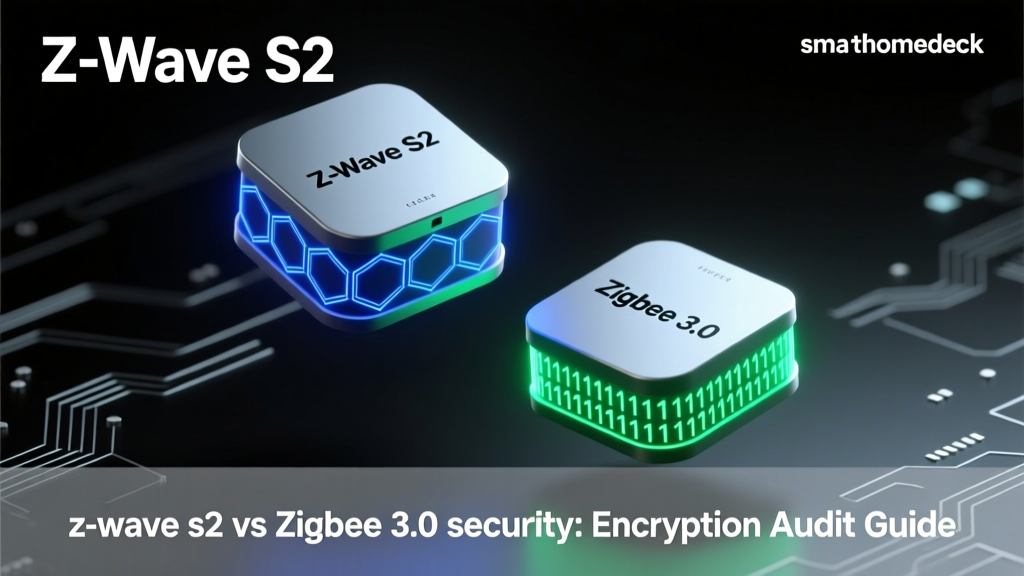
Take the Aeotec Smart Switch 7 ($65), a Z-Wave Plus v2 certified device. Its certification guarantees that it utilizes AES-128 symmetric encryption via the S2 framework, meaning a hacker driving down your street cannot intercept the RF signals to unlock your smart deadbolt or trigger your garage door. The certification also mandates strict power-reporting accuracy, ensuring the energy consumption data it sends to your Hubitat or Home Assistant hub is reliable.
The 'Works With' Trap: API Integration vs. True Compliance
Consumers must be wary of the 'Works with Amazon Alexa' or 'Works with Google Home' badges when they are not accompanied by a protocol certification logo. These badges often merely indicate that the manufacturer has built a cloud-to-cloud API bridge.
Certification is not merely a badge; it is a cryptographic guarantee that a device will not compromise the local network's security posture and will not orphan you when a startup runs out of server funding.
If a smart plug relies entirely on a cloud API, a server outage at the manufacturer's end renders the physical switch on the wall as your only means of control. True protocol compliance (Matter, Thread, Zigbee, Z-Wave) ensures that the device speaks a standardized local language. If the manufacturer goes bankrupt tomorrow, your certified Zigbee bulb will still respond to your Philips Hue Bridge or Home Assistant Zigbee dongle because the hub and the bulb are communicating via a standardized, open-source local protocol, not a proprietary cloud server.
Comparing Certification Requirements Across Protocols
To help you understand what you are paying for when you choose a specific ecosystem, we have broken down the core certification requirements of the major smart home protocols.
| Protocol | Governing Body | Security Baseline | Network Topology | Avg. Device Cost |
|---|---|---|---|---|
| Matter | CSA | AES-128, DAC Required | IP-based (Wi-Fi, Thread) | $30 - $150 |
| Zigbee 3.0 | CSA | AES-128, Install Code | Mesh (IEEE 802.15.4) | $15 - $80 |
| Z-Wave Plus v2 | Z-Wave Alliance | S2 Framework (AES-128) | Mesh (Sub-GHz RF) | $40 - $120 |
| Thread 1.3 | Thread Group | DTLS, AES-128 | IP-based Mesh | $25 - $100 |
How Consumers Can Verify Device Compliance
Manufacturers are known to use misleading marketing copy, claiming a device is 'Matter Ready' or 'Zigbee Compatible' without having actually passed the certification labs. As a savvy smart home enthusiast, you can verify compliance independently.
- The CSA IoT Certified Listings: The Connectivity Standards Alliance maintains a public, searchable database of every certified product. Before making a bulk purchase of smart switches, search the manufacturer's name in the CSA database to verify their active certification status.
- Scan the QR Code: Genuine Matter and Thread devices feature a standardized onboarding QR code. Scanning this code with a certified controller app will reveal the device's Vendor ID (VID) and Product ID (PID). If the app warns that the DAC is invalid or missing, the device is either a counterfeit, a pre-production prototype, or falsely advertised.
- Check the Chipset: For Z-Wave devices, look for the Silicon Labs 700 or 800 series designation in the technical specs. Older 500 series chips cannot achieve Z-Wave Plus v2 certification and lack the modern S2 security framework.
The Future of Compliance: Thread and Border Routers
As the industry shifts toward low-power, IP-based mesh networking, Thread has emerged as the leading transport layer for Matter. However, Thread introduces a new certification hurdle: the Border Router. A Thread Border Router (like the Apple TV 4K or the Nest Hub Pro) bridges the 802.15.4 Thread mesh network to your home's Wi-Fi Ethernet network.
Thread certification ensures that border routers from different manufacturers can seamlessly share routing tables and manage network credentials without creating duplicate, conflicting mesh networks. When buying a Thread-enabled device like the Eve Door & Window sensor ($40), ensuring you have a certified Thread Border Router in your home is critical. Without it, the device cannot route its IP packets to your broader network, rendering the advanced features of the protocol useless.
Conclusion: Paying for Peace of Mind
The price difference between a certified smart home device and a generic, uncertified alternative is rarely more than $10 to $20. However, the cost of uncertified devices is paid in hidden ways: dropped connections, frustrating re-pairing rituals, cloud dependencies, and severe security vulnerabilities. Protocol certification is the invisible infrastructure that makes the magic of the smart home possible. By prioritizing devices bearing the official Matter, Zigbee 3.0, and Z-Wave Plus v2 logos, and by verifying their status through official alliance databases, you are not just buying a gadget—you are investing in a resilient, secure, and truly interconnected home.