The Journey from Powerlines to IP Mesh Networks
The dream of a fully automated, intelligent home has evolved from a niche hobbyist pursuit into a mainstream consumer expectation. Over the past five decades, the underlying languages that allow our devices to communicate have undergone radical transformations. We have moved from rudimentary electrical signals superimposed on copper wiring to sophisticated, IPv6-based mesh networks secured by cryptographic attestation. Understanding this history is not just an academic exercise; it is essential for modern smart home enthusiasts who are likely dealing with a fragmented ecosystem of legacy and cutting-edge devices. In this comprehensive guide, we trace the evolution of smart home protocols from the pioneering days of X10 to the unified promise of Matter, providing actionable advice on how to bridge the gap between eras.
The Dawn of Home Automation: X10 (1970s-1990s)
Long before Wi-Fi routers and cloud servers, there was X10. Developed in Scotland in 1975 by Pico Electronics, X10 was a revolutionary concept that allowed homeowners to control lights and appliances without tearing open their walls to run new data cables. Instead, X10 utilized the existing electrical wiring in a home as a communication medium.
How X10 Worked and Its Limitations
X10 operates by transmitting 120 kHz radio frequency bursts onto the standard 60 Hz (or 50 Hz in Europe) alternating current (AC) powerline. These bursts are precisely timed to coincide with the zero-crossing point of the AC waveform, representing binary 1s and 0s. A central controller, such as the legendary X10 CM15A, would send commands to individual receiver modules like the LM465 Lamp Module.
While ingenious for its time, X10 was plagued by severe limitations that eventually led to its obsolescence:
- Signal Degradation: Modern homes are filled with Switch Mode Power Supplies (SMPS) found in LED drivers, phone chargers, and modern appliances. These devices introduce massive amounts of high-frequency noise onto the powerline, effectively drowning out the 120 kHz X10 signals.
- Phase Coupling: In North American homes with split-phase 240V power, a signal sent on one 120V leg might not reach a device on the other leg without a dedicated phase coupler.
- Glacial Speeds: X10 operates at a blistering speed of roughly 60 bits per second, making complex automations or status polling practically impossible.
Despite its flaws, X10 laid the foundational philosophy of the smart home: the desire for ambient, automated control of our physical environment without requiring structural renovations.
The Wireless Mesh Revolution: Zigbee and Z-Wave (2000s)
As the 2000s approached, the limitations of powerline communication became undeniable. The industry pivoted to wireless radio frequencies, giving birth to the mesh networking protocols that still dominate much of the legacy smart home market today: Zigbee and Z-Wave.
Zigbee: The 2.4 GHz Standard
Introduced in the early 2000s, Zigbee operates primarily on the crowded 2.4 GHz band (the same frequency as older Wi-Fi and Bluetooth). It boasts a data rate of 250 kbps and relies on a mesh topology, where mains-powered devices act as routers to extend the network's range. The Philips Hue ecosystem is arguably the most famous implementation of Zigbee, utilizing a dedicated hub to translate Zigbee commands into IP-based network traffic. While Zigbee is an open standard, its implementation was often fragmented, with manufacturers creating 'closed gardens' that prevented a GE Zigbee switch from talking to a Philips Hue bulb without a third-party bridge.
Z-Wave: The Sub-GHz Alternative
Z-Wave took a different approach. By operating in the sub-GHz spectrum (908.42 MHz in North America), Z-Wave completely sidestepped the interference issues inherent to 2.4 GHz networks. According to the Z-Wave Alliance, this lower frequency also provides superior wall penetration, making it ideal for reaching smart locks and garage door sensors at the periphery of a property. Z-Wave is a strictly controlled, proprietary standard (originally by Zensys, later Silicon Labs), which ensured a remarkably high degree of interoperability. If a device had the Z-Wave logo, it was virtually guaranteed to work with any Z-Wave hub.
The introduction of Z-Wave S2 Security in 2016 brought AES-128 encryption to the protocol, and the modern Z-Wave 800 series now boasts up to 10 years of battery life on a single coin cell and ranges exceeding 1.5 kilometers using Z-Wave Long Range (ZWLR).
The Broadband and Cloud Era: Wi-Fi and Bluetooth (2010s)
The 2010s IoT boom was driven by the proliferation of smartphones and ubiquitous broadband. Manufacturers realized they could bypass dedicated hubs entirely by embedding Wi-Fi chips (like the massively popular ESP8266) directly into smart plugs, bulbs, and switches.
The Double-Edged Sword of Wi-Fi
Wi-Fi offers immense bandwidth and direct integration with home routers. However, it was never designed for low-power, high-density sensor networks. A Wi-Fi smart plug might consume 1 to 2 watts of power continuously just to maintain a connection to the router, compared to the milliwatts consumed by a Zigbee or Z-Wave sensor. Furthermore, early Wi-Fi smart home devices relied heavily on cloud servers (such as the Tuya/SmartLife ecosystem). If your internet connection dropped, your smart switches often became dumb, and latency for automations increased significantly due to the round-trip to a remote server.
The Great Unification: Thread and Matter (2020s)
The fragmentation of the 2010s—where consumers had to juggle five different apps and hubs to control their living room—created massive consumer friction. The industry's answer is the most significant shift in smart home history: Matter and Thread.
Thread: The Transport Layer
Thread is not an application protocol; it is an IPv6-based, low-power mesh networking protocol built on the IEEE 802.15.4 radio standard. As outlined by the Thread Group, Thread's primary benefit is its lack of a single point of failure. Unlike Zigbee, which requires a dedicated coordinator hub, Thread uses Border Routers (often built into modern smart speakers like the Apple HomePod Mini or Amazon Echo 4th Gen) to seamlessly bridge the local mesh network to your home's IP network.
Matter: The Application Layer
Matter sits on top of Thread (or Wi-Fi/Ethernet). It is an open-source, royalty-free application layer that defines exactly how a smart lock, a thermostat, or a light bulb should behave and communicate. According to the Connectivity Standards Alliance, Matter ensures local control, multi-admin capabilities (allowing Apple Home, Google Home, and Amazon Alexa to control the same device simultaneously), and rigorous security via Device Attestation Certificates (DAC). With Matter, a SwitchBot Hub 2 or an Eve Energy Smart Plug operates on a unified fabric, ending the era of proprietary walled gardens.
Protocol Comparison Matrix
To understand how these technologies stack up against one another, review the technical specifications and architectural differences below:
| Protocol | Primary Frequency | Network Topology | Max Data Rate | Cloud Required? | Typical Use Case |
|---|---|---|---|---|---|
| X10 | 120 kHz (Powerline) | Point-to-Point | 60 bps | No | Legacy lighting control |
| Z-Wave | 908.42 MHz (US) | Mesh | 100 kbps | No | Security sensors, locks |
| Zigbee | 2.4 GHz | Mesh | 250 kbps | No | Lighting, motion sensors |
| Wi-Fi | 2.4 / 5 / 6 GHz | Star (Hub & Spoke) | Up to 9.6 Gbps | Usually Yes | Cameras, high-bandwidth |
| Thread/Matter | 2.4 GHz (802.15.4) | IP Mesh | 250 kbps | No (Local First) | Modern unified ecosystems |
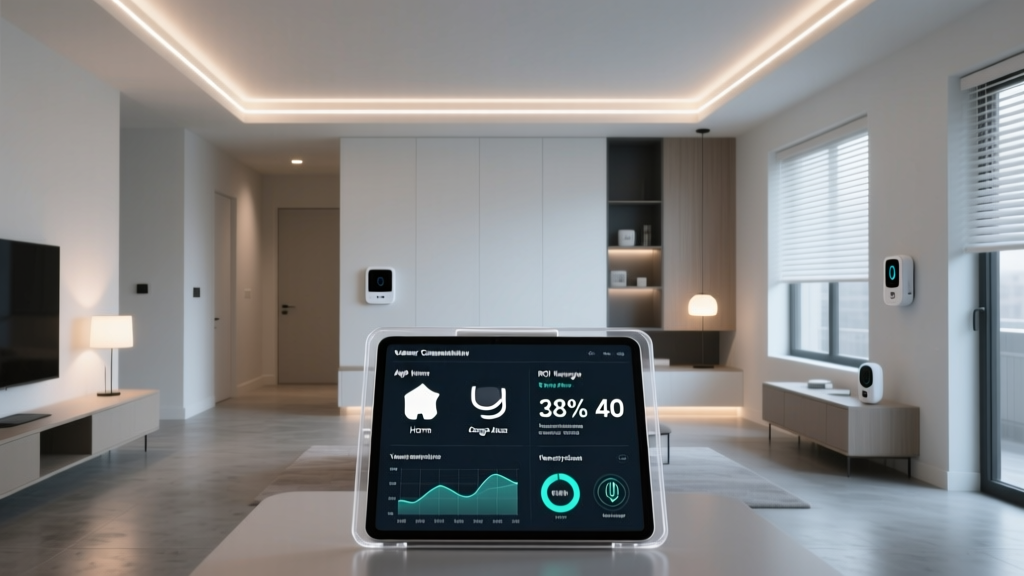
Protocol Capability Comparison
Bridging the Gap: Actionable Migration Advice
If you are a smart home veteran, you likely have a mix of Z-Wave 500-series sensors, Zigbee bulbs, and perhaps even some legacy X10 modules in hard-to-reach places. You do not need to throw these away to embrace Matter. The key to a modern, unified home is a robust local hub that acts as a universal translator.
Step 1: The Central Brain (Home Assistant)
Home Assistant is the undisputed champion of protocol bridging. Running on a Raspberry Pi 4 or a dedicated Home Assistant Green ($99), it can ingest data from virtually every protocol ever invented and expose them as unified devices.
Step 2: Bridging Zigbee and Matter
To integrate Zigbee and Thread/Matter devices, purchase the Home Assistant Connect ZBT-1 (formerly SkyConnect), which retails for around $30. This USB dongle supports both Zigbee and Thread multiprotocol, allowing you to pair a Philips Hue bulb and a modern Matter-over-Thread Eve Motion sensor on the same physical radio.
Step 3: Preserving the Z-Wave Investment
Z-Wave devices are incredibly reliable and expensive to replace. To bring them into your modern automations, add an Aeotec Z-Stick Gen5+ or the newer Zooz ZST39 Long Range stick ($40 - $60). Home Assistant will read the Z-Wave mesh via the Z-Wave JS integration, allowing a legacy Z-Wave door sensor to trigger a modern Matter smart plug with zero cloud latency.
Step 4: The X10 Workaround
If you must maintain X10 devices (e.g., hardwired wall switches that are too costly to replace), you can use an X10 CM15A controller connected to a Linux machine running the Mochad daemon. Home Assistant can communicate with Mochad via TCP, effectively pulling 1970s technology into a 2020s Matter-compatible dashboard.
Cost of a Modern Protocol Bridge Setup
- Hub (Home Assistant Green): $99
- Zigbee/Thread Dongle (Connect ZBT-1): $30
- Z-Wave Dongle (Zooz ZST39): $50
- Total Cost to Unify Legacy & Modern: ~$179
Compared to replacing 30+ Z-Wave and Zigbee sensors with new Matter devices (which would easily exceed $1,500), investing in a robust bridging hub is the most cost-effective and sustainable path forward.
Conclusion
The evolution from X10 to Matter represents a shift from isolated, fragile hacks to robust, secure, and interoperable networks. While X10 proved the concept, and Z-Wave and Zigbee built the reliable mesh foundations, Matter and Thread are finally delivering on the original promise of the smart home: a cohesive, local, and universally compatible ecosystem. By understanding the strengths and limitations of each generation, you can strategically upgrade your home, preserving the reliability of legacy mesh networks while embracing the seamless interoperability of the Matter era.