The Scaling Problem in Multi-Dwelling Units (MDUs)
The transition from single-family smart homes to Multi-Dwelling Units (MDUs) and commercial real estate introduces a massive leap in networking complexity. In a standard single-family home, a Wi-Fi router managing 30 to 50 smart devices is sufficient. However, in a 100-unit apartment complex or a multi-story commercial office, the Internet of Things (IoT) device count can easily exceed 3,000 endpoints. This includes smart locks, leak detectors, HVAC controllers, occupancy sensors, and sub-metering plugs.
Legacy networking protocols, particularly Wi-Fi and proprietary Zigbee, were never designed for this density. Wi-Fi relies on a star topology, where every device must maintain a direct, high-power connection to an Access Point (AP). In high-density MDUs, the 2.4GHz spectrum becomes heavily saturated. Beaconing overhead alone can cripple network performance, leading to dropped connections, delayed smart lock responses, and frustrated tenants. Furthermore, commercial buildings constructed with reinforced concrete and steel rebar create severe signal attenuation, making it nearly impossible for 2.4GHz Wi-Fi signals to penetrate interior walls reliably without deploying an AP in every single room.
Enter Thread and Matter. Together, these protocols provide a scalable, low-power, and interoperable foundation specifically suited for the rigorous demands of multi-family and commercial smart building automation.
Thread: The 802.15.4 Mesh Built for Concrete and Steel
Thread is an IP-based, low-power mesh networking protocol built on the IEEE 802.15.4 radio standard. Unlike Wi-Fi, Thread devices communicate with one another, creating a self-healing mesh network that routes data efficiently around physical obstacles. According to the Thread Group, the protocol utilizes 6LoWPAN to enable native IPv6 support, meaning every Thread device gets its own unique IP address without the need for Network Address Translation (NAT). This is a game-changer for commercial system integrators who need direct, secure, and routable access to endpoints for diagnostics and firmware updates.
Overcoming MDU Infrastructure Challenges
In a multi-family building, a Thread mesh leverages the density of devices to its advantage. A smart bulb in the hallway, a leak sensor under the sink, and a smart plug in the living room all act as routing nodes. If a concrete pillar blocks the direct path to a Thread Border Router, the mesh automatically reroutes the signal through neighboring nodes. This eliminates the need for expensive, hardwired Ethernet drops to Wi-Fi APs in every commercial suite or apartment unit.
Thread Border Routers bridge the 802.15.4 mesh to the building's primary IP network (Wi-Fi or Ethernet). In a commercial deployment, system integrators can deploy dedicated Thread Border Routers—such as those based on Silicon Labs EFR32 chips—or leverage enterprise-grade mesh Wi-Fi systems that include built-in Thread radios, like the Eero Pro 6E or Netgear Orbi.
Matter: Standardizing the Application Layer for Property Managers
While Thread handles the physical transport of data, Matter operates at the application layer. Developed by the Connectivity Standards Alliance (CSA), Matter provides a unified language for smart home and building devices. For commercial real estate and multi-family property managers, Matter solves the most significant pain point in IoT deployment: vendor lock-in and fragmented ecosystems.
Historically, integrating smart thermostats from one vendor, smart locks from another, and lighting from a third required a patchwork of proprietary cloud APIs. This created massive security vulnerabilities and ongoing maintenance costs. Matter standardizes the data models for these devices. A Matter-certified smart lock exposes the same standardized API endpoints to the building's Property Management System (PMS) as a Matter-certified thermostat.
Multi-Admin: The Key to Tenant Privacy and Landlord Access
One of Matter's most critical features for MDUs is Multi-Admin. In a rental property, the tenant requires full administrative control over their smart devices for privacy and convenience. However, the property management company also needs supervisory access for maintenance, emergency shut-offs, and automated turnover processes. Matter's Multi-Admin architecture allows a device to be securely commissioned to both the tenant's personal smartphone ecosystem (e.g., Apple HomeKit or Google Home) and the building's centralized commercial management platform simultaneously, without compromising the tenant's encryption keys or personal data.
Hardware Stack Recommendations for Commercial Deployments
When designing a Thread and Matter network for a multi-family or commercial space, selecting the right hardware is critical for long-term reliability. Below is a curated stack of commercial-grade and high-end consumer devices that excel in MDU environments.
- Border Routers & Hubs: Apple TV 4K (Ethernet model) or Eero Pro 6E. Both act as robust Thread Border Routers. For commercial spaces requiring centralized management, dedicated IP-to-Thread bridges from Silicon Labs or Nabu Casa are recommended.
- Lighting Control: Nanoleaf Essentials A19 Bulbs ($25/unit). These are Thread-native, meaning they act as mesh routers even when turned 'off' (via soft-switching). They support Matter natively, allowing seamless integration into building-wide lighting schedules for common areas and vacant units.
- HVAC & Sub-Metering: Eve Energy Smart Plugs ($40/unit). Essential for commercial sub-metering and monitoring appliance health in multi-family units. They provide real-time wattage data via Matter, allowing PMS software to track energy usage in common areas or bill back tenants accurately.
- Occupancy & Space Utilization: Aqara Presence Sensor FP2 ($70/unit). Utilizing mmWave radar, this sensor detects human presence even if the occupant is sitting still. In commercial offices, this data is fed via Matter bridges into BACnet systems to optimize HVAC zoning and reduce energy waste in unoccupied conference rooms.
Cost Analysis and ROI: Wi-Fi vs. Thread in a 100-Unit MDU
Deploying enterprise-grade Wi-Fi to support thousands of IoT endpoints requires high-density AP placement, expensive PoE switches, and ongoing licensing. Thread dramatically reduces both the initial capital expenditure (CapEx) and the long-term operational expenditure (OpEx).
| Protocol Architecture | Hardware Cost (100 Units) | Network Topology | Maintenance Overhead |
|---|---|---|---|
| Enterprise Wi-Fi (IoT VLAN) | $42,000 | Star (AP dependent) | High (AP firmware, channel interference, AP density) |
| Proprietary Zigbee (Hubs) | $31,000 | Mesh (Hub dependent) | Medium (Hub replacements, proprietary cloud API limits) |
| Thread + Matter | $24,000 | Self-Healing IPv6 Mesh | Low (Border routers auto-manage mesh, standardized APIs) |
While alternatives like Wi-Fi HaLow (802.11ah) offer sub-GHz range benefits for commercial IoT, as noted by the Wi-Fi Alliance, HaLow lacks the mesh-routing capabilities of Thread and the universal application-layer interoperability of Matter, making Thread the superior choice for indoor, multi-room MDU deployments.
Security, Privacy, and Network Segmentation
Security in multi-family buildings is paramount. A compromised smart lock or HVAC system can lead to severe liability issues. Thread and Matter address security at the silicon level.
Thread Network Credentials
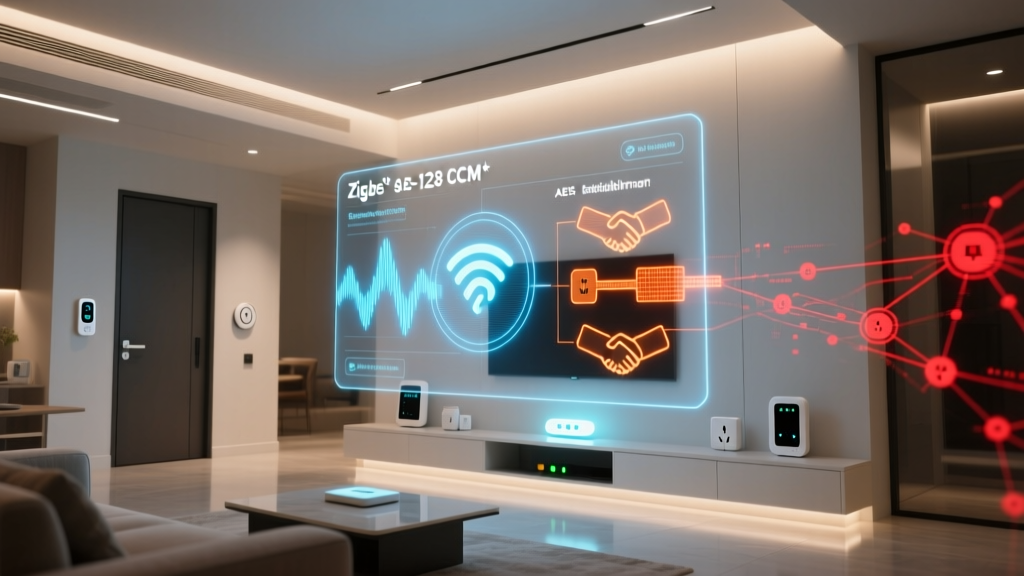
Thread networks are secured using AES-128 encryption at the link layer and network layer. In an MDU, property managers can deploy a single, building-wide Thread mesh network credential. Devices authenticate locally without needing to phone home to a cloud server, ensuring that if the building's external internet connection drops, the local mesh (and critical functions like smart lock access via Bluetooth fallback or local Matter controllers) remains fully operational.
Matter Device Attestation Certificates (DAC)
Every Matter-certified device contains a hardware-backed DAC. When a device is commissioned to the building's PMS or a tenant's app, the controller verifies the DAC against the CSA's root certificate authority. This guarantees that the device is genuine, has not been tampered with, and is running approved firmware. For commercial integrators, this eliminates the risk of deploying counterfeit or insecure white-label IoT devices that could serve as entry points for network breaches.
"In commercial real estate, the separation of tenant data and building operations data is a legal requirement. Matter's localized, encrypted fabric ensures that property managers can monitor device health and battery levels without ever accessing the tenant's personal usage patterns or automation routines."
5-Step Deployment Guide for System Integrators
For system integrators and commercial IT directors planning a Thread and Matter rollout, follow this actionable framework:
- Conduct an RF Site Survey: Although Thread is resilient, mapping the 2.4GHz spectrum and identifying heavy interference zones (e.g., near commercial elevators or microwave arrays) will help determine optimal Border Router placement.
- Deploy Redundant Border Routers: In a 100-unit building, deploy at least 4 to 6 Thread Border Routers in common areas, hallways, and utility rooms. This ensures the mesh has multiple pathways to the building's core IP network.
- Establish a Local Matter Controller: Do not rely solely on cloud-based dashboards. Install a local Matter controller (such as a dedicated server running Home Assistant OS or a commercial Hubitat hub) to manage local automations, ensuring zero-latency responses for lighting and access control even during internet outages.
- Integrate via Matter API to PMS: Connect your local Matter controller to your Property Management Software (e.g., Yardi, AppFolio) using standardized Matter REST/WebSocket APIs. Configure the PMS to pull battery health and connectivity status for automated maintenance ticketing.
- Commission via QR Code & NFC: Streamline tenant onboarding. Provide tenants with a standardized NFC tag or QR code in their unit that securely transfers Matter administrative rights to their personal smartphones upon lease signing, automatically revoking access upon lease termination.
Conclusion
The era of forcing thousands of IoT devices onto congested Wi-Fi networks in multi-family and commercial buildings is over. Thread provides the robust, self-healing, low-power mesh required to navigate the concrete and steel of modern architecture. Matter provides the universal, secure, and privacy-respecting application layer that property managers and tenants demand. By adopting a Thread and Matter-first strategy, commercial real estate developers and system integrators can drastically reduce deployment costs, eliminate vendor lock-in, and deliver a premium, reliable smart building experience that scales effortlessly.