The smart home ecosystem relies heavily on the invisible threads that connect our devices. Among the most robust and reliable of these threads is the Z-Wave protocol. While earlier iterations of Z-Wave established a foundation for reliable mesh networking, the introduction of Z-Wave Plus v2—built upon the 700 and 800 series hardware platforms—represents a monumental leap forward. For smart home enthusiasts and professionals alike, Z-Wave Plus v2 is not just a minor firmware update; it is a fundamental reimagining of how smart home devices handle cryptographic security and power management.
In this comprehensive protocol explainer, we will dissect the technical architecture of Z-Wave Plus v2. We will explore how the S2 security framework protects your home from digital intrusions, how advanced System on Chip (SoC) designs are pushing battery-operated sensors to last for years rather than months, and how these improvements integrate into your existing smart home setup. Whether you are building a new automation system from scratch or upgrading an existing network, understanding these protocol-level improvements is essential for maximizing performance, security, and efficiency.
How Z-Wave Plus v2 Works: The Architecture of Efficiency
To understand the improvements in security and battery life, we first need to look at the underlying hardware and architectural changes that define Z-Wave Plus v2. Unlike Wi-Fi, which operates on crowded 2.4 GHz and 5 GHz bands, Z-Wave utilizes a sub-GHz radio frequency (typically 908.42 MHz in North America). This lower frequency allows the signal to penetrate walls, floors, and dense building materials with far less attenuation than higher-frequency protocols like Zigbee or Wi-Fi.
Z-Wave Plus v2 is powered by the 700 and 800 series SoCs (System on Chips). These chips represent a massive shift in semiconductor manufacturing for IoT devices. By moving to a much smaller nanometer process node compared to the older 500 series (Z-Wave Plus), the new chips require significantly less voltage to perform complex calculations. This hardware-level efficiency is the bedrock upon which all software-level battery and performance improvements are built.
Enhanced Mesh Routing and RF Performance
Z-Wave Plus v2 introduces advanced routing algorithms and improved RF (Radio Frequency) sensitivity. The 700 and 800 series chips feature a refined transceiver that boosts the point-to-point range to up to 100 meters in open air, a significant increase over previous generations. Furthermore, the protocol utilizes a feature called 'beamforming' in its routing logic. Instead of broadcasting a signal omnidirectionally and hoping it reaches the destination, Z-Wave Plus v2 nodes can optimize their transmission paths based on historical network data, reducing the number of 'hops' a signal must take to reach the smart home hub. Fewer hops mean less time the radio spends in an active, power-hungry state, which directly translates to extended battery life for routing nodes.
Unbreakable Security: S2 Framework & SmartStart
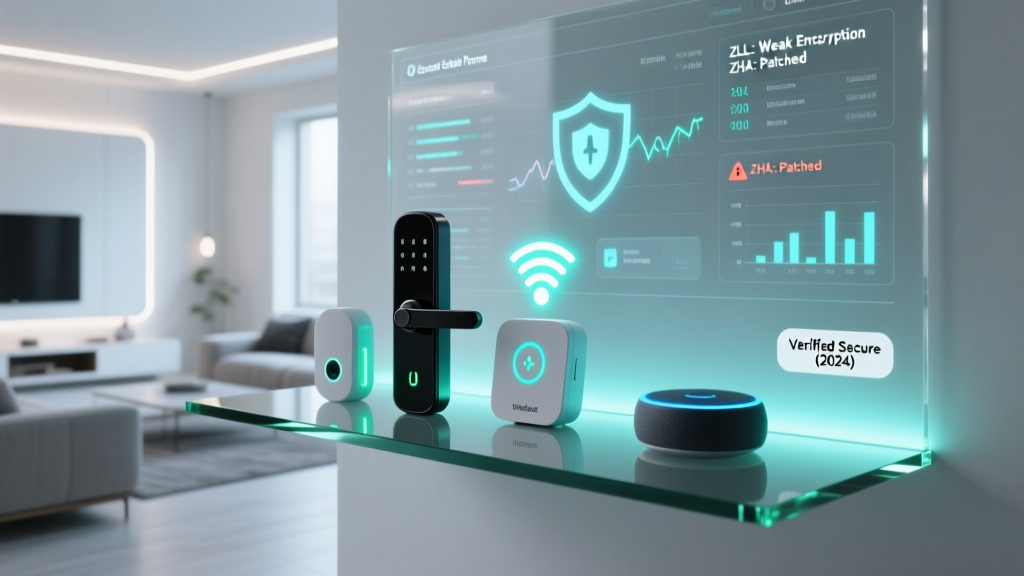
Security in the smart home is no longer optional; it is a critical necessity. Early smart home protocols relied on basic encryption that was vulnerable to replay attacks and packet sniffing. Z-Wave Plus v2 mandates the use of the S2 Security Framework, a robust, multi-layered cryptographic system designed to ensure that every command sent across your network is authenticated, encrypted, and protected against man-in-the-middle (MITM) attacks.
The S2 Security Framework Explained
The S2 framework relies on AES-128 symmetric encryption, but the true innovation lies in how the encryption keys are exchanged. Z-Wave Plus v2 utilizes Elliptic Curve Diffie-Hellman (ECDH) for secure key exchange. ECDH allows two devices (your hub and a new sensor) to establish a shared secret key over an unsecured radio channel without ever transmitting the key itself. Even if a malicious actor is intercepting all RF traffic in your home during the pairing process, they cannot mathematically derive the encryption key.
S2 is divided into three distinct security classes to ensure that devices only receive the level of cryptographic overhead they require:
- S2 Unauthenticated: Used for basic sensors where physical proximity during pairing is assumed, but network encryption is still required to prevent signal interception.
- S2 Authenticated: Requires a user-verified PIN or physical interaction during pairing. This is used for devices like thermostats and lighting controllers where unauthorized access could cause significant disruption.
- S2 Access Control: The highest tier of security, mandatory for smart locks and garage door controllers. It requires rigorous authentication and ensures that commands like 'unlock door' are absolutely immune to replay attacks.
SmartStart: Secure & Frictionless Pairing
Historically, adding a Z-Wave device to a network required putting the hub into 'inclusion mode' and physically pressing a button on the device, often resulting in a race against the clock and accidental inclusion of a neighbor's device. Z-Wave Plus v2 solves this with SmartStart.
Every Z-Wave Plus v2 device comes with a unique Device Specific Key (DSK) printed as a QR code on the device and its packaging. Using your smartphone and the hub's companion app, you simply scan the QR code. The device is added to a 'provisioning list' on the hub. When the device is powered on or its battery is inserted, it automatically and securely joins the network using the pre-provisioned S2 keys. This process is entirely encrypted, requires no physical button pressing on the hub, and guarantees that only the exact device you scanned can join your network.
Battery Life & Performance Improvements
Perhaps the most tangible benefit of Z-Wave Plus v2 for the end-user is the dramatic improvement in battery life. Battery-operated devices, such as door and window sensors, motion detectors, and smart locks, have traditionally been the bane of smart home maintenance. Changing batteries every few months is a tedious chore that can lead to network instability if a device dies unexpectedly.
The Physics of Power Management
The 700 and 800 series SoCs are engineered with aggressive power-gating and advanced sleep states. In a smart home sensor, the radio and microcontroller spend 99.9% of their time asleep, waiting for a physical trigger (like a door opening) or a scheduled wake-up interval to report to the hub. Z-Wave Plus v2 chips draw mere micro-amps (µA) in their deep sleep state, a fraction of the power required by the older 500 series chips.
Furthermore, Z-Wave Plus v2 optimizes the 'wake-up' and 'handshake' process. When a sensor is triggered, it must wake up, power the radio, connect to the mesh, send the payload, receive an acknowledgment, and go back to sleep. The 700/800 series chips perform this entire sequence in milliseconds, drastically reducing the 'active' time where the battery is under heavy load.
FLiRS and Beamforming Efficiency
For devices that need to be responsive but are battery-powered, Z-Wave uses a technology called FLiRS (Frequently Listening Routing Slaves). FLiRS devices wake up briefly every fraction of a second to listen for a 'beam' from the hub, allowing them to respond to commands almost instantly without staying fully awake. Z-Wave Plus v2 refines the FLiRS algorithm, allowing devices to listen with lower power draw and utilize the aforementioned beamforming to ensure the hub's wake-up signal is received on the first try, eliminating the need for power-wasting re-transmissions.
Compatibility & The Mesh Ecosystem
A common concern when a new protocol generation is released is whether it will render existing hardware obsolete. The Z-Wave Alliance has strictly enforced a mandate of backward compatibility since the protocol's inception. Z-Wave Plus v2 is fully backward compatible with older Z-Wave, Z-Wave Plus, and legacy devices.
Mixing Generations on a Single Network
If you have a Z-Wave Plus v2 hub, it can seamlessly communicate with a 10-year-old 300-series Z-Wave light switch. However, it is important to understand how the mesh network routes traffic. A Z-Wave Plus v2 device can route signals for older devices, but the network will only operate at the speed and security level of the lowest common denominator in a specific routing path. To fully utilize S2 security and the advanced battery-saving routing algorithms, both the sending and receiving nodes (and the routing nodes between them) should ideally be Z-Wave Plus v2.
The Introduction of Z-Wave Long Range (ZWLR)
Built on the same 700 and 800 series hardware foundation as Z-Wave Plus v2 is Z-Wave Long Range (ZWLR). While standard Z-Wave Plus v2 operates in a mesh topology, ZWLR utilizes a star topology and a specialized modulation scheme (FSK) to achieve ranges of over a mile in open air. ZWLR is designed for large estates, agricultural setups, and expansive outdoor lighting systems. Crucially, modern Z-Wave Plus v2 hubs support both standard Z-Wave mesh and ZWLR simultaneously, allowing you to use standard mesh devices inside your home and Long Range devices at the edges of your property without needing separate hubs or antennas.
Best Devices Leveraging Z-Wave Plus v2
While every device benefits from the upgraded silicon, certain categories of smart home hardware see a transformative improvement when utilizing Z-Wave Plus v2. When shopping for new additions to your mesh network, prioritize Z-Wave Plus v2 (700/800 series) for the following device types:
1. Smart Locks & Garage Door Controllers
Security and battery life are the two most critical factors for smart locks. Z-Wave Plus v2's S2 Access Control security class ensures that lock commands cannot be intercepted or spoofed. Simultaneously, the improved power management means your deadbolt's batteries will last significantly longer, even when the lock is actively routing mesh traffic for other devices on your porch.
2. Door, Window, & Leak Sensors
Sensors are the eyes and ears of your smart home, but they are often placed in inconvenient locations (like the top of a door frame or behind a washing machine). The micro-amp sleep states of Z-Wave Plus v2 mean that a high-quality door sensor can now operate for two to three years on a single coin-cell or AAA battery, drastically reducing maintenance overhead.
3. Outdoor Motion & Environmental Sensors
Outdoor devices face extreme temperature fluctuations, which naturally degrade battery performance. The RF sensitivity improvements in the 700/800 series chips mean that outdoor sensors can maintain a reliable connection to the hub even through thick exterior walls, without needing to boost their transmission power (which would otherwise drain the battery).
4. Motorized Blinds & Shades
Battery-powered motorized blinds require high-torque bursts of power to move the fabric, leaving little reserve for the radio. Z-Wave Plus v2's efficient wake-up and handshake protocols ensure that the radio consumes minimal power, reserving the bulk of the battery capacity for the physical motor.
Frequently Asked Questions (FAQ)
Is Z-Wave Plus v2 backward compatible with older Z-Wave devices?
Yes. The Z-Wave Alliance mandates strict backward compatibility. A modern Z-Wave Plus v2 hub can control and include legacy Z-Wave devices dating back to the early 300 series chips. However, to benefit from S2 security and extended battery life, the end devices themselves must be Z-Wave Plus v2 (700 or 800 series).
Do I need a new hub to use Z-Wave Plus v2 devices?
Not necessarily. Older 500 series hubs can usually include and control 700/800 series Z-Wave Plus v2 devices. However, an older hub may not support the S2 security framework or SmartStart provisioning. To unlock the full security and ease-of-use features of Z-Wave Plus v2, upgrading to a modern hub with a 700 or 800 series chip is highly recommended.
How does Z-Wave Plus v2 compare to Zigbee or Thread in battery efficiency?
While Zigbee and Thread are highly efficient, low-power mesh protocols, Z-Wave Plus v2 holds a distinct advantage in real-world battery life for routing nodes. Because Z-Wave operates on a sub-GHz frequency, it requires less power to push signals through walls compared to the 2.4 GHz radios used by Zigbee and Thread. Furthermore, Z-Wave's strict certification process ensures that all devices adhere to rigorous power-management standards, whereas the open nature of Zigbee can sometimes lead to poorly optimized third-party devices that drain batteries quickly.
What is the difference between Z-Wave Plus v2 and Z-Wave Long Range?
Z-Wave Plus v2 refers to the standard mesh networking protocol built on the 700/800 series chips, featuring S2 security and standard mesh routing. Z-Wave Long Range (ZWLR) is an extension of this platform that uses a different modulation scheme and a star topology to achieve massive distances (up to a mile). Modern hubs support both simultaneously, allowing you to mix standard indoor mesh devices with long-range outdoor devices on a single network.
Can I mix S2 and S0 security devices on the same network?
Yes, a Z-Wave Plus v2 hub can manage a network that contains both modern S2 devices and older S0 (legacy security) devices. The hub will automatically negotiate the highest level of security supported by each individual device. However, it is best practice to migrate away from S0 devices over time, as S2 offers vastly superior protection against modern cryptographic attacks and network congestion.
By embracing the architectural, cryptographic, and power-management advancements of Z-Wave Plus v2, smart home builders can create networks that are not only vastly more secure but also significantly easier to maintain. The days of constantly swapping batteries and worrying about RF interception are over, paving the way for a truly autonomous and secure smart home ecosystem.