The Multi-Family Density Challenge
When transitioning from single-family smart homes to multi-dwelling units (MDUs) and commercial high-rises, the wireless networking playbook must be entirely rewritten. Property managers and building automation system (BAS) integrators face a unique battleground characterized by extreme device density, physical obstructions, and spectrum saturation. In a 300-unit apartment complex, relying on Wi-Fi for smart locks, leak detectors, and HVAC controls is a recipe for disaster. A single building can easily host over 600 Wi-Fi access points broadcasting beacons, creating a 2.4 GHz noise floor that cripples standard IoT devices and leads to IP address exhaustion on local routers.
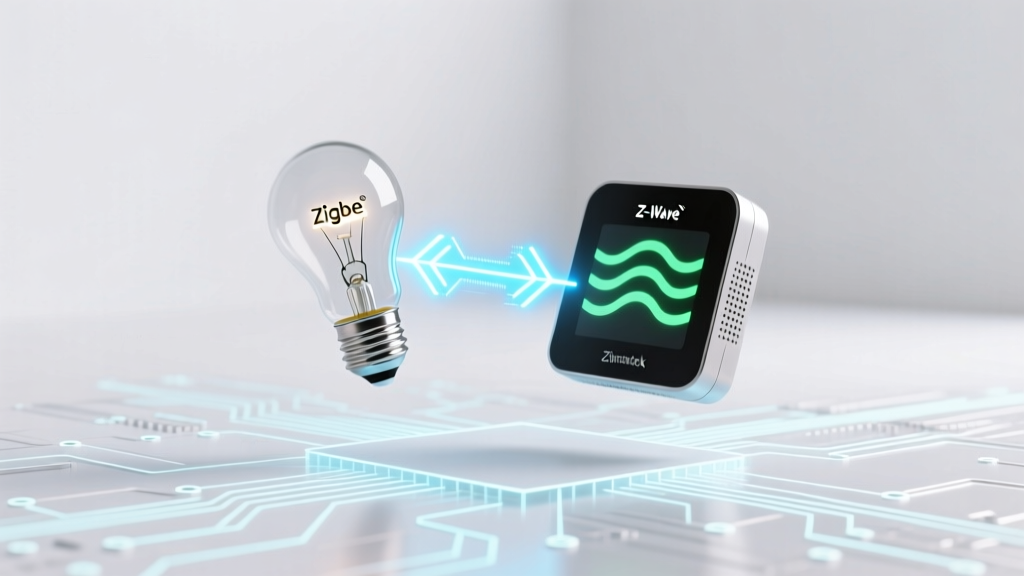
To achieve reliable, building-wide coverage, commercial integrators turn to low-power mesh networks. But which protocol reigns supreme in high-density environments: Zigbee or Thread? Both are built on the IEEE 802.15.4 physical layer, yet their approaches to routing, addressing, and gateway management differ vastly. Understanding these differences is critical for scaling smart building deployments while maintaining tenant privacy and minimizing maintenance truck rolls.
Zigbee in Commercial and Multi-Family Deployments
Zigbee has been the undisputed workhorse of commercial IoT for over a decade. Utilizing the 2.4 GHz band (with some regional sub-GHz variations), Zigbee PRO creates a robust mesh network where mains-powered devices act as routers, extending the range of battery-powered end nodes like door sensors and smart water meters.
The Power of Sub-GHz and DigiMesh
While consumer Zigbee operates strictly on 2.4 GHz, commercial deployments often leverage proprietary or specialized variants that utilize sub-GHz frequencies (900 MHz in North America, 868 MHz in Europe). Lower frequencies penetrate concrete floors, elevator shafts, and reinforced walls far better than 2.4 GHz signals. Digi International's XBee ecosystem is a prime example, offering DigiMesh—a proprietary but highly stable mesh protocol based on Zigbee hardware—that operates on 900 MHz. This allows a single gateway located in a basement telecom closet to reliably communicate with smart valves and leak sensors on the third floor, a feat nearly impossible for standard 2.4 GHz Wi-Fi or Thread networks without extensive repeater infrastructure.
Commercial Hardware and Node Limits
In an MDU environment, node limits matter. While the Zigbee PRO specification theoretically supports up to 65,000 nodes per network, practical routing tables and RAM limitations on commercial coordinators typically cap stable deployments at 200 to 300 nodes per gateway. For a 200-unit building requiring a smart lock, thermostat, and leak detector per unit (600 nodes minimum), integrators must deploy multiple enterprise-grade gateways, such as the Digi ConnectPort series, segmented by floor or wing. The hardware cost for commercial Zigbee gateways ranges from $150 to $400, but the proven reliability and massive library of legacy BMS (Building Management System) integrations via BACnet/IP make it a safe, albeit complex, choice.
Thread: The IPv6 Revolution for Building Management
Thread is the modern challenger, designed from the ground up to address the limitations of legacy mesh networks. Like Zigbee, Thread uses the IEEE 802.15.4 standard at 2.4 GHz, but its secret weapon is 6LoWPAN (IPv6 over Low-Power Wireless Personal Area Networks). According to the Connectivity Standards Alliance (CSA), Thread's native IP support fundamentally changes how commercial buildings manage IoT fleets.
Native IP Addressability
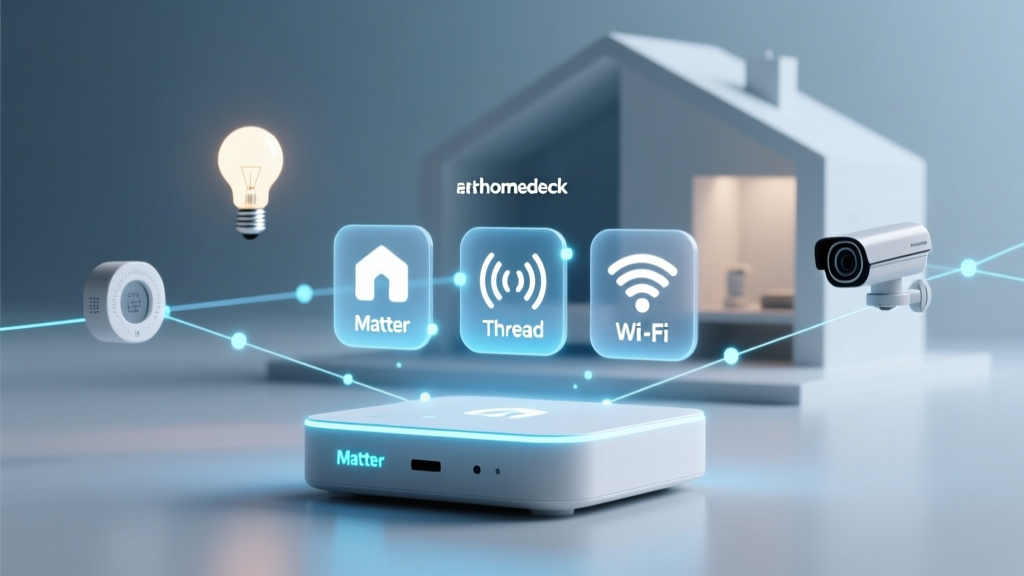
In a Zigbee network, devices are assigned short 16-bit addresses that are meaningless outside the local mesh. A gateway must translate these addresses to IP packets before sending them to a cloud server or local BMS. Thread eliminates this translation layer. Every Thread sensor, actuator, and smart lock receives a globally unique, routable IPv6 address. For commercial facility managers, this means a leak sensor in unit 4B can be pinged directly from a centralized IT dashboard without passing through a proprietary application-layer gateway. This native IP support drastically reduces latency and simplifies integration with enterprise IT networks, allowing Thread devices to sit securely alongside IP cameras and PoE lighting systems.
Border Router Redundancy
Unlike Zigbee, which relies on a single, critical Coordinator to manage network keys and routing tables, Thread is entirely decentralized. Thread networks utilize Border Routers to bridge the 802.15.4 mesh to the Wi-Fi or Ethernet backbone. If a primary Border Router fails or loses power, a secondary Border Router automatically assumes the routing duties without dropping the mesh network. Silicon Labs' Thread solutions, utilizing their EFR32MG24 SoCs, are increasingly being embedded directly into commercial PoE (Power over Ethernet) lighting fixtures and HVAC controllers, turning the building's existing wired infrastructure into a massive, redundant Thread mesh backbone.
Gateway Deployment Strategies for MDUs
Choosing the protocol is only half the battle; physical deployment dictates success in multi-family buildings.
- In-Unit Gateways: Placing a consumer-grade hub (e.g., Aeotec Smart Home Hub or Apple TV 4K) inside every apartment. This guarantees tenant privacy and network segmentation but creates a maintenance nightmare. If a hub freezes, property management must schedule a physical entry to reboot it.
- Corridor Backbone (Enterprise): Mounting high-powered, PoE-enabled commercial gateways in hallways or telecom closets. A single enterprise Thread Border Router or Zigbee Coordinator can penetrate drywall to service 10-15 adjacent units. This keeps maintenance staff out of tenant living spaces and centralizes network management.
For new construction, embedding Silicon Labs Thread chips into hardwired commercial smart thermostats and smart panels creates an instant, zero-cost Border Router network across the entire building.
Protocol Comparison: Zigbee vs. Thread in MDUs
| Feature | Zigbee PRO (Commercial) | Thread (Enterprise) |
|---|---|---|
| Physical Layer | IEEE 802.15.4 (2.4 GHz & Sub-GHz) | IEEE 802.15.4 (Strictly 2.4 GHz) |
| Network Layer | Proprietary / Zigbee PRO | IPv6 (6LoWPAN) |
| Single Point of Failure | Yes (Coordinator) | No (Distributed Border Routers) |
| Concrete Penetration | Excellent (via Sub-GHz / 900 MHz) | Poor (Requires dense 2.4 GHz mesh) |
| BMS Integration | Requires Application Gateway | Direct IP Routing (BACnet/IP ready) |
| Avg. Gateway Cost | $150 - $400 | $120 - $250 (or embedded in PoE) |
Deployment Cost and Node Capacity Comparison for MDU Gateways
Security, Privacy, and Network Segmentation
In multi-family dwellings, tenant privacy is a legal and ethical imperative. A major risk in dense mesh networks is cross-contamination—where Tenant A's smart lock accidentally routes its encrypted traffic through Tenant B's smart lightbulb, or worse, becomes discoverable on their network. Both Zigbee and Thread utilize AES-128 encryption, but their network segmentation strategies differ.
Zigbee relies on Network Keys and Trust Centers. In a commercial deployment, integrators must strictly manage commissioning, ensuring that devices are joined to a specific PAN (Personal Area Network) ID. Thread handles this more elegantly via IPv6 scoping and Thread Commissioning. Thread networks can be partitioned logically, and because every device is IP-addressable, enterprise firewalls and VLANs can be applied to Thread traffic just like standard IT traffic. This allows property managers to isolate smart lock traffic on a secure VLAN, while routing smart thermostat data to a separate, less restricted BMS subnet.
Actionable Advice for Property Managers and Integrators
When planning a smart building deployment, the choice between Zigbee and Thread should be dictated by the building's physical infrastructure and the specific use case:
- Choose Sub-GHz Zigbee (e.g., Digi XBee 900MHz) for: Deep retrofits, basement-to-roof water metering, concrete high-rises, and environments where running CAT6 Ethernet for gateways is cost-prohibitive. The wall-penetration capabilities of 900 MHz will save thousands in repeater hardware.
- Choose Thread for: New construction, PoE-enabled commercial buildings, and deployments heavily reliant on IP-based Building Management Systems (BACnet/IP, KNX IP). If you can embed Thread Border Routers into hardwired commercial thermostats and lighting panels, you gain a self-healing, IP-native mesh that future-proofs the building for the Matter standard.
Pro Tip: Never mix consumer-grade hubs with enterprise IoT sensors in an MDU. Consumer hubs lack the VLAN tagging, remote PoE reboot capabilities, and centralized API management required for commercial facility operations. Always invest in enterprise-grade edge gateways or PoE-embedded Thread routers.
Ultimately, while Zigbee holds the legacy advantage in raw commercial hardware options and sub-GHz penetration, Thread's native IPv6 architecture represents the future of commercial building automation, aligning IoT sensors seamlessly with enterprise IT infrastructure.