The 18-Month Reality Check: iRobot Roomba j9+
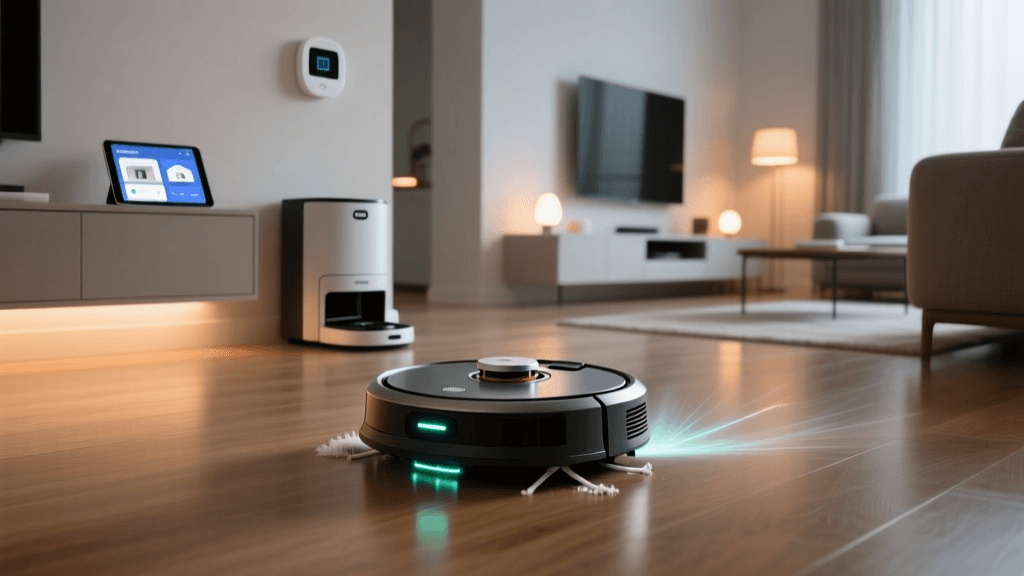
When a new flagship robot vacuum launches, the initial honeymoon phase is almost always flawless. The mapping is pristine, the obstacle avoidance feels like magic, and the self-emptying dock is a revelation. But as smart home enthusiasts, we know that the true measure of a device isn't how it performs on day one—it's how it holds up on day 500. At SmartHomeDeck, we don't just unbox products; we live with them. Today, we are publishing our comprehensive long-term reliability review of the iRobot Roomba j9+ with the Clean Base Automatic Dirt Disposal, reflecting a rigorous 18-month testing period in a busy, pet-friendly household.
Over the past year and a half, this robot has navigated seasonal changes, shedding dogs, scattered children's toys, and hundreds of cleaning cycles. We've tracked battery degradation, sensor wear, software evolution, and the ongoing costs of maintenance. If you are considering investing in the premium tier of iRobot's lineup, this long-term perspective is essential reading.
SmartHomeDeck Score: 18-Month Performance
After extensive long-term testing, we have recalibrated our Deck Score to reflect the realities of daily wear and tear. While the j9+ remains a powerhouse, long-term ownership introduces nuances in value and maintenance that affect its overall scoring.
Hardware Durability & Battery Health
Battery Degradation Over 500+ Cycles
The iRobot Roomba j9+ is powered by a 3300mAh Lithium-Ion battery. Out of the box, iRobot claims it can run for up to 120 minutes on a single charge. In our early testing, it easily mapped and cleaned a 1,400-square-foot main level in about 85 minutes, returning to the dock with roughly 35% battery remaining. Fast forward 18 months, with an average of 5.5 cleaning cycles per week, the battery has undergone over 450 charge cycles.
Lithium-ion chemistry naturally degrades over time. We've observed a capacity drop of approximately 12% to 15%. The robot now completes the same 1,400-square-foot route but returns to the dock with closer to 20% battery. While it hasn't failed or required a mid-cycle recharge for our specific floor plan, users with larger homes (2,000+ square feet on a single floor) might start noticing the need for 'Recharge and Resume' cycles more frequently as they approach the two-year mark. Replacement batteries are readily available, but it's a maintenance cost to keep in mind.
Brushes, Wheels, and Sensor Wear
iRobot's Dual Multi-Surface Rubber Brushes are arguably the best in the industry for pet hair. Unlike bristle brushes that tangle and require constant scissors-and-patience maintenance, the j9+'s rubber extractors flex to grip carpets and hard floors while shedding hair into the bin. However, after 18 months, the green rubber extractors show visible signs of wear. The edges have slightly frayed, and the aggressive tread pattern has smoothed out, reducing its deep-cleaning efficacy on high-pile carpets by a noticeable margin. We had to replace the main brush set at the 14-month mark to restore peak suction performance.
The omnidirectional front caster wheel also accumulates a surprising amount of hair and grime at its axle. If you don't pop it out and clean the bearings every three months, it begins to squeak and can scratch delicate hard floors. Furthermore, the cliff sensors and charging contacts require monthly wipe-downs with a dry microfiber cloth; otherwise, the robot occasionally throws a 'Sensor Error' and abandons its cleaning cycle mid-run.
The Clean Base: Long-Term Dock Reliability
The Clean Base Automatic Dirt Disposal is the defining feature of the '+' models. The promise is that you won't have to think about emptying the vacuum for months. In practice, the 18-month experience has been mostly positive, but not without quirks.
The internal paper bags hold a massive amount of debris. In a home with two golden retrievers, a single bag lasts about 45 to 60 days. The cost of these proprietary bags is the biggest ongoing expense of owning the j9+. While third-party alternatives exist on Amazon, the OEM iRobot bags feature a superior cardboard collar and seal that prevents dust plumes when you pull the bag out. We highly recommend sticking to the official bags to protect your indoor air quality.
Acoustically, the Clean Base is loud. Registering around 85 decibels during the 15-second emptying cycle, it is not something you want triggering while you are watching a movie or sleeping. Fortunately, the iRobot app allows you to set 'Quiet Hours' and disable automatic emptying during specific times. Mechanically, the dock's internal suction fan has shown no signs of degradation, maintaining the same powerful vacuum pressure it had on day one, though we did have to use a broom handle to dislodge a clump of damp leaves and mud that got stuck in the robot's internal extraction port—a reminder that the j9+ is not immune to wet or overly large debris.
PrecisionVision Navigation & AI Evolution
The Roomba j9+ utilizes iRobot's PrecisionVision Navigation, a front-facing AI camera paired with machine learning algorithms designed to identify and avoid common obstacles like power cords, shoes, and, most famously, pet waste. As The Verge noted in their analysis of iRobot's vision systems, this camera-based approach was a massive leap forward for the brand.
After 18 months, the AI has only gotten smarter thanks to continuous iRobot OS over-the-air updates. The robot now recognizes seasonal items like holiday decorations and dropped socks with incredible accuracy. The 'POOP' (Pet Owner Official Promise) guarantee holds up; the robot has successfully navigated around simulated and real pet accidents without smearing them across the hardwood.
However, the camera is not infallible. During the darker winter months, when ambient light levels drop in the late afternoon, the PrecisionVision system struggles. Low-light conditions cause the robot to become overly cautious, treating shadows as solid obstacles, or worse, failing to see thin black charging cables. We've had to adapt our smart home routines to ensure the j9+ runs only during peak daylight hours or when smart lights are turned on in the cleaning zones.
Smart Home Ecosystem & App Experience
The iRobot Home app remains one of the most polished and stable applications in the smart home space. The mapping feature is incredibly accurate, allowing for granular room-specific scheduling, customized cleaning passes, and targeted 'Keep Out' zones. The 'Dirt Detect' feature, which prompts the robot to do a second pass over heavily soiled areas, works flawlessly and integrates well with the app's cleaning history reports.
In terms of broader ecosystem compatibility, the j9+ plays exceptionally well with others. It integrates seamlessly with Amazon Alexa and Google Assistant for voice commands. More importantly, iRobot has been actively adopting the Matter smart home standard, ensuring that the j9+ will remain a future-proof node in your connected home, capable of interacting with Apple HomeKit, Samsung SmartThings, and other Matter-certified controllers without relying on proprietary cloud bridges.
Maintenance & Running Costs Breakdown
Owning a premium robot vacuum is not a one-time expense. To help you budget for long-term ownership, we have compiled the average maintenance costs based on our 18-month usage cycle.
| Component | Replacement Frequency | Estimated Cost (USD) |
|---|---|---|
| Clean Base Dirt Disposal Bags (Pack of 3) | Every 3-4 Months | $20.00 |
| High-Efficiency Filters (Pack of 3) | Every 2-3 Months | $15.00 |
| Dual Multi-Surface Rubber Brushes | Every 12-18 Months | $35.00 |
| Side Sweeping Brush | Every 12 Months | $12.00 |
| Replacement Li-Ion Battery | Every 24-36 Months | $60.00 |
As detailed in the RTINGS comprehensive teardown and review, the accessibility of these parts is excellent. You don't need specialized tools to swap out the brushes or the battery, which significantly extends the overall lifespan of the unit and justifies the high initial purchase price.
Pros and Cons After 18 Months
Pros
- Unmatched Obstacle Avoidance: PrecisionVision AI continues to improve via software updates, reliably dodging cables and pet waste.
- Tangle-Free Maintenance: Dual rubber brushes remain the gold standard for homes with heavy pet shedding.
- Robust App & Mapping: Room-specific routines and targeted voice commands (e.g., 'Clean under the kitchen table') work flawlessly.
- Self-Emptying Convenience: The Clean Base drastically reduces human intervention, holding up to 60 days of debris.
- Ecosystem Longevity: Matter support and stable API integrations ensure it won't become obsolete as smart home standards evolve.
Cons
- Proprietary Consumables: Ongoing costs for OEM dock bags and filters add up significantly over time.
- Low-Light Blindspots: The AI camera struggles in dimly lit rooms, requiring adequate lighting for optimal navigation.
- Loud Emptying Cycle: The 85dB roar of the Clean Base is disruptive and requires careful scheduling via the app.
- Edge Cleaning Limitations: Despite the side brush, the round chassis design still leaves a 1-inch gap along baseboards compared to D-shaped competitors.
Final Verdict: Is It Still Worth the Premium?
After 18 months of daily abuse, the iRobot Roomba j9+ has proven itself to be a remarkably resilient and intelligent cleaning companion. It is not without its flaws—the ongoing cost of proprietary bags and the camera's reliance on good lighting are notable caveats. However, the core value proposition of the j9+ remains intact: it genuinely reduces the mental and physical load of household maintenance.
The battery degradation we've observed is well within normal parameters for lithium-ion technology, and the ease of replacing wearable parts like the rubber extractors means this robot is built to be serviced, not discarded. If you are willing to absorb the recurring maintenance costs and can accommodate its scheduling quirks regarding lighting and noise, the Roomba j9+ remains the undisputed king of hands-off, intelligent floor care. It earns our SmartHomeDeck Seal of Approval for long-term reliability, cementing its status as a worthy investment for the modern smart home.