The Hidden Costs of Flagship Robot Vacuums
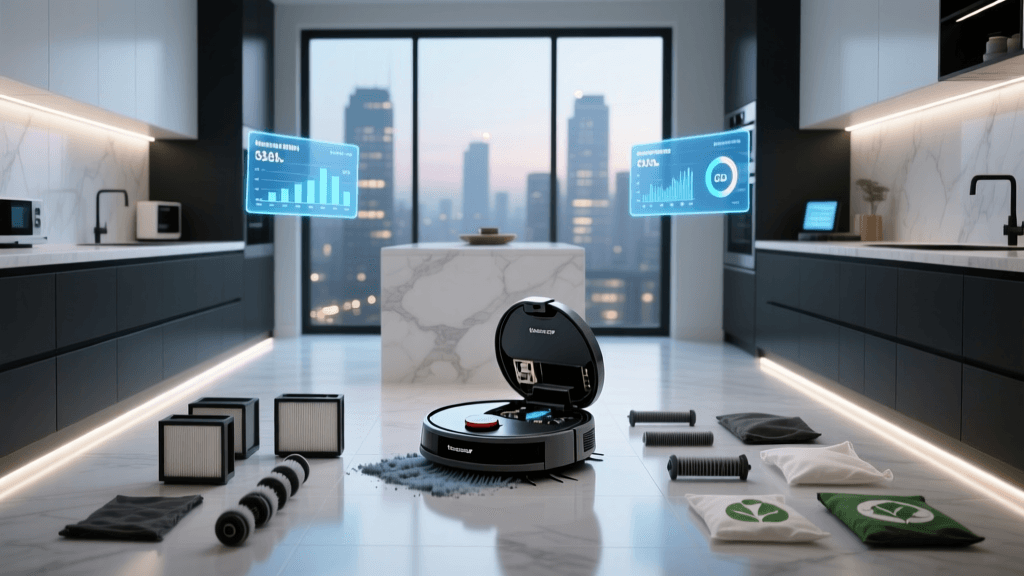
When investing over $1,500 in a flagship smart home cleaning device like the Roborock S8 Pro Ultra, the upfront price tag is only the beginning of the financial commitment. As a fully autonomous system featuring a self-emptying, self-washing, and self-refilling dock, this robot relies heavily on a specialized ecosystem of consumables to maintain its peak performance. For smart home enthusiasts and budget-conscious homeowners alike, understanding the long-term financial footprint of these machines is critical.
In this comprehensive Maintenance Cost Analysis, we shift our focus away from suction power and navigation algorithms to examine the real-world annual upkeep of the Roborock S8 Pro Ultra. We will break down the exact costs of dust bags, HEPA filters, roller brushes, and mop pads, while comparing OEM (Original Equipment Manufacturer) parts against third-party alternatives. Whether you manage a 2,000-square-foot home with heavy shedding pets or a compact apartment, this guide will help you forecast your annual robot vacuum consumable costs with precision.
Breakdown of Roborock S8 Pro Ultra Consumables
To accurately calculate annual expenses, we must first understand the lifecycle and material composition of each replaceable component on the S8 Pro Ultra. Roborock engineers have designed these parts to balance longevity with hygiene, but they are ultimately subject to wear, tear, and environmental saturation.
1. Self-Emptying Dust Bags
The RockDock Ultra features a 2.5-liter dust bag equipped with a multi-layer filtration system and an auto-sealing cardboard collar. According to independent testing by RTINGS, a single bag typically lasts between 6 to 8 weeks in an average household. The OEM bags utilize a meltblown fabric interior that traps 99% of fine dust, preventing the dock's internal fan motor from clogging. While third-party bags on Amazon are plentiful and significantly cheaper, they often lack the precise structural rigidity of the OEM cardboard collar, which can lead to improper sealing and dust blowback into your home.
2. E11 HEPA Filter
Located inside the robot's dustbin, the E11-rated HEPA filter captures microscopic allergens. Roborock officially rates this filter for up to 8 months of use. While the filter is technically washable, washing it degrades the electrostatic charge that captures sub-micron particles. For homes with allergy sufferers, replacing the filter every 6 months is highly recommended to maintain optimal airflow and suction efficiency. A clogged filter forces the main motor to work harder, which can lead to premature battery drain and motor burnout.
3. DuoRoller Rubber Brushes
The S8 Pro Ultra utilizes a dual rubber brush system (DuoRoller) rather than traditional bristle brushes. This design is a massive boon for pet owners, as it resists hair tangling and relies on friction to pull debris from carpets. However, the TPU (Thermoplastic Polyurethane) rubber fins do experience abrasion over time, particularly on high-pile carpets or textured tile grout. Expect to replace the main brush set every 12 to 18 months depending on your floor plan's abrasiveness.
4. Side Brush, Mop Pads, and Cleaning Solution
The single flexible side brush sweeps debris into the main intake path and generally requires replacement every 10-12 months as the rubberized tips warp. The VibraRise mopping system uses reusable microfiber pads that can be machine washed, but they lose their scrubbing efficacy after about 6 months of heavy use. Finally, the dock's auto-refill system requires Roborock's proprietary floor cleaning solution to prevent mineral buildup and bacterial growth inside the internal water lines.
Annual Cost Analysis: The 1,500 Sq. Ft. Pet Household
To provide actionable data, we have modeled the annual consumable costs for a moderately demanding environment: a 1,500-square-foot home with hard floors and area rugs, occupied by two adults and one shedding dog. The robot runs daily, and the mop is deployed three times a week.
| Consumable Component | Replacement Frequency | OEM Bundle / Unit Price | Annualized Cost (OEM) |
|---|---|---|---|
| 2.5L Self-Emptying Dust Bags | Every 7 weeks (approx. 7.5 per year) | $29.99 (Pack of 12) | $18.75 |
| E11 HEPA Filter | Every 6 months | $19.99 (Pack of 2) | $19.99 |
| DuoRoller Main Brush Set | Every 18 months | $39.99 (Set of 2) | $26.66 |
| Side Brush | Every 12 months | $14.99 (Pack of 2) | $14.99 |
| VibraRise Mop Pads | Every 8 months | $19.99 (Pack of 2) | $15.00 |
| Floor Cleaning Solution | Every 4 months | $19.99 (480ml bottle) | $60.00 |
| Total Estimated Annual Cost | $155.39 |
At roughly $155 per year using strictly OEM parts, the S8 Pro Ultra's maintenance is surprisingly reasonable when amortized against the hundreds of hours of manual labor it saves. However, this cost can be drastically altered by how you source your replacements.
Competitor Comparison: 3-Year Maintenance Projection
How does the Roborock S8 Pro Ultra stack up against its closest rivals in terms of long-term upkeep? We analyzed the 3-year consumable projections against the iRobot Roomba j7+ and the Ecovacs Deebot X2 Omni. The Roomba j7+ suffers from higher brush replacement costs due to its traditional bristle-and-rubber combo design, which requires more frequent swapping in pet-heavy homes. Meanwhile, the Ecovacs ecosystem relies on similar bagged technology but often requires more frequent filter changes due to differing airflow dynamics.
3-Year Consumable Cost Comparison for Flagship Robot Vacuums
As visualized in the data above, Roborock's reliance on durable rubber rollers and high-capacity dust bags yields a distinct financial advantage over a 36-month period. For deeper insights into how these brands approach long-term reliability and parts availability, Consumer Reports' robot vacuum buying guide frequently highlights the importance of parts accessibility in determining a machine's true lifetime value.
OEM vs. Third-Party: Is It Worth the Risk?
The smart home aftermarket is flooded with third-party consumables. A 12-pack of generic dust bags can often be found for under $15, and generic HEPA filters cost pennies on the dollar compared to OEM. But what are the hidden costs of going generic?
- Dust Bags: Generic bags often use inferior meltblown fabrics. While they may hold large debris, they allow fine drywall dust and pet dander to pass through, coating the inside of your RockDock Ultra and potentially damaging the exhaust fan. We recommend sticking to OEM or highly-rated premium third-party brands like EnviroCare.
- HEPA Filters: Third-party filters frequently lack the proper rubber gasket seal. A poor seal allows unfiltered air to bypass the HEPA material entirely, rendering the filtration system useless and venting allergens back into your home.
- Brushes and Mops: The DuoRoller system requires precise weight balancing. Cheap knock-off rubber brushes can cause the main motor to draw excess current, triggering error codes and potentially voiding your warranty. Mop pads, however, are generally safe to buy generic, as the microfiber weave is easily replicated without risking hardware damage.
Pro-Tip: To maximize savings without sacrificing hardware safety, buy OEM dust bags and filters, but feel free to source third-party microfiber mop pads and cleaning solutions (provided they are pH-neutral and non-foaming).
Smart App Tracking: Preventing Premature Waste
One of the most valuable, yet underutilized, features of the Roborock ecosystem is the consumable health tracker within the companion app. Rather than relying on arbitrary calendar dates, the S8 Pro Ultra calculates component wear based on actual runtime, square footage covered, and suction load.
The app provides a percentage-based health indicator for the main brush, side brush, filter, and sensors. This prevents the common mistake of throwing away perfectly good filters simply because a manual suggested a 6-month timeline. Furthermore, the app allows you to reset the wear counters manually if you have washed and thoroughly dried your HEPA filter or cleaned the rubber rollers with a damp cloth, ensuring you extract 100% of the usable life from every dollar spent.
Environmental Impact and Sustainability
Maintenance costs aren't just financial; they are environmental. The S8 Pro Ultra's dust bags are primarily made of non-woven polypropylene, which is not easily recyclable in standard municipal bins. Over three years, a single household will discard roughly 25 dust bags. To mitigate this, some users opt to carefully cut open OEM bags, empty them into a standard trash receptacle, and reuse the cardboard collar with generic bag material, though this is messy and defeats the purpose of the auto-seal mechanism. Roborock has yet to introduce a fully biodegradable dust bag, an area where future hardware iterations must improve to meet modern eco-conscious standards.
SmartHomeDeck Maintenance Score & Final Verdict
Evaluating the Roborock S8 Pro Ultra strictly through the lens of maintenance and consumable costs reveals a highly optimized, user-friendly ecosystem. The transition to dual rubber brushes was a masterstroke in reducing recurring expenses, and the high-capacity dust bags minimize the frequency of dock maintenance.
Deck Score: Maintenance & Upkeep
- Performance (9/10): OEM consumables maintain factory-level suction and mopping efficacy flawlessly.
- Value (8/10): At ~$155 annually, it is reasonably priced for a flagship, though third-party filter reliability remains a concern.
- Compatibility (7/10): Proprietary dock connections and bag collars lock you into the Roborock ecosystem, limiting cross-brand part sharing.
- Ease-of-Use (10/10): Color-coded tabs, auto-sealing bags, and app-based tracking make replacements foolproof.
- Features (9/10): Washable filters and reusable mop pads help offset the recurring cost of disposable bags.
The Bottom Line: If you are budgeting for the Roborock S8 Pro Ultra, set aside roughly $12 to $15 per month for OEM consumables. By leveraging the app's precise wear-tracking and strategically mixing OEM critical parts with generic cleaning accessories, you can maintain a pristine, fully autonomous smart home cleaning routine without suffering from long-term sticker shock.