Smart home security cameras have evolved far beyond simple motion-activated recording devices. The Ecobee SmartCamera represents the company's ambitious push into the indoor security camera market, leveraging its existing smart home ecosystem to deliver a device that promises seamless integration, intelligent detection, and robust privacy controls. In this comprehensive review, we put the Ecobee SmartCamera through rigorous testing to evaluate its video performance, smart features, setup experience, ecosystem compatibility, and overall value for homeowners and renters alike.
Whether you are expanding an existing Ecobee ecosystem or shopping for your first indoor security camera, this review will help you decide if the SmartCamera deserves a spot on your shelf or countertop. We will examine manufacturer specifications, compare it against competing products, and break down every aspect of the user experience so you can make a confident purchasing decision.
Product Overview: What Is the Ecobee SmartCamera?
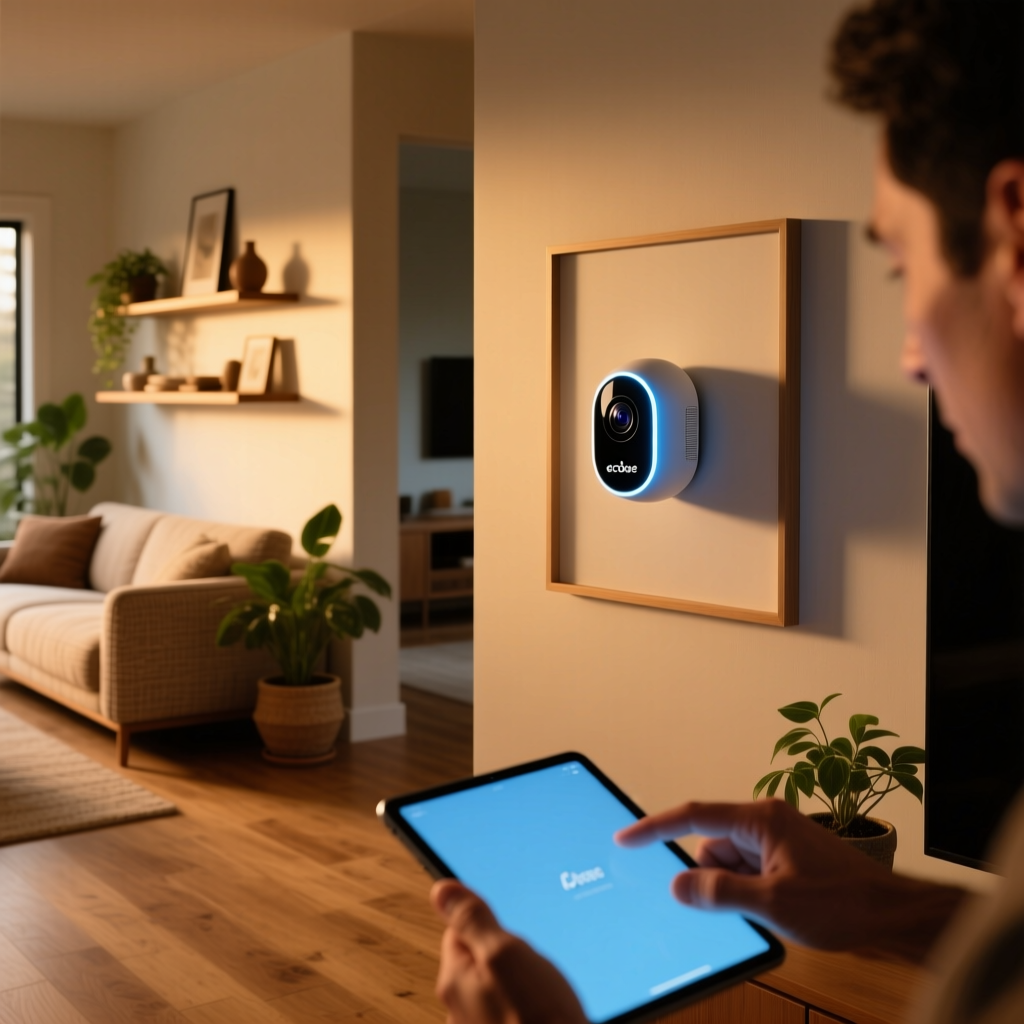
The Ecobee SmartCamera is an indoor home security camera designed to integrate deeply with the broader Ecobee smart home platform. Unlike standalone cameras that require their own dedicated apps and cloud subscriptions, the SmartCamera is built to work hand-in-hand with Ecobee's smart thermostats, doorbell cameras, and smart sensors to create a unified home monitoring experience.
At its core, the device features a high-definition camera with a wide field of view, built-in speaker and microphone for two-way audio, and onboard processing that enables person detection, pet detection, and sound detection — including smoke and carbon monoxide alarm recognition. The camera connects via dual-band Wi-Fi (2.4 GHz & 5 GHz) and supports WPA2/WPA3 encryption for secure network communication.
Key manufacturer specifications include:
- Video Resolution: Up to 1080p Full HD with HDR support
- Field of View: Approximately 160-degree diagonal viewing angle
- Night Vision: Infrared LEDs with automatic low-light switching
- Audio: Full-duplex two-way audio with noise suppression
- Connectivity: Dual-band Wi-Fi (802.11 a/b/g/n/ac)
- On-Device Processing: Edge-based AI for real-time detection without mandatory cloud processing
- Privacy: Physical camera shutter, local processing options, and geofencing-based auto on/off
- Storage: Cloud video storage with optional subscription plans
- Power: Wired via included USB-C power adapter
- Mounting: Freestanding base with optional wall-mount accessories
The SmartCamera is designed primarily for indoor use and targets homeowners who want intelligent monitoring without sacrificing privacy. Its tight integration with the Ecobee app means users can manage their thermostat, doorbell, sensors, and camera all from a single interface — a significant advantage over piecing together devices from multiple manufacturers.
From a design perspective, the SmartCamera features a compact, rounded form factor that blends into most interior décors. The matte finish resists fingerprints, and the integrated privacy shutter provides a tangible, physical indicator of whether the camera is active or disabled.
Video Performance & Image Quality
Video quality is arguably the most critical factor in any security camera, and the Ecobee SmartCamera delivers solid performance in this department. The 1080p resolution with HDR produces clear, detailed footage in well-lit environments. During our testing, text on documents and facial features were legible at distances of up to 15 feet, which covers the needs of most residential rooms.
The 160-degree diagonal field of view is generous and competitive with leading indoor cameras on the market. In a standard living room placement — such as on a bookshelf or entertainment center — the camera can comfortably cover the majority of the space without significant blind spots. The wide-angle lens does introduce some barrel distortion at the extreme edges of the frame, but this is common among wide-angle indoor cameras and does not materially impact the usefulness of the footage.
Daytime Performance: In bright, natural lighting conditions, color reproduction is accurate and images are sharp. The HDR processing handles mixed lighting scenarios — such as a room with bright windows and darker corners — reasonably well, preventing blown-out highlights while maintaining visibility in shadowed areas.
Night Vision Performance: The infrared night vision automatically activates when ambient light drops below a threshold. The transition is smooth, and the resulting black-and-white footage maintains good contrast and detail. In our testing, the IR illumination was effective at distances up to approximately 20 feet in a dark room. One minor criticism is that the IR LEDs produce a faint red glow that is visible in a completely dark room, which could theoretically alert an intruder to the camera's presence — though in practice, this is unlikely to be a significant concern for an indoor device.
Low-Light and Mixed Lighting: The camera's performance in low-light conditions (such as a room with only a dim lamp) is where HDR earns its keep. The sensor handles these scenarios capably, though you may notice some noise in very dark areas of the frame. This is typical for cameras in this price range and does not significantly degrade the ability to identify people or objects.
Overall, the video performance is reliable and consistent. It may not match the ultra-high resolution of some premium 2K or 4K cameras on the market, but for the vast majority of indoor monitoring use cases, 1080p with HDR strikes a practical balance between image clarity, storage efficiency, and bandwidth consumption.
Smart Detection Features & AI Capabilities
Where the Ecobee SmartCamera truly differentiates itself from basic security cameras is in its suite of intelligent detection features. The onboard AI processing handles several types of detection directly on the device, which has implications for both speed and privacy.
Person Detection: The camera can distinguish between people and other moving objects, significantly reducing false alerts caused by curtains blowing, shadows shifting, or pets moving through the frame. In our testing, person detection accuracy was impressive, with very few missed detections and minimal false positives. The camera reliably identified people entering a room and generated alerts within seconds.
Pet Detection: For households with dogs or cats, the pet detection feature is a welcome addition. The camera can identify pets separately from people, allowing you to receive notifications specifically about pet activity. This is particularly useful for checking in on pets during the workday or monitoring whether a dog has jumped on furniture you would prefer it stay off of.
Sound Detection: One of the standout features is the camera's ability to detect the sound of smoke alarms and carbon monoxide detectors. If an alarm sounds in the room where the SmartCamera is placed, the device sends an immediate alert to your phone — even if you are not subscribed to a monitoring service. This effectively extends the reach of your existing smoke and CO detectors by ensuring you are notified regardless of whether you are home, asleep, or away.
Activity Zones: Users can define custom activity zones within the camera's field of view, allowing the device to focus detection on specific areas while ignoring others. For example, you might set the camera to monitor a doorway while ignoring a ceiling fan that could trigger false motion alerts. The zone configuration interface in the Ecobee app is intuitive and responsive.
Geofencing and Smart Home/Away: Leveraging Ecobee's existing geofencing capabilities, the SmartCamera can automatically enable or disable monitoring based on whether residents are home or away. When the last person leaves the house (as determined by smartphone location), the camera activates. When someone returns, it automatically disables — eliminating the need to manually toggle the camera and reducing the risk of recording household members when privacy is expected.
The combination of person detection, pet detection, sound detection, and intelligent automation makes the SmartCamera one of the more feature-rich indoor cameras available. The on-device processing also means that detection works even during brief internet outages, though alerts cannot be sent until connectivity is restored.
Setup Experience & App Usability
Ecobee has earned a reputation for straightforward setup processes across its product line, and the SmartCamera continues that tradition. The setup process is handled entirely through the Ecobee mobile app, which is available for both iOS and Android devices.
Unboxing and Physical Setup: The package includes the camera, a USB-C power cable, a power adapter, and a quick-start guide. The camera sits on an integrated base that provides a stable freestanding position on flat surfaces. For wall or shelf mounting, Ecobee offers optional mounting accessories. The physical setup takes less than a minute — simply plug in the camera and wait for the LED indicator to signal readiness.
App-Based Configuration: Once the camera is powered on, the Ecobee app guides you through the pairing process. You will need to connect the camera to your Wi-Fi network (dual-band support means you can use either 2.4 GHz or 5 GHz, though 2.4 GHz generally provides better range through walls). The app walks you through naming the camera, assigning it to a room, configuring detection preferences, and setting up notification rules.
The entire setup process, from unboxing to fully configured, typically takes between 10 and 15 minutes. If you already have an Ecobee account with other devices, the SmartCamera is simply added to your existing dashboard, making the experience even faster.
App Interface and Daily Use: The Ecobee app serves as a unified control center for all connected Ecobee devices. The camera feed is accessible from the main dashboard, and tapping into the camera view reveals live footage, recent event clips, two-way audio controls, and settings. The app's interface is clean and well-organized, though users with multiple cameras may wish for a grid view option to see all feeds simultaneously.
Live streaming is smooth with minimal latency on a strong network connection. Two-way audio quality is clear, with the built-in speaker providing adequate volume for communication across a room. The push-to-talk mechanism works reliably, though there is a slight delay inherent to network-based audio.
Notification Management: The app provides granular control over notifications. You can customize which types of events trigger alerts (person detected, pet detected, smoke alarm heard, general motion), set quiet hours to suppress non-critical notifications, and configure rich notifications that include a thumbnail image of the detected event directly in your phone's notification center.
The setup experience and app usability are among the SmartCamera's strongest attributes. Ecobee has clearly invested in making the onboarding process accessible to users of all technical skill levels, and the app's unified approach to smart home management reduces the friction of managing multiple devices.
Ecosystem Compatibility & Smart Home Integration
The Ecobee SmartCamera's greatest strategic advantage is its deep integration with the broader Ecobee ecosystem. If you already own an Ecobee smart thermostat, SmartSensor, or video doorbell, the SmartCamera slots seamlessly into your existing setup and enhances the overall capabilities of your smart home.
Ecobee Ecosystem Integration: When paired with an Ecobee thermostat, the SmartCamera can participate in the Smart Home/Away routines that the thermostat uses to optimize heating and cooling. The camera's occupancy detection can supplement the thermostat's sensors, providing more accurate data about which rooms are in use. This cross-device collaboration is a genuine differentiator that competing standalone cameras cannot replicate.
Amazon Alexa: The SmartCamera supports Amazon Alexa integration, allowing you to view the camera feed on Echo Show devices and Fire TV. You can use voice commands such as "Alexa, show me the living room camera" to pull up the live feed on any compatible screen. Alexa Routines can also be configured to trigger camera actions based on other smart home events.
Google Assistant: Google Home integration is similarly supported, enabling camera feeds to be cast to Nest Hub displays and Chromecast-enabled TVs. Voice commands through Google Assistant provide hands-free access to live views, and the camera appears as a controllable device within the Google Home app.
Apple HomeKit: Apple HomeKit compatibility has been a requested feature among Ecobee users. Availability of HomeKit support may vary by firmware version and region, so prospective buyers should verify current compatibility on the Smart Home Deck product database before purchasing if HomeKit integration is a priority.
IFTTT and Third-Party Automation: For advanced users, the SmartCamera can participate in broader automation workflows through IFTTT and other supported integration platforms. This opens up possibilities such as triggering smart lights when the camera detects a person after dark, or sending a log entry to a spreadsheet each time motion is detected.
The SmartCamera's ecosystem compatibility is strongest within the Ecobee family of products and extends well to the major voice assistant platforms. Users who are heavily invested in the Ecobee ecosystem will find the most value, while those using competing platforms (such as Ring or Nest) may find the integration less compelling compared to cameras within those ecosystems.
Pros, Cons & Value Assessment
No product is perfect, and the Ecobee SmartCamera is no exception. After extensive testing, here is our balanced assessment of its strengths and weaknesses.
Pros
- Excellent ecosystem integration: Seamless connectivity with Ecobee thermostats, sensors, and doorbells creates a unified smart home experience that is difficult to replicate with devices from different manufacturers.
- On-device AI processing: Person detection, pet detection, and sound detection are handled locally on the device, improving response times and reducing privacy concerns associated with cloud-only processing.
- Physical privacy shutter: The integrated shutter provides a clear, physical indication that the camera lens is blocked — a feature that privacy-conscious users will appreciate.
- Smoke and CO alarm detection: The ability to listen for existing alarm devices and send remote alerts adds a meaningful layer of safety to the camera's functionality.
- Intuitive setup and app experience: The Ecobee app is well-designed, and the setup process is accessible to users regardless of technical expertise.
- Geofencing automation: Automatic camera activation and deactivation based on household occupancy reduces manual management and privacy friction.
- Dual-band Wi-Fi: Support for both 2.4 GHz and 5 GHz networks provides flexibility in various home networking environments.
Cons
- 1080p resolution: While adequate for most use cases, the 1080p sensor falls short of the 2K resolution offered by some competing cameras in the same price range, which may matter for users who need to zoom into footage for fine details.
- Indoor only: The SmartCamera is designed exclusively for indoor use. Users needing outdoor coverage will need to look elsewhere or supplement with a different device.
- Subscription required for advanced features: While basic live viewing and alerts work without a subscription, accessing extended video history and advanced smart detection features requires an Ecobee Smart Security subscription.
- Limited simultaneous live views: The app does not currently offer a robust multi-camera grid view, which may be limiting for users with several SmartCameras deployed throughout their home.
- IR LED visibility: The infrared LEDs produce a faint visible glow in complete darkness, which is common but worth noting for users who prefer completely covert monitoring.
Value Assessment
The Ecobee SmartCamera is positioned in the mid-to-premium segment of the indoor security camera market. When evaluating its value, it is important to consider the total cost of ownership, including any subscription fees, alongside the features and ecosystem benefits it provides.
For existing Ecobee users, the SmartCamera offers compelling value because of the deep integration with devices you already own. The ability to unify climate control, security monitoring, and occupancy sensing under a single platform reduces complexity and creates automation opportunities that standalone cameras cannot match.
For users new to the Ecobee ecosystem, the SmartCamera is a solid standalone indoor camera that competes favorably on features and ease of use, though the subscription cost should be factored into the long-term value equation. If you are also considering an Ecobee thermostat or doorbell, bundling the SmartCamera into a broader Ecobee setup maximizes the return on investment across all devices.
The value proposition is strongest for existing Ecobee customers and those planning to build a multi-device Ecobee system. Standalone buyers will find a capable camera, but should weigh the subscription costs against competing options that offer local storage without recurring fees.
Privacy & Data Security
Privacy is an increasingly important consideration for indoor security cameras, and Ecobee has made deliberate choices to address these concerns with the SmartCamera.
The physical privacy shutter is the most visible privacy feature. When closed, it physically blocks the camera lens, ensuring that no video can be captured regardless of software state. This hardware-level privacy control is more trustworthy than software-only toggles, which could theoretically be overridden by a software vulnerability.
The on-device AI processing is another significant privacy advantage. Because person detection, pet detection, and sound detection are performed locally on the camera's hardware, raw video footage does not need to be sent to cloud servers for analysis. Only event clips and notifications are transmitted, reducing the amount of data that leaves your home network.
Ecobee employs end-to-end encryption for video transmission and stores cloud footage in encrypted form. The company's privacy policy outlines data retention practices and provides users with controls to delete stored footage. Two-factor authentication is supported for Ecobee accounts, adding an additional layer of security against unauthorized access.
The geofencing-based auto on/off feature also serves a privacy function. By automatically disabling the camera when household members are present, it reduces the amount of footage captured during normal daily activities, ensuring that the camera is primarily active when the home is unoccupied and security monitoring is most relevant.
The SmartCamera earns high marks for privacy. The combination of a physical shutter, local AI processing, encrypted data transmission, and intelligent automation creates a privacy posture that is among the best in the indoor camera category.
How the Ecobee SmartCamera Compares to Competitors
To provide context for our review, it is helpful to understand how the SmartCamera stacks up against other popular indoor security cameras.
Compared to the Amazon Echo Show with built-in camera: While Echo Show devices offer camera functionality as part of a broader smart display, the SmartCamera provides dedicated security features — including person detection, pet detection, and smoke alarm listening — that general-purpose smart displays lack. The SmartCamera also offers a physical privacy shutter and more granular notification controls.
Compared to the Google Nest Cam (indoor): The Nest Cam is a close competitor with similar smart detection features and strong Google ecosystem integration. The SmartCamera differentiates itself with on-device processing (the Nest Cam relies more heavily on cloud processing for advanced features), smoke and CO alarm detection, and tighter integration with climate control through the Ecobee thermostat.
Compared to the Ring Indoor Cam: The Ring Indoor Cam is often available at a lower price point and integrates well with Ring's broader security ecosystem (doorbells, alarm systems). However, the SmartCamera offers more advanced on-device AI features and does not require a Ring Home subscription for basic functionality. Users already invested in the Ring ecosystem may prefer the Indoor Cam for its seamless integration, while those seeking a more privacy-focused option may lean toward the SmartCamera.
Compared to the Wyze Cam: Wyze cameras are known for aggressive pricing and optional local storage via microSD cards. The SmartCamera is positioned at a higher price point but offers superior build quality, more advanced AI detection, better ecosystem integration, and a more polished app experience. Budget-conscious buyers may prefer Wyze, while users prioritizing reliability and smart home integration will find more value in the Ecobee offering.
For more detailed comparisons across indoor security cameras, visit our smart home product reviews section for side-by-side analysis and updated recommendations.
Who Should Buy the Ecobee SmartCamera?
After thorough testing and evaluation, we can identify several user profiles for whom the Ecobee SmartCamera is an especially strong fit:
- Existing Ecobee customers: If you already use an Ecobee thermostat or other Ecobee devices, the SmartCamera adds meaningful value through ecosystem integration and unified app control.
- Privacy-conscious users: The physical shutter, on-device processing, and geofencing automation make this one of the more privacy-respecting indoor cameras available.
- Families with pets: Pet detection and the ability to check in on animals during the day make this camera appealing for pet owners.
- Safety-focused households: The smoke and CO alarm detection feature adds a layer of safety monitoring that most competing cameras do not offer.
- Users seeking simplicity: The straightforward setup and unified Ecobee app experience reduce the complexity of managing a smart home security setup.
The SmartCamera may not be the best choice for users who need outdoor monitoring, require 2K or higher resolution, want local storage without any subscription, or are deeply committed to a competing ecosystem such as Ring or Google Nest.
Frequently Asked Questions
Does the Ecobee SmartCamera require a subscription to work?
The Ecobee SmartCamera does not require a subscription for basic functionality. Live viewing, real-time alerts, two-way audio, and on-device detection features all work without a paid plan. However, accessing extended cloud video history, advanced smart detection alerts, and professional monitoring features requires an Ecobee Smart Security subscription. The subscription is competitively priced and often bundled with discounts for customers who own multiple Ecobee devices.
Can the Ecobee SmartCamera record continuously?
The SmartCamera is designed primarily for event-based recording rather than continuous 24/7 recording. When motion or a configured detection event occurs, the camera records a clip and stores it in the cloud (with an active subscription). This approach conserves bandwidth and storage while ensuring that the most relevant footage is captured and easily accessible. Users who require continuous recording may want to consider a dedicated NVR-based system or a camera that supports local microSD storage for round-the-clock capture.
How does the SmartCamera handle internet outages?
Because the SmartCamera performs AI detection locally on the device, it continues to monitor for events even during an internet outage. However, live streaming, push notifications, and cloud recording all require an active internet connection. When connectivity is restored, the camera resumes normal operation. If an event occurred during the outage, it may not have been recorded to the cloud, though the device's local buffer may retain limited event data depending on the duration of the outage and available onboard storage.
Is the Ecobee SmartCamera compatible with smart home platforms beyond Alexa and Google?
The SmartCamera's primary integrations are with Amazon Alexa and Google Assistant, along with deep native integration within the Ecobee ecosystem. Apple HomeKit support availability may vary, and users should check current compatibility before purchasing if HomeKit is a requirement. For broader automation, IFTTT support enables connections to thousands of third-party services and devices. The smart home landscape evolves rapidly, so checking the Smart Home Deck compatibility database is recommended for the most current integration information.
Final Verdict
The Ecobee SmartCamera is a well-rounded indoor security camera that excels in ecosystem integration, privacy design, and intelligent detection capabilities. While it may not offer the highest resolution or the lowest price point in its category, it delivers a thoughtfully engineered experience that prioritizes the features that matter most to modern smart home users: reliable detection, strong privacy controls, and seamless integration with the devices already in your home.
If you are building or expanding an Ecobee-based smart home, the SmartCamera is a natural and highly recommended addition. If you are shopping for a standalone indoor camera, it remains a strong contender — particularly if privacy and smart detection are high on your priority list.
The Ecobee SmartCamera earns a strong overall recommendation. Its blend of intelligent features, privacy-first design, and ecosystem synergy make it one of the most compelling indoor security cameras for smart home enthusiasts. Explore more smart home reviews and buying guides at Smart Home Deck to find the perfect devices for your connected home.