Introduction: The Price of Premium Climate Control
When upgrading to a smart home, the thermostat is often the first device consumers replace. It is the gateway to energy savings, automated comfort, and remote home management. However, the market is deeply polarized between budget-friendly programmable models and high-end AI-driven climate hubs. Sitting squarely at the top of the food chain is the Ecobee Smart Thermostat Premium. With a retail price hovering around $249, it demands a significant upfront investment compared to basic smart thermostats that sell for under $100.
But does the Ecobee Smart Thermostat Premium actually justify its premium price tag? As senior reviewers at SmartHomeDeck, we do not just look at the sticker price. We evaluate the Total Cost of Ownership (TCO), factoring in installation requirements, hidden hardware value, ecosystem compatibility, and long-term energy savings. In this comprehensive value-for-money assessment, we break down the real-world costs and benefits of the Ecobee Premium to determine if it is a wise financial investment for your smart home.
Upfront Costs and Installation Realities
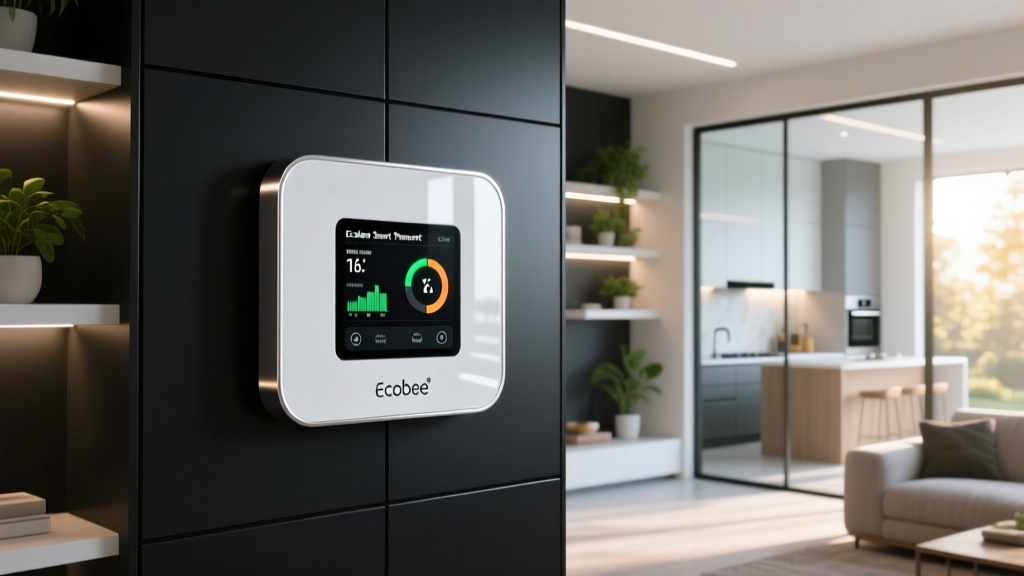
The MSRP of the Ecobee Smart Thermostat Premium is $249, though it frequently goes on sale for $199 during major shopping events. Out of the box, you receive the main thermostat unit, a built-in air quality monitor, a built-in smart speaker, and one SmartSensor (which tracks both occupancy and temperature).
The C-Wire Dilemma and Installation Savings
The most common hidden cost in smart thermostat installation is the requirement for a C-wire (common wire), which provides continuous 24V power to the device. Many older homes lack this wiring. If you hire an HVAC technician to run a new C-wire, you can easily spend between $150 and $300 on labor alone. This is where the Ecobee Premium quietly pays for itself.
Unlike some competitors that require you to purchase separate adapters or hire an electrician, Ecobee includes a Power Extender Kit (PEK) in the box. The PEK connects to your HVAC control board and uses existing wires to deliver power to the thermostat. For the average DIYer, this inclusion saves a massive potential installation cost, immediately improving the device's value proposition.
SmartHomeDeck Tip: Before purchasing any smart thermostat, pull off your current unit's faceplate and check for a C-wire. If you do not have one, the inclusion of the PEK makes the Ecobee Premium significantly more cost-effective than competitors that lack this hardware.
The Hidden Value: Built-In Hardware Replacements
To truly assess the value-for-money of the Ecobee Premium, we must look at the secondary hardware it replaces. The Premium is not just a thermostat; it is a multi-tool for the smart home. By integrating several distinct devices into one unit, it offsets its higher initial cost.
| Feature | Standalone Device Cost | Ecobee Premium Integration |
|---|---|---|
| Smart Speaker (Alexa/Siri) | $50 - $100 | Built-in (Far-field microphones) |
| Air Quality Monitor (VOC) | $70 - $150 | Built-in (Tracks VOCs, CO2, Temp) |
| Room Sensor (Occupancy) | $30 - $40 | One SmartSensor included in box |
| Smart Home Hub (Zigbee) | $40 - $60 | Built-in Smart Home Hub |
When you add up the cost of buying a standalone smart speaker, a dedicated indoor air quality monitor, a room sensor, and a smart home hub, you are looking at an additional $190 to $350 in hardware. The Ecobee Premium consolidates all of this into a single, elegantly designed glass-and-metal interface.
Air Quality Monitoring: A Health Investment
The built-in air quality monitor tracks volatile organic compounds (VOCs), carbon dioxide, temperature, and humidity. If VOC levels spike—perhaps from cooking, cleaning chemicals, or off-gassing furniture—the Ecobee Premium can automatically trigger your HVAC system's fan to circulate air or send an alert to your phone. For households with allergy sufferers or young children, this feature alone provides immense, unquantifiable value.
Energy Savings and Return on Investment (ROI)
The primary financial argument for any smart thermostat is energy conservation. According to the U.S. Department of Energy, properly managing your heating and cooling with a smart thermostat can save you up to 10% a year on heating and 15% on cooling costs. Furthermore, the EPA Energy Star program certifies that smart thermostats yield significant utility bill reductions by learning your schedule and optimizing HVAC runtimes.
Calculating the ROI
Let us run a practical cost assessment based on the national average HVAC energy spend. The average American household spends roughly $900 to $1,200 annually on heating and cooling.
- Average Annual HVAC Cost: $1,050
- Conservative Savings (10%): $105 per year
- Optimistic Savings (15%): $157 per year
At a purchase price of $249, the Ecobee Premium will completely pay for itself through energy savings alone in 1.5 to 2.3 years. Over a standard 5-year lifespan, the device will generate a net positive return of $276 to $536 in pure energy savings, effectively making the thermostat free and then some.
Real-World Testing: Sensors and Ecosystem Compatibility
A thermostat is only as good as the data it collects. The Ecobee Premium utilizes a built-in radar sensor for proximity and occupancy detection, meaning it knows when you are standing in front of it to light up the screen, and when you have left the house to trigger Eco modes. However, the true magic lies in the included SmartSensor.
Multi-Story and Hot/Cold Room Solutions
In our real-world testing inside a two-story home, the main thermostat (located in the downstairs hallway) read a comfortable 72°F, while the upstairs bedrooms were sweltering at 78°F. By placing the included SmartSensor in the master bedroom and enabling the 'Follow Me' feature, the Ecobee Premium prioritized the occupied room's temperature. This eliminated the need to run the AC constantly to cool the empty downstairs, further driving up the energy savings and comfort value.
Ecosystem and Matter Compatibility
The smart home landscape is shifting toward unified standards. According to the Connectivity Standards Alliance (CSA), the Matter protocol is the future of device interoperability. The Ecobee Premium is fully compatible with Apple HomeKit, Amazon Alexa, Google Home, Samsung SmartThings, and IFTTT. Furthermore, Ecobee has been proactive in rolling out firmware updates to support Matter, ensuring your investment will not become obsolete as smart home ecosystems evolve. The built-in Zigbee hub also allows you to connect third-party sensors directly to the thermostat without needing an external bridge.
SmartHomeDeck Scorecard
We evaluate every product across five core dimensions to provide a holistic view of its market standing.
| Dimension | Score (out of 10) | Notes |
|---|---|---|
| Performance | 9.5 | Flawless temperature regulation, rapid sensor response, and excellent Wi-Fi connectivity. |
| Value | 9.0 | High upfront cost, but massive long-term ROI and included hardware offset the price. |
| Compatibility | 10.0 | Native support for Siri, Alexa, HomeKit, and upcoming Matter integrations. |
| Ease-of-Use | 8.5 | The app is incredibly detailed, which can be slightly overwhelming for novice users. |
| Features | 9.8 | Air quality monitoring and built-in speaker elevate it beyond basic climate control. |
Pros and Cons
Pros
- Included Power Extender Kit (PEK): Saves $150+ on potential electrician fees for C-wire installation.
- Built-in Air Quality Monitor: Tracks VOCs and CO2, replacing the need for a standalone $100 monitor.
- Dual Voice Assistants: Native support for both Amazon Alexa and Apple Siri.
- SmartSensor Included: Solves multi-story temperature imbalances right out of the box.
- Superior Build Quality: Premium glass and metal finish looks vastly superior to plastic competitors.
Cons
- Premium Price Tag: At $249, it is a steep initial investment for budget-conscious buyers.
- Speaker Audio Quality: While great for voice commands and brief announcements, it lacks the bass for music listening compared to a dedicated smart speaker.
- Complex App Menus: The sheer volume of settings and automations can result in a steep learning curve for casual users.
Final Verdict: Is the Premium Price Justified?
When conducting a strict value-for-money and total cost assessment, the Ecobee Smart Thermostat Premium emerges as one of the most financially sound investments in the smart home space. While the $249 sticker price may cause initial hesitation, the math simply works in the consumer's favor.
By including the PEK, a SmartSensor, a smart home hub, and an air quality monitor in the box, Ecobee effectively bundles over $200 worth of secondary hardware into the base price. When you combine this with the proven 10% to 15% annual energy savings certified by the EPA and DOE, the device achieves a break-even point in under two years. Over a five-year period, it transitions from a household expense to a net-positive financial asset.
If you are deeply embedded in the Apple HomeKit or Amazon Alexa ecosystems, have a multi-story home with temperature imbalances, or care deeply about indoor air quality, the Ecobee Smart Thermostat Premium is not just a luxury upgrade—it is a highly cost-effective, value-packed necessity for the modern home.