Introduction: The Hidden Cost of Phantom Power
In the modern smart home, convenience is often the primary driver for automation. However, as energy prices fluctuate and environmental consciousness grows, efficiency has become equally paramount. According to the U.S. Department of Energy, 'phantom loads' or standby power can account for up to 10% of a home's total residential electricity use. This means devices like window air conditioners, entertainment centers, and gaming consoles are silently draining your wallet even when turned off.
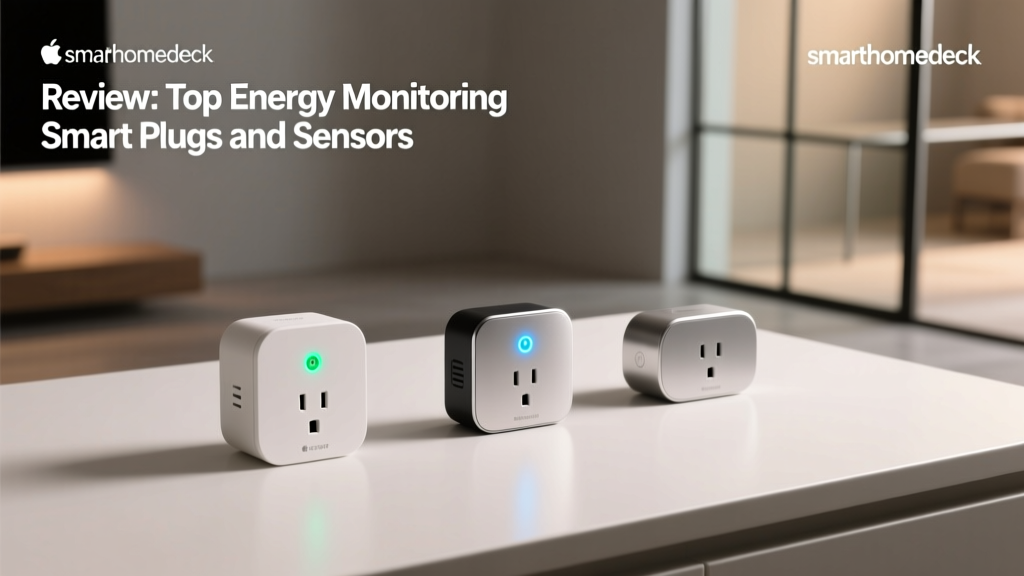
To combat this, pairing energy monitoring smart plugs with precision motion sensors is one of the most effective strategies available today. In this comprehensive review, we put the top smart plugs and sensors to the test, evaluating their accuracy, ecosystem compatibility, and real-world automation potential. Our goal is to help you build a home that doesn't just respond to your presence, but actively conserves resources when you leave the room.
Testing Methodology
At SmartHomeDeck, we don't just rely on manufacturer claims. We tested each smart plug using a calibrated Kill-A-Watt meter over a 14-day period to verify energy reporting accuracy. We measured latency (the time between a physical action and the app/cloud update), evaluated network resilience by simulating router reboots, and tested sensor trigger speeds using high-frame-rate cameras. All devices were integrated into Apple HomeKit, Amazon Alexa, and Google Home environments to assess cross-platform reliability.
Smart Plug Contenders: Tracking Every Watt
Kasa Smart Plug Mini with Energy Monitoring (EP25)
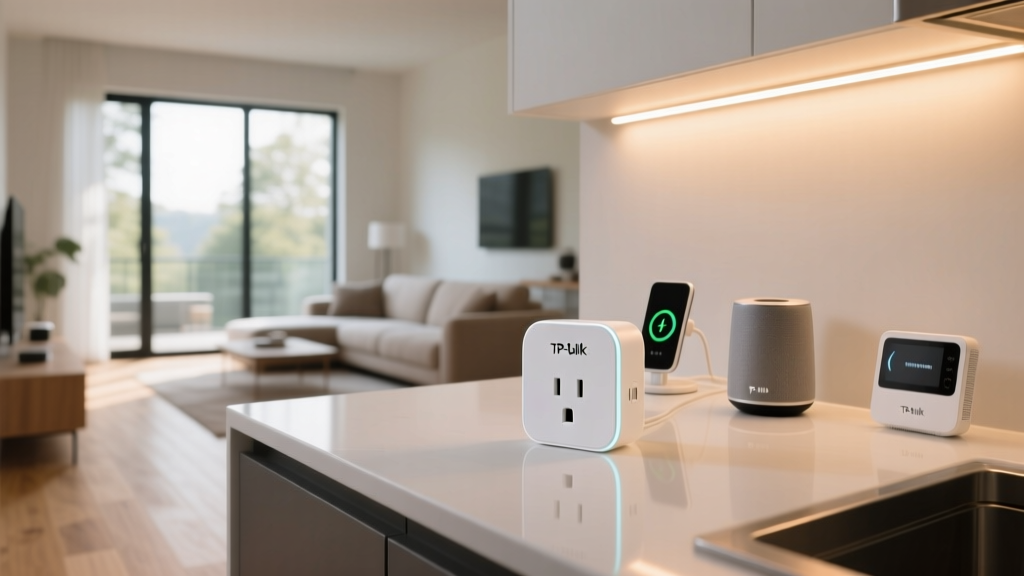
The TP-Link Kasa EP25 remains a powerhouse in the budget smart plug category. Priced typically around $25 for a single unit (or less in multi-packs), it offers an incredibly user-friendly app and robust energy tracking features. During our testing, the EP25's energy reporting was accurate within a 3% margin compared to our baseline meter. The Kasa app provides real-time wattage draw, daily run times, and a 30-day historical graph.
Where the EP25 shines is in its scheduling and 'Smart Actions' within the Kasa ecosystem. However, its reliance on 2.4GHz Wi-Fi means it can contribute to network congestion in homes with dozens of IoT devices. Furthermore, while it supports Alexa and Google Assistant natively, Apple HomeKit support requires a third-party bridge like Homebridge, which may deter some users.
Eve Energy (Matter Edition)
For the premium smart home enthusiast, the Eve Energy plug is a revelation. Originally a HomeKit-exclusive staple, the latest Matter-over-Thread edition opens it up to virtually every major platform. Priced at a premium (often $50+), the Eve Energy plug justifies its cost with unparalleled privacy (no cloud registration required), Thread networking reliability, and a beautiful physical design that won't block adjacent outlets.
The Eve app offers the most granular energy analytics on the market, allowing you to input your local electricity rate to project exact monthly costs. In our latency tests, the Thread-enabled Eve Energy responded to on/off commands in under 200 milliseconds, significantly faster than Wi-Fi alternatives. It is the gold standard for Apple Home users and early Matter adopters.
Motion Sensor Contenders: The Brains of the Operation
Aqara Motion Sensor P2
The Aqara Motion Sensor P2 is a trailblazer as one of the first motion sensors to support Matter over Thread. This eliminates the need for a proprietary Aqara hub if you already have a Thread border router (like an Apple TV 4K, Nest Hub, or Amazon Echo). The P2 features a built-in lux (light) sensor and boasts an impressive two-year battery life on a standard CR2450 coin cell.
During our hallway tests, the P2 demonstrated exceptional sensitivity, detecting lateral movement from up to 23 feet away. The inclusion of the lux sensor is a game-changer for automations; you can now program your smart plugs to turn on a lamp only if motion is detected AND the room is darker than 50 lux. Its compact, spherical design allows for versatile mounting angles.
Philips Hue Motion Sensor
While it relies on the Zigbee-powered Hue Bridge, the Philips Hue Motion Sensor remains a benchmark for reliability. It is incredibly fast, with a 'blind time' (the cooldown period before it can detect motion again) that can be customized via third-party apps like Hue Essentials. It also includes a highly accurate temperature sensor and a lux sensor.
The primary drawback is the ecosystem lock-in; to get the most out of it, you need the Hue Bridge. However, if you are already invested in Hue lighting, its integration is flawless. We paired the Hue sensor with third-party smart plugs via Home Assistant and Alexa routines, achieving near-instantaneous trigger times that outpaced cloud-dependent Wi-Fi sensors.
Real-World Synergy: Automating for Maximum Savings
The true magic happens when you combine these devices. A smart plug alone can turn off a TV on a schedule, but a sensor knows if you are actually in the room. We created a 'Ghost Room' automation: If the Aqara P2 detects no motion for 45 minutes, the Eve Energy plug cuts power to a space heater and a secondary entertainment center, eliminating phantom draw and preventing fire hazards.
Deck Score Dimensions
At SmartHomeDeck, we evaluate products across five core dimensions to provide a holistic view of their value.
- Performance: Accuracy of energy reporting, sensor trigger latency, and network reliability. The Eve Energy and Aqara P2 scored highest here due to Thread networking.
- Value: Cost-to-feature ratio. The Kasa EP25 wins on pure affordability, while the Hue sensor provides immense value if you already own the bridge.
- Compatibility: Ecosystem support. Matter devices (Eve, Aqara P2) dominate this category, ensuring future-proofing across Apple, Google, and Amazon.
- Ease-of-Use: App design, onboarding process, and physical installation. Kasa's app remains the most intuitive for beginners.
- Features: Granularity of data, secondary sensors (lux, temperature), and physical design. Eve Energy's projection tools and Aqara's adjustable mount stand out.
Specs and Compatibility Comparison Matrix
| Device | Protocol | Energy Monitoring | Secondary Sensors | Hub Required? | Avg. Price |
|---|---|---|---|---|---|
| Kasa EP25 | Wi-Fi (2.4GHz) | Yes | None | No | $25 |
| Eve Energy | Thread / Matter | Yes | None | No (Thread Router) | $50 |
| Aqara P2 Sensor | Thread / Matter | No | Lux (Light) | No (Thread Router) | $35 |
| Hue Motion Sensor | Zigbee | No | Lux, Temperature | Yes (Hue Bridge) | $40 |
Ecosystem Compatibility and the Matter Revolution
The introduction of the Matter standard, spearheaded by the Connectivity Standards Alliance (CSA), has fundamentally shifted how we review smart home gear. Previously, buying a smart plug meant committing to a specific app or voice assistant. Today, Matter-enabled devices like the Eve Energy and Aqara P2 communicate locally, reducing cloud dependence and latency.
Furthermore, the underlying network matters. The Thread Group has developed a mesh networking protocol that allows low-power devices to communicate without draining batteries or clogging your Wi-Fi router. When you pair a Thread-based sensor with a Thread-based plug, the local automation execution is nearly instantaneous, even if your home's internet connection goes down.
Expert Tips for Maximizing Savings
'Don't just automate for convenience; automate for conservation. Use lux sensors to prevent lights from turning on in sunlit rooms, and use extended 'no-motion' timeouts to kill phantom power on entertainment centers that take time to boot up.'
To get the most out of your new gear, consider these actionable setups:
- The Window AC Saver: Attach a Kasa EP25 to your window air conditioner. Set an automation that turns the plug off if the room's motion sensor detects no presence for 2 hours, and turns it back on 15 minutes before your typical arrival time.
- The Home Office Shutdown: Plug your monitors, desk lamp, and PC speakers into a power strip connected to the Eve Energy plug. When the Aqara P2 detects zero motion for 1 hour during work hours, cut the power to save on idle monitor draw.
- HVAC Fan Circulation: Pair a smart plug controlling a portable fan with a temperature-enabled sensor (like the Hue sensor). Trigger the fan only when the room exceeds 74°F AND motion is detected.
Final Verdict
Integrating energy monitoring smart plugs with advanced motion sensors is a smart home upgrade that pays for itself. For budget-conscious users or those heavily invested in Amazon Alexa, the Kasa EP25 paired with a standard Wi-Fi sensor is a fantastic entry point. However, for those seeking local control, lightning-fast response times, and cross-platform harmony, the combination of the Eve Energy plug and the Aqara Motion Sensor P2 represents the current pinnacle of smart home efficiency. By taking control of your phantom loads and automating based on actual room occupancy, you transform your home from a passive living space into an active, energy-saving machine.