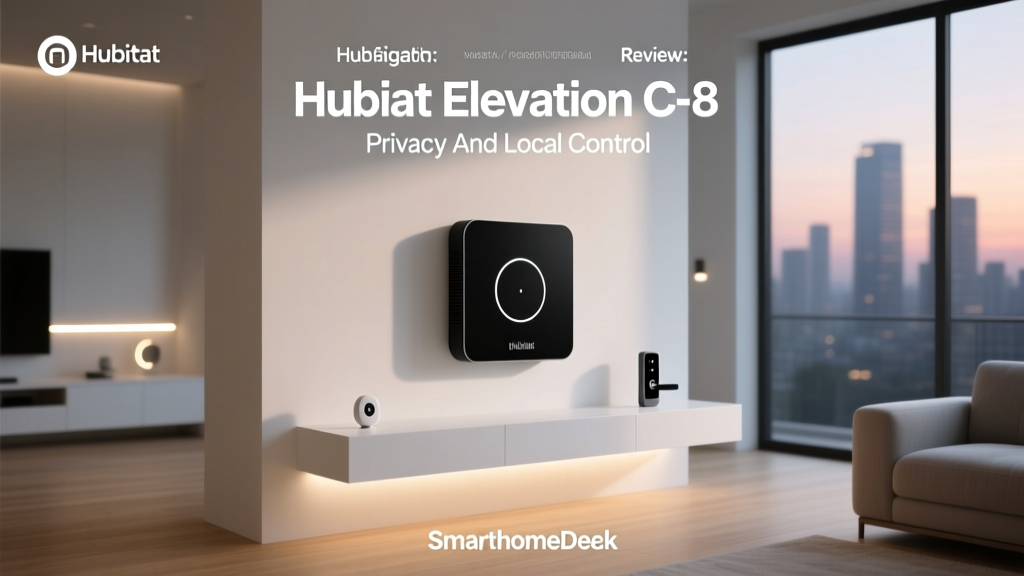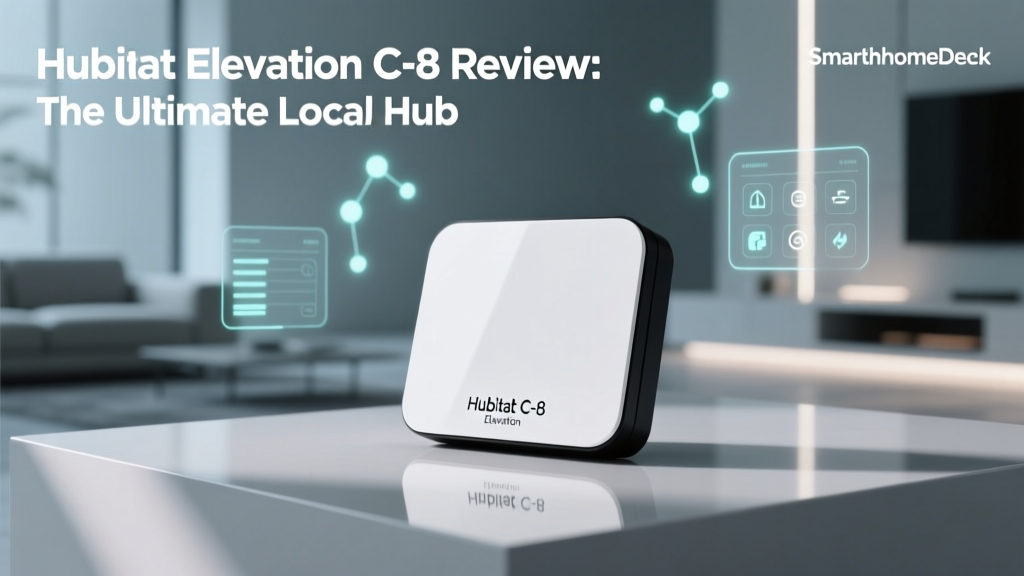
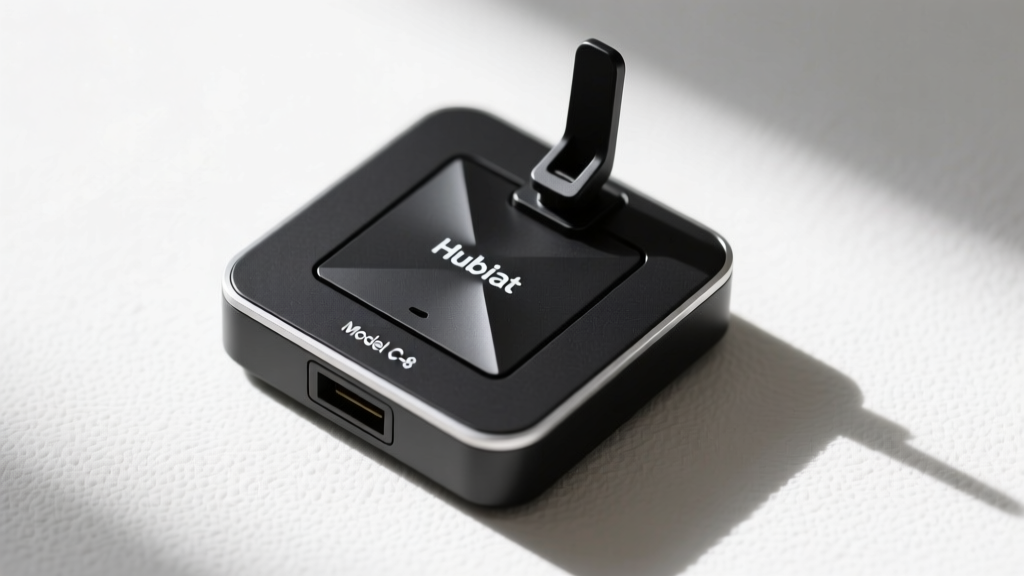
The Hubitat Elevation Model C-8 hub is a local-first smart home controller engineered for advanced users and privacy-conscious homeowners who demand reliable automation without cloud dependency. Featuring the Z-Wave 800-series chip with Long Range support and a 1.5 GHz quad-core processor, the Model C-8 delivers enterprise-grade reliability for complex networks. This review targets intermediate to advanced smart home enthusiasts looking to upgrade from cloud-based ecosystems or older Hubitat generations.
TL;DR: Key Takeaways
- Core Hardware: 1.5 GHz quad-core processor and 2 GB RAM ensure instantaneous local rule execution.
- Connectivity: Native Z-Wave 800 Long Range and Zigbee 3.0 radios eliminate the need for external USB dongles for standard setups.
- Privacy: 100% local processing guarantees automations function during internet outages.
- Verdict: The definitive choice for users prioritizing speed, privacy, and massive device scalability.
Hubitat Elevation Model C-8 Overview
The Hubitat Elevation Model C-8 represents the current pinnacle of local smart home hubs. Unlike cloud-reliant alternatives, this hub processes every automation rule directly on the device. This architecture guarantees sub-100-millisecond response times for lighting and security routines.
Hardware Specifications and Z-Wave Long Range
At the core of the Model C-8 is a 1.5 GHz quad-core processor paired with 2 GB of RAM. This hardware configuration easily handles hundreds of complex automation rules without lag. The standout feature is the integrated Z-Wave 800-series radio.
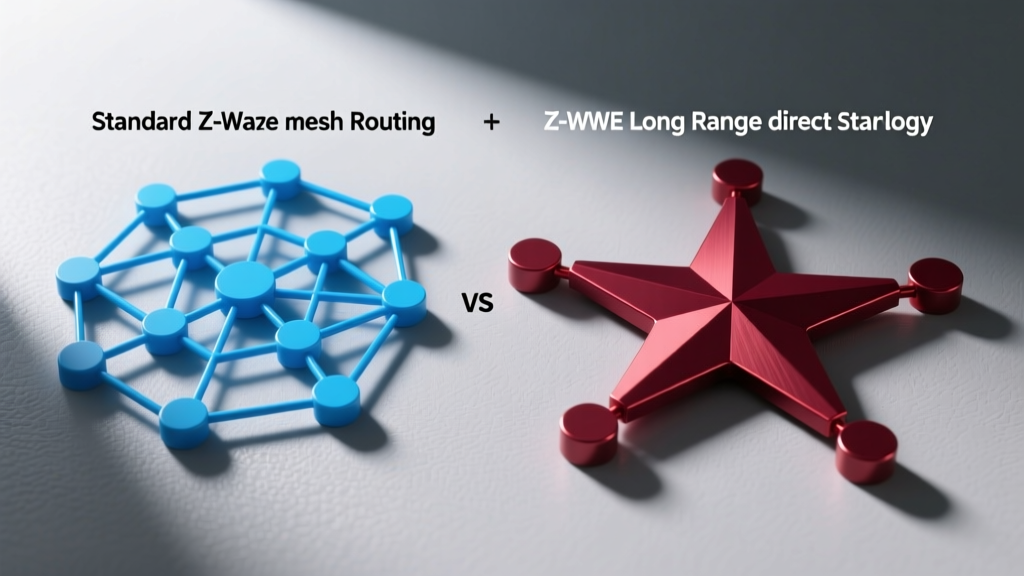
Z-Wave Long Range (ZWLR): A wireless communication protocol extension that increases Z-Wave network range up to 1 mile and supports up to 4,000 nodes, utilizing a star topology alongside the traditional mesh network for massive smart home scalability.
This integration allows users to place sensors in detached garages or distant gates without deploying secondary repeaters. According to the Z-Wave Alliance 800-series documentation, this chip also introduces enhanced security protocols and improved battery efficiency for end devices.
Key Features and Performance
Performance on the Model C-8 is defined by its unwavering consistency. Because the hub does not route commands through external servers, network congestion on your home Wi-Fi does not impact smart home responsiveness.
Local Processing and Privacy
Local Processing: A smart home architecture where automation rules and device commands are executed directly on a physical hub within the home network. This eliminates cloud server latency, ensures operations continue during internet outages, and keeps telemetry data strictly private.
For users integrating security cameras and smart locks, this local-first approach ensures that sensitive entry logs never leave the home network. The hub only reaches out to the internet for initial device pairing references or third-party API integrations like weather services.
Zigbee 3.0 and Matter Compatibility
The internal Zigbee 3.0 radio provides a robust mesh network for lighting and environmental sensors. While the hub does not natively support Thread or Matter out of the box, it integrates seamlessly with Matter devices via your existing Wi-Fi or Ethernet network using the Hubitat Matter bridge feature introduced in recent firmware updates.
Model C-8 vs. Model C-7 Comparison
Upgrading from the previous generation requires understanding the tangible hardware differences. Below is a decision framework to help you determine if the C-8 is necessary for your specific environment.
| Feature | Hubitat Model C-7 | Hubitat Model C-8 |
|---|---|---|
| Z-Wave Chip | 700-Series | 800-Series (with Long Range) |
| Processor | 1.2 GHz Quad-Core | 1.5 GHz Quad-Core |
| Memory (RAM) | 1 GB | 2 GB |
| Max Z-Wave Nodes | 232 | 4,000 (via ZWLR) |
| Typical Indoor Range | 100-foot (standard mesh) | 100-foot mesh + extended LR |
| Current MSRP | $99.95 (Discontinued) | $149.95 |
Setup and User Experience
Setting up the Hubitat Elevation Model C-8 requires a wired Ethernet connection to your primary router. The hub does not include built-in Wi-Fi, a deliberate design choice to maximize network stability and reduce wireless interference.
The web-based dashboard remains the primary interface for configuration. While the learning curve is steeper than consumer-grade apps, the Rule Machine interface provides unmatched granular control over conditional logic, variable tracking, and device state monitoring.
Frequently Asked Questions
How does the Hubitat Elevation Model C-8 compare to SmartThings?
The Hubitat Elevation Model C-8 processes all automations locally, ensuring they work without internet access. SmartThings relies heavily on cloud processing, which introduces latency and vulnerability to server outages. Hubitat is superior for privacy and speed, while SmartThings offers a more beginner-friendly mobile interface.
What is the practical Z-Wave range of the Model C-8?
Standard Z-Wave mesh routing provides a reliable 100-foot indoor range between nodes. When utilizing Z-Wave Long Range compatible devices, the hub can communicate directly with sensors up to 1 mile away in open air, making it ideal for expansive properties or detached structures.
Does the Hubitat C-8 support Matter devices natively?
The Model C-8 supports Matter over IP (Wi-Fi/Ethernet) via its network bridge integration. For Matter over Thread, users must attach a compatible Thread border router or USB dongle to the hub, as the C-8 does not feature a native Thread radio.
Final Verdict
The Hubitat Elevation Model C-8 hub is the premier choice for dedicated smart home builders who require absolute reliability, local privacy, and extensive device capacity. Its integration of the Z-Wave 800 Long Range chip future-proofs large-scale installations against mesh congestion.
To proceed, download the Hubitat mobile app, connect the hub via Ethernet, and verify your existing smart devices against the official Hubitat compatibility matrix before migrating your automations.