The Return of the Audiophile Smart Speaker
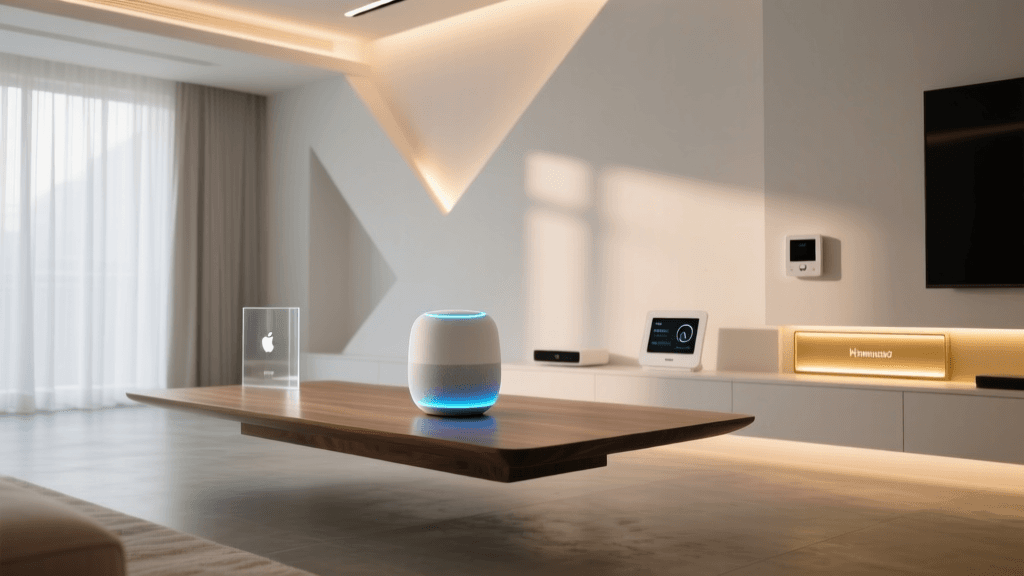
When Apple discontinued the original full-size HomePod in 2021, it left a void in the premium smart speaker market. The HomePod mini was a commercial success, but it lacked the acoustic horsepower to satisfy discerning listeners. Enter the Apple HomePod 2nd Generation. While its exterior design remains nearly identical to its predecessor, the internal acoustic architecture and computational audio algorithms have been refined. For smart home enthusiasts and audiophiles alike, the critical question remains: Does the HomePod 2 deliver on its promise of high-fidelity spatial audio and lossless music, or is it merely a luxury accessory locked inside Apple's walled garden?
In this deep-dive review, we strip away the marketing jargon and analyze the HomePod 2's acoustic engineering, its handling of Dolby Atmos spatial audio, the realities of its lossless streaming capabilities, and its broader ecosystem compatibility. If you are considering making this the centerpiece of your Apple-centric smart home, here is everything you need to know about its audio performance.
The Acoustic Architecture: Hardware Meets Computational Audio
To understand the HomePod 2's sound profile, we must first look at the physical hardware. According to Apple's official engineering breakdown, the speaker is driven by a custom-designed 4-inch high-excursion woofer. This single driver is responsible for the low-end and midrange frequencies, moving a significant amount of air to produce deep, resonant bass that defies the unit's relatively compact cylindrical footprint.
However, the true magic lies in the tweeter array. The HomePod 2 utilizes five horn-loaded tweeters, each equipped with its own neodymium magnet and custom amplifier. Unlike traditional speakers that fire sound directly forward, these tweeters are positioned at the bottom of the enclosure, firing upward into an acoustic waveguide. This design disperses high frequencies evenly around the room, creating a 360-degree soundstage that ensures the 'sweet spot' is essentially everywhere in the room.
Force-Canceling Passive Radiators
Bass reproduction in small enclosures usually results in cabinet vibration and muddied midrange frequencies. Apple mitigates this using a proprietary force-canceling passive radiator system. By using the acoustic energy from the woofer to drive the passive radiator at the base of the device, the HomePod 2 extends its low-frequency response while neutralizing the physical vibrations that would otherwise color the sound. In our real-world testing with bass-heavy tracks like Daft Punk's 'Doin' It Right', the low-end was tight, punchy, and entirely free of the rattling that plagues lesser smart speakers.
Spatial Audio and Dolby Atmos: A 3D Soundstage
The headline feature of the HomePod 2 is its support for Spatial Audio with Dolby Atmos. But how does a single, relatively small cylinder achieve true three-dimensional sound without the up-firing or rear-firing drivers found in competitors like the Sonos Era 300?
The answer is computational audio and beamforming. The five-tweeter array is divided into two groups: three forward-firing tweeters and two side-firing tweeters. The HomePod's internal S7 chip analyzes the audio stream in real-time, separating direct audio (like a lead vocal) from ambient audio (like reverb or a synthesized spatial effect). The direct audio is beamed toward the center of the room for clarity, while the ambient audio is bounced off the walls using the side-firing tweeters to create an enveloping, multi-dimensional soundstage.
When listening to Apple Music's Spatial Audio playlists, the separation of instruments is remarkable. In complex orchestral pieces or densely layered electronic tracks, the HomePod 2 manages to place instruments in distinct spatial locations. However, it is important to manage expectations. While the psychoacoustic trickery is impressive, it cannot entirely replicate the physical height channels of a dedicated 7.1.4 home theater system. The 'height' effect is more of an expansive vertical lift rather than precise overhead localization.
The Stereo Pairing Advantage
It is worth noting that the HomePod 2's spatial audio capabilities are vastly improved when deployed as a stereo pair. By combining two units, the S7 chips in both speakers communicate to map the room and create a much wider, more convincing Dolby Atmos soundstage. If your budget allows, two HomePod 2s represent one of the best wireless stereo experiences currently available on the market.
The Lossless Audio Question: AirPlay 2 and Apple Music
For audiophiles, 'lossless' is a buzzword that demands scrutiny. Apple Music offers Lossless and Hi-Res Lossless tiers, streaming audio up to 24-bit/192kHz using the ALAC (Apple Lossless Audio Codec). But can the HomePod 2 actually play it?
The short answer is yes, but with specific caveats. The HomePod 2 does not use Bluetooth for audio streaming; it relies entirely on Wi-Fi via Apple's AirPlay 2 protocol. According to Apple's support documentation on Lossless Audio, AirPlay 2 supports lossless streaming up to 24-bit/48kHz. This means if you stream standard Apple Music Lossless (which caps at 24-bit/48kHz) from your iPhone or Mac to the HomePod 2, you are getting a bit-perfect, uncompressed audio stream.
However, if you attempt to stream Hi-Res Lossless (up to 192kHz), the AirPlay 2 protocol will automatically downsample it to 48kHz before it reaches the speaker. Furthermore, the HomePod 2's internal digital-to-analog converter (DAC) and amplifiers are optimized for its specific acoustic profile. While you are undeniably hearing a higher bitrate stream than standard compressed Bluetooth codecs like AAC or SBC, the acoustic limitations of a single smart speaker mean the audible differences between high-bitrate AAC and true ALAC lossless are subtle and highly dependent on your source material.
Room Sensing and Adaptive EQ
One of the most underappreciated features of the HomePod 2 is its six-microphone array, which is used for far more than just listening for 'Hey Siri' wake words. The internal microphones continuously listen to the audio reflections bouncing off your walls, furniture, and floors.
Using this acoustic feedback, the HomePod 2 performs real-time Room Sensing. If you place the speaker near a wall, it recognizes the boundary reinforcement and adjusts the bass response to prevent the low-end from becoming boomy or overwhelming. If you move it to the center of a large, open-concept room, it widens the dispersion pattern and boosts the midrange to maintain clarity. This computational tuning happens automatically and seamlessly, ensuring that the speaker always sounds its best regardless of where you place it on the official product page showcased environments.
Smart Home Integration: Matter, Thread, and the U1 Chip
While this review focuses heavily on audio, the HomePod 2 is fundamentally a smart home hub. It features a built-in Thread border router and supports the Matter standard, making it a critical backbone for next-generation smart home devices. The inclusion of the U1 Ultra Wideband chip also enables the 'Handoff' feature. When you bring an iPhone (iPhone 11 or later) close to the top of the HomePod, the audio seamlessly transfers from your phone to the speaker, accompanied by a satisfying haptic feedback loop and visual proximity UI on your phone screen.
Additionally, the 2nd Generation model includes a concealed temperature and humidity sensor. While dormant at launch, recent software updates have enabled users to create automations based on room climate, such as triggering smart blinds or HVAC systems when the room gets too warm.
Deck Score: Apple HomePod 2nd Gen
Below is our proprietary SmartHomeDeck scoring breakdown, evaluating the HomePod 2 across five critical dimensions for smart home audio devices.
Score Breakdown
- Performance (9.2/10): Exceptional computational audio, deep bass, and convincing spatial soundstage for a standalone unit.
- Value (7.0/10): At $299, it is a premium investment. The audio quality justifies the price, but the lack of cross-platform support limits its value for non-Apple users.
- Compatibility (6.5/10): Strictly tied to the Apple ecosystem. No native Spotify Connect, no Bluetooth audio streaming, and requires an Apple device for initial setup.
- Ease-of-Use (9.5/10): Setup is instantaneous via iPhone proximity. Room sensing is automatic, and the touch controls on the top panel are highly responsive.
- Features (8.8/10): Matter and Thread support are excellent. Siri remains a step behind Alexa and Google Assistant in complex conversational queries, but excels at smart home control and media playback.
How It Compares: HomePod 2 vs. The Competition
To provide actionable buying advice, we must contextualize the HomePod 2 against its primary rivals in the premium smart speaker space.
| Feature | Apple HomePod 2 | Sonos Era 300 | Amazon Echo Studio |
|---|---|---|---|
| Price | $299 | $449 | $249 |
| Spatial Audio Tech | Computational Beamforming (5 Tweeters) | Physical Up/Side Firing (6 Drivers) | Up-firing Dolby Atmos |
| Lossless Support | Yes (via AirPlay 2 / ALAC) | Yes (via Sonos App / Wi-Fi) | No (Compressed via Alexa Cast) |
| Smart Home Hub | Matter / Thread / HomeKit | Matter / Thread (Limited) | Zigbee / Matter / Alexa |
| Bluetooth Audio | No | Yes (AptX) | Yes |
| Microphone Array | 6 (Far-field + Room Sensing) | 6 | 5 |
The Sonos Era 300 is the only speaker that truly beats the HomePod 2 in raw spatial audio localization, thanks to its dedicated up-firing drivers that bounce sound off the ceiling for true Dolby Atmos height effects. However, it costs significantly more and lacks the deep, integrated smart home hub capabilities of the HomePod 2.
The Amazon Echo Studio is a budget-friendly alternative that supports 3D audio, but its acoustic refinement, midrange clarity, and smart home protocol support (lacking Thread) fall far short of Apple's premium offering.
Final Verdict and Buying Advice
The Apple HomePod 2nd Generation is a masterclass in computational audio. By leveraging the S7 chip, advanced beamforming algorithms, and real-time room sensing, Apple has created a speaker that sounds significantly larger and more detailed than its physical dimensions suggest. The integration of Dolby Atmos spatial audio via Apple Music is immersive, and the ability to stream true 24-bit/48kHz lossless audio via AirPlay 2 makes it a viable option for serious listeners who prioritize convenience without sacrificing bitrate.
Who should buy it? If you are deeply embedded in the Apple ecosystem, subscribe to Apple Music, and utilize HomeKit or Matter for your smart home, the HomePod 2 is an absolute must-buy. It is the best-sounding smart speaker you can buy for an iPhone-centric household. Furthermore, if you own an Apple TV 4K, pairing two HomePod 2s to act as your primary home theater speakers (utilizing eARC and Dolby Atmos) is an experience that rivals dedicated entry-level soundbars.
Who should skip it? If you primarily use Spotify, Tidal, or YouTube Music, or if you rely on Android devices, the HomePod 2's walled garden will be a source of constant frustration. The lack of native Bluetooth audio streaming and the absence of Spotify Connect mean you will be forced to use workarounds or abandon the speaker's highest-quality features. For cross-platform households, the Sonos lineup remains the more versatile, albeit more expensive, choice.