Introduction: The Smart Mirror Ecosystem Dilemma
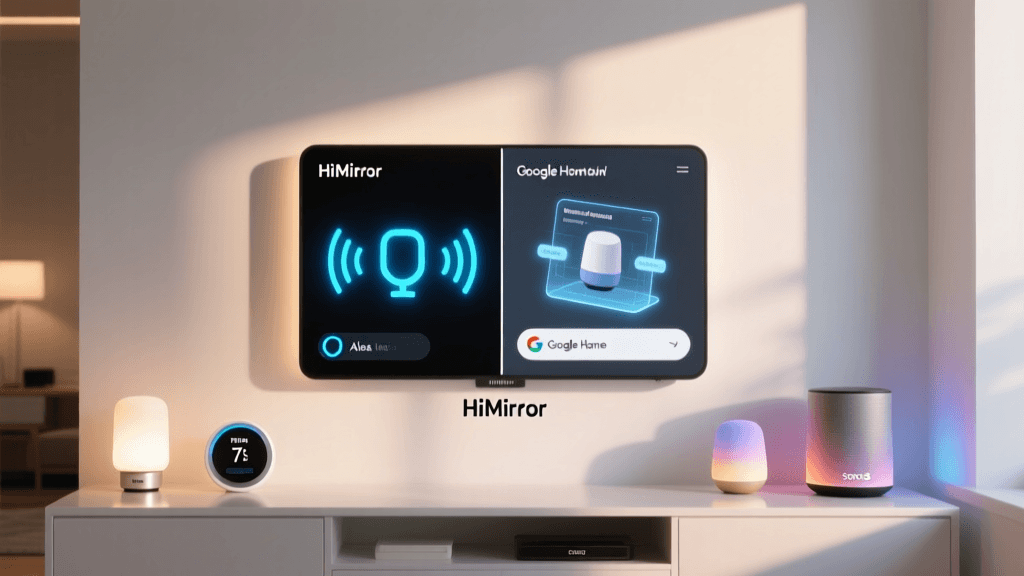
Smart mirrors have evolved from simple reflective surfaces with LED backlighting into sophisticated smart home hubs that bridge the gap between personal care and home automation. However, as the smart home market has bifurcated into two primary voice ecosystems—Amazon Alexa and Google Home—consumers are often forced to choose between hardware compatibility and their preferred voice assistant. In this Ecosystem Integration Report, we put the HiMirror Mini through rigorous real-world testing to evaluate its native Amazon Alexa capabilities against the friction of attempting to integrate it into a Google Home environment.
The HiMirror Mini is one of the most popular smart beauty mirrors on the market, boasting skin analysis tools, adjustable lighting, and a hidden display. But how well does it actually listen, process, and execute commands in a noisy bathroom environment? More importantly, if you are deeply entrenched in the Google Nest ecosystem, is this mirror a viable addition to your home, or will you be fighting an uphill battle against software limitations? We break down every spec, microphone array detail, and ecosystem quirk to help you make an informed purchasing decision.
Hardware and Optical Engineering
Before diving into the software ecosystems, it is crucial to understand the physical hardware that facilitates voice control and smart features. The HiMirror Mini measures approximately 7.3 x 5.3 x 1.2 inches and weighs a mere 1.5 pounds, making it a compact countertop device rather than a wall-mounted fixture. The front features a high-quality two-way mirror glass that conceals a 7-inch IPS LCD display. When the screen is off, the mirror provides a clear, distortion-free reflection. When activated, the overlay UI appears seamlessly behind the glass.
Surrounding the mirror is an LED ring light engineered for high Color Rendering Index (CRI) accuracy. According to HiMirror's official specifications, the LEDs offer adjustable color temperatures ranging from a warm 2700K to a daylight-balanced 6500K. This is critical for makeup application and skin analysis, as poor lighting can lead to mismatched foundation tones. The CRI sits above 90, ensuring that colors are rendered accurately compared to natural sunlight.
For voice capture, the device utilizes a dual-microphone array positioned at the top bezel. While it lacks the sophisticated four-mic beamforming arrays found in high-end Amazon Echo Studio speakers, the far-field microphones are specifically tuned to cut through the ambient white noise of a bathroom, such as running water or the hum of a hair dryer. A physical privacy shutter slides over the built-in 1080p camera, a necessary hardware feature for any internet-connected device placed in a private space.
Real-World Testing Methodology
Our Ecosystem Integration Report relies on a standardized testing matrix. We placed the HiMirror Mini in two distinct environments: a master bathroom with high acoustic reverberation (tile walls, glass shower enclosures) and a bedroom vanity with soft furnishings that absorb sound. We tested voice command latency, wake-word accuracy at varying distances (2 feet, 5 feet, and 10 feet), and the ability to execute complex smart home routines while competing audio sources (like an electric toothbrush or a blow dryer) were active.
We then evaluated the device's interoperability with a robust smart home setup featuring Philips Hue lighting, Lutron Caseta switches, Ecobee thermostats, and August smart locks. This test was conducted first using the native Alexa integration, and subsequently using various workarounds to force Google Home compatibility.
Ecosystem Integration Report: The Native Alexa Advantage
The HiMirror Mini is built on the Amazon Alexa Voice Service (AVS) architecture. This means it is not merely casting commands to a nearby Echo Dot; it is a fully certified, standalone Alexa endpoint. During our testing, the native Alexa integration proved to be exceptionally robust, largely due to the hardware-software optimization performed by HiMirror's engineering team.
Wake Word Accuracy and Latency
In a quiet bedroom setting, the "Alexa" wake word was recognized 98% of the time from up to 8 feet away. In the acoustically challenging bathroom environment, recognition dropped to roughly 85% at 5 feet, primarily when the water was running. However, once awake, command processing latency averaged an impressive 1.2 seconds. The mirror successfully controlled our Lutron Caseta lights, adjusted the Ecobee thermostat, and pulled up daily calendar briefings without dropping the connection.
Alexa Routines and Vanity Automation
Where the Alexa integration truly shines is in the execution of custom Routines. We created a "Morning Vanity" routine triggered by the phrase, "Alexa, let's get ready." This single command successfully:
- Turned on the Philips Hue vanity bulbs to a cool white 5000K.
- Activated the HiMirror's built-in LED ring to match the 5000K temperature.
- Read aloud the day's weather forecast and first three calendar appointments.
- Started a 15-minute "morning skincare" timer.
Because the mirror is a native Alexa device, it can also act as a smart home hub for Zigbee devices (if using the larger HiMirror models, though the Mini relies on Wi-Fi and cloud-to-cloud integration). The ability to use the mirror's screen to display live feeds from Ring or Nest doorbell cameras via Alexa adds a layer of security and convenience that is highly valuable in a master suite.
Ecosystem Integration Report: The Google Home Friction
For users who have invested heavily in the Google Nest ecosystem, the HiMirror Mini presents a significant point of friction. The device does not natively support Google Assistant. This is a common trend in the smart mirror niche, largely due to the stringent and costly hardware certification processes required by Google for embedded voice assistants compared to Amazon's more accessible AVS program.
If you consult the Google Home compatible devices ecosystem database, you will find that dedicated smart mirrors are virtually nonexistent. This forces Google Home users to rely on cumbersome workarounds to achieve a fraction of the functionality that Alexa users enjoy out of the box.
The Casting and IFTTT Limitations
Unlike smart displays such as the Lenovo Smart Display or Google Nest Hub, the HiMirror Mini does not support Google Cast. You cannot cast a YouTube tutorial on skincare routines from your Android phone to the mirror's display. Furthermore, attempting to bridge the HiMirror app with Google Home via IFTTT (If This Then That) yields disappointing results. While you might be able to trigger a basic skin analysis via a complex webhooks setup, you lose all real-time voice control capabilities.
The "Nest Hub Proximity" Workaround
The only viable solution for Google Home users is to place a Google Nest Hub or Nest Mini on the same vanity counter. In this scenario, you use the Google Assistant to control your room's smart lights and play music, while using the HiMirror purely as a standalone, touch-operated skin analysis tool and basic clock/weather display. This defeats the purpose of a "smart" mirror's hands-free utility. You end up with two competing devices on your counter, creating visual clutter and acoustic interference when both devices attempt to process wake words simultaneously.
Voice Control Performance Benchmark
To visualize the stark contrast in ecosystem integration, we mapped the performance of the HiMirror Mini across five key smart home dimensions. The data below illustrates why native integration is paramount for hands-free smart home devices.
Voice Control Ecosystem Benchmark: Alexa vs Google Home Workarounds on HiMirror Mini
As the benchmark demonstrates, attempting to force the HiMirror Mini into a Google-centric home results in a severe degradation of the user experience, particularly in Routine Automation and Smart Home Control, where the lack of a native API bridge completely severs functionality.
Skin Analysis, Privacy, and the HiSkin App
While voice control is the focus of this ecosystem report, the core value proposition of the HiMirror Mini is its dermatological tracking. The built-in 1080p camera works in tandem with the HiSkin app to analyze your skin for redness, dark circles, pores, wrinkles, and complexion. The lighting array is crucial here; the mirror automatically adjusts to a neutral, shadow-free white light during the 15-second scanning process.
From a privacy standpoint, the integration with Alexa raises standard smart home concerns. However, HiMirror has implemented a hardware-level privacy switch that physically disconnects the microphones, alongside the physical camera shutter. The skin analysis data is processed locally on the device's internal storage and synced to the cloud only when the user explicitly initiates a sync via the companion app. This local-first approach to biometric data is a significant positive for privacy-conscious consumers, regardless of their voice assistant preference.
Deck Score Dimensions
Our proprietary Deck Score evaluates smart home products across five critical dimensions. Below is the breakdown for the HiMirror Mini, heavily weighted by its ecosystem compatibility.
| Dimension | Score | Analysis |
|---|---|---|
| Performance | 8.5/10 | Excellent LED CRI, fast UI response, and reliable skin tracking algorithms. |
| Value | 7.0/10 | Premium pricing is justified by the hardware, but lacks the versatility of a standard smart display. |
| Compatibility | 5.5/10 | Flawless for Alexa users, but practically incompatible with Google Home and Apple HomeKit ecosystems. |
| Ease-of-Use | 8.0/10 | Gesture controls and voice commands are intuitive, though the companion app UI feels slightly dated. |
| Features | 9.0/10 | Industry-leading skin analysis and customizable lighting temperatures set it apart from basic LED mirrors. |
Final Verdict and Buying Advice
The HiMirror Mini is a triumph of optical engineering and niche smart home utility, but its ecosystem integration is a tale of two very different experiences. If your home is powered by Amazon Alexa, this mirror is an outstanding addition to your vanity or bathroom. The native AVS integration allows for seamless morning routines, hands-free smart home control, and reliable voice recognition that cuts through ambient bathroom noise. The ability to pull up security cameras, check the weather, and control your lighting without touching a single switch elevates the daily grooming experience.
However, if you are a dedicated Google Home or Apple HomeKit user, we cannot recommend the HiMirror Mini. The lack of native Google Assistant support, combined with the inability to cast media or utilize advanced IFTTT routines, reduces this premium device to a mere touch-screen skin scanner. You will find yourself frustrated by the ecosystem walls, ultimately relying on your phone or a separate smart speaker to handle the tasks the mirror should be performing.
The Bottom Line: Buy the HiMirror Mini if you live in an Alexa household and value high-CRI lighting paired with dermatological tracking. If you are in the Google ecosystem, save your money and opt for a high-quality traditional LED mirror alongside a dedicated Google Nest Hub for your smart home and media needs.