Introduction: The Smart Bathroom Dilemma
Upgrading a bathroom often feels like a costly endeavor, especially when you start looking into smart home integrations. While smart lighting, thermostats, and showers have become increasingly accessible, the smart bathroom mirror has largely remained a luxury item. Premium brands charge anywhere from $800 to over $1,500 for mirrors that offer integrated lighting, defoggers, and audio. For the average homeowner or renter looking to modernize their space without taking out a second mortgage, these prices are simply out of reach.
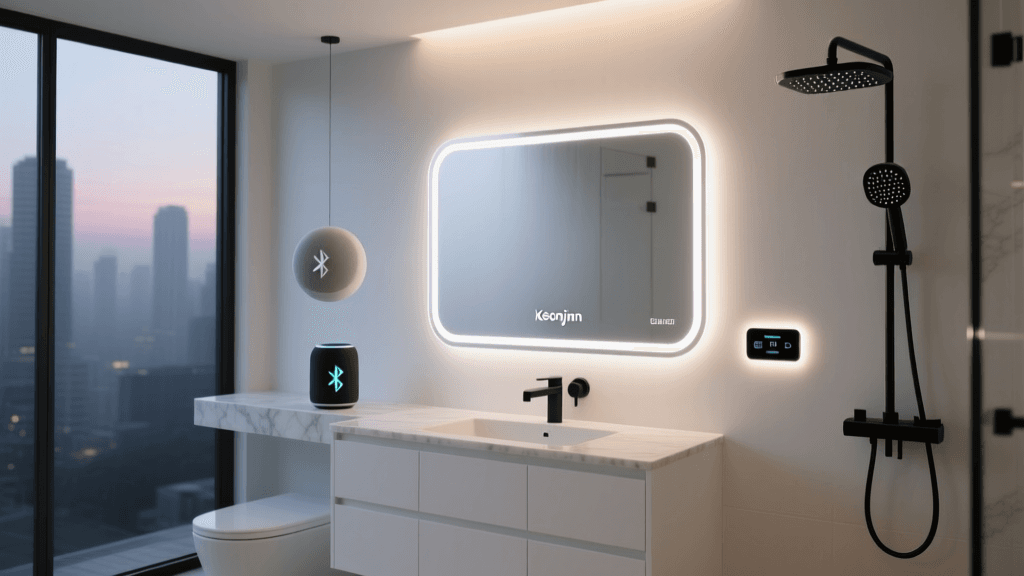
Enter the budget tier of smart mirrors, specifically the Keonjinn Smart LED Bathroom Mirror with Bluetooth and Anti-Fog capabilities. Priced comfortably under the $300 mark, it promises to deliver the core functionalities of its high-end competitors at a fraction of the cost. But does cutting the price mean cutting essential corners? In this comprehensive value-for-money assessment, we put the Keonjinn mirror through real-world testing to evaluate its build quality, lighting performance, audio capabilities, and overall place in a modern smart home ecosystem.
Design and Build Quality: More Than Just Glass
When dealing with budget electronics, the first casualty is usually build quality. Fortunately, the Keonjinn mirror holds its ground. The model we tested features a 24x32-inch footprint, which is the standard sweet spot for single-sink vanities. It utilizes a 5mm copper-free silver glass mirror, which is a crucial specification. Traditional mirrors use copper in the reflective backing, which can oxidize over time in humid environments, leading to those unsightly black edges. By eliminating copper, Keonjinn ensures a longer lifespan for the mirror's clarity.
The frame is constructed from rust-proof aluminum, giving it a sleek, modern, and minimalist profile that blends seamlessly into contemporary bathroom designs. It is rated at IP44 for water resistance. It is vital to understand what EPA WaterSense guidelines and IP ratings mean for your bathroom: IP44 protects against splashing water from any direction, making it perfectly safe for installation above a sink. However, it is not rated for direct, continuous water jets, meaning it should not be installed inside an enclosed shower stall.
Lighting Performance: Illuminating the Details
The primary function of any bathroom mirror is to provide clear, accurate reflection, and this is where LED technology shines. The Keonjinn mirror features edge-lit LED strips concealed behind a frosted border, providing a soft, diffused glow that eliminates harsh shadows on the face.
One of the most critical metrics for lighting is the Color Rendering Index (CRI). The Keonjinn boasts a CRI of 90+, meaning it renders colors very close to how they appear in natural sunlight. This is exceptionally important for tasks like applying makeup, shaving, or checking outfit color coordination. Furthermore, the mirror allows you to adjust the color temperature from a warm 3000K to a crisp daylight 6000K. According to the U.S. Environmental Protection Agency's ENERGY STAR program, modern LED lighting not only provides superior light quality but does so using a fraction of the energy of traditional incandescent vanity bulbs, keeping your electricity costs down.
The touch-sensitive power button located on the bottom of the mirror responds well, even with slightly damp hands, and features a memory function that remembers your last used brightness and color temperature settings.
Bluetooth Audio: Acoustics in a Tiled Room
Perhaps the most marketed 'smart' feature of this mirror is its integrated Bluetooth speaker system. Bathrooms are notoriously difficult acoustic environments; hard tiles, glass shower doors, and porcelain sinks create an echo chamber that can make audio sound tinny and harsh. The Keonjinn attempts to combat this with dual 5-watt speakers mounted directly behind the glass, utilizing the mirror's surface as a resonator.
Utilizing protocols outlined by the Bluetooth Special Interest Group, the mirror connects via Bluetooth 5.0, ensuring a stable connection with minimal latency. In our testing, pairing was instantaneous. Audio quality is surprisingly robust for a budget device. While it will not replace a high-end Sonos or Bose smart speaker, the mid-tones are clear enough for podcasts and morning news, and the bass is adequate for casual music listening while getting ready. The volume gets loud enough to overcome the sound of a running shower or an electric toothbrush without distorting.
The Defogger: A Necessary Luxury?
Wiping a foggy mirror after a hot shower is a universal annoyance. The Keonjinn includes a built-in anti-fog heating pad located in the center of the mirror. When activated via a dedicated touch button, the pad gently heats the glass, preventing condensation from forming. It takes about three to five minutes to fully clear a fogged mirror, so the best practice is to turn it on before you step into the shower. While it does draw additional power while active, it automatically shuts off after an hour to prevent overheating and energy waste.
Smart Home Ecosystem & Compatibility
Here is where the 'value' assessment requires a reality check. The Keonjinn is a 'smart' mirror in the sense that it contains digital technology (LEDs, Bluetooth, capacitive touch), but it is not a 'smart home' mirror. It lacks Wi-Fi connectivity, meaning there is no native integration with Apple HomeKit, Amazon Alexa, Google Home, or Samsung SmartThings. You cannot set up automated routines, like having the mirror lights turn on when your smart alarm goes off, nor can you control it via voice commands.
However, for users who simply want an upgraded appliance without the hassle of managing another app or dealing with Wi-Fi dropouts, this standalone approach is actually a benefit. It operates entirely independently, relying on your smartphone for Bluetooth audio and physical touch for lighting.
Deck Score Assessment
Our proprietary Deck Score evaluates the mirror across five critical dimensions. As seen in the radar chart below, the Keonjinn dominates in Value and Ease-of-Use, while taking a hit in Compatibility due to the lack of Wi-Fi smart home integration.
SmartHomeDeck Score Radar
Value-for-Money Comparison Table
To truly understand the value proposition, we must compare the Keonjinn against both premium smart mirrors and basic, non-smart LED mirrors.
| Feature | Keonjinn Smart Mirror (~$200) | Premium Smart Mirror ($800+) | Basic LED Mirror (~$120) |
|---|---|---|---|
| LED Lighting & Dimming | Yes (Adjustable Temp) | Yes (Adjustable Temp) | Yes (Fixed Temp) |
| Bluetooth Audio | Yes (Dual 5W) | Yes (Premium Drivers) | No |
| Anti-Fog Defogger | Yes | Yes | Rarely |
| Smart Home Integration | No (Bluetooth only) | Yes (Wi-Fi, HomeKit, Alexa) | No |
| Touch Controls | Yes | Yes | Yes |
| Value Proposition | Excellent | Poor (Diminishing Returns) | Good |
As the table illustrates, the Keonjinn captures about 85% of the features found in premium models at less than 30% of the cost. The only major sacrifice is the Wi-Fi ecosystem integration, which many users may not even utilize in a bathroom setting.
Installation and Hidden Costs
When budgeting for a smart mirror, you must factor in installation. The Keonjinn can be hardwired directly into your wall's electrical junction box or plugged into a standard outlet using the included adapter. Hardwiring provides the cleanest, most seamless look, as it allows you to control the mirror's standby power via your existing wall switch. However, if you do not have a junction box behind the mirror, you will need to hire a licensed electrician, which can add $150 to $300 to your total project cost. If you opt for the plug-in method, you will have a visible cord hanging down the wall, which detracts from the premium aesthetic.
The mirror mounts using a sturdy Z-bar (French cleat) bracket. It is a two-person job to safely lift and hang the mirror onto the bracket, but the physical installation process is straightforward and requires only basic tools like a drill, level, and drywall anchors.
Pros and Cons
Pros:
- Exceptional value for money, undercutting premium brands by hundreds of dollars.
- High CRI (90+) lighting with adjustable color temperatures.
- Copper-free glass prevents long-term edge degradation.
- Bluetooth 5.0 provides stable, surprisingly good audio for a tiled room.
- Responsive touch controls with a memory function.
Cons:
- No Wi-Fi or native smart home ecosystem integration (HomeKit/Alexa).
- Defogger takes a few minutes to activate; requires manual foresight.
- Hardwiring may require professional electrical work.
- Touch buttons can be finicky with heavily soaked hands.
Final Verdict: Should You Buy It?
If you are building a highly automated smart home and demand that every single device, including your bathroom mirror, responds to voice commands and automated routines, the Keonjinn is not for you. You will need to look at premium brands that offer Wi-Fi and Matter support.
However, if your definition of a 'smart' bathroom upgrade revolves around practical, daily luxuries—perfect lighting for grooming, built-in audio for morning podcasts, and a fog-free mirror after a hot shower—the Keonjinn Smart LED Bathroom Mirror is an undisputed champion of value. It delivers the core features that actually matter, stripping away the expensive Wi-Fi modules that most users rarely utilize in the bathroom. For under $300, it transforms a mundane daily routine into a spa-like experience, earning it our highest recommendation for budget-conscious smart home enthusiasts.